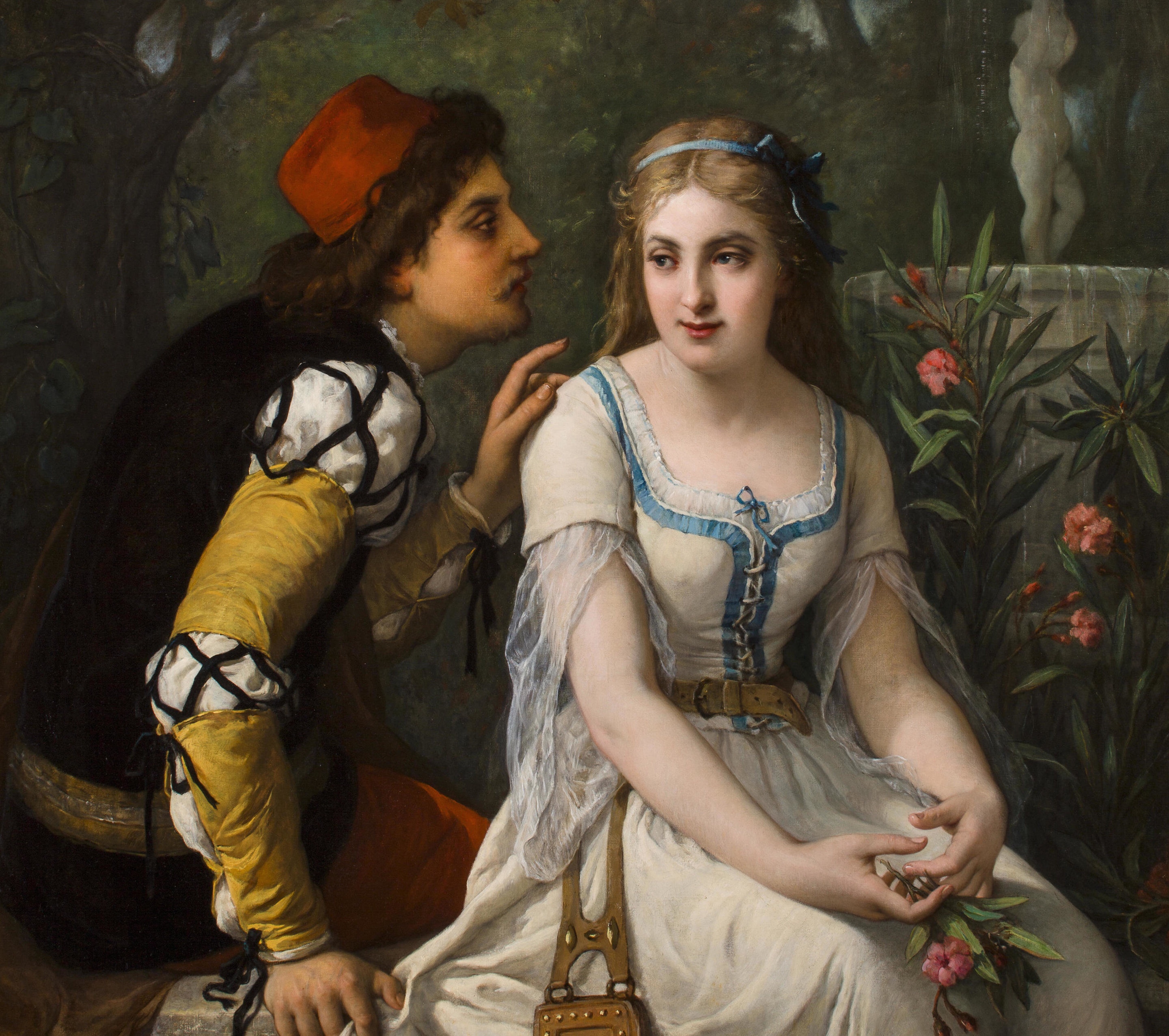
from Portrait of the Artist as a Young Man

You are an artist, are you not, Mr Dedalus?—said the dean, glancing up and blinking his pale eyes.—The object of the artist is the creation of the beautiful. What the beautiful is is another question.—

He rubbed his hands slowly and drily over the difficulty.

—Can you solve that question now?—he asked.

—Aquinas—answered Stephen—says pulcra sunt quæ visa placent.——

—This fire before us—said the dean—will be pleasing to the eye. Will it therefore be beautiful?—

—In so far as it is apprehended by the sight, which I suppose means here esthetic intellection, it will be beautiful. But Aquinas also says Bonum est in quod tendit appetitus. In so far as it satisfies the animal craving for warmth fire is a good. In hell, however, it is an evil.—

—Quite so—said the dean—you have certainly hit the nail on the head.—

The Books

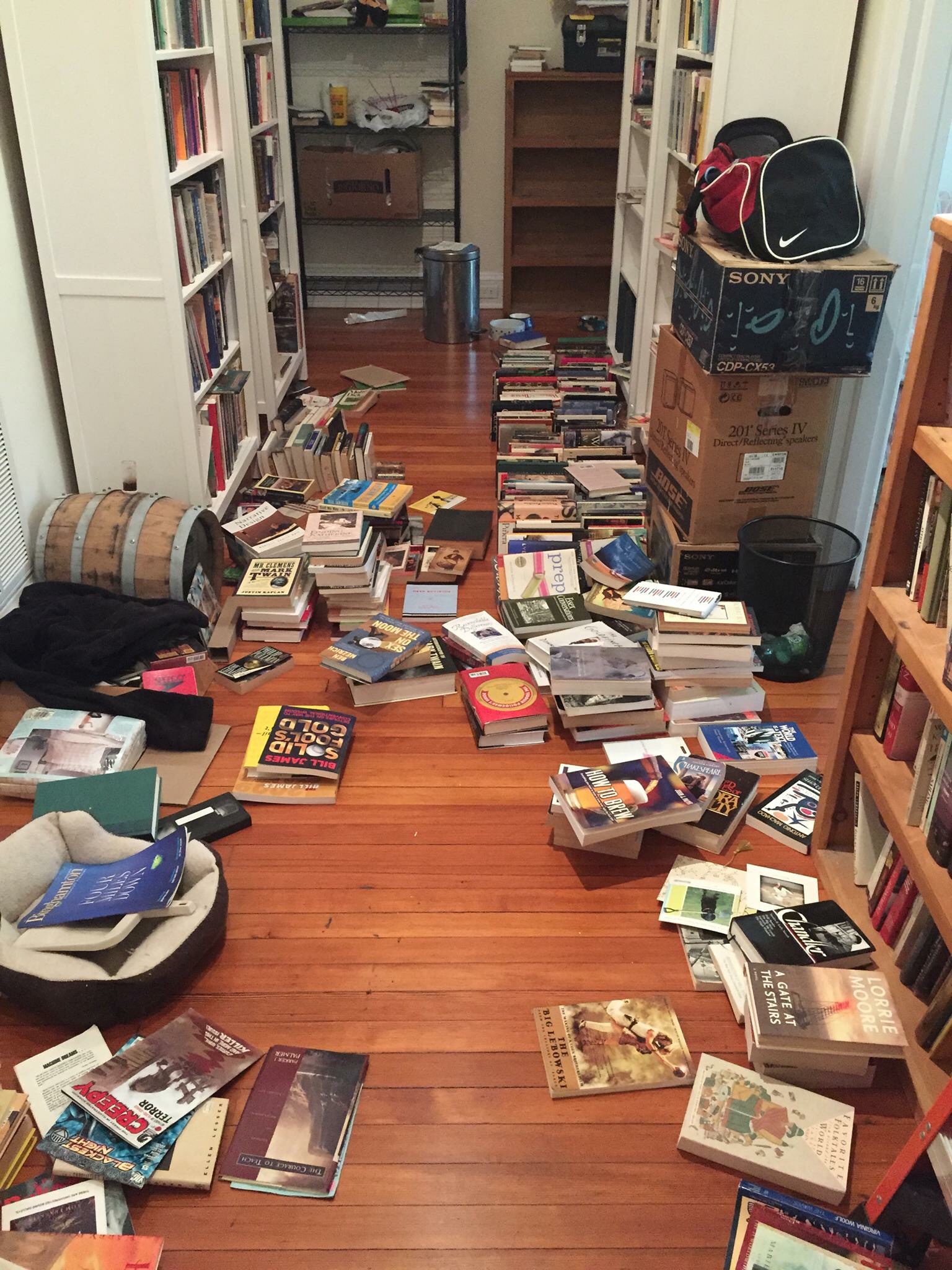
Almost fifteen years ago, I put my books in the attic. They were out, in shelves, but tucked beneath a sloping ceiling and packed behind all manner of family detritus. When my ex-wife and I separated, I moved them into my main living space, where they sang back to me after their—or my—sojourn.  My books matter to me, and I felt their absence. Getting them back onto tall shelves, walking past them every day, reminded me of what I had done, what I had learned, and what I wanted to do with my life and mind.

I have books about writing, books about religion, books about education, history books, philosophy (what we called theory in graduate school), fiction, poetry, books full of art and art history, and even books about sports—mainly baseball. I have a hard cover edition of Dickens published by Chapman and Hall with pages that requires a pocket knife to cut open.  I own a set of Andrew Lang’s color-coded Fairy Tale books.

The books reflect my preoccupations over the past thirty years.  Much of what is on my shelves I first read while I was in graduate school. Some I acquired afterward to keep me in touch with what I spent six years studying. Some comes from undergraduate college—books about gothic art and architecture, an old edition of Joyce’s Portrait of the Artist as a Young Man. There are some newer books that reflect my current interests: a collection of Sumerian mythology, a book about Djinn.

As much as I love my books, as much as they tell a story of my past, as much as they feel like an external manifestation of my mind, I think it may be time to lose them.

How long can one hold onto the past—a past that weighs an actual ton—without moving into the future? Yes, there are some things that I would keep, and this is true of more than my books, but they possess so much gravity. What is the past to me? Of course it is, was, everything. However, the future beckons, and requires a kind of lightness to which things do not lend themselves. Even memorable things.

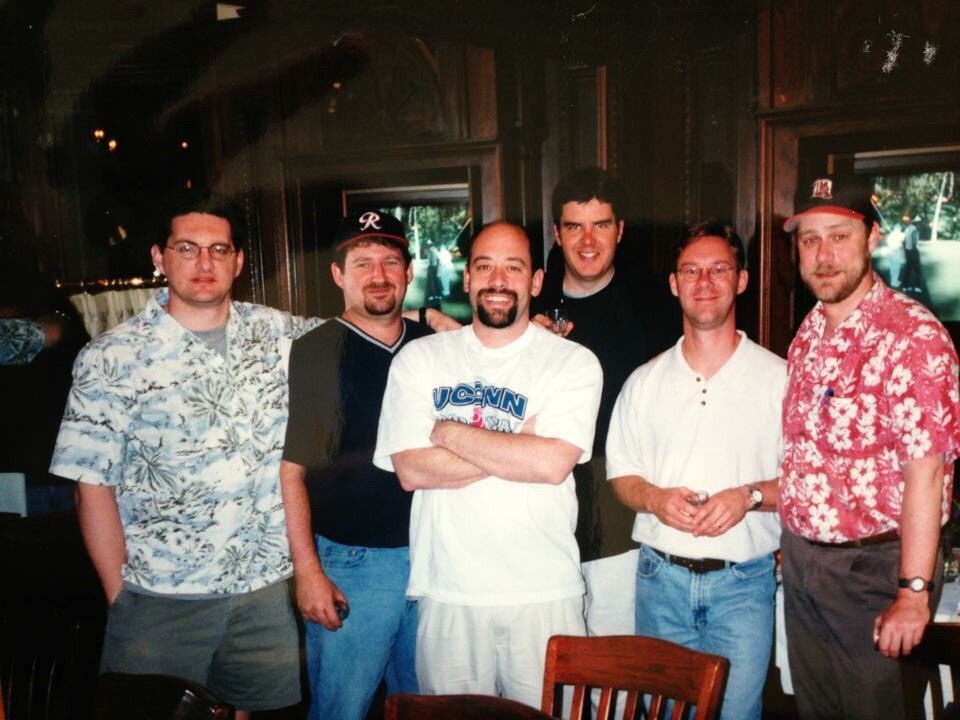
There are other presences in my life—deep and profound connections. This time last year, I started unraveling the two jobs I had in Norfolk, Virginia. I moved away from those jobs and in the process also moved away from my daughters, who continue to live with their mother in Norfolk. Of course, I separated from and divorced their mother. It may seem inconsequential, but over 30 years ago, I picked a cat off the street, and have had cats ever since. I have never been more than three weeks away from them. This year I considered giving up a long standing fantasy baseball game that I have played for nearly 30 years with friends.

I wonder about what I have given up, but also what I have stayed with over the years. I have been a teacher for over 20 years—including my work as a TA in graduate school, over 25 years. What would it be like to not teach? I wrote for years, and then, if I didn’t stop, I slowed considerably—at what hazard, I cannot guess. I am writing again now, and have been, but can’t help wonder why my work slowed to a trickle.

I wonder would it would be like to be free of obligation and free of the gravity of myself—that ton of books, the closet full of clothes, my job, my family, my cats, even my friends. I wonder what my life would have been like if I had just chased words—the stories that I had declared as my purpose when I went away to and then stayed in graduate school. When I went away to graduate school, I traveled in a single car, with a mattress tied to the roof, and a single cat riding in the passenger seats. What would it be like to travel to what’s next with even less?

I do not regret the life I led, nor the life I lead; regret possesses a gravity greater than all the books own own, and I have no time for that. Not now. Nonetheless, I am aware of another life that exists, not over the horizon, not over the rainbow, but buried deep within me. I don’t know how I have kept it buried for so long, or at what cost—or even at what gain. Still. It is there.

I wonder, and wonder hard, and the wondering stirs something in me, something alive and insistent. What will I carry into the future? What must I carry? And what must I leave?

Writing, Purpose, and Masculinity

I have been struggling with masculinity as of late. Which is to say, struggling with ambition. Or struggling with my career choices. Or struggling with relationship choices. Or, simply struggling. Because I am a man, I am struggling on the somewhat closed field of masculinity. I haven’t always thought of it that way, and yet, there it is. I have avoided masculinity for dozens of reasons.

I have seen more examples of toxicity and hypocrisy among men than anywhere else.  Maybe these are not inherently male traits, but I grew up in a male-dominated environment—which is to say, the world—including four years in an all-male prep school. I have been bullied and been a bully. I have seen puffery masquerade as accomplishment. I have seen might valued over intelligence. I have watched as surface characteristics outshone deeper wells of strength. In To the Lighthouse, when Woolf takes Mr. Ramsay to the cleaners for failing to see the world outside of his carefully constructed “a, b, c…” hierarchy, I knew of what she was writing. But that came later.

After college my father brought me to his company once, to ask his colleagues what career path I should pursue. One of the men counseled, “Don’t go into business.” This was a man my father had often spoken of as one of his few friends at work. This man did not offer an alternate suggestion, just “Don’t.” Then he spoke of a working world in which the soul found no home. That resonated with me. My father was often unhappy after a day of work, and I had seen that unhappiness first hand.

I drew a line between the life of the soul and the world of business and ambition—the world of men.

I spent a number of years in career limbo and ended up managing a restaurant and working 80 hour weeks. Ambition always finds a way, even in limbo, even when one says, “No.” Part of being a man, I suppose, at least this man, was finding my way into positions of authority. During this time, I started writing—the very definition of authority—something I had done in fits and starts in high school then in college. I applied to graduate school in creative writing and was accepted.

So in my late twenties, I became a student of writing and literature. I went all in.  I was never interested in “finding my voice”; I was interested in hitting the metaphorical home run, of, and pardon me for this, catching the big fish.  There was always a bigger fish in the ocean.  Joyce, Woolf, Dickens, Marquez, Dickinson, Whitman, Marquez, and Calvino were among the literary fish that pushed me forward. The critical fish were there too.  Each set out a mark and said, “Meet me here.” And, right or wrong, I chased that mark.

I sought work that broke the hierarchies and offered more possibilities to all. Brilliance the only goal. Brilliance the reward. I reveled. My classmates often complained of this course or that course, or of school altogether. I did not. There was no class—even bibliography—that did not unlock some possibility. My purpose, clear and simple, was to learn and to write.

I was at graduate school at a time when feminism was fully asserting itself, and I allied myself with that movement, in part under the guise of being a creator, which I identified as a feminine act. I was full of it. In the end, I divided the world not between men and women, with all the problematic tangle that came between those energies, but between writers and non-writers. I saw a kinship between Charles Dickens and Jane Gallup. If you know the work, you know what a leap that is. Or, and this is easier, Hélène Cixous and James Joyce. Words held a primal energy for me, an energy that bridged gender and sex. The only ones who could experience jouissance, truly experience it, not simply having it happen, but calling it forth, meeting it, urging it on—if they could—were writers. And so I wrote fervently, seeking a pleasure beyond limits. And I found it.

Now, I realize that I had harnessed a most basic form of male sexual energy, of masculinity. If I had classmates who imagined me in black leather pants, well, there was a reason. I chased something bigger than me, something vital. And chasing is what men do—secretly or not. Part of our deep-seated masculinity drives us to seek—“to bear it out,” as Shakespeare writes, “even to the edge of doom.” What keeps us from doom, from becoming an Ahab (there’s that big fish) is not avoiding the sea and the hunt, just putting up the harpoon and dreaming of what might have been. We must learn to integrate the hunt with the world. We must listen to the world and find an honorable way forth.

I did not. I stopped. I did not stop all at once, but over a series of years. I let more temporary ambitions, often driven by temporary monetary concerns, take precedence. I grew nervous, even cautious. I stepped off the stage. I continued, as I had when I was younger, to find outlets for ambition. They were circumscribed by my career choices, but they persisted. I became principal of a school and, during a crisis at my church, helped hold a congregation together. But I was not doing my life’s work—the thing that brought me joy, even if it did not pay the water bill.

And, as a man, a life without a driving purpose withers. I’m sure this is true for women too. Finally, at 58, I made a change. It was not an easy, nor a secure choice. It is not the final choice I will make along this way. But it is the first step. And I realize that even though I have been writing—fervently, discovering along the way—that I also have things to learn. About me. About the world. And as a man.

Imaginary Destinations

There are imaginary places that call to us. Illyria. Macondo–though be careful of that one, friend. The Invisible Cities that Polo reports on to the Khan. And Cocaigne.

And so, at the end of the day, when I have spent the precious fortune of my wit and energy, spent it for what? Money? Success? Some recognizable residue that others may tout as virtue? I return to the nearest country I can find–the one adrift in the books on my shelves, or the sea of my imagination. Return traveler, with ships once more laden with waking dreams.

Until such time as I may board a ship, an airplane, or some contrivance to carry me into strange and wonderful streets, I have this. Baudelaire…

L’Invitation Au Voyage

There is a wonderful country, a country of Cocaigne, they say, that I dream of visiting with an old love. A strange country lost in the mists of the North and that might be called the East of the West, the China of Europe, so freely has a warm and capricious fancy been allowed to run riot there, illustrating it patiently and persistently with an artful and delicate vegetation.

A real country of Cocaigne where everything is beautiful, rich, honest and calm; where order is luxury’s mirror; where life is unctuous and sweet to breathe; where disorder, tumult, and the unexpected are shut out; where happiness is wedded to silence; where cooking is poetic, rich, and yet stimulating as well; where everything, dear love, resembles you.

You know that feverish sickness which comes over us in our cold despairs, that nostalgia for countries we have never known, that anguish of curiosity? There is a country that resembles you, where everything is beautiful, rich, honest and calm, where fancy has built an decorated an Occidental China, where life is sweet to breathe, where happiness is wedded to silence. It is there we must live, it is there we must die.

Yes, it is there we must go to breathe, to dream, and to prolong the hours in an infinity of sensations. A musician has written l’Invitation a la valse; who will write l’Invitation au voyage that may be offered to the beloved, to the chosen sister?

Yes, in such an atmosphere it would be good to live—where there are more thoughts in slower hours, where clocks strike happiness with a deeper, a more significant solemnity.

On shining panels or on a dark rich and gilded leathers, discreet paintings repose, as deep, calm and devout as the souls of the painters who depicted them. Sunsets throw their glowing colors on the walls of the dining-room and drawing-room, sifting softly through lovely hangings or intricate high windows with mullioned panes. All the furniture is immense, fantastic, strange, armed with locks and secrets like all civilized souls. Mirrors, metals, fabrics, pottery, and works of the goldsmith’s art play a mute mysterious symphony for the eye, and every corner, every crack, every drawer and curtain’s fold breathes forth a curious perfume, a perfume of Sumatra whispering come back, which is the soul of the abode.

A true country of Cocaigne, I assure you, where everything is rich, shining and clean like a good conscience or well-scoured kitchen pots, like chiseled gold or variegated gems! All the treasures of the world abound there, as in the house of a laborious man who has put the whole world in his debt. A singular country and superior to all others, as art is superior to Nature who is transformed by dream corrected, remodeled and adorned.

Let them seek and seek again, let them endlessly push back the limits of happiness, those horticultural Alchemists! Let them offer prizes of sixty, a hundred florins for the solution of their ambitious problems! As for me, I found found my black tulip, I have found my blue dahlia!

Incomparable flower, rediscovered tulip, allegorical dahlia, it is there, is it not, in that beautiful country, so calm, so full of dream, that you must live, that you must bloom? Would you not be framed within your own analogy, would you see yourself reflected in your own correspondence, as the mystics say?

Dreams! Always dreams! And the more ambitious and delicate the soul, all the more impossible the dreams. Every man possesses his own dose of natural opium, ceaselessly secreted and renewed, and from birth to death how many hours can we reckon of positive pleasure, of successful and decided action? Shall we ever live in, be a part of, that picture my imagination has painted, and that resembles you?

These treasures, these furnishings, this luxury, this order, these perfumes, and these miraculous flowers, they are you! And you are the great rivers too, and the calm canals. And those great ships that they bear along laden with riches and from which rise the sailors’ rhythmic chants, they are my thoughts that sleep or that rise with the swell of your breast. You lead them gently toward the sea which is the Infinite, as you mirror the sky’s depth in the crystalline purity of your soul;—and when, weary with the rolling waters and surfeited with the spoils of the Orient, they return to their port of call, still they are my thoughts coming back, enriched from the Infinite to you.
At first sight

Country Living posted a video of Jeff Bridges’s romance with his wife Susan. He first saw her while she worked as a waitress when he was on the shoot for Michael Cimino’s Thunderbolt and Lightfoot. “I knew I was madly in love with my wife the minute I saw her,” he claims. They married, and remain married after forty-some years. How did he know? How does anyone know at first sight?

What the hell. I say, “I love you” easily. It gets me into trouble.

Call it a predisposition—an attitude toward the world. I can walk into a museum and be delighted by things made four thousand years ago, four hundred years ago, and four hours ago. There isn’t one kind of music that is my “favorite”—so long as it avoids cliches, I like it. The same holds true for art. For movies. For most everything. So long as that thing provides some spark of surprise—the world is larger than you thought, old man!—I am, once again, in love with the world.

Cliches interrupt that feeling because there is no surprise. It is the pure unadulterated expression of the absolutely familiar. We’ve seen this show before. I thought about this when revisiting Yeats’s “Sailing to Byzantium” last week in school, and his rail against schools for studying “monuments of [old men’s] magnificence.” How many times have I heard praise for souls that would (or should) “clap [their] hands and sing”? A hundred? A thousand times? More? Surely so. And yet, Yeats’s poem doesn’t feel like a cliche at all, even after all these years. I am surprised again. And in love.

But this is not about poetry or art. This is about falling in love, and saying “I love you”—and for doing it fast—at first sight, before the number of days and months proscribed by articles in Men’s Health or Psychology Today have passed.

Maybe men are more likely to go all in at first sight. Think of Romeo’s quickly fickle heart as he falls from Rosaline to Juliet. But Juliet, young and inexperienced as she is, follows quickly enough. And Susan Geston may have said, “No” to Bridges’s first request for a date, but she traveled home with him after filming in North Dakota wrapped up. I don’t know.

And a quick nerd note here. There is something I protect against: the reifying power of the male gaze. I suspect my gaze—and that of other men and women. It’s a way we have been, what? taught to see the world. This idea took shape when I studied film theory and encountered the work of Laura Mulvey. It’s worth serious consideration.

I do know that finding or creating a bond, and accepting that bond as something deeper than a mutual appreciation for art or wine or politics (I’ve been in those relationships, and what they lack in depth, they can more than make up for in breadth; there is much to appreciate in the world with a sympathetic soul) can help weather the inevitable differences that will occur. Most of my enduring friendships or relationships began nearly from the moment we met. Love provides the substrate for all that follows. And so much does follow.

But, how does one know? How does one ignite a deep and abiding passion based on a look, or a conversation? Experience, and more, has taught me that looks can be deceiving, but words, especially spoken words with all their attendant gestures, rise and fall of voice, and the play of expressions can unmask a heart—mine, hers.

What unmasks me, makes me open to the possibility again, is the blend of surprise and recognition. When someone adds some new aspect to the world, breaks some old pattern (like him, like her, but—somehow—not the same), and also reprises some aspect of the world that I value above all others, then I am laid bare, and I fall. I am less on guard against another person, than I am to my own repeated patterns—Am I doing that again? I am doing that again. Oy.

If I was a cynic, I would wait, and say, why love, when you know what will follow? Why not let the uglier side of each person—either her or me—assert itself, and avoid the disappointment? Go ahead and replace “cynic” with “practical.” And replace “ugly” with whatever euphemism for “real” that suits you. Either way, I am neither cynical nor practical. I am open to surprise.

Everything

There is an apocryphal story about Tolstoy and War and Peace. After receiving the galleys from his publisher, he checked them over, made corrections, and sent them, via courier, back to the publisher. Days later, he was out for a walk, and he cried, “The yacht race! The yacht race!” He had forgotten—as if anything could be forgotten in that encyclopedic novel—a scene that included a yacht race.
Novelists tell each other that story as a means of warning that everything—no matter what—in your mind while you are writing a novel, should go in that novel. Everything. Leave nothing out. Don’t start on another book. Everything now, in this one.

This conception of the novel: book as compendium, the thousand footed beast, as Tom Wolfe called it; has drifted in and out of vogue as writers tried more minimalist work, or work that focused on voice and character as carefully as a short story or novella. Most of my favorite authors: Joyce, Dickens, Marquez, Barth, Chabon; write rampaging maximalist novels that include golems, magnets, dinosaurs, computer-spawned heroes, newspaper headlines, thunderclaps, and the end of the world. It’s easy to think of their novels as rather shaggy, and that is part of their charm, and they wear their shag into the world.

The other side of the spectrum, while still not minimalist, contains James, Faulkner, and Woolf, who delve into the shaggy and unconstructed inner workings of their characters. They are shaggy insofar as they contradict themselves: at one moment feeling free and the next utterly constrained.

All the well. This is incredibly short handed analysis of these writers’ works. But it will have to do. I’m in a hurry.

Right now, and for the past two months, I have been at work on a novel, and I have been scribbling madly at this blog. I’m clearly violating the dictum of “Everything!” I can admit that many of the ideas in these blog posts have emanated from my fiction work. And the other way around. I find the jumping between one form and the other exhilarating and edifying. These non-fiction pieces give me time to puzzle through ideas before they end up in the fiction. Or I can chase down a mad hare that has run out of the novel here in the blog. Of course, sometimes, like when traveling to London, the blog is just a kind of public journal.

To be honest, everything, all of these thoughts, have, in one way or another, ended up in the novel. So far. Even London. Even the ideas about love. Everything. And although there is a story (oh, is there), it is like a snowball rolling down a hillside, picking up branches, mittens, and stray bits of dirt as it careens to the bottom. Even now, this.

Everything.

London Again

Think of London, a small city
It’s dark, dark in the daytime
The people sleep, sleep in the daytime
If they want to, if they want to

Cities, The Talking Heads

The sun rose at 8:04 am in London on the shortest day of the year. It set at 3:53 pm. A shorter day than Fort Fairfield in northern Maine. Add clouds and rain, and the day seems shorter. Is it any wonder that people on their ways home from work find their way into pubs lit with fireplaces? Our days in London were marginally longer, and after walking through the city each afternoon, we found our way to a pub. The Paternoster, The Old Red Lion, Punch and Judy’s, The Swan, Lady Abercorn’s, The George. Some of these were easy to find, others required a turn down a slender lane. Each was bustling.

The charm of London is found in its strange alleyways, endlessly curled streets, and tucked away history. If there is a grid, and in some way, there is, it is bent around the past and the ox bow turns of the Thames, and everything attached to it has been attached in a haphazard fashion. For instance, the coagulation of insurance buildings in central London: the gherkin, the cheese-grater, the scalpel, and the inside-out building; defy any sense of a rational aesthetic plan. Or the juxtaposition of the Tower on one side of the Thames and the glass pineapple of the City Hall just across the river.

I have wandered down the narrow canyons of New York City, through low slung neighborhoods in San Francisco, across broad avenues in Chicago, in and out of fish stalls in Seattle. Even my home city, Philadelphia, built as it once was, on squares, in spite of the Schuylkill river turning into the Delaware, and the oddly oblong expanse of Fairmount Park, makes easy sense. Get oriented and go. London seems to double back on itself, and in doing so, has folds and torn edges through which a body can slip out of any regular order.

And so London’s history is oddly folded into the cityscape as well. A tour through the city—you cannot tour the whole city, or tour it on a bus; you must walk it—folds two thousand years of history, creased around a Roman occupation, a French conquest in 1066, and a fire that destroyed 80% of the city in 1666. And the city is just the square mile that had been walled and gated, but is now open and underlaced with a rail system that carries you quickly to nearly every point beyond the old wall.

The people who live there are folded too. The streets are packed with diverse faces—a variety of eyes and ears and cheeks and chins that make them all different, and so different from the faces in American cities—and sounds. Their voices carry languages from Europe, Africa, and Asia—all of which are easy (and relatively cheap) to get to, even from this island nation. It is as if a map of the world has been folded and brought all these people here. Scarves are the only nearly universal banner, and men tie theirs tightly around their necks. Women walk down streets in shoes ill made for walking—but that is, sadly more universal than naught.

There is an orderliness to the whole affair. Announcements in the Underground direct people where to walk down hallways and on escalators. Advertisements along the walls of the stations counsel caution with wallets and and advise care with alcohol. “Mind the Gap” is stenciled on the ground where the trains stop, and cheeky announcers corral riders whose fancy Italian made shoes have strayed over the yellow safety line. Cross walks show a green walker when it’s time to cross—around Trafalgar Square the walkers take on a variety of LGBT friendly forms: couples and symbols. Just remember to cross when the green light comes!

In so many ways, walking through London was like walking through my mind–folded and full of associations and reveries. My fellow traveler asked what surprised me most, and I answered, nothing. Of course, the fact of a place like London is a surprise all by itself. Are there more surprises to come, more cities to inhabit, that will fill my mind with visions—or somehow, match my visions? Yes. And, yes.

London Thoughts

History is a story of discontinuous events—events that collide like weather systems or galaxies, having barely understood origins, and even less decipherable records. All the witnesses were destroyed in the collision. What they saw, what they thought, and what they felt—even if they recorded their observations on stone, paper, steel, or silicone, have been destroyed along with them. We are living in the age of delusion, in which we believe in the sanctity of our recorded history—either self-scribbled or captured by another.

This thought is brought about by two things. First, wandering, quickly—this time—through the British Museum (or Westminster Cathedral, or almost anything else in London), what becomes painfully obvious are the gaps. All these artifacts, so painstakingly arranged create an idea that history is continuous, and has flowed in a linear pattern. And then a closer inspection shows that over and over again, things haven’t come that way. There are sudden breaks in history, when entire empires vanish, or when they change—seemingly overnight—religions, or methods of governance, or technologies, and the old gets swept away, almost as if it was a betrayal of the new.

England as it shifts back and forth between Catholicism and Protestantism bears these marks hard. Or, reading through the story of Ashurbanipal and the claims of glory made by this king reminds me of Shelley’s “Ozymandias.”

Thinking of history reminds me of Stephen Jay Gould’s idea of punctuated equilibrium—evolution proceeding in long quiet periods of little change, and then having sudden outbursts of change. I know, we are taught that slow and steady wins the race, but, we are also taught to believe in the nature of story as an overarching “way things are.” We see things through that frame, and it doesn’t always support the picture inside—or outside—the frame.

Second, in the musical Hamilton (which was also part of this trip to London), the character of George Washington warns Hamilton that we do not control who writes our stories. He’s telling this to a man who believes in his power to literally write his own story—and to use his words to cement his reality. He can’t—and doesn’t. His wife, Eliza, sends his legacy forward—and Lin Manuel Miranda brings us her legacy. But, as Miranda admits in interviews, even this moment for Hamilton—and therefore, for him as well—is provisional and subject to changing tastes and critical opinion.

Does everything disappear? No. There are 2000 year old Roman walls in London. But Rome? Everything can disappear. And we will tell stories that soften the loss.

I wonder, I can’t help but wonder, what I am doing when I write: whose story I am writing? It isn’t my story. Of course it’s my story–as if it could be anything else. Nonetheless, as I write about characters who are 5000 years old–older in some cases–I think about history, because they think about history. How can they not? How can any of us not? It is everywhere–in the streets, and in the faces, here in London.

Writing for the reader—surprise

When I sit down to write, I haven’t thought about an audience. Often I feel more like an amanuensis, copying down whatever the universe commands. The universe commands much, by the way. You might call it inspiration—divine or otherwise. I have not spent much time trying to figure out “my voice,” as much as I have trying to listen keenly to what comes my way.

That changed recently, and I actually began to think about delighting a reader. I began a writing project with one particular reader in mind, and I sought to please that reader. This shift helped me to shift how I wrote. I no longer found myself struggling to listen for some voice that came from another place. To be honest, I still feel that my voice is only partly my own, I still rely on inspiration. But now, I realize that thinking about a reader was something that I had been missing. For years.

In part, and a big part, I worry less about getting the inspiration right. That has been a weighty burden. What if I misplaced word and intent? What if I failed to capture the muse’s song? Now, all I need to do is surprise, and somehow, please a reader. That is so much easier. I know enough about my reader that I can throw in some reference that the reader will appreciate. Or add some detail culled from our common experience.

As I have written more, I have focused less on that particular reader—for whatever reason—and began to accept that all along the muse, my muse, did not want me to repeat a song. My muse wanted me to sing back. All this time, my muse had been aching for surprise and delight. How did I not know this?

One of my first teachers, Ron Hansen, ends his spectacular novel Mariette in Ecstasy with Mariette’s message from her muse (who just happens to be God). The message is, “Surprise me.” I read that years and years ago, and only now has the lesson begun to take hold. How I wish I had stumbled into that realization 20 years ago. But better now, late as it is, than not at all.

And so, now, finally, I write to the surprise. And it comes. Over and over.

The Writing Process (this time)

This time, I have little idea where my writing is going. I have some vague notion, but with each chapter, I am surprised. Something happens as I write. A snippet of speech. An image. An action. They are there, already waiting for me, like a message underneath a thick film of dust—everything gray until it gets brushed away. And then…

I have struggled with longer work. My head was always full of plans and themes and rumination. I wanted so much, and could never trust the words—or myself. It was always easier to write short things. They were all fire, and almost extinguished before the fire spread. And perhaps that is how I am writing now. Not worrying about the longer vision (even though it is there). Letting each chapter be its own part.

Of course, as I glance back at the early chapters—which I do only fleetingly, let the rewrite come later, when the whole draft is done—I see that I have changed course, developing  elements that were nascent in the first few chapters. But there! Everything tumbling out unbidden.

Fortunately, I don’t look back too hard. And when I do, I see that I have opened pathways to correct my initial steps and bring them in line with where the work has headed. That happened today. I exclaimed, out loud, when a few students were in my classroom, “I know what to do! It was there the whole time!” And it was. And it is.

Is it writing itself? No. I have to carve out time to work at the thousand word chunks. And it takes work and time. Sometimes the chunks are smaller. Sometimes I skip ahead when I get bogged down, but rarely do a few chapters follow before the way through the snarl becomes at least a little more obvious.

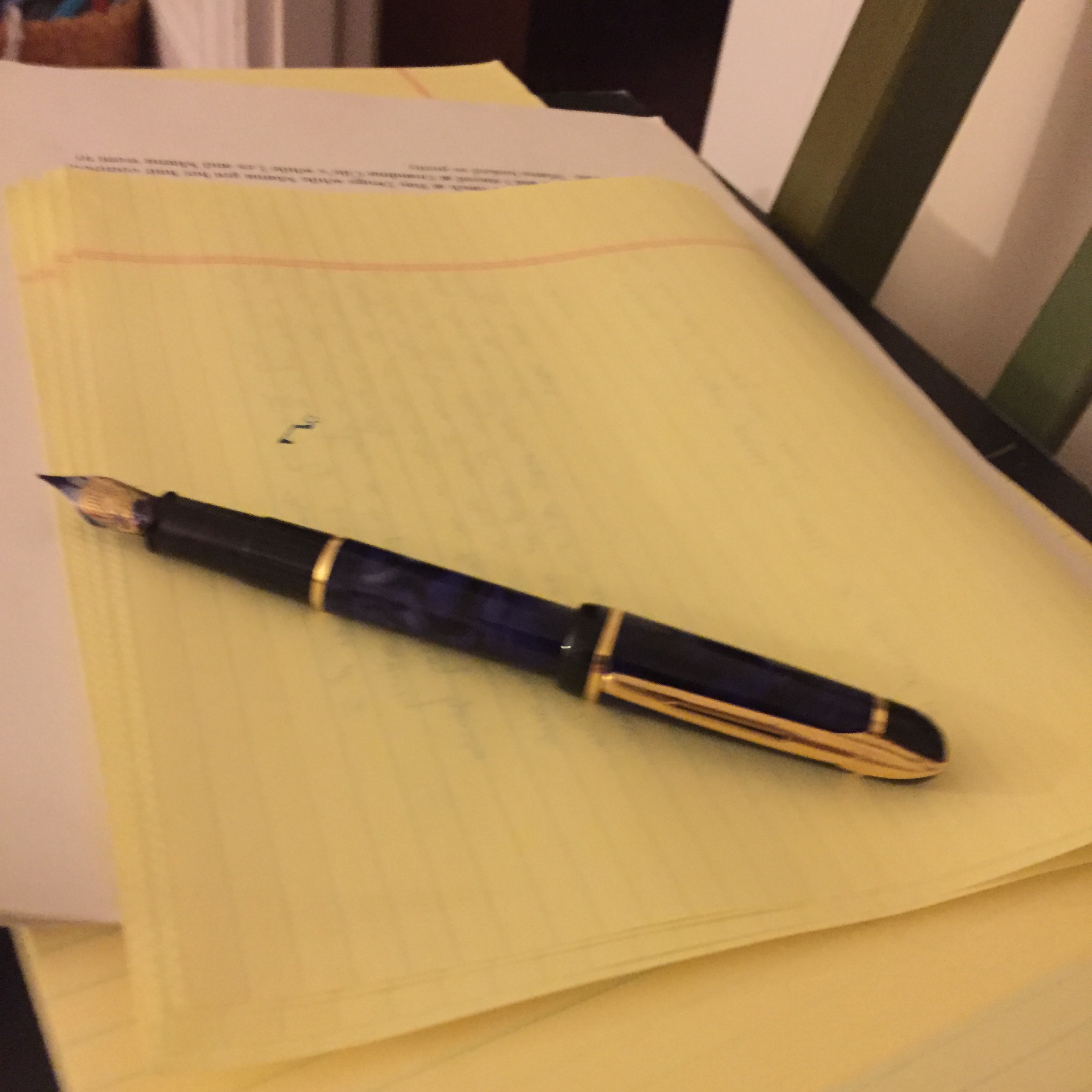
Mostly, I feel as if I can just write into the void. It is like letting go of the bar in trapeze. I trust that the story will catch me—or the net.  And if it is the net, then I know the way back to the slender ladder up to the platform.  Once more, and into the air.