A game in which one player begins with a category. Not an abstraction, like “love” (All you need, is a many splendored thing, means never having to say your sorry, is all around you, in the afternoon, and death, actually), but something specific like the color blue. Then each player calls out something associated with that category.
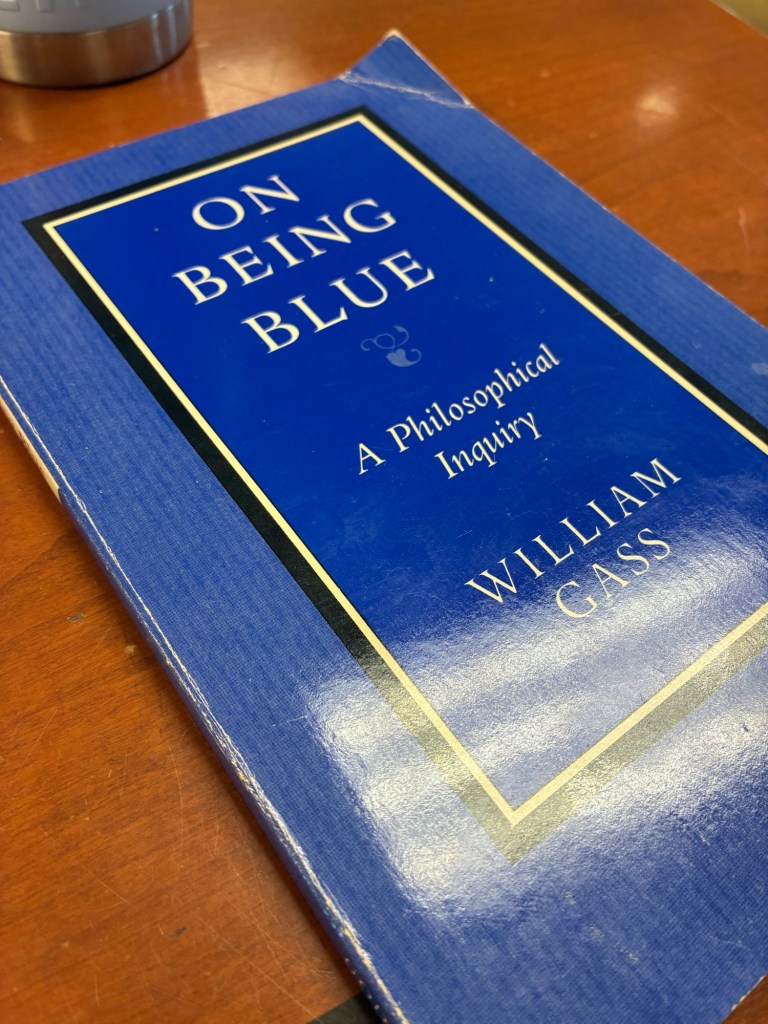
For instance—and this is from the opening of William Gass’s On Being Blue:
Blue pencils, blue noses, blue movies, blue legs and stockings, the language of birds, bees, and flowers as sung by longshoremen, that lead-like look the skin has when affected by cold, contusion, sickness, fear; the rotten rum or gin they call blue ruin and the blue devils of its delirium; Russian cats and oysters, a withheld or imprisoned breath, the blue they say that diamonds have, deep holes in the ocean and the blazers which English athletes earn that gentlemen may wear; afflictions of the spirit—dumps, mopes, Mondays—all that’s dismal—low-down gloomy music; Nova Scotians, cyanosis, hair rinse, bluing, bleach; the rare blue dahlia like that blue moon shrewd things happen only once in, or the call for trumps in whist (but who remembers whist or what the death of unplayed games is like?), and correspondingly the flag, Blue Peter, which is our signal for getting under way; a swift pitch, Confederate money, the shaded slopes of clouds and mountains, and so the constantly increasing absentees of Heaven (ins Blaue hinein, the Germans say), consequently the color of everything that’s empty: blue bottles, bank accounts, and compliments, for instance, or, when the sky’s turned turtle, the blue-green bleat of ocean (both the same), and, when in Hell its neatly landscaped rows of concrete huts and gas-blue flames; social registers, examination booklets, blue bloods, balls, and bonnets, beards, coats, collars, chips, and cheese … the pedantic, indecent and censorious … watered twilight, sour seas: through a scrambling of accidents, blue has become their color, just as it’s stood for fidelity.
Play proceeds until a player announces an association that is unknown to the other players. The player making the surprising announcement the must give a specific citation from memory (of course) to support their claim (“Blue Tango,” by Leroy Anderson, and covered by dozens of musicians—you should be so happy to be playing with a group who does not know this, and who allows you to win with such a simple association). If the claim is unsupported (either by the player’s lack of specific reference or obvious deceit—to be decided by the fellow players!), the player who made it is exiled. The game continues without them.
Naturally, this game should be played by those of equal experience and equal fascination for the world. Otherwise, boredom and disdain ensues. Recommended for groups of four to eight. Can be played with fewer (a solitaire version, for instance), but more than eight tends to mean the table (players should be seated at a table) is too large, and associations will not be clearly heard.
No devices permitted either in the generation or confirmation or associations.
The game is played for an hour after dinner, and may continue on as many consecutive nights as necessary. When the game is won, cocktails are served, even to those not yet of drinking age, even to those who eschew alcohol.