The Unmet Reader—writing novels

Since the 1987, I have started at least five novels. Some I carried with me for a few months—the story of a wedding, unfolding like the petals of a rose. Others lingered over decades—the story of a woman who stole paintings. None of them lasted beyond seventy or eighty pages, or in the case of the long project, fifteen or twenty starts at initial chapters. I had notebooks full of scenes, outlines, character sketches, dialogue, and thematic connections. All the while I wrote other things. Shorter pieces, poems, prose poems, essays, sermons, children’s stories. Or I wrote nothing at all and suffered in silence. I believe that I was unbearable in those times.
What cracks the shell, and let’s the story run out?

I do not know.

I do know that I burned the first one. It had stuck with me for a couple of years, and was the piece I was working on when I went to the MA program at Binghamton. I put the pages on the little hibachi I owned, and watched it burn. I kept the ashes in a brown paper bag on the desk in my office at grad school for as long as I was there. Some of my friends found it morbid. I found it freeing. Move on.

Over the years it has been less easy to move on. I became more anxious. Would this happen? Had I somehow failed? I had other successes as a writer along the way. Why not switch course? Why not give up and go in another direction? There are many ways to write.

Even as a high school English teacher, novels called to me in ways that poems and shorter pieces did not—as exhilarating as a poem or short story can be. There is something satisfying about the duration of a novel. There was also, like it or not, the commercial aspect of novels—they are designed to draw everyday readers. I loved that about them. 300-500 page pop songs.

Perhaps I was too enchanted by the high art novels that I read in my graduate classes, and in the critical approaches we used to pull them and the ideas that surrounded them apart. I forgot about the old thrill of reading for pleasure—which is why novels exist. Art is fine, better than fine. Criticism is a world unto itself. But writing for an audience, for a world of unmet readers, that is everything.

And so, this time, I am following Seymour Glass’s advice to his brother Bruno, and I am writing the book I want to read. I am my own unmet reader. And will hope, against hope, to find many others.

Trusting imagination

I have carved a method out over the several months. I am writing smaller chapters, and it seems to suit the task. Someone may correct this later, make a suggestion to combine and reorder, but for now, my brain jumps from scene to scene, from image to image, from scrap of dialogue, well you get the idea. But I have no plan, no worksheets containing outlines hung on the walls. No maps with pins tracking destinations tacked to a slanted ceiling. No scribbled notes in the margins of a dozen or two books. I have done all of those things over the past twenty years. And not written. I am working without a plan.

This method requires trust. First, and foremost, that I will continue every day, no matter what. I have done plenty of things every day over the past twenty years, but never my work, always someone else’s work, and often done with their idea of what I should be doing. How much does “should” become a cage, and I paced like Rilke’s Panther. I had to change my life.

Second, I have to trust the story as I write it. While I know where it will end up (provisionally), the work opens before me. The writing unlocks images and settings. As I wrote before, surprise is the generative heart of this work. But I have learned that the simple act of writing is like scraping away at the rust and dirt that covers something beautiful. All I need to do is scrape. I find this amazing.

Third, and this is related to the previous one, I have to trust my imagination. This is what I am uncovering. This is what had grown rusty. What I have uncovered isn’t exactly waiting for me, already made, it is the thing that does the making.What I am scraping away at is me, my hands, my mind, my heart, my imagination. Mostly my imagination.

And my imagination includes, as the dictum goes, everything. I went horse riding in the fall, and now there are horses, and one fabulous horse, in the book. I saw the Assyrian Lion Hunt reliefs at the British Museum, and the lions are there. A friend went to Kathmandu and heard an American band playing reggae at a bar called “Purple Haze”; that’s in there too. Patagonia? In the book. Another friend pointed out that what one of my characters was doing was a metaphor for how I felt about making up for lost time. Yes, that’s in there too.

The imagination eats all of the world and transforms it into some odd new thing. I trusted my imagination before, making up shorter pieces. But not like this. And so I scrape away, and find it, as vital as it was when I was a child and fell in love with Sinbad and the genie, which I learned was a story from Scheherazade and the Djinn. It all comes back.

Piece by piece, and like Scheherazade, I know I must keep telling this stories, and trust to make it through another day. The alternative is most unfortunate, but even that will be a surprise.

60,000 words

I was compiling blog posts today—why not a second book about writing and second chances? (Yes, but first things first)—and realized that I had written over 60,000 words in two directions since the beginning of September. While working at a new job. While beginning a new relationship.
That is more, by no small amount, than I wrote in any year I was in graduate school, when all I had to do was read and write.

When I saw that number today, I was in a room with a friend at school, and nearly broke into tears. I don’t know why it took so long, but there it is.

I don’t know why the shell had not broken open before. No novel came while I was getting my PhD in Creative Writing. I received crazy kudos from some of my academic professors about my critical work—but I knew that wasn’t what I wanted. I knew the successes would have been too tempting. I would have been a writer manqué. The worst. So I struggled and struggled. And struggled.

I always wrote, frustratingly, stupidly at times. There was never a period of time when it stopped entirely, but it all felt like awfulness. I was ashamed of my work. It stank. No one could convince me otherwise. I hated that feeling, and hated how it conflicted with the desire, the call, I felt daily.

And then, when I went to China to adopt my daughter, that shame abated. About many things. Over the next several years, culminating with this one, I found my way back. It was hard earned. I stopped listening to old demons, stopped worrying about quality (though good things were happening), and stopped waiting. It wasn’t a smooth restart, but it got me here, and to what has happened over the past several months.

I have not started writing for you, dear reader, though I love it when the few of who do, do read my work. Those flags from many nations delight me. I like that you have been here while this has happened. I enjoy sharing my exhilaration with someone. I have tried to talk to my best friend about it, but he’s in the “don’t tell me” camp of writers. I’ve shared with a few others, but it has been nice to share with you.

This is my chance. I know it. I know all the costs and weight of regret and everything else that goes with it. I was a “happy enough” man for ages, and always felt the horrible gnawing of unfulfillment. I took the first full strides back to my work a year ago, and have spent much of this year falling back in love with myself.  Somehow, this love freed me to be myself again, and in some ways, for the first time.

Yes, dear reader, I have regrets, but I cannot dwell in that space. I have to look to my future and embrace it. That is all there is, the only way I can live now. I know the other paths, and they are death. I will not go there again.

This way. Forward.

Keep writing.

The impulse is to judge, and then to correct. Don’t do that, do this. Or at the very least, Don’t do that.

Keep writing.

There is the (I hope it is apocryphal and, sadly, know better) story of Galway Kinnell working all morning to take a comma out of a poem, then returning the next, working again all morning, and putting it back in—a sort of “for want of a nail, the war was lost” mentality. While I see the value in such a granular vision—yes, yes, as Twain. wrote, “Th difference between the almost right word and the right word is really a large matter–’tis the difference between the lightning-bug and the lightning”—does every comma need to be examined, interrogated, and tried?

Keep writing.

As a teacher, I struggle with two impulses: fix everything, and encourage my students to keep writing. I teach younger students, and while, yes, their writing has flaws, mainly they are flaws of omission (not enough detail, not enough focus, not enough development, not enough). More is a welcome problem. So, I suggest, add details, organize, and:

Keep writing.

As a younger writer I had an early teacher who would simply read my stories, and if I was not hitting the mark suggested:

Keep writing.

When I hit the mark, he cheered:

Keep writing.

As I developed, I had a teacher who jotted “No’s” into the margins, and exercised comments in red pen. Fortunately, I was driven and obsessed. I revised and redrafted furiously. At least to start, but as time passed, I began to think that there was no way forward without to web of red ink. Red means stop.

Keep writing.

This creeps into our daily lives as well—the impulse to correct, to impulse toward perfection. We hold up ideals and ignore the working or workable drafts. Or complain when the dishwasher is full, but not packed the way we like it. Or demand, “Turn here!” There are a thousand roads to Mecca. The first steps to Avalon are through impenetrable fog and mist. To find the end of the world, get lost. And yet, afraid of missing something, a voice within us insists: The right way, the right way!

Keep writing.

In the song, “Move On” from Sunday in the Park with George, a vision of Dot sings to George, who is struggling with his work:

Stop worrying it your vision

Is new

Let others make that decision-

They usually do

You keep moving on

Keep writing.

Yes, you know this already. Whether a word, a paragraph, or 2000 words, all that matters is the writing. Fix it later.

Keep writing.

Losing the Path—How a writer can get lost

Along the way, I lost the true path. So many of these past posts have been about finding my way back to the right road—to my purpose, to writing, and to love. Like the Italian poet, I am perhaps a little attuned to an inspiring force—a Beatrice, if you will—and so as writing has come back into my life, I have found inspiration as well. But the path is writing, and I blundered off.

Dante begins The Inferno:

Midway on our life’s journey, I found myself

In dark woods, the right road lost. To tell

About those woods is hard–so tangled and rough

And savage that thinking of it now, I feel

The old fear stirring: death is hardly more bitter.

And yet, to treat the good I found there as well

I’ll tell what I saw, though how I came to enter

I cannot well say, being so full of sleep

Whatever moment it was I began to blunder

Off the true path.

Of course we ask, “Why? How?” For each of us who blundered off, the cause of our blundering was specific. Perhaps there are similarities. Here are mine.

Some of my challenge is surely due to some odd predisposition against the kind of selfish drive that must accompany the purposeful and durable impulse to write—or do anything. I recall when I was twelve or thirteen and we were electing pack leaders in my Boy Scout troop. I was nominated, and I did not vote for myself. I did not do that because I had been taught, always and hard, to think of others first, to not be selfish. I had two younger brothers—and not just younger, smaller—and was expected to make way for them, to not impose myself. Whether the overall message came from my parents, from teachers, or from some other source, I cannot say. When the time came for me to vote for a pack leader, part of being a leader, so I thought, was making the generous and considerate move. It was an early lesson.

My life in the world has set me against those who are primarily selfish. I see selfishness everywhere—the thousand daily infractions of an overarching ethical code. Be strong. Do more than your share. Tell the truth. Be kind. I do not understand behaviors that subvert those rules, and when I have broken them, or come close to breaking them, I have borne that certain weight. At some point on a dating site, there was a question, “Do you know the worst thing you have ever done?” I know the ten worst things. One was yelling at a boy with a physical disability to not block the stairs going into school. It is far from the worst. I work to balance the ledger.

I have framed the writing life, my writing life, as a calling. While that is a powerful vision of writing, a calling has its drawbacks, even dangers (see “The Dangers of a Calling“). It means that our work is not about or for us, but for something outside us, and this can lead those who live within this frame, to sacrifice, even sacrificing what is at the heart of that calling. Somewhere along the line, we must learn to be ferocious, obsessive even, about our purposes. This, and nothing else. No matter what.

Beyond that, there are many other roads, especially when one is in the dark—whether suffering through a bout of creative disconnection (no stories!), or suffering through the slings and arrows of outrageous fortune (the daily bits of life and love)—and a wrong road can seem very much like a right road. There are so many opportunities for success, and routes that promise fulfillment. The greatest dangers to purpose are not dissolution and waste; they are “almost purposeful” fulfillment. How hard to turn away from success (or the road to success) as a leader, as a teacher, as a father, as a spouse. Who would not want all these successes in his life? I am writing about me, so the male pronoun is appropriate here; I imagine that a “she” or a “they” would have the same kind of struggle.

One of the attractions of success across a broad range of fields is the push to be well-rounded. How many times was passion curtailed because it was deemed too obsessional, too blinding to a balanced life. From early on in my life, I was strongly encouraged to be conversant in several fields of study. To understand science, math, history, and, English. To be a scholar athlete. To be well-informed about the news of the day (not just local, parochial news, but in the world as well, and not just news about proto-historical events, but arts, sports, business, everything). To play a number of sports. Always more. The monomania to do the 10,000 hours of practice was seen as ungentlemanly. Me, the last amateur, breezily succeeding, breezily failing, breezily letting life slide past.

Purpose was nearly antithetical to my life. And I have paid for that. Midway on our life’s journey, I reclaim the right road. I leave these markers for you, and for me. Follow.

The Way Back to Writing

Today, teaching Mark Haddon’s Curious Incident of the Dog in the Night-time, I asked my students about the little ways that they organize their worlds (the book’s narrator has autism, and has strategies to do exactly this). This is one of those “connect to the text” questions that teachers love to ask, and often, promptly regret asking. The regret can have two sources: information given that is wildly inappropriate, or worse, that flattened response of sheer disinterest. Fortunately, today’s foray was fruitful.

In the process, I thought about what I did—especially how I trigger my writing. And as soon as my classes ended, I played a song that opens the magic doors (a symphonic version of Led Zeppelin’s “All My Love”), and have been hitting the keys since.

I have fought so long to give myself proper and indelible roads back to my work—unencumbered by other concerns or commitments. This has been a challenge, because my magpie brain connects everything. There are few things—song, food, image, street sign, building, landscape, plate of food—that do not immediately trigger a dense and specific memory. The chance that something, anything, has latched itself to just the dream of writing, has been less than slim.

I do not know why, finally, after decades of struggle, the bonds of memory have taken looser hold of my consciousness and my writing process. Perhaps, as much as I needed to remember, to hold onto some past fiction of myself, I also needed to forget, to release that great anchor and drift.

The poet Antonio Machado wrote,

Mankind owns four things

that are no good at sea:

rudder, anchor, oars,

and the fear of going down.

Here, on the ocean of my dream, deep into the sea of fiction, I find my way back to the sea roads, and let the current take me.

Calling the Muse

Sing in me muse, and through me tell the story…
So began the first translation, by Robert Fitzgerald, of The Odyssey that I read. Later, I taught another translation, by Robert Fagles, that began:

Sing to me of the man, Muse, the man of twists and turns…

More recently, Emily Wilson offered this:

Tell me about a complicated man,/ Muse…

No matter the translation or framing of the tale and Odysseus, the poet turns to the muse to provide the story and the song. It seems like a quaint notion. These days we mine our lives for the sources of stories.

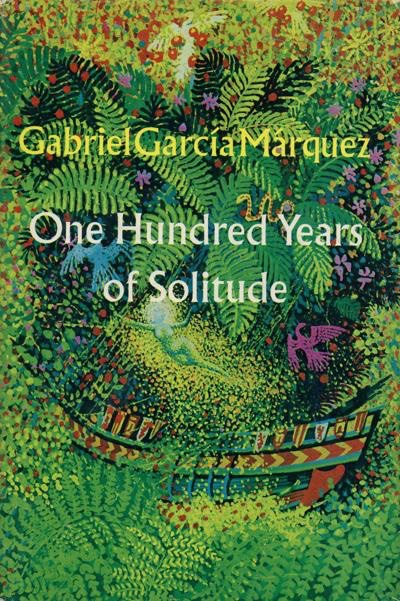
Even Gabriel Garcia Marquez, perhaps somewhat disingenuously, claimed that all the impossible elements of One Hundred Years of Solitude were true. His memoir, Living to Tell the Tale, reads like a revelation, and it makes all that seemed strange in his novel strangely normal—at least for that time and place. Of course, Marquez famously recounts the genesis of that novel—he was headed away on vacation with his family when he realized that the voice of the book was the voice of his grandmother telling incredible stories in the most matter-of-fact voice. He turned the car around and started the work that would define him as a writer. His grandmother was, in a way, his muse.

Why do writers have muses—things, people, animals—outside of themselves to give their work a nearly mystical, almost divine impetus? The writer faces inward and outward tidal forces. A writer works the tension between the inner voice—the thing that writes—and the outer world—what she or he writes about. Writers attempt to portray the outer world, even if it is a fantastic and impossible world, truthfully, crafting a vivid continuous dream in words, crafting it with the inner voice.

Of course, what a writer makes is not the world: it is an approximation, a copy, a simulacrum, an aspiring reality that with a combination of skill and luck convinces the reader. Or hoodwinks. I can never tell. Perhaps enchants. The writer makes a world, or something like a world, and populates it with minds and bodies, cities and mountains, oceans and sea monsters. Even if all these elements resemble something found in the real world—the world of the reader—each part comes from within the writer.

This act of creation is nearly divine. The writer is the maker of worlds. Even when Dickens charts London’s streets—we can locate Scrooge’s counting house and guess, fairly accurately, where his lonely lodgings were—they are shoved two inches to the left of the world we know. This London is not London. By creating a new world, the writer seeks to emulate the world that is, but also to replace it. For the time the reader enters the dream, it is a world that could be, not a world that is, and the dream reveals something particular, something full of twists and turns and complications.

While the writer uncovers the words that capture this world, she or he enters the world, and if the writer believes the words—and she must! he must!—then the inner world threatens to obliterate the outer one. After all, there is something about that outer world that the writer seeks to correct. The ghosts visit and Scrooge reforms—is literally made into someone new. This is the world that should be—where a miserly and selfish investor can become “as good a friend, as good a master, and as good a man, as the good old city knew, or any other good old city, town, or borough, in the good old world.”

The writer sees what could be, like Cassandra, the unheeded prophet of myth. Some writers simply disgorge the terrible truth of what is, like an oracle who disdains both irony and hope. There is no redemption, just inexorable weight—think of the novels of Stephen Crane, or Gustave Flaubert. Their worlds may be imagined, but the imagined reality is cautionary: there is no escaping this gravity. Let me pause to say that dystopian fiction while cautionary, by making the possible reality so obviously awful, opens a kind of door to redemption: all this could be avoided. The realist, on the other hand, sees no way around the unbearable truth.

Either writer—redemptive or admonishing—seeks some anchor outside the work. By locating the inner voice in some external force, a muse, whether divine or closer at hand, the writer can dissociate from that other world. It isn’t in me! It comes from Erato, or my lover, or my cat, or the messages on the television. The muse is a hedge against being swallowed by that inner world. Madness is a double edged sword, and there is divine madness in writing. “Much madness is divinest Sense,” Emily Dickinson begins her poem. The muse keeps the madness at a distance.

I am not suggesting that writers are mad—that trope has little interest or value to me. Writers bear the weight of vision, and seek ways to allay that weight. Some retreat from the world—the noisiness of life interrupts the vision that animates their existence. Some bound into the world—seeking febrile connections to the world, and allowing all those connections to illuminate their visions. Some stop writing, and I believe that even then they suffer. I know so. Vision is persistent and obstinate.

Sing, sing, or tell. We seek a trick, a magic act, inspiration to crack through the hard shell, and once again, create and fly. A muse, or otherwise, a simple spell of words to open the way.

Heeding the Call

Some of my students are aghast at the idea of reading a book a second time, let alone a third or forth, or fifteenth time. The life of a teacher means revisiting books again and again. They become habits. The past dozen years brought steady stops in S.E. Hinton’s The Outsiders and Harper Lee’s To Kill a Mockingbird, Homer’s Odyssey, and maybe Shakespeare’s Macbeth. All became exceedingly familiar territory—terra too cognito—and I welcomed the changes that a change of job and change of curriculum brought this year. I taught half a dozen book I had not read in years. The freshness helped revive my vision.

Of course, repetition is the backbone of study. There isn’t a piece, whether film, book, or painting, that I have not poured over. And over. Some works hold up to repeated visits—this is especially of true of paintings and sculptures. I have sat in front of some paintings for hours, and then gone back a year later to do more. The ability to give concentrated attention to something is a rare quality. And yet, I find myself loosing the fire for return visits and viewings, even for old favorites. How many times can I return to Hamlet, or It’s a Wonderful Life, or Wings of Desire? I know there are things I have not seen, and they call to me.

With spring, my attention is pulled back to baseball, and a group of friends with whom I have played rotisserie baseball for nearly thirty years. I have risen at odd hours when the season began in Japan, as it did again this season. I did not wake to watch early in the morning, but acknowledged the game at arm’s length. I almost did not play our little game this season, almost tired of keeping track of scores and statistics. 162 games and fifteen teams works out to nearly 2500 events to be aware of in some nagging fashion. Enough already.

How much has repetition and routine play a part in life? Too much. At times it seemed that I flew on autopilot, barely aware of the ground beneath me or the time that slipped past, never to return. Sometimes the routine is good—I don’t give more than passing thought to breakfast and lunch when I am busy. I eat the same thing, more or less, day after day. Perhaps my life would be better if I added variations here, but I have had other pressing concerns, like a Stephen Greenblatt essay about Hamlet. There are ways to keep the standards fresh. Still, there must be more.

I changed large parts of my life this past year—there were many reasons, but one was to interrupt the flow that had become too familiar, too easy. I wanted to drive up to a different door—my door. It did not have to be more beautiful—and it wasn’t—it just had to be different. My work as a teacher, although familiar enough, had to take me to different books an different students. And I needed to extricate myself from a years long creative drought. I needed to write to be alive.

This past December, I traveled to a new place, London, to which I had meant to travel almost thirty years ago. I traveled after I did a series of new things, each one satisfying, but each fueling a desire for more. Almost everything that has been part of the solid ritual of my daily routine tastes bland. I don’t hanker for extremes—a solo sailing venture around the world, or an ascent up some foreboding mountain, or a year in a seraglio—I yearn to encounter something as if for the first time. I wish to be a beginner again, with a clean slate ahead of me.

It will not be. There is much that I cannot jettison (Overboard! Overboard!), and some of which has been central to my life. But to bring my daughter along for the ride. To carry my brave and loving heart into boundless possibility. To write without care for sharp tongued critique. To go, and keep going.

I recognize that when I felt at my best, I was a student, learning, reading, discovering with a vigor that few matched. Right now my writing carries me vigorously to some new place—an undiscovered country that is beyond death—the little death of stagnation and routine, the larger death of a withered soul. I need to find a way to return this more adventurous, more daring, more profound sense of discovery to the rest of my life, to every aspect of my life. To become a masterful student again. Even while I wear the mantle of expert, I am an expert explorer. It is time to honor that. And go.

Perhaps my writing will be enough to answer that call during the long school year. My work feels, for the first time in longer than I care to admit, durable and ecstatic. However, I cannot let anything—or anyone, even myself—keep me from discovery. There must be time for new thoughts, new places, and a new world that will animate my work and revive my old heart. Here—there, and everywhere—I go.

The Weight of Words

The thing about writing that some people will never understand is that for the writer, it is not cerebral. Writing is physical. I feel exhausted, physically spent, after writing. Not exactly the same as after a work out, or after a night of intimacy, but I will push myself until my body shakes. I stop when I am done, when I have hit a physical limit. I do not believe that people who do not write, seriously write, understand this.

I’m not speaking out of my hat on this. I know about physical limits and I have tested mine. When I was younger, I swam seven hours a day (over three separate workouts). When I was older, I took the helm and held it until for days until storms had passed, even when I was seasick and retching over the stern, even when I had a broken rib. I am aware of myself as a physical being. I know where my limits are, and how to push up to and extend them.

Part of the physicality of writing comes from the sound. When I write, each word resonates. It is like being inside a drum, or suspended in the bell of a trombone. My mind is noisy when I write—not scattered, but genuinely full of noise. And like a conductor, my arms are keeping all the sounds organized, on time, in concert.

Writing calls a world into being. There are no phantoms, no shadows. Each image, every idea, is made real, is pulled from some grey other world into this one. Some ideas and images do not come easily, but must be coaxed, yanked, or held gently—each needs to be evoked and tended in its own particular way—the same way each child needs just this much attention, just this much encouragement. But when they come, what joy.

Sometimes, I have to stop, slow my heart, and wait. I can feel the words begin to come along the inside of my arms, deep in my thighs, in my chest. They shorten my breath and turn my feet unusually cold, almost the only time I feel an actual chill—I am a warm man.

And, well do I know how I become a better writer when I move—when I take long walks, or spend a few thousand yards in the pool, or push my heart rate above 180 beats per minute. Because the writing is physical, and the words have a weight, beyond the blinking cursor on the screen.

Back to the Forge: Learning from Portrait of the Artist as a Young Man

I revisit texts—novels, stories, plays, and poems—with joy. They stand as mileposts, as reminders of the paths I have walked. I have not always enjoyed this journey, but it has been my journey. No one else has walked this path. I have never wanted it to end, even when the trails of my imagination have become untended and overrun with weeds, when it seemed too difficult a task to return to those paths, to follow where they led, to cut new ways into the wilderness.

The mileposts that speak loudest to me are those that recall not simply the distance but the method of travel. How many times have I dipped into Whitman to find a way I thought I had lost? Perhaps not enough. Or the more diminutive Dickinson, who reminds me of the power of possibility? I re-encounter Prospero every few years, not yet ready to cast my books of power into watery graves.

The first time I read Joyce’s Portrait of the Artist as a Young Man, I was 20, a junior in college. I read it in one furious sitting, rushing as was the case in undergraduate school. The book shot through me—the sermons in the third chapter frightened me, and the ending befuddled me.  I had not written since the rhyming verse I attempted in high school. It would be a year before I started to cobble together my own stories.

I encountered it again when I was 28, and in my first year of graduate school. I wrote every day and was just learning to read by making connections—or rather, by freeing my mind to read as expansively as possible. I did not see a mirror in Stephen Dedalus, not yet, but I saw how Joyce was beginning to challenge the reader, and followed his challenge into Ulysses, and peered obliquely at Finnegan’s Wake. Reading Joyce intoxicated me—all the word play, all the allusions, all the swirl of events. This is how my brain worked, and I felt a kindred spirit at play in Joyce. Perhaps this was too great a burden to lift as a young writer—to think like Joyce, to aspire to something like his work, but I saw the path, at least one path. There were others, and I tested many.

The next time I was 41, and in my first high school teaching job. For whatever reason, my writing had slowed. The difficulties I encountered in my work made me doubt every word I wrote—and even every word I read—which made reading more distant and difficult. I could read a novel as a collection of themes and ideas, which made for fine if programmatic teaching, but the hearts of the works did not beat with the same sense of connection. I felt hollow. I read Portrait as a kind of roadmap for one man’s feelings about Ireland, faith, men, and women. I nodded toward his art but felt closed off from that part of Stephen’s story. I knew it was there—I sensed it—which made the experience strangely worse. This is what you should be doing, the book chided.

I spent several years away from my life’s work. I wrote here and there—stories for kids, sermons, and—in fits and starts—this blog. I suffered for it, as, I am sure, did those around me. I am not a man who can be what he is not and put on the trappings of happiness. “Fake it until you make it,” may work for some, but I need connection—not simply interpersonal or romantic connection, but to the universe, to some deep unconscious thrum that turns words into flesh and flesh into a play of bright and dark and dense presence. While I started to craft a life that combined the spiritual threads I would need to reconnect me to that seen and unseen world, it wasn’t until I started writing daily that my words found the old (new) purpose. Over the past year, I have kept a daily writing practice that, with very few exceptions, has brought me back.

Now I am 58. I am not young. I have long past the point where Stephen stepped into his work, but my heart bursts, as if newly forged—reforged by my years long effort. I read the book again, and this time I hear the singing—it is for me, and for my students too. I orchestrate a class that includes Portrait, weaving together strands from universes that while shadowy—more to my students than me—move with playful grace. The book sings to me, calls to me, demands my attention, my thought, and my response. Not simply in class, but in my work.  Not just these words, but other words.

I no longer feel called to write like Joyce, or Dickens, or Marquez, or Woolf, or Calvino (though, wouldn’t that be nice). Or, or, or. All the words—from every page, from the labels of soap, from the scraps of memes, to the shifting exchanges of my students call, all the words—insist “forge.” And so, I will, I must. Old father, old mother, old artificers, all of you, “stand me now and ever in good stead.”