In the Smithsonian American Art Museum, John Singer Sargent’s portrait of Elizabeth Winthrop Chanler hangs in a room on the second floor. The room features paintings of men and women from the Gilded Age—the last great flourishing of robber baron capitalism in the United States. Elizabeth Winthrop Chanler is a descendant of Peter Stuyvestant, a member of the Astor family,and became part of “the 400”—the unofficial roster of New York’s finest families.
Sargent painted her while she was in London for her brother’s wedding. She is 26, the eldest daughter, self-possessed—as she needed to be since both of her parents died by the time she was 11. The description on the museum website points to the juxtaposition between her controlled gaze and the turmoil of “[h]er arms, leg-of-mutton sleeves, and the pillows [as they] seem to wrestle with one another.” That’s fair enough. Her gaze, direct and at the viewer, is strident, almost an affront, “You think you see me?” she asks.

Museums are fabulous places, in no small part because of the juxtapositions of things. Across the mall this is made clear by the exhibit of Charles Lang Freer’s ideas about exhibiting like objects that were made hundreds if not thousands of years apart. Here at SAAM, the exhibitors have put the portrait of Elizabeth Winthrop Chanler in a place where her gaze extends out into and across the hall. Standing across the hall, one can still sense her stridency.
What’s in the room across the hall? Undine, Illusions, Spring Dance, An Eclogue, The White Parasol, and Woman with Red Hair.
None of the women depicted in these works stares fiercely at the viewer. They either stare off to the right or left, or are engaged in a closed unit—with other women, or in the case of “Illusions,” a child or putto. Several are naked, or draped to reveal their sensual forms. Or, as the titles suggest, are to be known for the attributes (hair, parasol). The women her are used as subject matter (“The White Parasol”) or at the service of allegory (“Illusions,” “The Eclogue”).

I cannot be certain what Elizabeth Winthrop Chanler felt about art and female representations. That she was part of a world that valued culture (her brother, Robert Wilson Chanler was a painter) is fairly certain. By 1893, sitting for a portrait by Sargent would not have been an inconsiderable achievement. But in this museum—in every museum—are countless works that transform the sitter into something at the service of the artist (who is often working at the service of another). She must have known that.
Sargent captures her singular defiance. She may be beautiful. She may be 26 (and years yet from marriage). She may be wealthy—or wealthy enough, say her rings and her brooch. She is not too young, not too self-aware as to hold our gaze with hers. Sargent said she had “the face of the Madonna and the eyes of a child,” but his painting reveals a fire that exceeds anything childish. She is determined.
“Match me,” she tells us. “I will not go quietly.”
I return to the SAAM—or the hall National Gallery, or the Freer and Sackler Galleries—because getting caught in the web of juxtapositions helps untangle me from whatever I am stuck in from the rest of the week. The juxtapositions reinvigorate me. Roethke writes in “The Waking,” “This shaking keeps me steady.” Do they contradict themselves? I hope so. I count on it.
How are the juxtapositions I find here, in these places and spaces, different from those in the world? There are a web of contradictions waiting around every corner—cocksure hypocrisies and beguiling changes of mind. Why do I need more? What’s the point of contradiction contained in or by art?
There is a difference. I am drawn to a world of things and ideas that acknowledge the diversity, that are not afraid to make contradiction and juxtaposition a large part of the message. Yes, just as there are people who insist on “I know the truth”—and then brook no contradiction—there are works that proclaim their own monolithic messages—“Look on ye mighty and despair.”
And yet like a cathedral, or like a mountain, a canyon, or an act of genuine kindness, they can awaken a sense of awe, and, if you are open to the experience, that sense of awe blasts away preconceptions. And unlike things found in nature—as awe-inspiring as those are—works of art made by human hands, perhaps because they were made by human hands, despite the petty hypocrisies and even the pointed cruelties awaken a human sized sense of awe. I can stand before the human sublime and feel the full terror (Jeder Engel ist schrecklich—Every angel is terrible, Rilke), but the terror is a tearing away of everything else, everything I thought I knew, and an opening to what is suddenly possible. I stand and proclaim, “I do not know!”
I feel rather a bit like Scrooge when he declares: “I don’t know what day of the month it is!… I don’t know how long I’ve been among the Spirits. I don’t know anything. I’m quite a baby. Never mind. I don’t care. I’d rather be a baby…” Imagine that, being 18, 25, 38, or 60 and being like a baby, ready to learn everything as if for the first time. To be wise and to be willing to be surprised.
So, I return, and step between Elizabeth Winthrop Chanler and whatever it was she held in her gaze, and I let myself be cast into the room across the hall, and all the rooms across all the halls, and find, once again, some awe and uncertainty. I can match that.

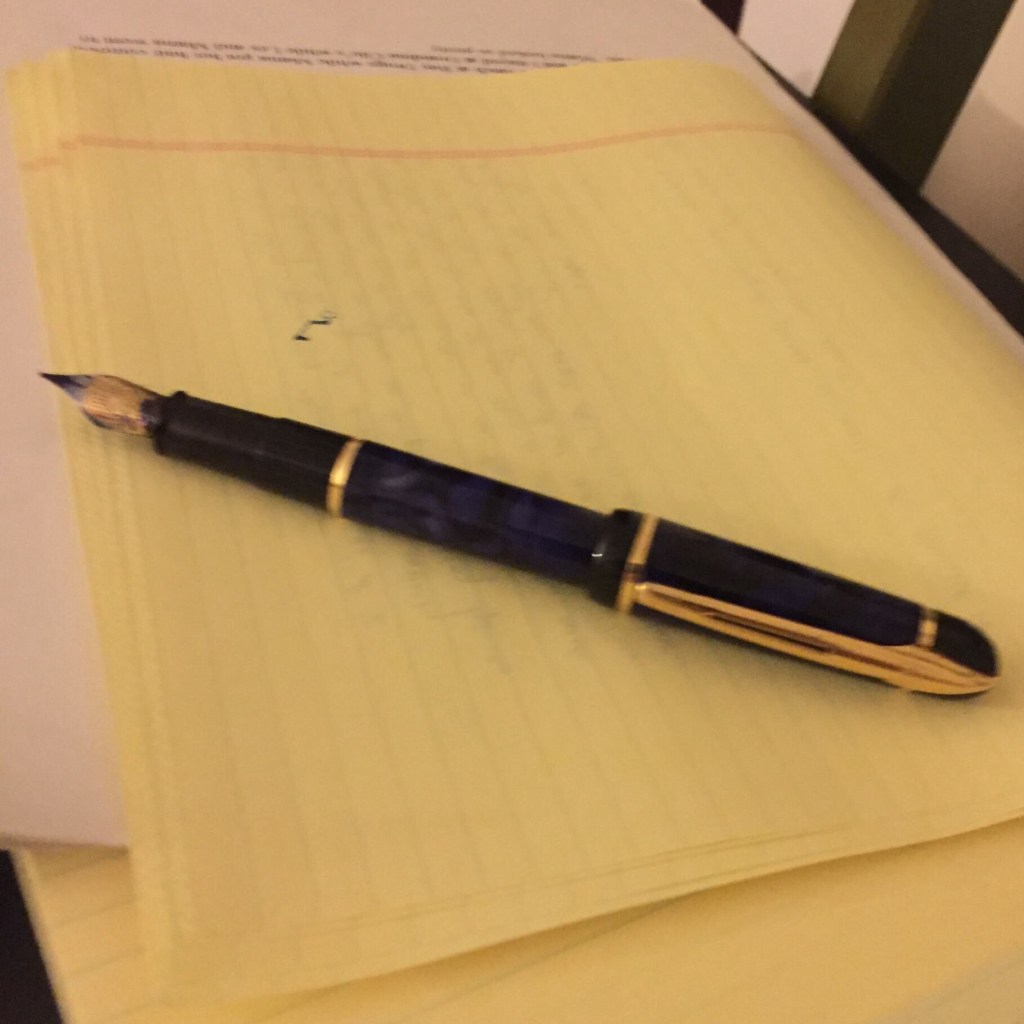


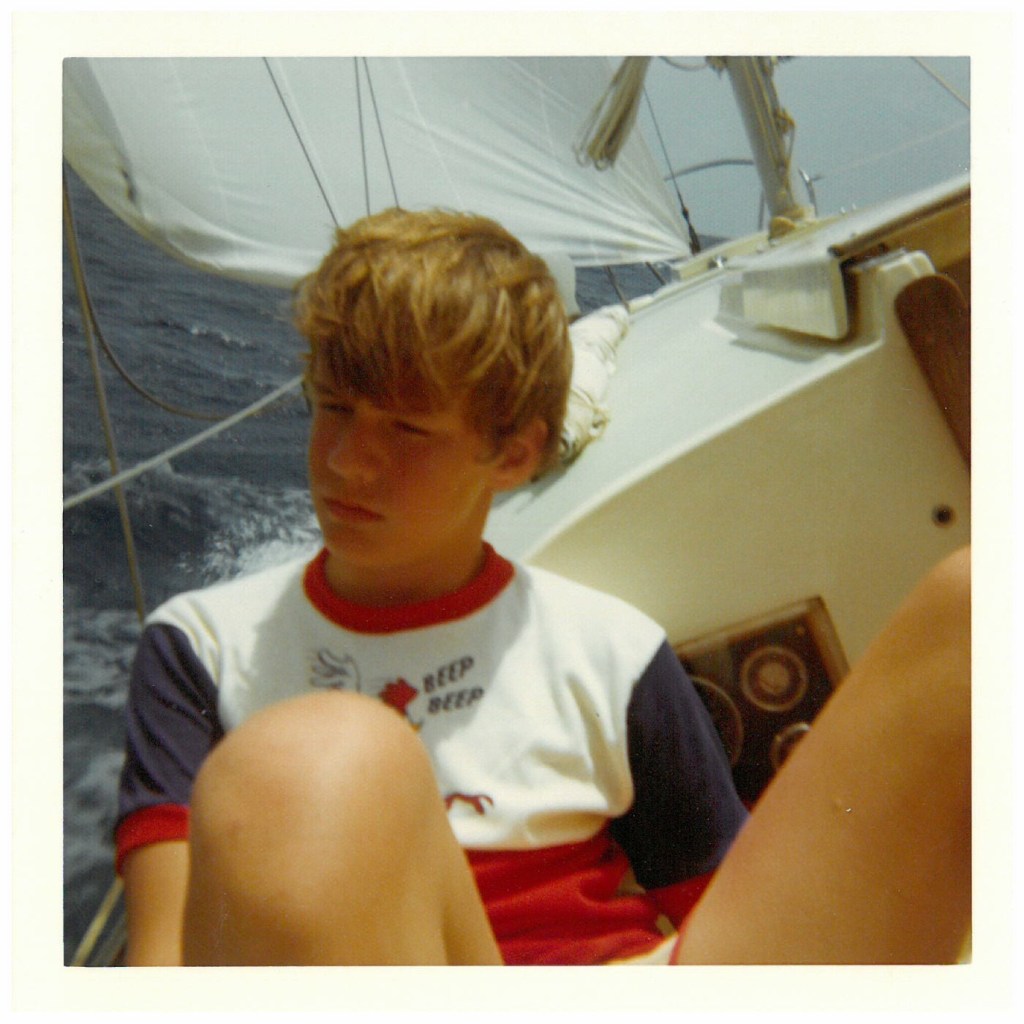


 Viruses are the prototype for the “lilies of the field: … they toil not, neither do they spin.” How they may be arrayed is entirely in the eye of the beholder. The virus of current interest wears a crown—or presents something crown-like on its exterior. It’s almost too satisfying to try and picture it, or to quibble over which depiction is more accurate.
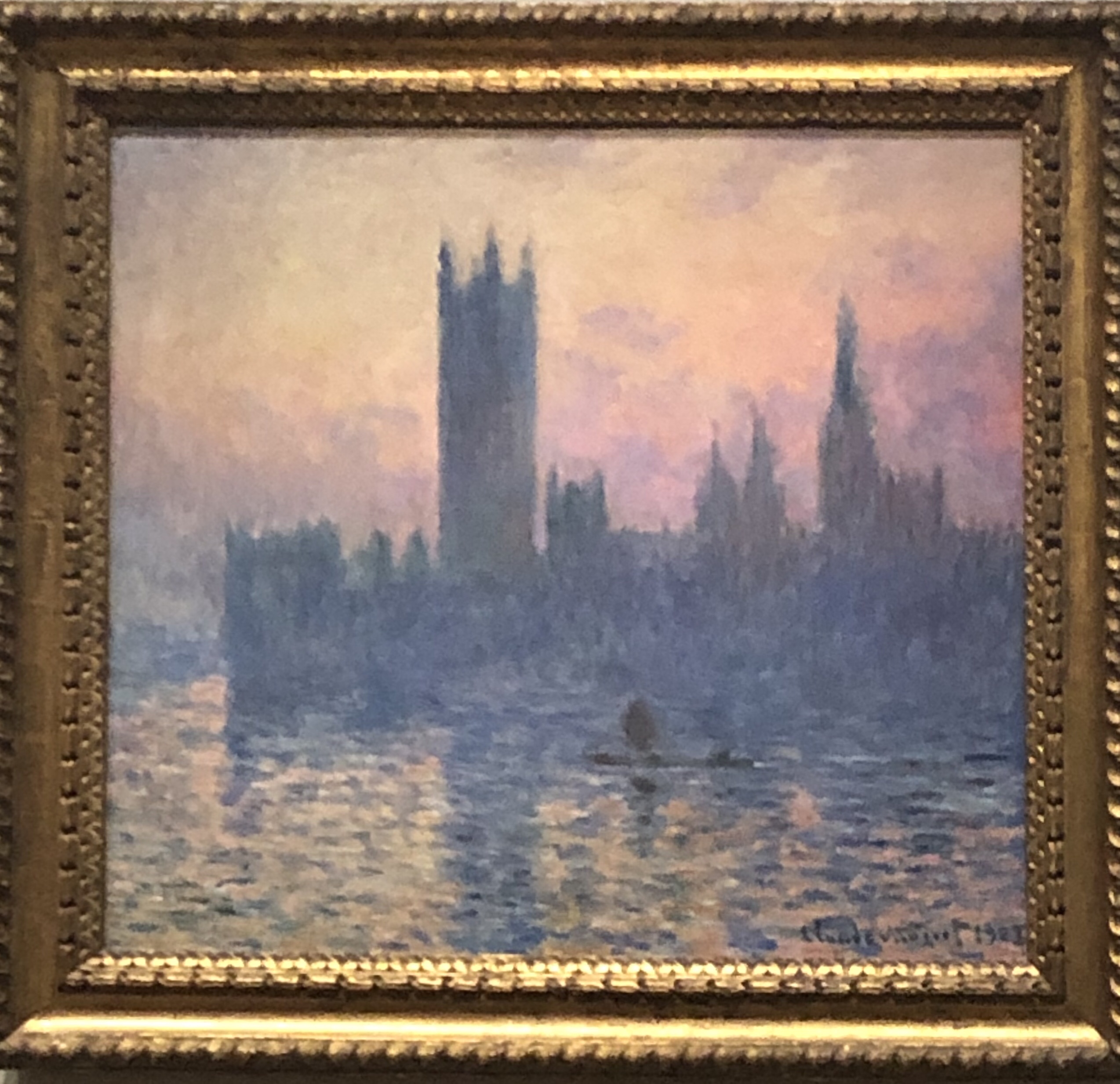 It has been a year and a few months since I was in London. I’m thinking about London while I sit and study Monet’s “Houses of Parliament, Sunset” at the National Gallery of Art. The memory of looking across the Thames at that building, with Big Ben swathed in the latticework of repair, has faded only a little. The memories of walking the streets of the original square mile and beyond remain startlingly vivid. I used them to paint scenes when the characters in my novel walked through London. The memories of the places and the memories of the feelings.
 When I was last in London, I was taking steps into a world where I knew I could live, where I had longed to live. Just like in the dream, writing—flight—was not foreign to me, but something I had traded in for a more certain, more directed existence. While “You are…You should” can feel like shackles, flying—writing—is formless and uncertain. Anywhere is possible. Everywhere is almost a mandate. Just like in the dream, I had written before—had flown—and had lived closer to the limits of my existence. But I had to leave my self-imposed limits. I had to accept that I might fall—and fail—but just as I accepted that in my dream—soaring up the side of a steel and glass edifice, wondering, “What if I forget? What if I fall?—I thought, even as the thrill of fear invigorated me, “You are flying now. Even if you fall, you will remember as you fall, and fly again. Keep flying.”
 Two women look at the Monet—taking seat in the National Gallery beside me. They think it is beautiful, but claim, “It doesn’t look like that.” Of course, the Houses of Parliament look like that, as does the river Thames, as does the sunset. “We didn’t see it,” they claim, “We were tourists, doing touristy things, like thinking about where to have dinner.” I did not think about dinner when I was in London. As much as I love dinner, even food became a secondary thought while I was in London. Even the pubs and ales became little more than way-stations along the bigger task—the journey, the seeing, the walking, and the flying. And the writing.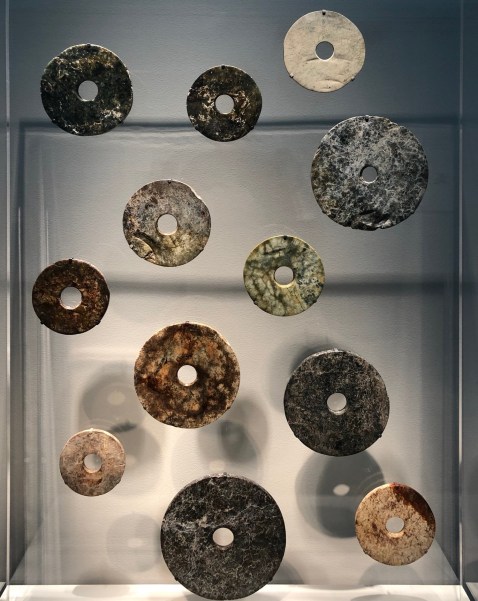
 In the other corner of the Freer Gallery, an exhibit of Hokusai’s paintings and illustrations includes quotations from the artist about what he intended—not just in the specific works, but as an artist. He wrote about discovering himself as an artist late in life. He was already an artist, but he claims to come into his own in his 50s and thought that he might attain his most complete vision if he lived to 110. He died at 90. His work is sweeping and intimate—monumental nature and quiet personal moments—fantastic and humorous—heroes wrestling demons and uproarious coworkers. Whatever else he meant to last in his work—why that hero wrestled that demon (as if one could easily answer such a question)?—he meant it to last. He aspired to capture a vision that would last long after he died.
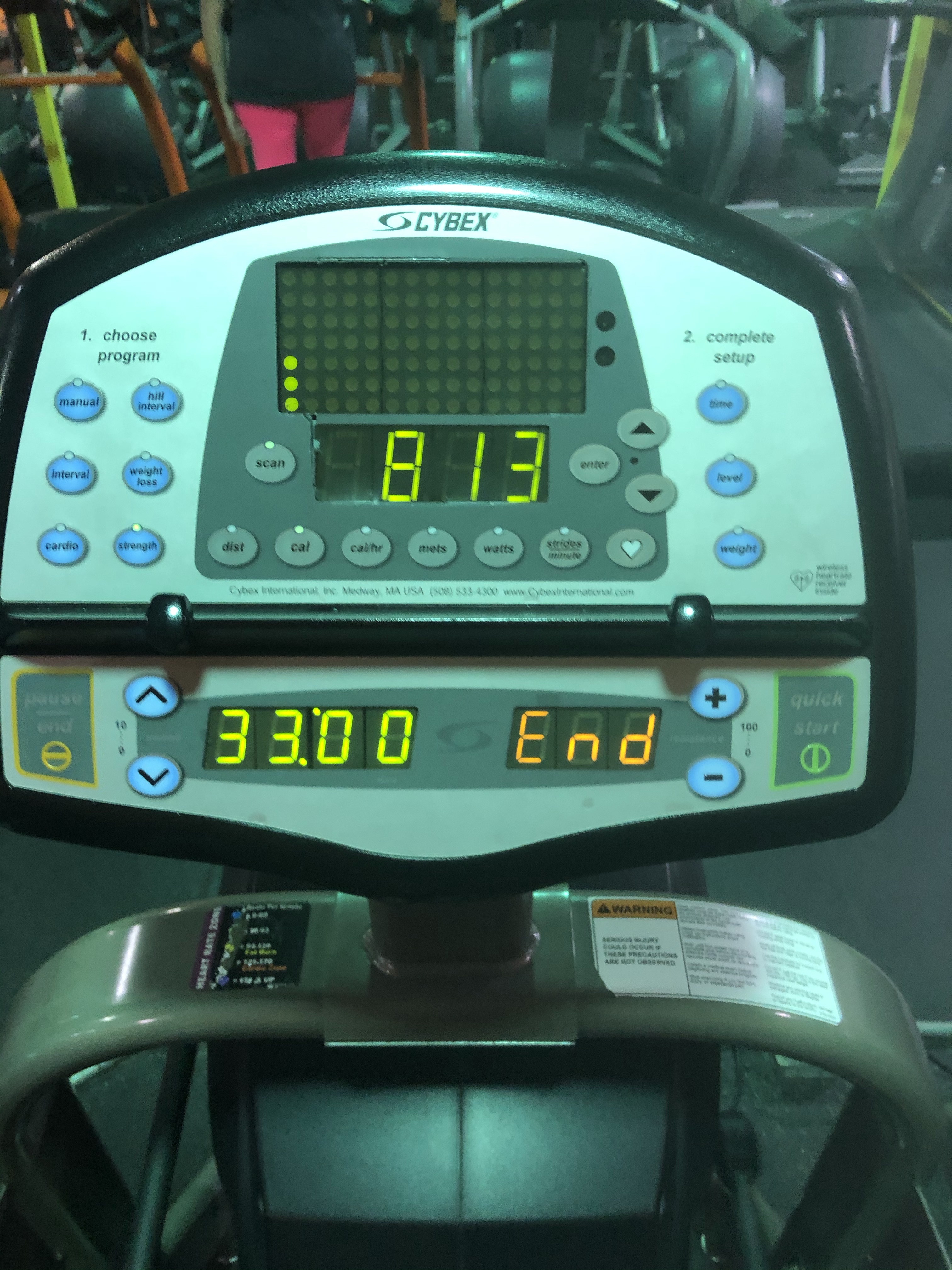 I start paying attention after 17 minutes or so — the meter on the elliptical estimates that I am burning 24.3 calories every minute. I am about halfway through the current “run,” and I will burn through 720 calories in 30 minutes and well over 800 when I include the five minutes of cool-down time that the machine grants me at the end of the workout. I get pissed because the timer starts as soon as I start moving my feet, and the first 15 seconds are “slow.” I make up for it. After a five minute break, I jump on another machine that allows me to take longer strides, and run for 12 minutes, aiming for 7-minute miles. It’s a workout.
 Just over a year ago, I went to the LA Bar in Arlington and did karaoke. It was New Year’s Eve, and I had just come from a fairly routine party, where we had counted down the end of the old year and beginning of the new. It wasn’t enough. And so, away I went with my date, and we signed up to sing the Talking Heads’
