

Calling the Muse

Sing in me muse, and through me tell the story…

So began the first translation, by Robert Fitzgerald, of The Odyssey that I read. Later, I taught another translation, by Robert Fagles, that began:

Sing to me of the man, Muse, the man of twists and turns…

More recently, Emily Wilson offered this:

Tell me about a complicated man,/ Muse…

No matter the translation or framing of the tale and Odysseus, the poet turns to the muse to provide the story and the song. It seems like a quaint notion. These days we mine our lives for the sources of stories.
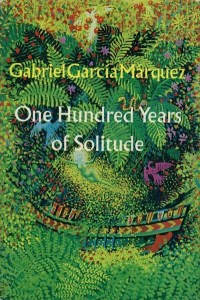
Even Gabriel Garcia Marquez, perhaps somewhat disingenuously, claimed that all the impossible elements of One Hundred Years of Solitude were true. His memoir, Living to Tell the Tale, reads like a revelation, and it makes all that seemed strange in his novel strangely normal—at least for that time and place. Of course, Marquez famously recounts the genesis of that novel—he was headed away on vacation with his family when he realized that the voice of the book was the voice of his grandmother telling incredible stories in the most matter-of-fact voice. He turned the car around and started the work that would define him as a writer. His grandmother was, in a way, his muse.

Why do writers have muses—things, people, animals—outside of themselves to give their work a nearly mystical, almost divine impetus? The writer faces inward and outward tidal forces. A writer works the tension between the inner voice—the thing that writes—and the outer world—what she or he writes about. Writers attempt to portray the outer world, even if it is a fantastic and impossible world, truthfully, crafting a vivid continuous dream in words, crafting it with the inner voice.

Of course, what a writer makes is not the world: it is an approximation, a copy, a simulacrum, an aspiring reality that with a combination of skill and luck convinces the reader. Or hoodwinks. I can never tell. Perhaps enchants. The writer makes a world, or something like a world, and populates it with minds and bodies, cities and mountains, oceans and sea monsters. Even if all these elements resemble something found in the real world—the world of the reader—each part comes from within the writer.

This act of creation is nearly divine. The writer is the maker of worlds. Even when Dickens charts London’s streets—we can locate Scrooge’s counting house and guess, fairly accurately, where his lonely lodgings were—they are shoved two inches to the left of the world we know. This London is not London. By creating a new world, the writer seeks to emulate the world that is, but also to replace it. For the time the reader enters the dream, it is a world that could be, not a world that is, and the dream reveals something particular, something full of twists and turns and complications.
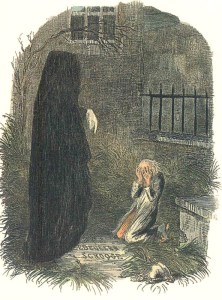
While the writer uncovers the words that capture this world, she or he enters the world, and if the writer believes the words—and she must! he must!—then the inner world threatens to obliterate the outer one. After all, there is something about that outer world that the writer seeks to correct. The ghosts visit and Scrooge reforms—is literally made into someone new. This is the world that should be—where a miserly and selfish investor can become “as good a friend, as good a master, and as good a man, as the good old city knew, or any other good old city, town, or borough, in the good old world.”

The writer sees what could be, like Cassandra, the unheeded prophet of myth. Some writers simply disgorge the terrible truth of what is, like an oracle who disdains both irony and hope. There is no redemption, just inexorable weight—think of the novels of Stephen Crane, or Gustave Flaubert. Their worlds may be imagined, but the imagined reality is cautionary: there is no escaping this gravity. Let me pause to say that dystopian fiction while cautionary, by making the possible reality so obviously awful, opens a kind of door to redemption: all this could be avoided. The realist, on the other hand, sees no way around the unbearable truth.

Either writer—redemptive or admonishing—seeks some anchor outside the work. By locating the inner voice in some external force, a muse, whether divine or closer at hand, the writer can dissociate from that other world. It isn’t in me! It comes from Erato, or my lover, or my cat, or the messages on the television. The muse is a hedge against being swallowed by that inner world. Madness is a double edged sword, and there is divine madness in writing. “Much madness is divinest Sense,” Emily Dickinson begins her poem. The muse keeps the madness at a distance.

I am not suggesting that writers are mad—that trope has little interest or value to me. Writers bear the weight of vision, and seek ways to allay that weight. Some retreat from the world—the noisiness of life interrupts the vision that animates their existence. Some bound into the world—seeking febrile connections to the world, and allowing all those connections to illuminate their visions. Some stop writing, and I believe that even then they suffer. I know so. Vision is persistent and obstinate.

Sing, sing, or tell. We seek a trick, a magic act, inspiration to crack through the hard shell, and once again, create and fly. A muse, or otherwise, a simple spell of words to open the way.

Repetition, again.

Is it any surprise that repetition plays a significant role in my life? I came of age as an athlete knocking out sets of 30 200 yard freestyle swims. They were yardage eaters—a quick and dirty way to lay in 6000 yards of workout and buy time for rest of the yards that the coach had in mind. We finished them at intervals of 2:30, 2:20, and 2:10, which left 50 minutes for the rest of the practice—an easy pace for the two to four thousand yards to come. Pushing off the wall every two minutes and thirty seconds, there was time for conversation between swims. Leaving at every two minutes and ten seconds put a crimp on anything other than brief exchanges: “This sucks,” “Stop hitting my feet,” “I’m hungry.”
We did this day after day.

With my head down in the water, my eyes trained on the feet of the swimmer who left 5 seconds before me—chasing, always chasing. In high school I was far from the fastest swimmer on the team. I made myself a better swimmer. One summer I traveled to Iowa and a training regimen that increased the junior varsity’s load of 3500 yards in an afternoon’s hour long practice, to 22,000-28,000 yards spread over three practices every day. I lost whatever baby fat—and whatever other fat—that my 15 year old frame carried, crashed my immune system—catching a nasty staph infection that laid me up for days after I returned home—and sliced ten seconds off my hundred breaststroke time. No mean feat. I made the varsity team. Repetition was the way.

Years later, when I was a graduate student in English, I read books two and three times. I would attack most of the books for my classes in two weeks before the beginning of the semester, then again as we read them as a class. The initial reading with facile, getting the joys and traps of plot out of the way, allowing the words—and all the ideas in the words—to come to the fore when I read along with the class. If I wrote about a particular book, I read it again, and some passages, dozens of times.

Since I was in school to write, I wrote and rewrote some stories six or seven times. My classmates, colleagues, cow-writers, and teachers, shared the demanding mantra: “All writing is rewriting.” And we practiced what we preached.

As a teacher, I sometimes warn my students that this—and the years to come in college—are the best years, because of the preponderance of the new. Almost everything they learn is, will be, new. Each encounter with something new gives a new opportunity for mastery—another shot at sudden improvement and the giddy transformative moment of adding some unknown idea to the swirl of self.

I warn them because at some point there lives will bend toward repetition. Yes, the repetition may lead to a finer, hard-earned mastery. I think of all the miles that I put into the pool, and how it shaped and shapes my body (still). I think of the ways that great works give up new meanings after repeated shared readings, and how I became a more aware reader. And while I may not rewrite as much as I once did—obsessively, compulsively, debilitatingly—I know that writing begets writing—good, bad, or otherwise. The thing is to write, over and over, every day, without fear, even without hope. The words will bear you up. Push off. Go again.

Well do I know that repetition can suck the joy from the flower of life—making no honey, leaving all empty, colorless, scentless. I do not how how I managed all those laps in the pool, with nothing but the dull roar of water passing my ears, the steady ache and agony of my muscles, and the songs that played in my mind, setting an unimaginable pace. There was joy at the end of each 200 yards—“Good time!”—and these little victories provided enough of a goad to return to repeat success. Who determined what was a “good” time? I did, in concert with the clock—the cold but consistent arbiter of performance. Time, as opposed to opinion, never wavered. The clock was not making a comment because it had a good or a bad day. Go again.

I hope that my students will discover some place where they can demonstrate mastery, and change the long monotonous drone of repetition into a glorious repeated success. That they will find a way to insist, “Again, again,” holding on to that inner childlike joy. That in spite of how hard their task may be, that their arbiters are, if not cold, consistent and consistently challenging. I hope all this for myself as well.

The sweeping red hand of the clock on the wall flies past the black hashmarks: two minutes and one second; two minutes and two seconds, two minutes and three seconds. I breathe deep, and get ready. Here I go. Again.

Heeding the Call

Some of my students are aghast at the idea of reading a book a second time, let alone a third or forth, or fifteenth time. The life of a teacher means revisiting books again and again. They become habits. The past dozen years brought steady stops in S.E. Hinton’s The Outsiders and Harper Lee’s To Kill a Mockingbird, Homer’s Odyssey, and maybe Shakespeare’s Macbeth. All became exceedingly familiar territory—terra too cognito—and I welcomed the changes that a change of job and change of curriculum brought this year. I taught half a dozen book I had not read in years. The freshness helped revive my vision.

Of course, repetition is the backbone of study. There isn’t a piece, whether film, book, or painting, that I have not poured over. And over. Some works hold up to repeated visits—this is especially of true of paintings and sculptures. I have sat in front of some paintings for hours, and then gone back a year later to do more. The ability to give concentrated attention to something is a rare quality. And yet, I find myself loosing the fire for return visits and viewings, even for old favorites. How many times can I return to Hamlet, or It’s a Wonderful Life, or Wings of Desire? I know there are things I have not seen, and they call to me.

With spring, my attention is pulled back to baseball, and a group of friends with whom I have played rotisserie baseball for nearly thirty years. I have risen at odd hours when the season began in Japan, as it did again this season. I did not wake to watch early in the morning, but acknowledged the game at arm’s length. I almost did not play our little game this season, almost tired of keeping track of scores and statistics. 162 games and fifteen teams works out to nearly 2500 events to be aware of in some nagging fashion. Enough already.

How much has repetition and routine play a part in life? Too much. At times it seemed that I flew on autopilot, barely aware of the ground beneath me or the time that slipped past, never to return. Sometimes the routine is good—I don’t give more than passing thought to breakfast and lunch when I am busy. I eat the same thing, more or less, day after day. Perhaps my life would be better if I added variations here, but I have had other pressing concerns, like a Stephen Greenblatt essay about Hamlet. There are ways to keep the standards fresh. Still, there must be more.

I changed large parts of my life this past year—there were many reasons, but one was to interrupt the flow that had become too familiar, too easy. I wanted to drive up to a different door—my door. It did not have to be more beautiful—and it wasn’t—it just had to be different. My work as a teacher, although familiar enough, had to take me to different books an different students. And I needed to extricate myself from a years long creative drought. I needed to write to be alive.

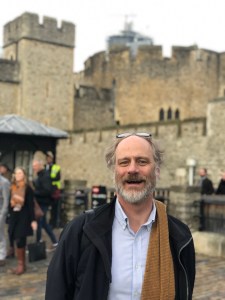
This past December, I traveled to a new place, London, to which I had meant to travel almost thirty years ago. I traveled after I did a series of new things, each one satisfying, but each fueling a desire for more. Almost everything that has been part of the solid ritual of my daily routine tastes bland. I don’t hanker for extremes—a solo sailing venture around the world, or an ascent up some foreboding mountain, or a year in a seraglio—I yearn to encounter something as if for the first time. I wish to be a beginner again, with a clean slate ahead of me.
It will not be. There is much that I cannot jettison (Overboard! Overboard!), and some of which has been central to my life. But to bring my daughter along for the ride. To carry my brave and loving heart into boundless possibility. To write without care for sharp tongued critique. To go, and keep going.

I recognize that when I felt at my best, I was a student, learning, reading, discovering with a vigor that few matched. Right now my writing carries me vigorously to some new place—an undiscovered country that is beyond death—the little death of stagnation and routine, the larger death of a withered soul. I need to find a way to return this more adventurous, more daring, more profound sense of discovery to the rest of my life, to every aspect of my life. To become a masterful student again. Even while I wear the mantle of expert, I am an expert explorer. It is time to honor that. And go.

Perhaps my writing will be enough to answer that call during the long school year. My work feels, for the first time in longer than I care to admit, durable and ecstatic. However, I cannot let anything—or anyone, even myself—keep me from discovery. There must be time for new thoughts, new places, and a new world that will animate my work and revive my old heart. Here—there, and everywhere—I go.

The Weight of Words

The thing about writing that some people will never understand is that for the writer, it is not cerebral. Writing is physical. I feel exhausted, physically spent, after writing. Not exactly the same as after a work out, or after a night of intimacy, but I will push myself until my body shakes. I stop when I am done, when I have hit a physical limit. I do not believe that people who do not write, seriously write, understand this.
I’m not speaking out of my hat on this. I know about physical limits and I have tested mine. When I was younger, I swam seven hours a day (over three separate workouts). When I was older, I took the helm and held it until for days until storms had passed, even when I was seasick and retching over the stern, even when I had a broken rib. I am aware of myself as a physical being. I know where my limits are, and how to push up to and extend them.

Part of the physicality of writing comes from the sound. When I write, each word resonates. It is like being inside a drum, or suspended in the bell of a trombone. My mind is noisy when I write—not scattered, but genuinely full of noise. And like a conductor, my arms are keeping all the sounds organized, on time, in concert.

Writing calls a world into being. There are no phantoms, no shadows. Each image, every idea, is made real, is pulled from some grey other world into this one. Some ideas and images do not come easily, but must be coaxed, yanked, or held gently—each needs to be evoked and tended in its own particular way—the same way each child needs just this much attention, just this much encouragement. But when they come, what joy.

Sometimes, I have to stop, slow my heart, and wait. I can feel the words begin to come along the inside of my arms, deep in my thighs, in my chest. They shorten my breath and turn my feet unusually cold, almost the only time I feel an actual chill—I am a warm man.

And, well do I know how I become a better writer when I move—when I take long walks, or spend a few thousand yards in the pool, or push my heart rate above 180 beats per minute. Because the writing is physical, and the words have a weight, beyond the blinking cursor on the screen.

The Books

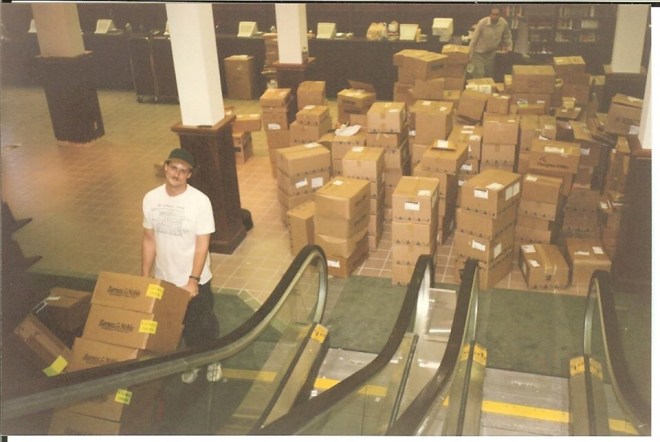
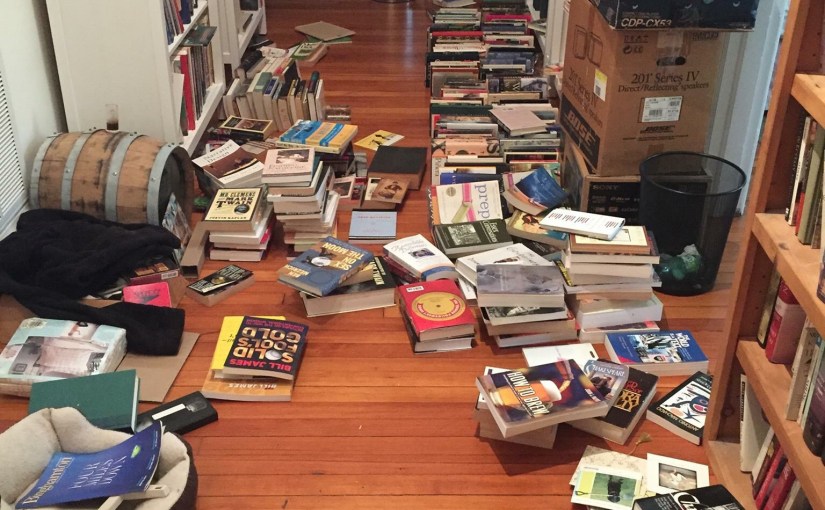
Almost fifteen years ago, I put my books in the attic. They were out, in shelves, but tucked beneath a sloping ceiling and packed behind all manner of family detritus. When my ex-wife and I separated, I moved them into my main living space, where they sang back to me after their—or my—sojourn.  My books matter to me, and I felt their absence. Getting them back onto tall shelves, walking past them every day, reminded me of what I had done, what I had learned, and what I wanted to do with my life and mind.

I have books about writing, books about religion, books about education, history books, philosophy (what we called theory in graduate school), fiction, poetry, books full of art and art history, and even books about sports—mainly baseball. I have a hard cover edition of Dickens published by Chapman and Hall with pages that requires a pocket knife to cut open.  I own a set of Andrew Lang’s color-coded Fairy Tale books.

The books reflect my preoccupations over the past thirty years.  Much of what is on my shelves I first read while I was in graduate school. Some I acquired afterward to keep me in touch with what I spent six years studying. Some comes from undergraduate college—books about gothic art and architecture, an old edition of Joyce’s Portrait of the Artist as a Young Man. There are some newer books that reflect my current interests: a collection of Sumerian mythology, a book about Djinn.

As much as I love my books, as much as they tell a story of my past, as much as they feel like an external manifestation of my mind, I think it may be time to lose them.

How long can one hold onto the past—a past that weighs an actual ton—without moving into the future? Yes, there are some things that I would keep, and this is true of more than my books, but they possess so much gravity. What is the past to me? Of course it is, was, everything. However, the future beckons, and requires a kind of lightness to which things do not lend themselves. Even memorable things.

There are other presences in my life—deep and profound connections. This time last year, I started unraveling the two jobs I had in Norfolk, Virginia. I moved away from those jobs and in the process also moved away from my daughters, who continue to live with their mother in Norfolk. Of course, I separated from and divorced their mother. It may seem inconsequential, but over 30 years ago, I picked a cat off the street, and have had cats ever since. I have never been more than three weeks away from them. This year I considered giving up a long standing fantasy baseball game that I have played for nearly 30 years with friends.

I wonder about what I have given up, but also what I have stayed with over the years. I have been a teacher for over 20 years—including my work as a TA in graduate school, over 25 years. What would it be like to not teach? I wrote for years, and then, if I didn’t stop, I slowed considerably—at what hazard, I cannot guess. I am writing again now, and have been, but can’t help wonder why my work slowed to a trickle.

I wonder would it would be like to be free of obligation and free of the gravity of myself—that ton of books, the closet full of clothes, my job, my family, my cats, even my friends. I wonder what my life would have been like if I had just chased words—the stories that I had declared as my purpose when I went away to and then stayed in graduate school. When I went away to graduate school, I traveled in a single car, with a mattress tied to the roof, and a single cat riding in the passenger seats. What would it be like to travel to what’s next with even less?

I do not regret the life I led, nor the life I lead; regret possesses a gravity greater than all the books own own, and I have no time for that. Not now. Nonetheless, I am aware of another life that exists, not over the horizon, not over the rainbow, but buried deep within me. I don’t know how I have kept it buried for so long, or at what cost—or even at what gain. Still. It is there.

I wonder, and wonder hard, and the wondering stirs something in me, something alive and insistent. What will I carry into the future? What must I carry? And what must I leave?