The people sleep, sleep in the daytime
If they want to, if they want to
Cities, The Talking Heads
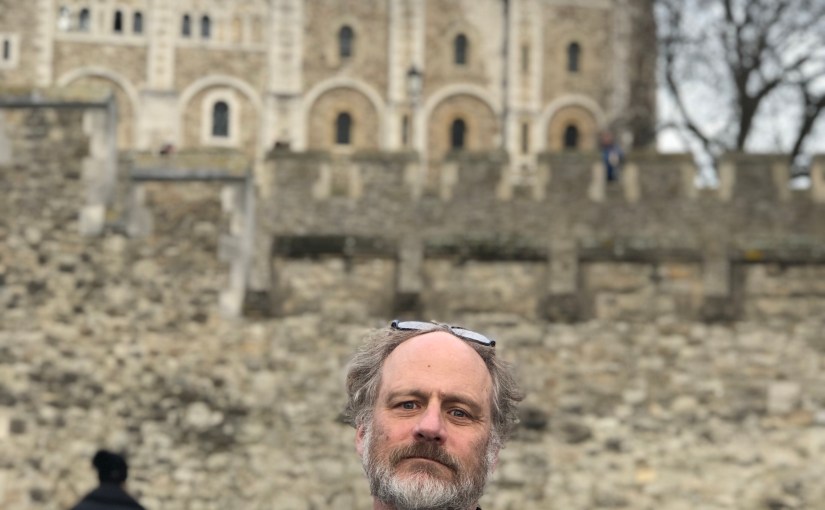
The sun rose at 8:04 am in London on the shortest day of the year. It set at 3:53 pm. A shorter day than Fort Fairfield in northern Maine. Add clouds and rain, and the day seems shorter. Is it any wonder that people on their ways home from work find their way into pubs lit with fireplaces? Our days in London were marginally longer, and after walking through the city each afternoon, we found our way to a pub. The Paternoster, The Old Red Lion, Punch and Judy’s, The Swan, Lady Abercorn’s, The George. Some of these were easy to find, others required a turn down a slender lane. Each was bustling.
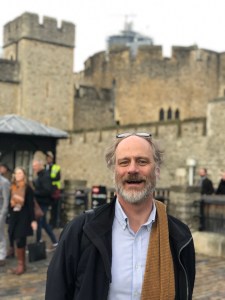
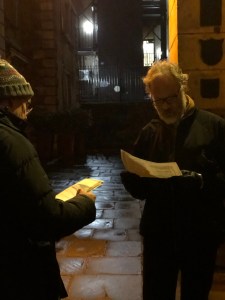 The charm of London is found in its strange alleyways, endlessly curled streets, and tucked away history. If there is a grid, and in some way, there is, it is bent around the past and the ox bow turns of the Thames, and everything attached to it has been attached in a haphazard fashion. For instance, the coagulation of insurance buildings in central London: the gherkin, the cheese-grater, the scalpel, and the inside-out building; defy any sense of a rational aesthetic plan. Or the juxtaposition of the Tower on one side of the Thames and the glass pineapple of the City Hall just across the river.
I have wandered down the narrow canyons of New York City, through low slung neighborhoods in San Francisco, across broad avenues in Chicago, in and out of fish stalls in Seattle. Even my home city, Philadelphia, built as it once was, on squares, in spite of the Schuylkill river turning into the Delaware, and the oddly oblong expanse of Fairmount Park, makes easy sense. Get oriented and go. London seems to double back on itself, and in doing so, has folds and torn edges through which a body can slip out of any regular order.
 And so London’s history is oddly folded into the cityscape as well. A tour through the city—you cannot tour the whole city, or tour it on a bus; you must walk it—folds two thousand years of history, creased around a Roman occupation, a French conquest in 1066, and a fire that destroyed 80% of the city in 1666. And the city is just the square mile that had been walled and gated, but is now open and underlaced with a rail system that carries you quickly to nearly every point beyond the old wall.
The people who live there are folded too. The streets are packed with diverse faces—a variety of eyes and ears and cheeks and chins that make them all different, and so different from the faces in American cities—and sounds. Their voices carry languages from Europe, Africa, and Asia—all of which are easy (and relatively cheap) to get to, even from this island nation. It is as if a map of the world has been folded and brought all these people here. Scarves are the only nearly universal banner, and men tie theirs tightly around their necks. Women walk down streets in shoes ill made for walking—but that is, sadly more universal than naught.
 There is an orderliness to the whole affair. Announcements in the Underground direct people where to walk down hallways and on escalators. Advertisements along the walls of the stations counsel caution with wallets and and advise care with alcohol. “Mind the Gap” is stenciled on the ground where the trains stop, and cheeky announcers corral riders whose fancy Italian made shoes have strayed over the yellow safety line. Cross walks show a green walker when it’s time to cross—around Trafalgar Square the walkers take on a variety of LGBT friendly forms: couples and symbols. Just remember to cross when the green light comes!
In so many ways, walking through London was like walking through my mind–folded and full of associations and reveries. My fellow traveler asked what surprised me most, and I answered, nothing. Of course, the fact of a place like London is a surprise all by itself. Are there more surprises to come, more cities to inhabit, that will fill my mind with visions—or somehow, match my visions? Yes. And, yes.
 History is a story of discontinuous events—events that collide like weather systems or galaxies, having barely understood origins, and even less decipherable records. All the witnesses were destroyed in the collision. What they saw, what they thought, and what they felt—even if they recorded their observations on stone, paper, steel, or silicone, have been destroyed along with them. We are living in the age of delusion, in which we believe in the sanctity of our recorded history—either self-scribbled or captured by another.
 Second, in the musical Hamilton (which was also part of this trip to London), the character of George Washington warns Hamilton that we do not control who writes our stories. He’s telling this to a man who believes in his power to literally write his own story—and to use his words to cement his reality. He can’t—and doesn’t. His wife, Eliza, sends his legacy forward—and Lin Manuel Miranda brings us her legacy. But, as Miranda admits in interviews, even this moment for Hamilton—and therefore, for him as well—is provisional and subject to changing tastes and critical opinion.
 I had always shrugged off the idea of traveling to the Grand Canyon. I was one of those, “what’s the big deal about a big hole in the ground” skeptics. I was wrong. Of course I was wrong. The Grand Canyon is an amazement—and of course, I was properly amazed when I saw it—looking into two billion years of rock will do that, should do that. I realized that what I had held aside was not the geology or the landscape, but the travel. Why had I discounted my ability to be amazed by travel? I had done it all my life. Going, all kinds of going, even if so much of it has been more local—on this continent, in this country—has been part of me all my life.
 I loved airplanes and airports. Departures were invitations to new adventures. When I traveled with my family, I usually sat alone—the hazard or benefit of being an odd numbered group. I took my first plane flight alone when I went to Iowa to swim; I was 15. I traveled by train and bus alone all through my early adult life. I usually traveled to visit friends. However, I also went to cities to simply see them, to look at buildings, and camp in museums—visiting and revisiting works of art that held sway over my imagination.
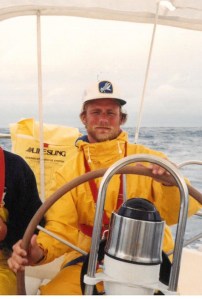 There were trips under sail with my father and brothers. These were tests as well as trips. The ocean makes us foreign to ourselves, our bodies not made to be perpetually wet, and perpetually in motion—shaken and stirred. I have never been anywhere larger than surrounded by sky and ocean, never felt as alive, nor as alone.
 A current meme on Facebook compares what Moms used to say to their kids with what they say now. It is held up as a clarion call to the virtues of yesteryear, when Moms—and their kids—knew what was what. Over and over again, stuff (stuff) like this careens around the internet, in casual banter on news shows, in conversations in my workplaces. Those of us who grew up in the mythical “then” look back with nostalgia, and look at this moment with a jocular disdain. I would like to call “bullshit” on the whole enterprise.
 My mother did what she thought and felt was right. She learned her lessons from her mother and family—and what lessons they were. Some things, she changed. She never leashed us to trees in the front yard. Others were more indelible. I am certain that most of us parent in the same way—sifting through the conscious and unconscious lessons that we received from our parents. What we do, we do almost on a kind of autopilot—in the heat of the moment, dumb memory takes over. Change is hard.
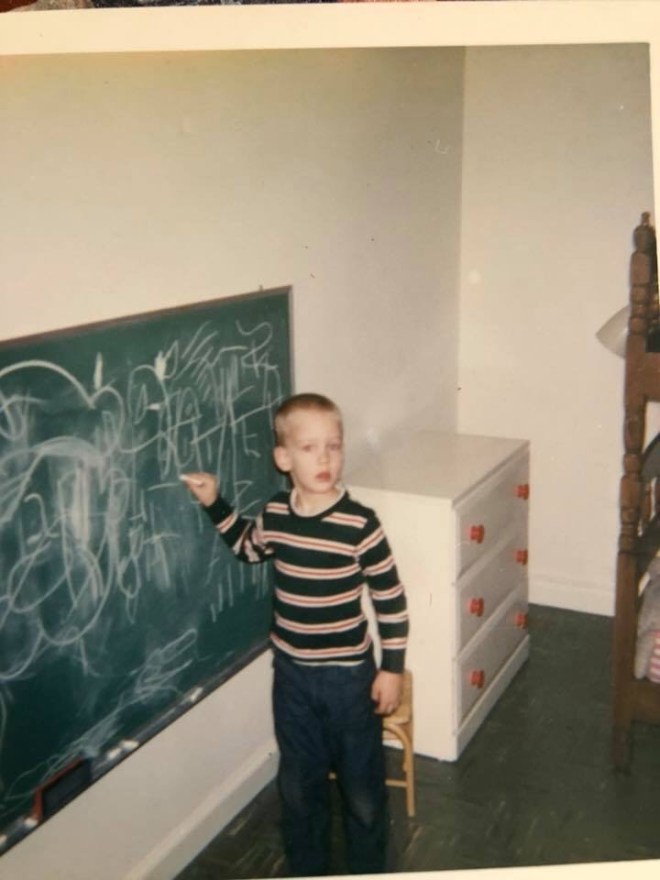 In many ways, I take solace in being surrounded by memories, and there are some that I purposefully mine. The routine of the same lunch—on most days—reminds me of years of similar lunches from the time I was five—earlier—until just last week—and all the lunches in between. I feel comforted by the way those memories permeate my present so easily.
 I have written about the powerful memories associated with places—a rolling set of hills on a road headed north, an intersection with two right turn lanes, a road sign, the curve of a shoreline, a buoy. But, it is everything else as well. All the things. My walls at home are lined with books, and the books speak—not just of what is contained in their pages, but of the times I read them, the places I was, the company that surrounded those moments. And there is more, a gesture, my hand on a doorknob, the sudden turn of my head when I look for something, the way my foot falls on a stair. I am out of myself in a flash, or at least out of this time—even though I know that I am inextricably in it—and another older time surges through me. Even when still, this heartbeat explodes into a thousand, a million other heartbeats, and time collapses.
 And so, beside my own strange face, I also take pleasure in crowds of strange faces, all of whom present unknown avenues, untapped sources of experiences and memories. I know the echoes will come to the strange person I will again be tomorrow.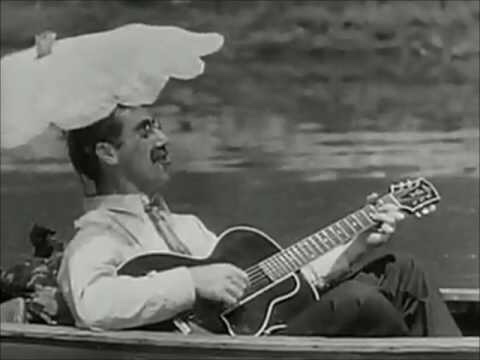
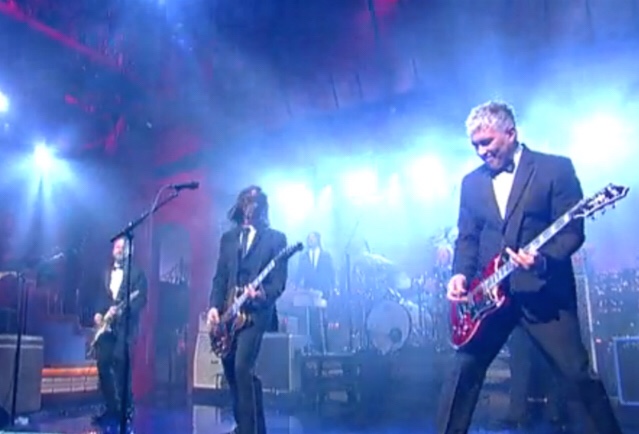 Play it loud.
 I wrote this years and years ago. Later, I sat down on a stone wall in a tony neighborhood in Baltimore to wait for a bus, thinking about nothing other than the weather—it was a late spring, the sky was all but cloudless—when I realized that the stones were swarming with ants. I quickly stood up, and brushed many, too many, off my pants. I knew what I had done. I laughed, and started walking.
 I am unpacking and repacking old boxes. I have no fantasy that I will throw away old essays or my notes from Joyce and Woolf classes. But there are things I threw into boxes as deadlines approached, and now, when I look at them, nothing. I have whole boxes of emotional and intellectual cul de sacs.
