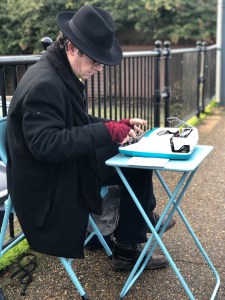
 I began graduate school in the fall of 1988. Writing was still new to me. I had written in high school then in college, but the daily life of writing was only a shadowy presence. I had begun a novel, and tended it during the free time of my six day weeks managing a small Italian restaurant in the Manayunk neighborhood of Philadelphia. Which is to say, that I had written enough to gain admission to a program, but not enough in any real kind of way.
Graduate school was a relief and a release—it was the thing all my friends and customers were hinting at when they asked, “What are you going to do?”—recognizing long before I did that there was something specific that I was going to do.
I had drifted after college. It was as if I wore an anti-gravity suit that kept me from becoming grounded. There were reasons. I had encountered “purpose” as a rationale for selfishness and intentional moral blindness. The latter I found incredibly troubling. I believed in an inherent goodness—found in man or god—in spite of my experiences in the world. And when I wrote, I explored that possibility.
When I arrived at Binghamton, I poured myself into the work, writing with avaricious fervor, and studying gleefully. I learned quickly that a “B” was an “F,” and after one failing grade on an essay, turned to successful outcomes. I earned a scholarship after my first year, and with it, the right to teach, which I welcomed with the zeal of the recently converted. I was hooked.
One of the hooks at Binghamton was the presence of John Gardner, the author of The Art of Fiction and several novels I had not yet read. I had read Grendel when I was much younger, drawn by the monster after my mother had read us some version of Beowulf as our bedtime entertainment. What attracted us, some of us at least, was the myth of John—driven, irascible, generous, and demanding. As often as not, when describing ourselves as writers, we focused on our characters-not the characters in what we wrote, but out own personal strengths and foibles, and how we matched up against this fabled presence. He had been dead for 6 years, but he hung around the program (his ex-wife became my dissertation director).
One of my teachers, I think it was Liz Rosenberg, introduced me to On Becoming a Novelist, in which Gardner laid out some characteristics of the novelist:
Like other kinds of intelligence, the storyteller’s is partly natural, partly trained. It is composed of several qualities, most of which, in normal people, are signs of either immaturity or incivility: wit (a tendency to make irreverent connections); obstinacy and a tendency towards churlishness (a refusal to believe what all sensible people know is true); childishness (an apparent lack of mental focus and serious life purpose, a fondness for daydreaming and telling pointless lies, a lack of proper respect, mischievousness, an unseemly propensity for crying over nothing); a marked tendency toward oral or anal fixation or both (the oral manifested by excessive eating, drinking, smoking, and chattering; the anal by nervous cleanliness and neatness coupled with a weird fascination with dirty jokes); remarkable powers of eidetic recall, or visual memory (a usual feature of early adolescence and mental retardation); a strange admixture of shameless playfulness and embarrassing earnestness, the latter often heightened by irrationally intense feelings for or against religion; patience like a cat’s; a criminal streak of cunning; psychological instability; recklessness, impulsiveness, and improvidence; and finally an inexplicable and incurable addiction to stories, written or oral, bad or good. Not all writers have exactly the same virtues, of course. Occasionally one finds someone who is not abnormally improvident.
We looked inside ourselves to see whether we met the unholy criteria that John threw down—gauntlet-like—for us to match. It became a weird check list. There were dozens of weird checklists that we tested ourselves against: pre-work habits and rituals, kinds of writing implements, time that we wrote. I think that many of us were hoping to awaken a writing practice that could sustain us, and so looked for that one thing, the one trick that would allow the words to tumble out as effortlessly as possible.
Of course, we focused on how damnably hard writing was—and is. The metaphors we used to describe writing—like Virgilio Pinera’s man who decides to eat a mountain, one rocky mouthful after another—emphasized the difficulty, futility, and irreverent commitment. Perhaps the real solution was a correction to our character—some unbridling of our sinful writer manqué natures, and a resurrection into some more saintly (or demonic) deranger of the senses. If only we could rid ourselves of our flaws, and get to work.
I came to grad school, and to writing, after years of 60+ hour weeks. I rose early enough to get to the pool and down 3000 meters, then head across town to the restaurant. When I arrived in grad school, I found a job, and worked 3-4 nights a week in a high end restaurant. After I started teaching, I took a job in a bookstore ran by the husband of my mentor (he had been a student of Gardner’s as well). I swam, and then started running several days a week (I could listen to music while I ran!). Some of my classmates complained about the workload. I did not. Work was in me. Writing was not.
But it was. I wrote some inspired pieces, and won praise from mentors and classmates for my work. I didn’t know what to do with it—I had some things published, but what do a few stories and prose poems amount to in a world driven by novels? Besides, I confused inspiration with work. Work, that simple, boring, daily activity, with simple, boring, daily and measurable rewards. I was seeking star fire, supernovae, and earth-shaking prose. In order to do that I had to remake myself in the image of whom? John Gardner? Stephen King? Virginia Woolf? Some Norse God?
And what is the measure of good (let alone brilliant) writing? A great sentence doesn’t blaze as distinctly as the time on the clock when you touch the wall after one of ten 200 yard swims (That’s good; keep going). You write without a clear standard, and a novelist bangs out 60,000 to 100,000 words into the blind space of “who knows what will happen to all this?”.
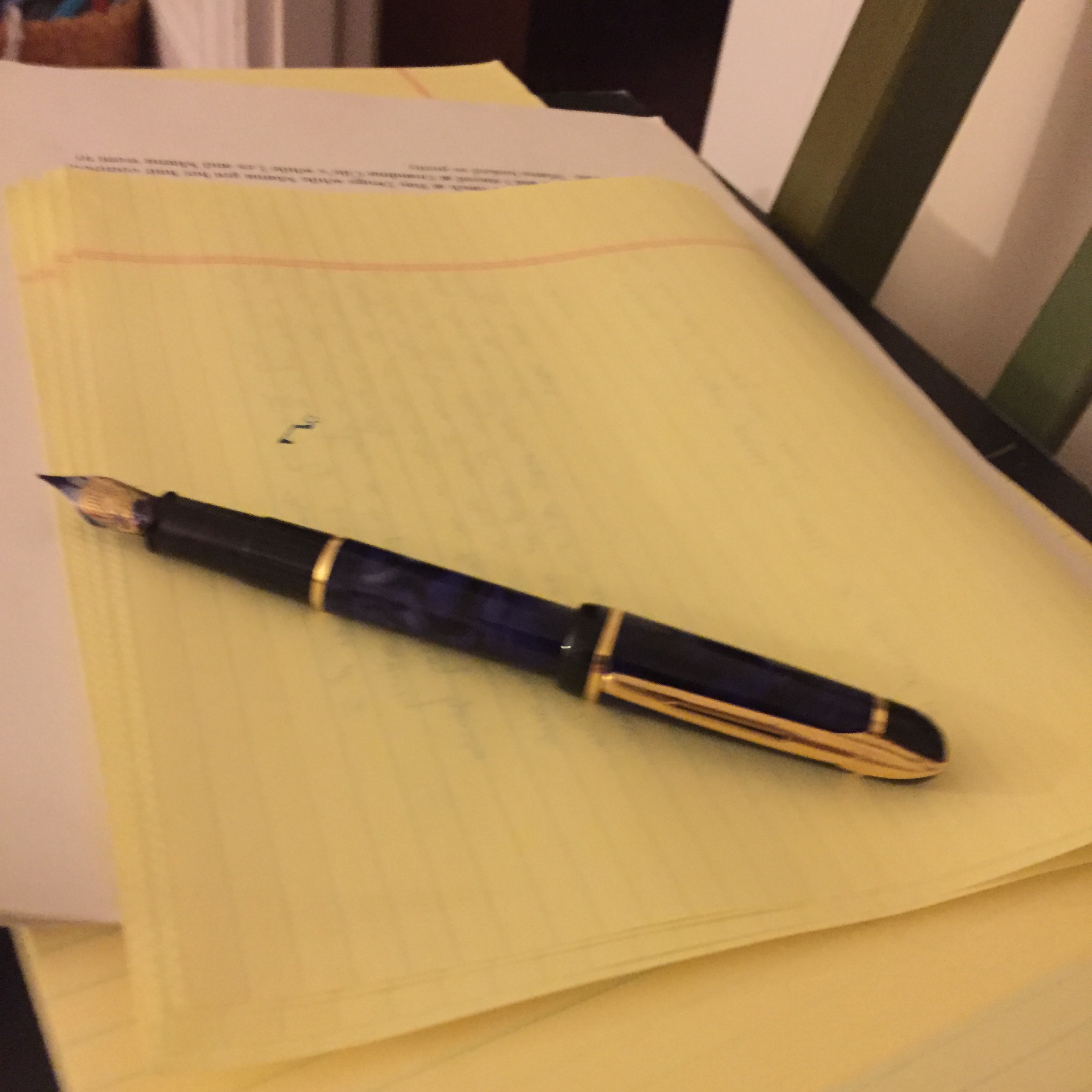
So we focused on character, the one thing we could control or change. This, of course, is poppycock. There are good and bad people who write. Character is no Holy Grail, and no simple gateway or guarantee to writing. Work is. I wish we had simply talked more about work and habit and word count in grad school. How do you sneak in an extra 200 words? Have you done your work for today? Do you need a new pen? God only knows, make it work, let it be work, and demystify the process. It’s just work. It’s not about whether the muse is singing to you, or the dread siren, or anything or anyone. It’s just work, a job, a practice, and all you need to do, is to do it.
In the long run, Gardner’s description of the writer, and, once again, that sense that a purpose that led to blindness to everything other than IT, drove me away. After all, what was the lesson of nearly every novel, short story, or poem we read? Connect. Connect. And for the sake of everything that’s holy, or valuable, or worth saving: connect. The pursuit of art never matched the message. Picasso was a sonofabitch, but Guernica. Dickens philandered. Woolf suffered from limiting snobbery and mental illness. Joyce? Don’t even. Our contemporaries wandered into the forest of “immaturity and incivility” with a stridency that was matched only by ignorant blowhards and professional athletes.
I recognize that now, all of it, as a kind of armor. I know what it allowed, and what costs they incurred for strapping it on with such easy regularity. I saw it for a kind of blindness, and doubted. And in that doubt, returned to the anti-gravity armor that had supported me years before.
I turned, for years, to teaching and a kind of preaching. I tried to reach out, to convert the sensible—and others—to deeper understanding (reading) and brighter thought (writing). These are not fool’s errands, to be sure. But once you have tasted brilliance—and writing done well is brilliance—every other work other than the work that is the most brilliant, makes your tongue recoil. Even your dog would turn away from that feast. Not me. Not for years. And though I still fight with gravity, I feel the pull, and this is what binds us together—separate planets careening into each other with cataclysmic potential. I tried to resist, but, really, why?
So I’m left with these questions: How does one balance the work and the meaning of the work? How does one have purpose and character? Ah, as always, the trick of balance, and not in Gardner’s list of a writer’s characteristics. We will have to figure this out ourselves.
Of course, equanimity (balance) is not Gardner’s list, but the safety net is the work—stupid, dull-witted, and quotidian. Be an angel or a devil, but get to work. It comes back, and, if done well, connects us, once more, to the world, to each other, and to the gravity that holds us all.
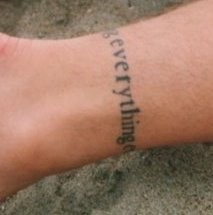 While explaining a quandary I was having as I waded into one of the more difficult portions of my novel, a friend asked, “You’re the writer. Can’t you just make them (your characters) do what you want?” And that, dear reader, is always the rub. Of course, I could, but, even when writing about magical characters (djinn and such), there is no magic wand. Everything must seem real, and if not real, plausible, and if not plausible—if wild and genuinely surprising—then I have to prove it.
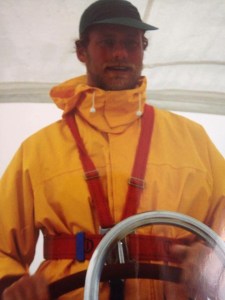 We gathered a twice a day to listen to the nautical forecast, usually in the cockpit, but when the weather was execrable, in the cabin. For days on the ocean it was the only external information we had, and the computerized voice that intoned the zones and conditions annoyed and entranced us. My father never explained which particular slice of the forecast we should heed. If there was one, it was his secret. We did get a general sense: the information could reveal a significant change from the forecast with which we headed onto the ocean. For the most part, the weather we encountered was weather we could see.

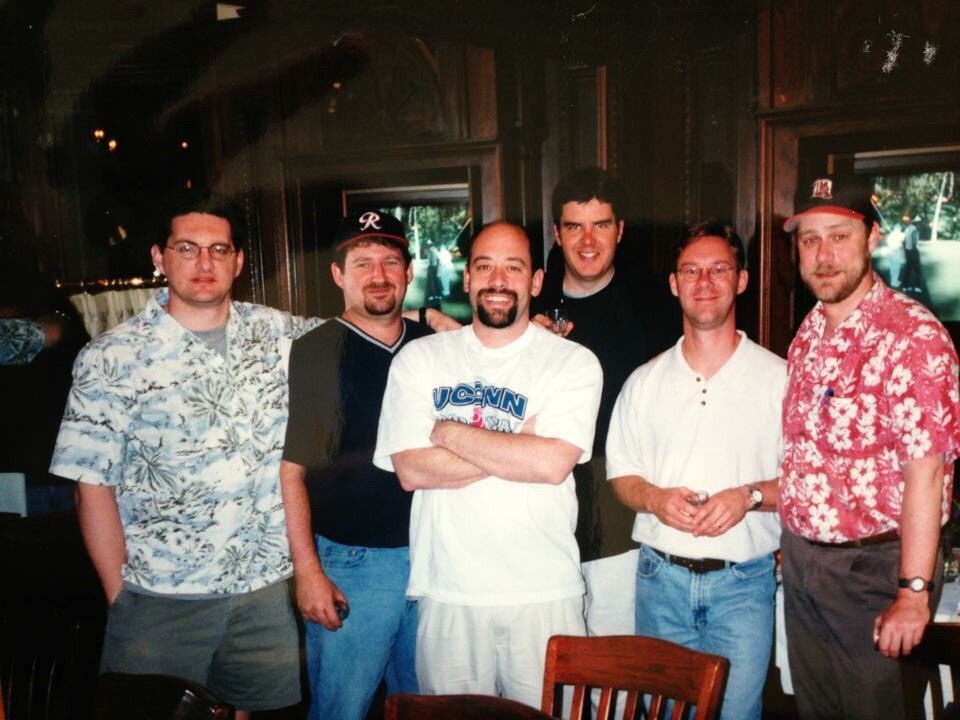
 Almost thirty years ago, I was eating dinner at a little restaurant on the edges of Johnson City and Binghamton, New York. My mentor and her husband had invited me along. These were heady occasions, full of discussions about writing and literature, and the program in which we all worked. I was a student, but, still, I worked. On this particular occasion, they started talking about writers manqué—although I heard it as writer manqués. It was a new word for me. Manqué: having failed to become what one might have become; unfulfilled. They started listing writers who had been in the program, writers who had published and stopped, and writers who were currently in the program. It was sharp and cruel, and the sobriquet stood out as one to be avoided at all costs. These may not have been eternal footmen, but there was snickering enough to go around.
 Nonetheless, the fear of being unfulfilled lurks. In a
  Is it any surprise that repetition plays a significant role in my life? I came of age as an athlete knocking out sets of 30 200 yard freestyle swims. They were yardage eaters—a quick and dirty way to lay in 6000 yards of workout and buy time for rest of the yards that the coach had in mind. We finished them at intervals of 2:30, 2:20, and 2:10, which left 50 minutes for the rest of the practice—an easy pace for the two to four thousand yards to come. Pushing off the wall every two minutes and thirty seconds, there was time for conversation between swims. Leaving at every two minutes and ten seconds put a crimp on anything other than brief exchanges: “This sucks,” “Stop hitting my feet,” “I’m hungry.”