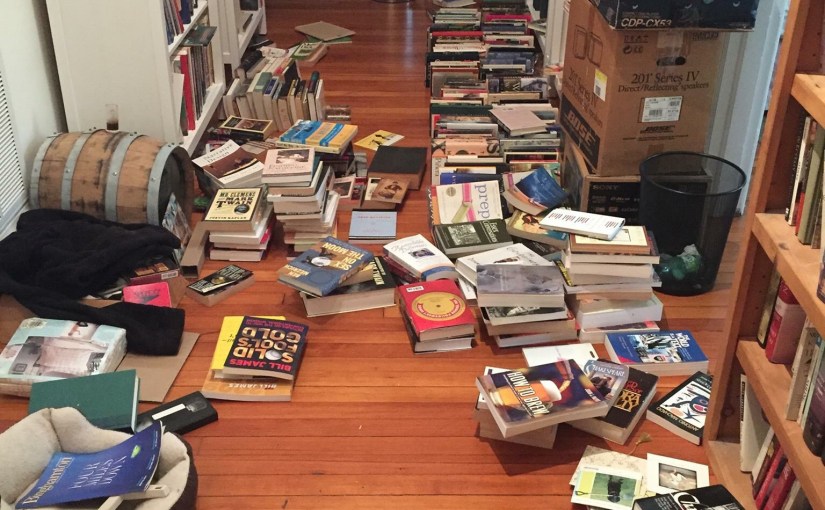
 Almost fifteen years ago, I put my books in the attic. They were out, in shelves, but tucked beneath a sloping ceiling and packed behind all manner of family detritus. When my ex-wife and I separated, I moved them into my main living space, where they sang back to me after their—or my—sojourn. My books matter to me, and I felt their absence. Getting them back onto tall shelves, walking past them every day, reminded me of what I had done, what I had learned, and what I wanted to do with my life and mind.
I have books about writing, books about religion, books about education, history books, philosophy (what we called theory in graduate school), fiction, poetry, books full of art and art history, and even books about sports—mainly baseball. I have a hard cover edition of Dickens published by Chapman and Hall with pages that requires a pocket knife to cut open. I own a set of Andrew Lang’s color-coded Fairy Tale books.
The books reflect my preoccupations over the past thirty years. Much of what is on my shelves I first read while I was in graduate school. Some I acquired afterward to keep me in touch with what I spent six years studying. Some comes from undergraduate college—books about gothic art and architecture, an old edition of Joyce’s Portrait of the Artist as a Young Man. There are some newer books that reflect my current interests: a collection of Sumerian mythology, a book about Djinn.
As much as I love my books, as much as they tell a story of my past, as much as they feel like an external manifestation of my mind, I think it may be time to lose them.
How long can one hold onto the past—a past that weighs an actual ton—without moving into the future? Yes, there are some things that I would keep, and this is true of more than my books, but they possess so much gravity. What is the past to me? Of course it is, was, everything. However, the future beckons, and requires a kind of lightness to which things do not lend themselves. Even memorable things.
There are other presences in my life—deep and profound connections. This time last year, I started unraveling the two jobs I had in Norfolk, Virginia. I moved away from those jobs and in the process also moved away from my daughters, who continue to live with their mother in Norfolk. Of course, I separated from and divorced their mother. It may seem inconsequential, but over 30 years ago, I picked a cat off the street, and have had cats ever since. I have never been more than three weeks away from them. This year I considered giving up a long standing fantasy baseball game that I have played for nearly 30 years with friends.
I wonder about what I have given up, but also what I have stayed with over the years. I have been a teacher for over 20 years—including my work as a TA in graduate school, over 25 years. What would it be like to not teach? I wrote for years, and then, if I didn’t stop, I slowed considerably—at what hazard, I cannot guess. I am writing again now, and have been, but can’t help wonder why my work slowed to a trickle.
I wonder would it would be like to be free of obligation and free of the gravity of myself—that ton of books, the closet full of clothes, my job, my family, my cats, even my friends. I wonder what my life would have been like if I had just chased words—the stories that I had declared as my purpose when I went away to and then stayed in graduate school. When I went away to graduate school, I traveled in a single car, with a mattress tied to the roof, and a single cat riding in the passenger seats. What would it be like to travel to what’s next with even less?

I do not regret the life I led, nor the life I lead; regret possesses a gravity greater than all the books own own, and I have no time for that. Not now. Nonetheless, I am aware of another life that exists, not over the horizon, not over the rainbow, but buried deep within me. I don’t know how I have kept it buried for so long, or at what cost—or even at what gain. Still. It is there.
I wonder, and wonder hard, and the wondering stirs something in me, something alive and insistent. What will I carry into the future? What must I carry? And what must I leave?
 Country Living posted a
  There is an apocryphal story about Tolstoy and War and Peace. After receiving the galleys from his publisher, he checked them over, made corrections, and sent them, via courier, back to the publisher. Days later, he was out for a walk, and he cried, “The yacht race! The yacht race!” He had forgotten—as if anything could be forgotten in that encyclopedic novel—a scene that included a yacht race.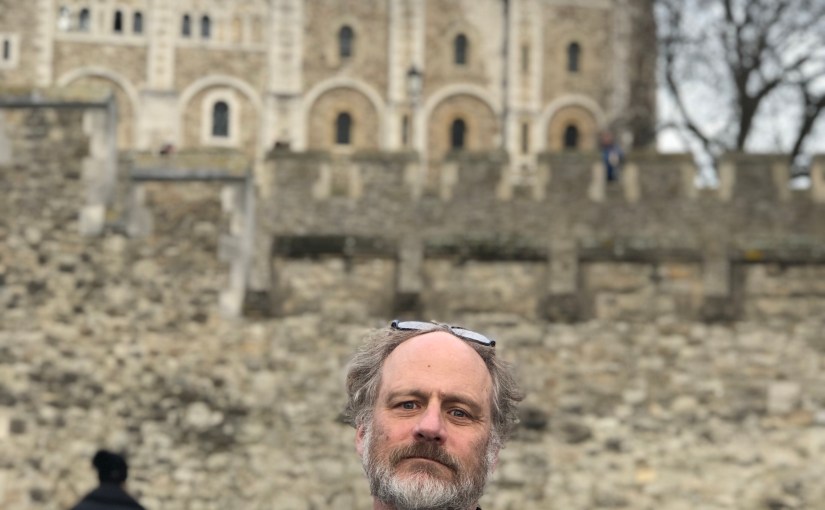
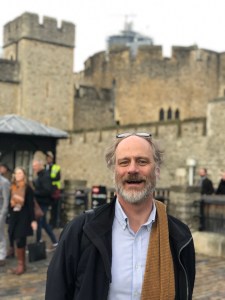
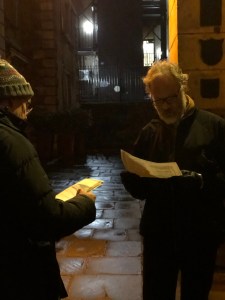 The charm of London is found in its strange alleyways, endlessly curled streets, and tucked away history. If there is a grid, and in some way, there is, it is bent around the past and the ox bow turns of the Thames, and everything attached to it has been attached in a haphazard fashion. For instance, the coagulation of insurance buildings in central London: the gherkin, the cheese-grater, the scalpel, and the inside-out building; defy any sense of a rational aesthetic plan. Or the juxtaposition of the Tower on one side of the Thames and the glass pineapple of the City Hall just across the river.
 And so London’s history is oddly folded into the cityscape as well. A tour through the city—you cannot tour the whole city, or tour it on a bus; you must walk it—folds two thousand years of history, creased around a Roman occupation, a French conquest in 1066, and a fire that destroyed 80% of the city in 1666. And the city is just the square mile that had been walled and gated, but is now open and underlaced with a rail system that carries you quickly to nearly every point beyond the old wall.
 There is an orderliness to the whole affair. Announcements in the Underground direct people where to walk down hallways and on escalators. Advertisements along the walls of the stations counsel caution with wallets and and advise care with alcohol. “Mind the Gap” is stenciled on the ground where the trains stop, and cheeky announcers corral riders whose fancy Italian made shoes have strayed over the yellow safety line. Cross walks show a green walker when it’s time to cross—around Trafalgar Square the walkers take on a variety of LGBT friendly forms: couples and symbols. Just remember to cross when the green light comes!
 History is a story of discontinuous events—events that collide like weather systems or galaxies, having barely understood origins, and even less decipherable records. All the witnesses were destroyed in the collision. What they saw, what they thought, and what they felt—even if they recorded their observations on stone, paper, steel, or silicone, have been destroyed along with them. We are living in the age of delusion, in which we believe in the sanctity of our recorded history—either self-scribbled or captured by another.
 Second, in the musical Hamilton (which was also part of this trip to London), the character of George Washington warns Hamilton that we do not control who writes our stories. He’s telling this to a man who believes in his power to literally write his own story—and to use his words to cement his reality. He can’t—and doesn’t. His wife, Eliza, sends his legacy forward—and Lin Manuel Miranda brings us her legacy. But, as Miranda admits in interviews, even this moment for Hamilton—and therefore, for him as well—is provisional and subject to changing tastes and critical opinion.
 I had always shrugged off the idea of traveling to the Grand Canyon. I was one of those, “what’s the big deal about a big hole in the ground” skeptics. I was wrong. Of course I was wrong. The Grand Canyon is an amazement—and of course, I was properly amazed when I saw it—looking into two billion years of rock will do that, should do that. I realized that what I had held aside was not the geology or the landscape, but the travel. Why had I discounted my ability to be amazed by travel? I had done it all my life. Going, all kinds of going, even if so much of it has been more local—on this continent, in this country—has been part of me all my life.
 I loved airplanes and airports. Departures were invitations to new adventures. When I traveled with my family, I usually sat alone—the hazard or benefit of being an odd numbered group. I took my first plane flight alone when I went to Iowa to swim; I was 15. I traveled by train and bus alone all through my early adult life. I usually traveled to visit friends. However, I also went to cities to simply see them, to look at buildings, and camp in museums—visiting and revisiting works of art that held sway over my imagination.
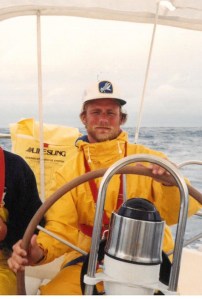 There were trips under sail with my father and brothers. These were tests as well as trips. The ocean makes us foreign to ourselves, our bodies not made to be perpetually wet, and perpetually in motion—shaken and stirred. I have never been anywhere larger than surrounded by sky and ocean, never felt as alive, nor as alone.
 A current meme on Facebook compares what Moms used to say to their kids with what they say now. It is held up as a clarion call to the virtues of yesteryear, when Moms—and their kids—knew what was what. Over and over again, stuff (stuff) like this careens around the internet, in casual banter on news shows, in conversations in my workplaces. Those of us who grew up in the mythical “then” look back with nostalgia, and look at this moment with a jocular disdain. I would like to call “bullshit” on the whole enterprise.
 My mother did what she thought and felt was right. She learned her lessons from her mother and family—and what lessons they were. Some things, she changed. She never leashed us to trees in the front yard. Others were more indelible. I am certain that most of us parent in the same way—sifting through the conscious and unconscious lessons that we received from our parents. What we do, we do almost on a kind of autopilot—in the heat of the moment, dumb memory takes over. Change is hard.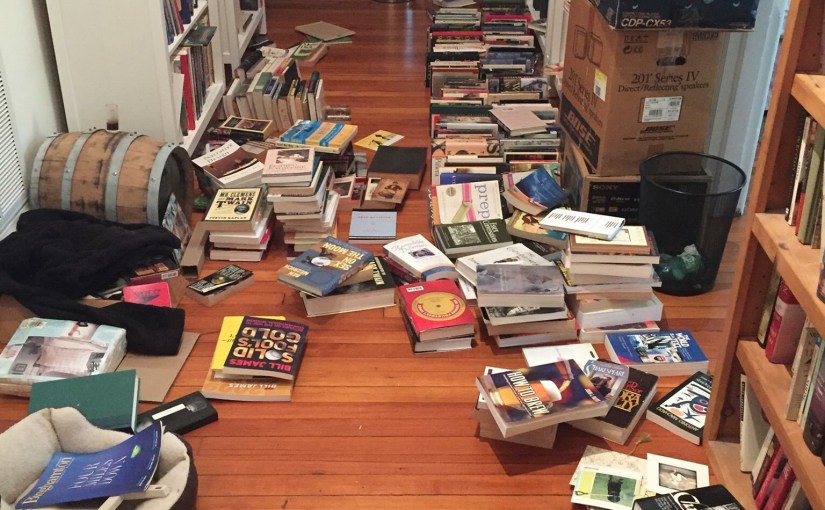
 At some point—and it happens fairly quickly—the life of an English teacher becomes more about re-reading than reading. This is a preposterous change from the life of a graduate student, when everything is reading. As a student, there may be a handful of books that one reads a twice, but those are also the books with which one spends an engaged period of time—there is an essay in the offing. If you read them twice, chances are you read them a half dozen or dozen times. By the time you start teaching, the repetition is no longer driven by your desire or directed curiosity, but by a curricular roadmap that more often than not, you have not decided.
 I feel the loss keenly. I am dissatisfied with the too morbid outcomes that serious writers propose, and with the deathly insistence on disconnection and disappointment. And I am dissatisfied with trudging over this same ground over and over again. There must be the possibility of joy, and please, for gods’ sakes, there must be discovery. Which means new works. In “Seymour: An Introduction,” Salinger allows Seymour to give his brother, Bruno, the single best piece of writing advice—and by extension, life advice—I have ever read. It is hopeful. “Imagine the book you most want to read… Now write it.”
 When I sit down to write, I haven’t thought about an audience. Often I feel more like an amanuensis, copying down whatever the universe commands. The universe commands much, by the way. You might call it inspiration—divine or otherwise. I have not spent much time trying to figure out “my voice,” as much as I have trying to listen keenly to what comes my way.
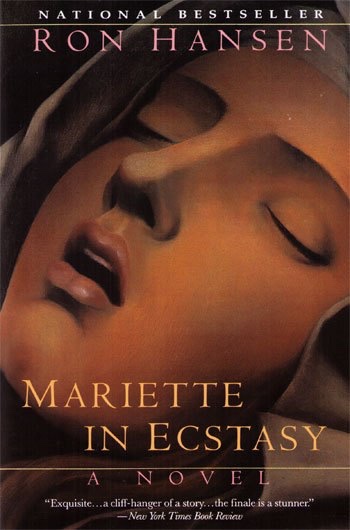 One of my first teachers, Ron Hansen, ends his spectacular novel Mariette in Ecstasy with Mariette’s message from her muse (who just happens to be God). The message is, “Surprise me.” I read that years and years ago, and only now has the lesson begun to take hold. How I wish I had stumbled into that realization 20 years ago. But better now, late as it is, than not at all.
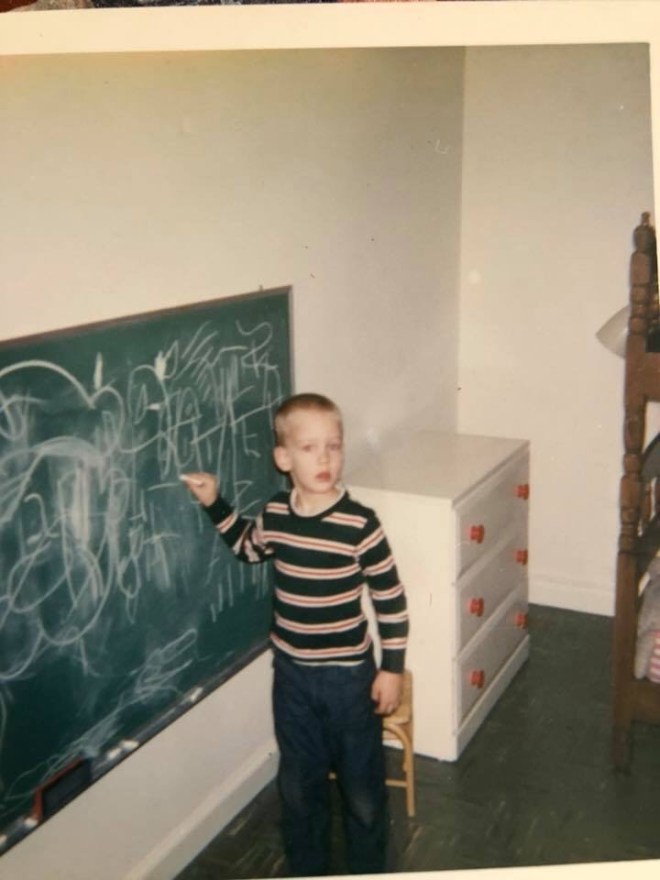 In many ways, I take solace in being surrounded by memories, and there are some that I purposefully mine. The routine of the same lunch—on most days—reminds me of years of similar lunches from the time I was five—earlier—until just last week—and all the lunches in between. I feel comforted by the way those memories permeate my present so easily.
 I have written about the powerful memories associated with places—a rolling set of hills on a road headed north, an intersection with two right turn lanes, a road sign, the curve of a shoreline, a buoy. But, it is everything else as well. All the things. My walls at home are lined with books, and the books speak—not just of what is contained in their pages, but of the times I read them, the places I was, the company that surrounded those moments. And there is more, a gesture, my hand on a doorknob, the sudden turn of my head when I look for something, the way my foot falls on a stair. I am out of myself in a flash, or at least out of this time—even though I know that I am inextricably in it—and another older time surges through me. Even when still, this heartbeat explodes into a thousand, a million other heartbeats, and time collapses.
 And so, beside my own strange face, I also take pleasure in crowds of strange faces, all of whom present unknown avenues, untapped sources of experiences and memories. I know the echoes will come to the strange person I will again be tomorrow.
 continuoussearch