“You are in transition,” she said.
I had changed my life, leaving a world in which I was relatively secure and not writing. I had made walls for myself to hang paintings and prints, in which friends could visit, and my daughter could stay three nights a week. Like the song says, this was not my beautiful house, this was not my beautiful life. There are a thousand, no a million people who would have doggedly pursued the life they made, the life I created. I was a principal, a teacher, a program director at my church. And I felt profoundly unsatisfied.
Just recently, I finished teaching Joyce’s “The Dead.” Again. I pointed out to my students that the whole point of literature is to learn about life. In “The Dead,” Gabriel Conroy is an English teacher; he has, for all his life, read and learned about life. And yet, when life comes at him, he fails. He is stuck—beautifully stuck if we believe that the story’s closing coda is his thought. Yet stuck he is, like the “never-to-be-forgotten Johnny” going round and round the monument of King Billy. And if the beloved Gabriel, the angel of the Annunciation, the deliverer of the good news, is stuck, what hope have we?
I was stuck.
I had set out on a course years before and had finally begun my way back. I had started writing—nonfiction, but words are words—and I began to reapportion my responsibilities. I left my jobs and my home.
“You are in transition,” she said; it was not a compliment.
When I think about literature, which I often do, most of the lessons are about managing change or how to change well. The ponderous chain that Scrooge girded on with his own two hands represents one form of paralysis: bondage of the heart and soul. Odysseus stuck on Calypso’s Island is a variation; the prison of our hopes and dreams can be ecstatically pleasant. In her book of poems Dream Work, Mary Oliver acknowledges the pain and weight of abuse and her need to live on despite that weight. Either we recognize “What good does it do to lie all day in the sun loving what is easy?” or we simply resort to the easy. Sometimes the weight is what is easy. Habit is like that.
Writers must have habits. In the end, no matter what we write, we must write—every day. But we must also write outside the narrow band of habit, beyond the immediate limit of what we already know. This—pushing the limits—is not true of all writers. Some work the known to great effect and profit. While I recognize the value of profit (Mr. Dickens tilled his well-worn field to fame, as have most successful authors), I come to writing as a way of discovering
I have discovered this: I must mine uncertainty. I have friends who claim that when they begin a novel, they know the last line and write toward that goal. I tried that, and it did not work for me. I tried and tried and mapped and mapped and was stymied. I lost faith and put my efforts into other work, into another life. The work was good and meaningful, as was the life. Still, I felt unfulfilled; a promise went unmet. Maybe I needed to suffer that loss (maybe) to find the spring. What good would regret do now?
Gabriel regrets. Marley regrets. Peter Walsh regrets. I had tried that too easy suit as well. I took it off.
I began without even so much as a first line. I charged in and kept going. I churned through a hundred thousand words. Not a day passed when I knew where I was going. I trusted the process. “I learned,” as Roethke wrote, “by going where I had to go.” And that’s the point—I had to go. While I fill my life with routines, as long as I conserve enough energy and joy for the project at hand, the writing surprises me. That is how I must proceed. Surprise is met on uncertain ground, and there it is I must go.
“You are in transition,” she said, and yes, I am. I must make peace with that—that my method needs me to be ever in the air, landing where I need to be for a year or a minute, long enough to write for a day and a month and the rest of my life, and then, always, casting my lot with chance and discovery. The old song commends “to turn, turn will be our delight/‘Till by turning, turning we come round right,” and, yes, this is the simple lesson I have learned—and which I have fought against too often in the past.
There are risks to this: to be always turning. But holding tightly to the chains also presents a risk—and a certain one. Back into the maelstrom I must go. Time to turn.

Will this work for you? Will change and uncertainty produce a sudden outpouring of words? I do not know. I do know that surprise is what brought me to literature in the first place. Writing that made the world bigger than it was before I started reading kept me reading. Is that true for you as well? Perhaps you seek confirmation and affirmation. I understand the gravity of both, and that may well be what you need. Or, you may already know what makes the world larger. Maybe you are sure about that. Then perhaps we are different kinds of writers and this advice is lost on you.
If not, in spite of yourself, in spite of your routines, charge into the unknown. Embrace uncertainty. And write.
 Out of the Past (1947)
 None of this is surprising or unexpected. It’s almost too easy and too obvious. Out of the Past is a movie that continually works between the obvious and the hidden. The main character, Jeff Bailey, is hiding in Bridgeport, a sleepy little California town with a diner owner who knows everyone’s business. Jeff is the wild card, which draws the attention of the town’s beautiful Ann Miller. She is straight out of a fairy tale. We first meet her fishing in secret with Jeff, he declares, “You see that cove over there? Well, I’d like to build a house right there, marry you, live in it, and never go anywhere else.” She answers, “I wish you would.” Ann comes from a world where wishes come true. Jeff does not.
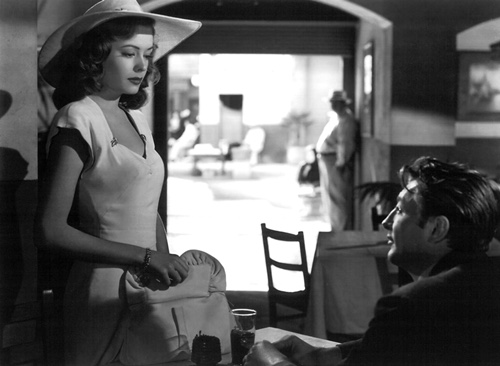 Some critics will let Jeff off the hook—an appropriate metaphor in this film because we are introduced to Ann and Jeff while they are fishing—and claim that the film frames Kathie. After all, Jeff acts nobly at the end of the movie, when the Kid tells Ann, in unspoken accordance with Jeff, that Jeff was leaving with Kathie. This clears the way for Ann to return to her old reliable beau. And Kathie did kill three men.




 Viruses are the prototype for the “lilies of the field: … they toil not, neither do they spin.” How they may be arrayed is entirely in the eye of the beholder. The virus of current interest wears a crown—or presents something crown-like on its exterior. It’s almost too satisfying to try and picture it, or to quibble over which depiction is more accurate.
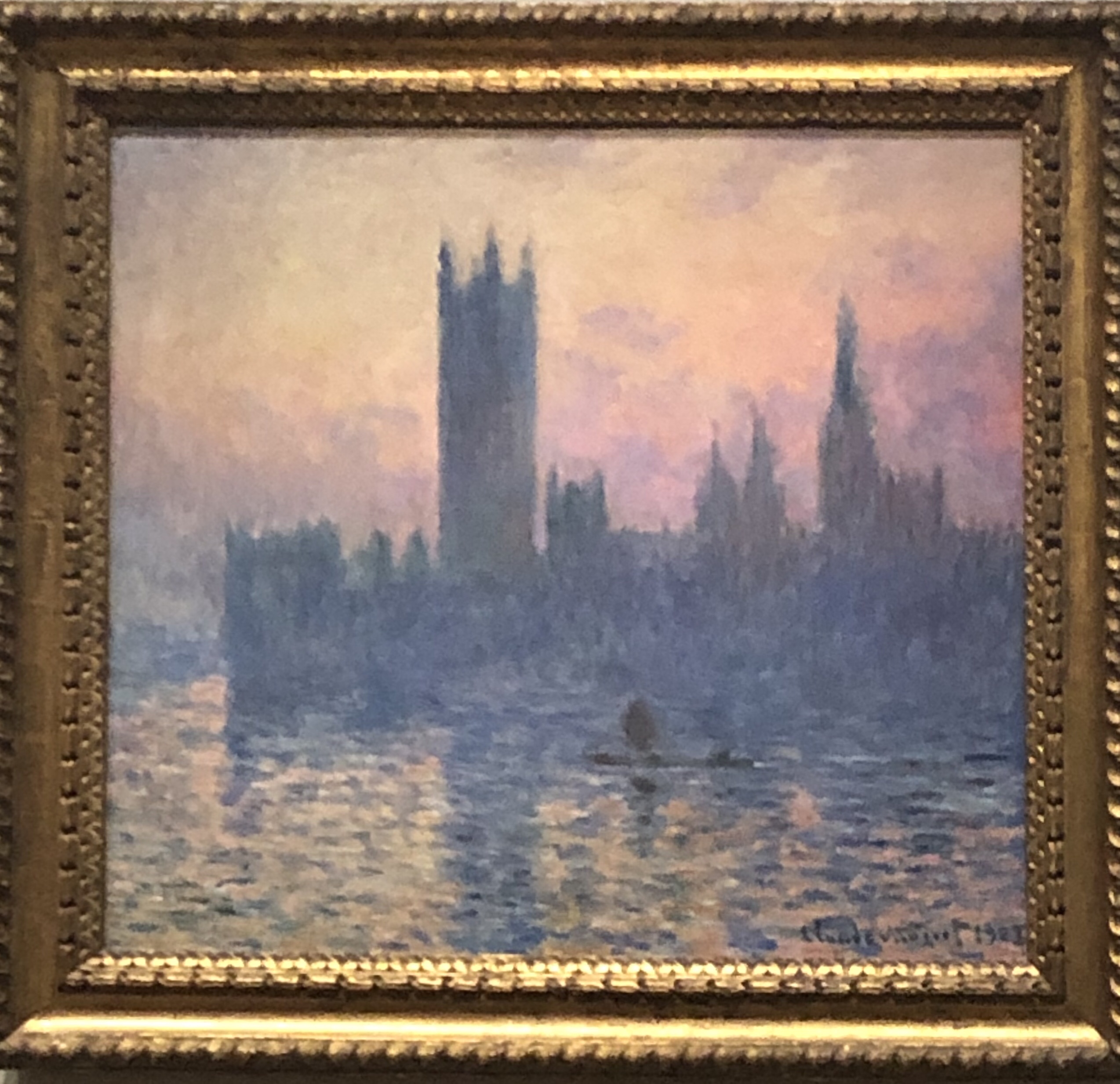 It has been a year and a few months since I was in London. I’m thinking about London while I sit and study Monet’s “Houses of Parliament, Sunset” at the National Gallery of Art. The memory of looking across the Thames at that building, with Big Ben swathed in the latticework of repair, has faded only a little. The memories of walking the streets of the original square mile and beyond remain startlingly vivid. I used them to paint scenes when the characters in my novel walked through London. The memories of the places and the memories of the feelings.
 When I was last in London, I was taking steps into a world where I knew I could live, where I had longed to live. Just like in the dream, writing—flight—was not foreign to me, but something I had traded in for a more certain, more directed existence. While “You are…You should” can feel like shackles, flying—writing—is formless and uncertain. Anywhere is possible. Everywhere is almost a mandate. Just like in the dream, I had written before—had flown—and had lived closer to the limits of my existence. But I had to leave my self-imposed limits. I had to accept that I might fall—and fail—but just as I accepted that in my dream—soaring up the side of a steel and glass edifice, wondering, “What if I forget? What if I fall?—I thought, even as the thrill of fear invigorated me, “You are flying now. Even if you fall, you will remember as you fall, and fly again. Keep flying.”
 Two women look at the Monet—taking seat in the National Gallery beside me. They think it is beautiful, but claim, “It doesn’t look like that.” Of course, the Houses of Parliament look like that, as does the river Thames, as does the sunset. “We didn’t see it,” they claim, “We were tourists, doing touristy things, like thinking about where to have dinner.” I did not think about dinner when I was in London. As much as I love dinner, even food became a secondary thought while I was in London. Even the pubs and ales became little more than way-stations along the bigger task—the journey, the seeing, the walking, and the flying. And the writing.
 In the other corner of the Freer Gallery, an exhibit of Hokusai’s paintings and illustrations includes quotations from the artist about what he intended—not just in the specific works, but as an artist. He wrote about discovering himself as an artist late in life. He was already an artist, but he claims to come into his own in his 50s and thought that he might attain his most complete vision if he lived to 110. He died at 90. His work is sweeping and intimate—monumental nature and quiet personal moments—fantastic and humorous—heroes wrestling demons and uproarious coworkers. Whatever else he meant to last in his work—why that hero wrestled that demon (as if one could easily answer such a question)?—he meant it to last. He aspired to capture a vision that would last long after he died.
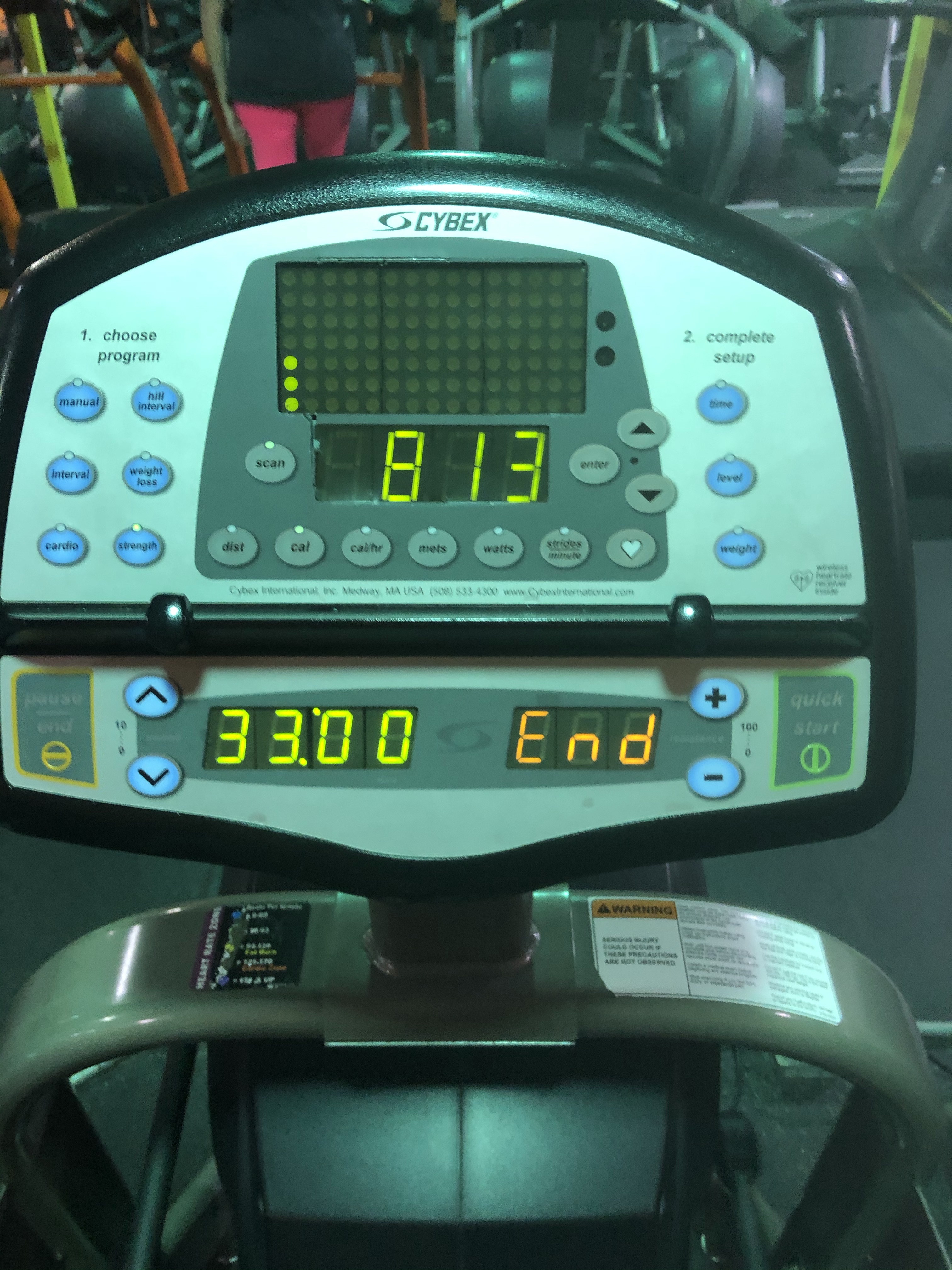 I start paying attention after 17 minutes or so — the meter on the elliptical estimates that I am burning 24.3 calories every minute. I am about halfway through the current “run,” and I will burn through 720 calories in 30 minutes and well over 800 when I include the five minutes of cool-down time that the machine grants me at the end of the workout. I get pissed because the timer starts as soon as I start moving my feet, and the first 15 seconds are “slow.” I make up for it. After a five minute break, I jump on another machine that allows me to take longer strides, and run for 12 minutes, aiming for 7-minute miles. It’s a workout.
 continuoussearch