Two years ago, I rekindled this blog with reflections about what I learned about love from movies I watched in my youth. Love—in all its tangled brilliant forms—is the flame for this moth. Contemplating that light allows me to see through the darkness. Over 40 years ago, my cinema professor, Kaori Kitao, asked us what cinema was—the big question—to which she supplied the final answer after we had all tried our hands. “Cinema,” she said, “is light.”
Of course. What we saw on the screen was light obscured at 24 frames per second—light shaded and shaped into colors (or not) and accompanied by sound (or not). In our Wednesday afternoon classes, we sat and watched—over and over, for 3-6 hours—film projected onto a small white screen. Professor Kitao would speedily rewind reels of film so she could point out—over and over—the traces of light on the screen. There were secrets to be found.

I found love—or at very least, desire. The opening scenes of Bergman’s Persona spelled out what the light could do. I was too shy at 20 to comment on the erect penis that flashed oh so briefly (not that briefly!) on the screen in the opening montage. Love and sex. Desire and death. The devil that dances in that opening sequence reminded me of a childhood dream I had of a green-skinned devil who hopped about in our living room. Cinema is a dream—all dreams—distilled by light. And dreams take place in the dark.
If love is my light, there is also darkness. I struggle with darkness—with seeing it too much. In Peter Chelsom’s underrated Funny Bones, one of the characters remarks that Jack Parker—the comic genius of the film—sees the dark side of comedy too clearly. I saw that movie on my 35th birthday, and it crystallized my thoughts about comedy and tragedy. There are things that some of us see too clearly, that most of us just laugh or cry away. We turn our faces to what suits us best and call what does not please us “the other” in one of its many names.
However, the dark is not merely the absence of light or its easily demonized opposite. It is a vital source of energy. How long did it take me to accept that? I’m still working on it.
I saw the movies that taught me those first lessons about love when I was a teenager—or younger. With a few exceptions, the films that helped me grapple with the dark were part of my twenties—the lost years after I graduated from college and before I began graduate school. With few exceptions, I saw all these in movie theaters (or I have seen them all in theaters). I was fortunate that there was a revival house in Philadelphia (the TLA) that showed old movies. And, while Philadelphia had no cable TV, one of the UHF stations played classic films late at night. I watched. And dreamed.
Unlike the movies that taught me love lessons, these are uniformly great films. There are no April Fools or Hotel here. Maybe that’s because after taking Kaori’s class, I had learned to turn my eyes to more serious work, or maybe that’s because darkness instigates a different kind of art—more obviously profound, more apparent attempts at art. The distinction matters and does not matter. What we see in the dark is a dream. Great or not, these are no more real—or just as real—than the films I wrote about two years ago, the same way that my dreams are neither better nor worse than when I was a boy. Out of the light and into the dark.
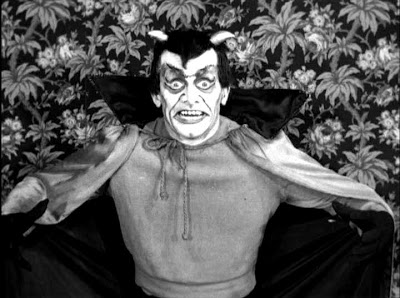
Evil. What is evil in these films? Inhumanity. Failure. Fatal inevitability. Some incredible compunction on the part of the characters to launch headfirst into harm, and to take large swaths of their world with them. I saw these at a time when I became more starkly aware of the evil that was at once accepted and codified in the world around me. Sure, I had warnings along the way, and sure, these films are not life—any more than the movies that taught me about love ever substituted for the harder lessons that life delivered. Still, they offer up the contradiction: darkness painted with light. And each one provided a lesson that stuck, even if I disagreed with its premise.
I’ve been wrong before. I will be wrong again.
The Films
The Draughtsman’s Contract
Brazil
Ran
House of Games
Lawrence of Arabia
Dr. Strangelove




 Viruses are the prototype for the “lilies of the field: … they toil not, neither do they spin.” How they may be arrayed is entirely in the eye of the beholder. The virus of current interest wears a crown—or presents something crown-like on its exterior. It’s almost too satisfying to try and picture it, or to quibble over which depiction is more accurate.
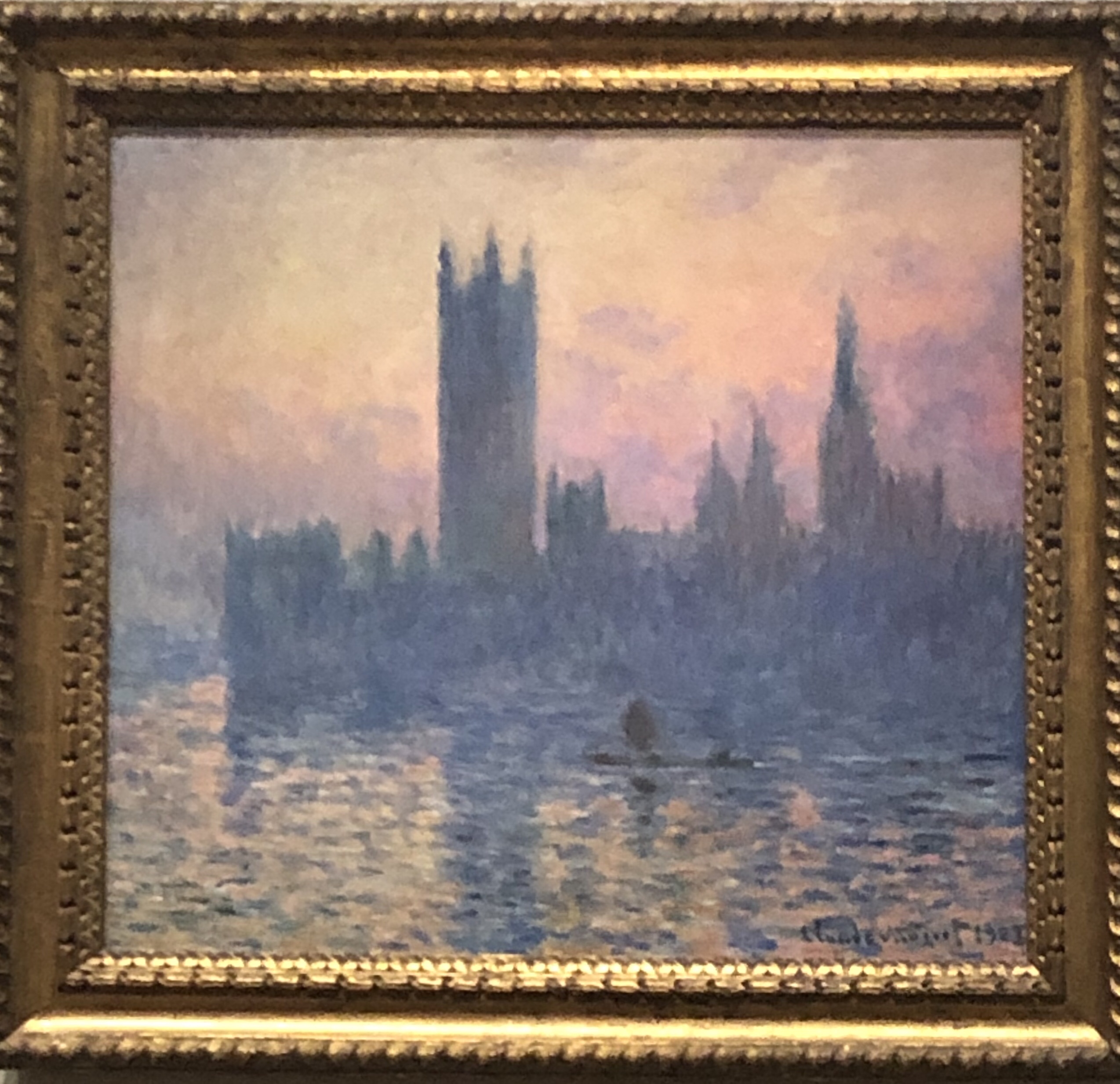 It has been a year and a few months since I was in London. I’m thinking about London while I sit and study Monet’s “Houses of Parliament, Sunset” at the National Gallery of Art. The memory of looking across the Thames at that building, with Big Ben swathed in the latticework of repair, has faded only a little. The memories of walking the streets of the original square mile and beyond remain startlingly vivid. I used them to paint scenes when the characters in my novel walked through London. The memories of the places and the memories of the feelings.
 When I was last in London, I was taking steps into a world where I knew I could live, where I had longed to live. Just like in the dream, writing—flight—was not foreign to me, but something I had traded in for a more certain, more directed existence. While “You are…You should” can feel like shackles, flying—writing—is formless and uncertain. Anywhere is possible. Everywhere is almost a mandate. Just like in the dream, I had written before—had flown—and had lived closer to the limits of my existence. But I had to leave my self-imposed limits. I had to accept that I might fall—and fail—but just as I accepted that in my dream—soaring up the side of a steel and glass edifice, wondering, “What if I forget? What if I fall?—I thought, even as the thrill of fear invigorated me, “You are flying now. Even if you fall, you will remember as you fall, and fly again. Keep flying.”
 Two women look at the Monet—taking seat in the National Gallery beside me. They think it is beautiful, but claim, “It doesn’t look like that.” Of course, the Houses of Parliament look like that, as does the river Thames, as does the sunset. “We didn’t see it,” they claim, “We were tourists, doing touristy things, like thinking about where to have dinner.” I did not think about dinner when I was in London. As much as I love dinner, even food became a secondary thought while I was in London. Even the pubs and ales became little more than way-stations along the bigger task—the journey, the seeing, the walking, and the flying. And the writing.
 In the other corner of the Freer Gallery, an exhibit of Hokusai’s paintings and illustrations includes quotations from the artist about what he intended—not just in the specific works, but as an artist. He wrote about discovering himself as an artist late in life. He was already an artist, but he claims to come into his own in his 50s and thought that he might attain his most complete vision if he lived to 110. He died at 90. His work is sweeping and intimate—monumental nature and quiet personal moments—fantastic and humorous—heroes wrestling demons and uproarious coworkers. Whatever else he meant to last in his work—why that hero wrestled that demon (as if one could easily answer such a question)?—he meant it to last. He aspired to capture a vision that would last long after he died.
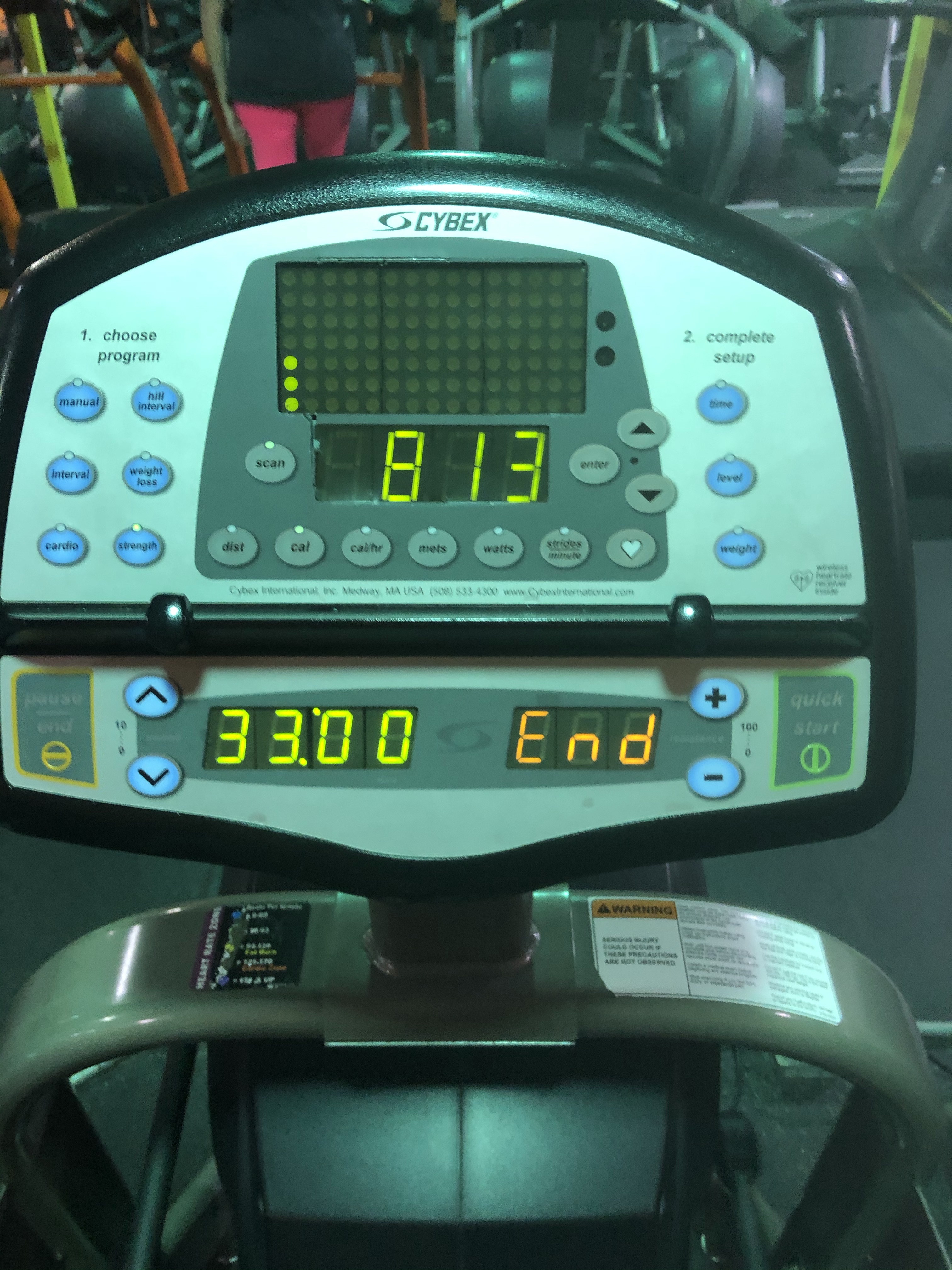 I start paying attention after 17 minutes or so — the meter on the elliptical estimates that I am burning 24.3 calories every minute. I am about halfway through the current “run,” and I will burn through 720 calories in 30 minutes and well over 800 when I include the five minutes of cool-down time that the machine grants me at the end of the workout. I get pissed because the timer starts as soon as I start moving my feet, and the first 15 seconds are “slow.” I make up for it. After a five minute break, I jump on another machine that allows me to take longer strides, and run for 12 minutes, aiming for 7-minute miles. It’s a workout.
 Just over a year ago, I went to the LA Bar in Arlington and did karaoke. It was New Year’s Eve, and I had just come from a fairly routine party, where we had counted down the end of the old year and beginning of the new. It wasn’t enough. And so, away I went with my date, and we signed up to sing the Talking Heads’
