Remaking the body; remaking the mind

I once had a “fitness trainer” who exhorted me, and those I worked with, to be as hard as the tip of the spear. I had spent years as a serious swimmer, and had a macho enough attitude to gobble this up. There were long sessions among Nautilus machines (the preferred hi-tech option of the early 80’s), blistering runs, and of course, time in the water. I enjoyed the hardness that was belied by my boyish exterior. The baby-faced bloom of youth did not dissipate until I was nearly 30 and grew a beard. I used my appearance to push me: “Do not mistake my youthful exterior for a lack of drive,” I thought. I drove hard.

Then I stopped. I left a life that promised not just physical hardness, but an emotional, intellectual, and spiritual severity. I dropped out and into the lost years of restaurant work, taking solace in uncommitted drift. In spite of the self-enforced sojourn, I kept swimming, which was more languid, even at a brisk pace. Two regular diners, Tom and Janet Flannigan, joked about all the “soft people” they saw in the pool—“You’ll never stay fit doing that,” they jested, lighting up cigarettes, and drinking themselves thin.

And I began writing, even while I worked 80 hour weeks at an Italian dive in Manayunk. The writing echoed the life I left and the ramifications of my decision. It feels as if everything I wrote was rooted in those moments. Of course, I was trying to write my life right.

I have often questioned my decision to become, if not “soft,”then decidedly less “hard” than the path that had been open to me. At least in the first several years after my decision, I think my friends saw aspects of that old self, but as best I could I burned it or buried it. We make choices in life, bending toward the light or dark—unlike phototropic plants that do so automatically. Or so we like to imagine. There are consequences to all our choices, to how we emphasize parts of our personalities or our essential selves. A choice away from or toward ripples into every other dimension of our lives.

This past winter, for the first time in over 30 years, I returned to weights. I bemoaned (and bemoan) the loss of strength—it isn’t innate, and must be tended. Jack, the owner of the gym I attend, says, “You’re in great shape.” I remember when, I think and do not gainsay. For now, I have taken on the task of shifting and strengthening the weight on my body. When I turned 50, I fought hard to get my body weight down to 200 pounds. This year, heading to 59, I flew lower with relative ease—I even have to eat more. I also feel harder, and delight in the body that has reemerged, as if it had been waiting all along (I knew you would be back). Although my strength is not what it was, it waxes again, along with some other aspects of that one time severity.

I court severity carefully. Maybe it took thirty years to give me distance from all that being the tip of the spear meant. Maybe the intervening years have buffered the fatal vision that guided my hand and mind. Or maybe those years changed me enough that I can take that dagger and wield it without the same moral repercussions that haunted me then, and that drove me to chose against it. Choosing against is never the same as choosing for; the choice to avoid a path is not the same as choosing a path. I have begun choosing for again, a bit rusty, but finding my way.

Not to my surprise, this change has come with a reinvigorated call to writing. I am a man whose mind and body work in concert. There was a reason I championed Susan Bordo’s and Richard Rorty’s philosophical repudiations of Descartes’ cogito ergo sum. We are not just minds forged in cold thought but warm bodies that claim a presence in the world. I tried to make my mind and body softer, and there was a deeper cost. I felt that cost more powerfully as I passed through this year’s birthday. I choose this body now, and the mind that goes with it, and feel ready to press on.

Forward.

The Writer’s Character (and work)

I began graduate school in the fall of 1988. Writing was still new to me. I had written in high school then in college, but the daily life of writing was only a shadowy presence. I had begun a novel, and tended it during the free time of my six day weeks managing a small Italian restaurant in the Manayunk neighborhood of Philadelphia. Which is to say, that I had written enough to gain admission to a program, but not enough in any real kind of way.

Graduate school was a relief and a release—it was the thing all my friends and customers were hinting at when they asked, “What are you going to do?”—recognizing long before I did that there was something specific that I was going to do.

I had drifted after college. It was as if I wore an anti-gravity suit that kept me from becoming grounded. There were reasons. I had encountered “purpose” as a rationale for selfishness and intentional moral blindness. The latter I found incredibly troubling. I believed in an inherent goodness—found in man or god—in spite of my experiences in the world. And when I wrote, I explored that possibility.

When I arrived at Binghamton, I poured myself into the work, writing with avaricious fervor, and studying gleefully. I learned quickly that a “B” was an “F,” and after one failing grade on an essay, turned to successful outcomes. I earned a scholarship after my first year, and with it, the right to teach, which I welcomed with the zeal of the recently converted. I was hooked.

One of the hooks at Binghamton was the presence of John Gardner, the author of The Art of Fiction and several novels I had not yet read. I had read Grendel when I was much younger, drawn by the monster after my mother had read us some version of Beowulf as our bedtime entertainment. What attracted us, some of us at least, was the myth of John—driven, irascible, generous, and demanding. As often as not, when describing ourselves as writers, we focused on our characters-not the characters in what we wrote, but out own personal strengths and foibles, and how we matched up against this fabled presence. He had been dead for 6 years, but he hung around the program (his ex-wife became my dissertation director).

One of my teachers, I think it was Liz Rosenberg, introduced me to On Becoming a Novelist, in which Gardner laid out some characteristics of the novelist:

Like other kinds of intelligence, the storyteller’s is partly natural, partly trained. It is composed of several qualities, most of which, in normal people, are signs of either immaturity or incivility: wit (a tendency to make irreverent connections); obstinacy and a tendency towards churlishness (a refusal to believe what all sensible people know is true); childishness (an apparent lack of mental focus and serious life purpose, a fondness for daydreaming and telling pointless lies, a lack of proper respect, mischievousness, an unseemly propensity for crying over nothing); a marked tendency toward oral or anal fixation or both (the oral manifested by excessive eating, drinking, smoking, and chattering; the anal by nervous cleanliness and neatness coupled with a weird fascination with dirty jokes); remarkable powers of eidetic recall, or visual memory (a usual feature of early adolescence and mental retardation); a strange admixture of shameless playfulness and embarrassing earnestness, the latter often heightened by irrationally intense feelings for or against religion; patience like a cat’s; a criminal streak of cunning; psychological instability; recklessness, impulsiveness, and improvidence; and finally an inexplicable and incurable addiction to stories, written or oral, bad or good. Not all writers have exactly the same virtues, of course. Occasionally one finds someone who is not abnormally improvident.

We looked inside ourselves to see whether we met the unholy criteria that John threw down—gauntlet-like—for us to match. It became a weird check list. There were dozens of weird checklists that we tested ourselves against: pre-work habits and rituals, kinds of writing implements, time that we wrote. I think that many of us were hoping to awaken a writing practice that could sustain us, and so looked for that one thing, the one trick that would allow the words to tumble out as effortlessly as possible.

Of course, we focused on how damnably hard writing was—and is. The metaphors we used to describe writing—like Virgilio Pinera’s man who decides to eat a mountain, one rocky mouthful after another—emphasized the difficulty, futility, and irreverent commitment. Perhaps the real solution was a correction to our character—some unbridling of our sinful writer manqué natures, and a resurrection into some more saintly (or demonic) deranger of the senses. If only we could rid ourselves of our flaws, and get to work.

I came to grad school, and to writing, after years of 60+ hour weeks. I rose early enough to get to the pool and down 3000 meters, then head across town to the restaurant. When I arrived in grad school, I found a job, and worked 3-4 nights a week in a high end restaurant. After I started teaching, I took a job in a bookstore ran by the husband of my mentor (he had been a student of Gardner’s as well). I swam, and then started running several days a week (I could listen to music while I ran!). Some of my classmates complained about the workload. I did not. Work was in me. Writing was not.

But it was. I wrote some inspired pieces, and won praise from mentors and classmates for my work. I didn’t know what to do with it—I had some things published, but what do a few stories and prose poems amount to in a world driven by novels? Besides, I confused inspiration with work. Work, that simple, boring, daily activity, with simple, boring, daily and measurable rewards. I was seeking star fire, supernovae, and earth-shaking prose. In order to do that I had to remake myself in the image of whom? John Gardner? Stephen King? Virginia Woolf? Some Norse God?

And what is the measure of good (let alone brilliant) writing? A great sentence doesn’t blaze as distinctly as the time on the clock when you touch the wall after one of ten 200 yard swims (That’s good; keep going). You write without a clear standard, and a novelist bangs out 60,000 to 100,000 words into the blind space of “who knows what will happen to all this?”.

So we focused on character, the one thing we could control or change. This, of course, is poppycock. There are good and bad people who write. Character is no Holy Grail, and no simple gateway or guarantee to writing. Work is. I wish we had simply talked more about work and habit and word count in grad school. How do you sneak in an extra 200 words? Have you done your work for today? Do you need a new pen? God only knows, make it work, let it be work, and demystify the process. It’s just work. It’s not about whether the muse is singing to you, or the dread siren, or anything or anyone. It’s just work, a job, a practice, and all you need to do, is to do it.

In the long run, Gardner’s description of the writer, and, once again, that sense that a purpose that led to blindness to everything other than IT, drove me away. After all, what was the lesson of nearly every novel, short story, or poem we read? Connect. Connect. And for the sake of everything that’s holy, or valuable, or worth saving: connect. The pursuit of art never matched the message. Picasso was a sonofabitch, but Guernica. Dickens philandered. Woolf suffered from limiting snobbery and mental illness. Joyce? Don’t even. Our contemporaries wandered into the forest of “immaturity and incivility” with a stridency that was matched only by ignorant blowhards and professional athletes.

I recognize that now, all of it, as a kind of armor. I know what it allowed, and what costs they incurred for strapping it on with such easy regularity. I saw it for a kind of blindness, and doubted. And in that doubt, returned to the anti-gravity armor that had supported me years before.

I turned, for years, to teaching and a kind of preaching. I tried to reach out, to convert the sensible—and others—to deeper understanding (reading) and brighter thought (writing). These are not fool’s errands, to be sure. But once you have tasted brilliance—and writing done well is brilliance—every other work other than the work that is the most brilliant, makes your tongue recoil. Even your dog would turn away from that feast. Not me. Not for years. And though I still fight with gravity, I feel the pull, and this is what binds us together—separate planets careening into each other with cataclysmic potential. I tried to resist, but, really, why?

So I’m left with these questions: How does one balance the work and the meaning of the work? How does one have purpose and character? Ah, as always, the trick of balance, and not in Gardner’s list of a writer’s characteristics. We will have to figure this out ourselves.

Of course, equanimity (balance) is not Gardner’s list, but the safety net is the work—stupid, dull-witted, and quotidian. Be an angel or a devil, but get to work. It comes back, and, if done well, connects us, once more, to the world, to each other, and to the gravity that holds us all.

Risking it all

It is difficult to explain the existential risk that the writer—at least this writer—undertakes when working. It is tantamount to this:

One time we (my father, two crewmates, and I) sailed out of the Chesapeake Bay and onto the ocean in a gale. A gale is wind at 40 knots. There was already 6-8 foot chop in the bay. One of us (a first-time sailor) slipped into his bunk clutching his life jacket, stricken with an indomitable case of seasickness. We sailed short-handed into stupid weather and bigger seas.

For the next four days, 30-50 knot winds harassed us, and the sea that was more like a protracted set of sand dunes, the water whipped by the wind into twelve-foot peaks that barely seemed to move. They were moving though, faster than we were in our 36-foot sailboat. The ship sailed up and down these wet rolling hills, making ragged progress toward our goal: Bermuda.

Sensible men would have waited, but for all my father’s strengths (long-range planning, and in-the-moment decisiveness among them), he had a stubbornness that did not waver. Once he had a plan, he stuck to it. Later in life, this supported him as he battled g on with Parkinson’s Disease. He suffered with the adaptations the illness forced on him, but refused to be stopped. In the end this led to his death. On this trip, his drive took us into conditions that would test us.

I should also note that when I point to a crewmate who became seasick, I do not cast aspersions. I get seasick, and had each time I had sailed on the ocean before this. It always struck me when I took my first late watch, when the horizon was shrouded in black, and my eyes and inner ear could not properly make sense of the several directions that my body was moving. It is an ugly sickness, driving the guts empty in rebellion until there is nothing left but bile. I never missed my turns at the helm because of it. The nausea would strike, and I would turn my head, and do what I needed. I did not eat or drink while it was on me, and it passed, for me it did, and after 36 hours.

On this trip, in this ocean, I was entirely spared. All my other crewmates, even my father, were struck. In retrospect perhaps the swell of the sea was so distinct and regular, that the three-way (pitch, yaw, and roll) motion did not take grip of me. Or perhaps the danger created a necessary clarity. As with all retrospect, I cannot be sure.

After four days, we finally passed into the fringe of whatever had driven the gale. In a matter of hours, the wind created new swell patterns. Around midnight, the sea that had been a reasonable set of rolling hills, turned, and became more like waves breaking over an invisible reef or sand bar. 18-24 foot waves rose and broke, all headed in one direction. They are called following seas, which means the breakers were rising behind us, and rolling toward us. They were moving faster than we were and lifted our boat to each peak, at which point our boat would slide down the front of the breaker like a sailboard.

That sounds easy enough, but as the boat fell down the surface of each wave, it carved a path driven by gravity and the force of the wave it was riding. Its path down the wave became, temporarily and repeatedly, unmanageable. Pushed by wind, pushed by water, pulled by gravity, the rudder merely suggested a direction. And yet, when at the helm, every suggestion made a difference. Caught at the top of a breaker, the boat could easily go sideways and roll over. Sliding down the side of the breakers, it could turn too sharply and roll over.

A sailboat is not a surfboard.

My father and I took the helm when the sea turned. We held it in half-hour turns, and it was exhausting work that required dense and specific attention. And, we were exhausted after the previous days of sail. Usually, in harsh conditions, one man took the wheel, and the other took refuge propped against the cabin in the leeward side of the cockpit, using the cabin as a wall against the constant water that broke over the windward gunwale. In this case, as we planed down the sides of the swells, the leeward gunwale cut into the water, and the water rushed into the cockpit. This added a new threat. The boat could be capsized, swamped with water if the helmsmen was not attentive. And, because no attention was enough, at the very least, we were soaked, the water pooling in our yellow foul weather gear, which was not designed for repeated submersion.

At 4 in the morning my father looked at me and said, “I can’t do it anymore. I’m going to send another crew member up, but you cannot let him take the helm until the sea settles down. You have to sail until then. The boat is yours.”

I brought a waterproof Walkman on these trips. While I took the helm that night, I listened to an array of the loudest songs I had: Dinosaur Jr’s “I Know You’re Out There,” Medicine’s “One More,” and Sonic Youth’s “Sugar Kane.” Nothing was loud enough. Nothing matched the ocean or my attention. Nothing matched my awareness of what might happen, or when my father relented, what had happened.

I sailed. Every time I turned the wheel, I felt like I was making a decision that could imperil the lives of all of us. We would go down fast, without time to throw the life raft overboard. It would happen in an instant. We were at sea—tempest-tossed as Shakespeare wrote. The end would come quickly. Each time I turned the wheel, each millimeter I moved it to port or starboard, I felt as if I was making a decision for speed and forward motion. It felt, again, as the bard wrote, giddy. Not happy, and not drunk—although I felt as drunk as I could be—drunk with sailing, with water, and with wind—but transported out of my mind, beyond all thought, and into every thought possible. I sailed as I never had before, as I would always want to sail afterward.

Friends ask me if I have been sailing in the years since my father’s death. I have not. But even before he died, I knew that I would not—not because of fear or seasickness (an anti-vertigo drug helped allay that)—but because I had done something then that I would never replicate. Not on the ocean. I have sought it ever since.

I do not know what has ever led me back to safety. I know that what calls me is not simply mastery (I have a Ph.D. in English, I have some level of mastery there), but the exhilaration of being over the edge of control and into the realm of the impossible. To be the captain, which I became that night. Sometimes, too often, I have exercised the caution I faulted my father for lacking. I have stayed controlled, almost too calm. In some measure, this is because I feel a lack of control and a lack of mastery around me. Even the experts profess a quietness or steadfastness, when sometimes what is needed is to go out of one’s mind. To forgo safety. To risk. But also to carry the responsibility for the lives on board. We are, truly, in this together, and must all go out of our minds, together.

I have over-prepared, or tried to know, to tame the ideas in my head, worried that they were unintelligible, or that they were somehow too strange. I feel myself now, at the top of the breaking wave again. And look down into the night sea. This way. Now. Down. For life.

The Unmet Reader—writing novels

Since the 1987, I have started at least five novels. Some I carried with me for a few months—the story of a wedding, unfolding like the petals of a rose. Others lingered over decades—the story of a woman who stole paintings. None of them lasted beyond seventy or eighty pages, or in the case of the long project, fifteen or twenty starts at initial chapters. I had notebooks full of scenes, outlines, character sketches, dialogue, and thematic connections. All the while I wrote other things. Shorter pieces, poems, prose poems, essays, sermons, children’s stories. Or I wrote nothing at all and suffered in silence. I believe that I was unbearable in those times.
What cracks the shell, and let’s the story run out?

I do not know.

I do know that I burned the first one. It had stuck with me for a couple of years, and was the piece I was working on when I went to the MA program at Binghamton. I put the pages on the little hibachi I owned, and watched it burn. I kept the ashes in a brown paper bag on the desk in my office at grad school for as long as I was there. Some of my friends found it morbid. I found it freeing. Move on.

Over the years it has been less easy to move on. I became more anxious. Would this happen? Had I somehow failed? I had other successes as a writer along the way. Why not switch course? Why not give up and go in another direction? There are many ways to write.

Even as a high school English teacher, novels called to me in ways that poems and shorter pieces did not—as exhilarating as a poem or short story can be. There is something satisfying about the duration of a novel. There was also, like it or not, the commercial aspect of novels—they are designed to draw everyday readers. I loved that about them. 300-500 page pop songs.

Perhaps I was too enchanted by the high art novels that I read in my graduate classes, and in the critical approaches we used to pull them and the ideas that surrounded them apart. I forgot about the old thrill of reading for pleasure—which is why novels exist. Art is fine, better than fine. Criticism is a world unto itself. But writing for an audience, for a world of unmet readers, that is everything.

And so, this time, I am following Seymour Glass’s advice to his brother Bruno, and I am writing the book I want to read. I am my own unmet reader. And will hope, against hope, to find many others.

60,000 words

I was compiling blog posts today—why not a second book about writing and second chances? (Yes, but first things first)—and realized that I had written over 60,000 words in two directions since the beginning of September. While working at a new job. While beginning a new relationship.

That is more, by no small amount, than I wrote in any year I was in graduate school, when all I had to do was read and write.

When I saw that number today, I was in a room with a friend at school, and nearly broke into tears. I don’t know why it took so long, but there it is.

I don’t know why the shell had not broken open before. No novel came while I was getting my PhD in Creative Writing. I received crazy kudos from some of my academic professors about my critical work—but I knew that wasn’t what I wanted. I knew the successes would have been too tempting. I would have been a writer manqué. The worst. So I struggled and struggled. And struggled.

I always wrote, frustratingly, stupidly at times. There was never a period of time when it stopped entirely, but it all felt like awfulness. I was ashamed of my work. It stank. No one could convince me otherwise. I hated that feeling, and hated how it conflicted with the desire, the call, I felt daily.

And then, when I went to China to adopt my daughter, that shame abated. About many things. Over the next several years, culminating with this one, I found my way back. It was hard earned. I stopped listening to old demons, stopped worrying about quality (though good things were happening), and stopped waiting. It wasn’t a smooth restart, but it got me here, and to what has happened over the past several months.

I have not started writing for you, dear reader, though I love it when the few of who do, do read my work. Those flags from many nations delight me. I like that you have been here while this has happened. I enjoy sharing my exhilaration with someone. I have tried to talk to my best friend about it, but he’s in the “don’t tell me” camp of writers. I’ve shared with a few others, but it has been nice to share with you.

This is my chance. I know it. I know all the costs and weight of regret and everything else that goes with it. I was a “happy enough” man for ages, and always felt the horrible gnawing of unfulfillment. I took the first full strides back to my work a year ago, and have spent much of this year falling back in love with myself.  Somehow, this love freed me to be myself again, and in some ways, for the first time.

Yes, dear reader, I have regrets, but I cannot dwell in that space. I have to look to my future and embrace it. That is all there is, the only way I can live now. I know the other paths, and they are death. I will not go there again.

This way. Forward.

Manqué—a Writer’s Predicament

Almost thirty years ago, I was eating dinner at a little restaurant on the edges of Johnson City and Binghamton, New York. My mentor and her husband had invited me along. These were heady occasions, full of discussions about writing and literature, and the program in which we all worked. I was a student, but, still, I worked. On this particular occasion, they started talking about writers manqué—although I heard it as writer manqués. It was a new word for me. Manqué: having failed to become what one might have become; unfulfilled. They started listing writers who had been in the program, writers who had published and stopped, and writers who were currently in the program. It was sharp and cruel, and the sobriquet stood out as one to be avoided at all costs. These may not have been eternal footmen, but there was snickering enough to go around.

The muse is a durable construct for the writer, because the muse can go away. Most writers I know have experienced life-crushing bouts of silence. It is the single worst event in the life of a writer: when the inward eye stares and stares and sees nothing, and all the inward voice can do is wait, or write, less vividly, about less, or about the nothing. Think of Wallace Stevens’ poem “The Snowman,” and the listener, who “listens in the snow,/ And, nothing himself, beholds/ Nothing that is not there and the nothing that is.”  A writer who has faced silence has faced the absolute nothing. It makes the writer question her or his ability to evoke a world, to create, to even be. Stevens turns it into a gift—the ability to not see anything but what is, to inhabit a “mind of winter” without preconceptions or preconditions.

The writer carries a slew of preconceptions and preconditions. While most can leave their jobs and go home to become a mother or a husband or something, the writer, like a soldier, is on duty all day. Unlike a soldier, who can remove the uniform, and briefly be, what? human? the writer never becomes anything else. Her or his humanity is bound into this one peculiar characteristic: they make worlds with words. I’m sure this is true of artists of all sorts. A friend recounted an interview with a composer who told how each time when she wrote and felt that the work was wonderful and that she was flying, when she started the next day, she had to learn to fly all over again, that she was rooted to the ground. Success is no bulwark against the feeling of starting all over each and every day.

And so, locating that characteristic in a muse—and those old Greek muses were incredibly flighty—was, is, a safe way to inoculate oneself against the silent times.  It isn’t me! It’s that damn fickle muse!

Some writers simply prescribe habit to overcome the silent times. Stephen King wrote the commonplace advice: “Writing equals ass in chair,” which is a grittier take on Mary Heaton Vorse’s “The art of writing is the art of applying the seat of the pants to the seat of the chair.” Getting used to daily practice removes the onus of waiting for the muse. Sit down and write. Repeat. Of course King provides an example of a diligent sitter in The Shining, when Jack Torrance produced reams of “All work and no play makes Jack a dull boy.” A little more than sitting can be a help.

Nonetheless, the fear of being unfulfilled lurks. In a prose poem called “Ants,” I render it as a mass of ants that eat the speaker, even while success beckons. Having come to writing in stages, and later than many, I was thrilled by the force of words as they seemed to tumble forth. I was also a little suspicious. Was this really what I could do forever? What about money? or success? Hearing my mentor denigrate those poor “manqués”—I imagined little monkey of Isak Dinesen’s tale “The Monkey.” How horrible to lose oneself to that invidious transformation.

Like any great and terrible idea, this one lurked. Even when I was writing every day, and earning the admiration of friends and mentors for my creative and scholarly work, I worried. Perhaps that is exactly because I did come late to the craft, that coming so late, I did not have a firm belief either in it or myself. There are half a dozen other reasons, all of them lying in wait. Monkey. Like the law-seeker in Franz Kafka’s “Before the Law,” I was ready to be stopped at the wall, and wait. I knew better—I even knew the antidote! I did!—but the idea of “manqué,” so formidable, grew out of proportion to all reason.

When the silence came, I was unprepared, or, rather, I was over-prepared. Too ready. I sought and found success outside of my work, and followed those paths for years. However, the muse—or the mind—did not forget. It simmered there, stoking my peripheral vision for years. Characters and stories inhabited the edges of my consciousness, darting away when I turned my inward eye upon them. Chiding me—don’t you know how to see us? I did not. It hurt. I carried half a heart in my chest, wearing an inner funeral black no matter what flags of color banded my body.

And I had success. But what is success to a writer, to an artist, but the work? Teacher, husband, father, religious leader. I had to tear my life apart, reorganize it.

Kafka has another short story, “My Destination” (“Das Ziel”), in which the traveler declares “I need [no provisions], the journey is so long that I must die of hunger if I don’t get anything on the way. No provisions can save me. For it is, fortunately, a truly immense journey.” I knew this long ago, and sang it out to any who asked, but could not hear it, not truly, myself. Physician, heal thyself. I could not. And a silent wound festers until it explodes. Or until the call is heard. Again.

And, as if by magic (and not magic at all, old artificer), seeing that I had given myself back to the craft, that I was writing every day—these blog posts included—the vision began to hold. I wrote, I changed my life, and continue to write, out a sense of surprise and without expectation. I write without a plan—and that is my secret. Without a goal, other than writing, there is no question of staring straight at something, or letting the peripheral vision take precedence. I can move forward by sidelong glances. Into the unknown, ignorant of my former limits—and not, stupid memory—and finding the old useful joy and craft.

Heeding the Call

Some of my students are aghast at the idea of reading a book a second time, let alone a third or forth, or fifteenth time. The life of a teacher means revisiting books again and again. They become habits. The past dozen years brought steady stops in S.E. Hinton’s The Outsiders and Harper Lee’s To Kill a Mockingbird, Homer’s Odyssey, and maybe Shakespeare’s Macbeth. All became exceedingly familiar territory—terra too cognito—and I welcomed the changes that a change of job and change of curriculum brought this year. I taught half a dozen book I had not read in years. The freshness helped revive my vision.

Of course, repetition is the backbone of study. There isn’t a piece, whether film, book, or painting, that I have not poured over. And over. Some works hold up to repeated visits—this is especially of true of paintings and sculptures. I have sat in front of some paintings for hours, and then gone back a year later to do more. The ability to give concentrated attention to something is a rare quality. And yet, I find myself loosing the fire for return visits and viewings, even for old favorites. How many times can I return to Hamlet, or It’s a Wonderful Life, or Wings of Desire? I know there are things I have not seen, and they call to me.

With spring, my attention is pulled back to baseball, and a group of friends with whom I have played rotisserie baseball for nearly thirty years. I have risen at odd hours when the season began in Japan, as it did again this season. I did not wake to watch early in the morning, but acknowledged the game at arm’s length. I almost did not play our little game this season, almost tired of keeping track of scores and statistics. 162 games and fifteen teams works out to nearly 2500 events to be aware of in some nagging fashion. Enough already.

How much has repetition and routine play a part in life? Too much. At times it seemed that I flew on autopilot, barely aware of the ground beneath me or the time that slipped past, never to return. Sometimes the routine is good—I don’t give more than passing thought to breakfast and lunch when I am busy. I eat the same thing, more or less, day after day. Perhaps my life would be better if I added variations here, but I have had other pressing concerns, like a Stephen Greenblatt essay about Hamlet. There are ways to keep the standards fresh. Still, there must be more.

I changed large parts of my life this past year—there were many reasons, but one was to interrupt the flow that had become too familiar, too easy. I wanted to drive up to a different door—my door. It did not have to be more beautiful—and it wasn’t—it just had to be different. My work as a teacher, although familiar enough, had to take me to different books an different students. And I needed to extricate myself from a years long creative drought. I needed to write to be alive.

This past December, I traveled to a new place, London, to which I had meant to travel almost thirty years ago. I traveled after I did a series of new things, each one satisfying, but each fueling a desire for more. Almost everything that has been part of the solid ritual of my daily routine tastes bland. I don’t hanker for extremes—a solo sailing venture around the world, or an ascent up some foreboding mountain, or a year in a seraglio—I yearn to encounter something as if for the first time. I wish to be a beginner again, with a clean slate ahead of me.
It will not be. There is much that I cannot jettison (Overboard! Overboard!), and some of which has been central to my life. But to bring my daughter along for the ride. To carry my brave and loving heart into boundless possibility. To write without care for sharp tongued critique. To go, and keep going.

I recognize that when I felt at my best, I was a student, learning, reading, discovering with a vigor that few matched. Right now my writing carries me vigorously to some new place—an undiscovered country that is beyond death—the little death of stagnation and routine, the larger death of a withered soul. I need to find a way to return this more adventurous, more daring, more profound sense of discovery to the rest of my life, to every aspect of my life. To become a masterful student again. Even while I wear the mantle of expert, I am an expert explorer. It is time to honor that. And go.

Perhaps my writing will be enough to answer that call during the long school year. My work feels, for the first time in longer than I care to admit, durable and ecstatic. However, I cannot let anything—or anyone, even myself—keep me from discovery. There must be time for new thoughts, new places, and a new world that will animate my work and revive my old heart. Here—there, and everywhere—I go.

Back to the Forge: Learning from Portrait of the Artist as a Young Man

I revisit texts—novels, stories, plays, and poems—with joy. They stand as mileposts, as reminders of the paths I have walked. I have not always enjoyed this journey, but it has been my journey. No one else has walked this path. I have never wanted it to end, even when the trails of my imagination have become untended and overrun with weeds, when it seemed too difficult a task to return to those paths, to follow where they led, to cut new ways into the wilderness.

The mileposts that speak loudest to me are those that recall not simply the distance but the method of travel. How many times have I dipped into Whitman to find a way I thought I had lost? Perhaps not enough. Or the more diminutive Dickinson, who reminds me of the power of possibility? I re-encounter Prospero every few years, not yet ready to cast my books of power into watery graves.

The first time I read Joyce’s Portrait of the Artist as a Young Man, I was 20, a junior in college. I read it in one furious sitting, rushing as was the case in undergraduate school. The book shot through me—the sermons in the third chapter frightened me, and the ending befuddled me.  I had not written since the rhyming verse I attempted in high school. It would be a year before I started to cobble together my own stories.

I encountered it again when I was 28, and in my first year of graduate school. I wrote every day and was just learning to read by making connections—or rather, by freeing my mind to read as expansively as possible. I did not see a mirror in Stephen Dedalus, not yet, but I saw how Joyce was beginning to challenge the reader, and followed his challenge into Ulysses, and peered obliquely at Finnegan’s Wake. Reading Joyce intoxicated me—all the word play, all the allusions, all the swirl of events. This is how my brain worked, and I felt a kindred spirit at play in Joyce. Perhaps this was too great a burden to lift as a young writer—to think like Joyce, to aspire to something like his work, but I saw the path, at least one path. There were others, and I tested many.

The next time I was 41, and in my first high school teaching job. For whatever reason, my writing had slowed. The difficulties I encountered in my work made me doubt every word I wrote—and even every word I read—which made reading more distant and difficult. I could read a novel as a collection of themes and ideas, which made for fine if programmatic teaching, but the hearts of the works did not beat with the same sense of connection. I felt hollow. I read Portrait as a kind of roadmap for one man’s feelings about Ireland, faith, men, and women. I nodded toward his art but felt closed off from that part of Stephen’s story. I knew it was there—I sensed it—which made the experience strangely worse. This is what you should be doing, the book chided.

I spent several years away from my life’s work. I wrote here and there—stories for kids, sermons, and—in fits and starts—this blog. I suffered for it, as, I am sure, did those around me. I am not a man who can be what he is not and put on the trappings of happiness. “Fake it until you make it,” may work for some, but I need connection—not simply interpersonal or romantic connection, but to the universe, to some deep unconscious thrum that turns words into flesh and flesh into a play of bright and dark and dense presence. While I started to craft a life that combined the spiritual threads I would need to reconnect me to that seen and unseen world, it wasn’t until I started writing daily that my words found the old (new) purpose. Over the past year, I have kept a daily writing practice that, with very few exceptions, has brought me back.

Now I am 58. I am not young. I have long past the point where Stephen stepped into his work, but my heart bursts, as if newly forged—reforged by my years long effort. I read the book again, and this time I hear the singing—it is for me, and for my students too. I orchestrate a class that includes Portrait, weaving together strands from universes that while shadowy—more to my students than me—move with playful grace. The book sings to me, calls to me, demands my attention, my thought, and my response. Not simply in class, but in my work.  Not just these words, but other words.

I no longer feel called to write like Joyce, or Dickens, or Marquez, or Woolf, or Calvino (though, wouldn’t that be nice). Or, or, or. All the words—from every page, from the labels of soap, from the scraps of memes, to the shifting exchanges of my students call, all the words—insist “forge.” And so, I will, I must. Old father, old mother, old artificers, all of you, “stand me now and ever in good stead.”

Writing, Purpose, and Masculinity

I have been struggling with masculinity as of late. Which is to say, struggling with ambition. Or struggling with my career choices. Or struggling with relationship choices. Or, simply struggling. Because I am a man, I am struggling on the somewhat closed field of masculinity. I haven’t always thought of it that way, and yet, there it is. I have avoided masculinity for dozens of reasons.
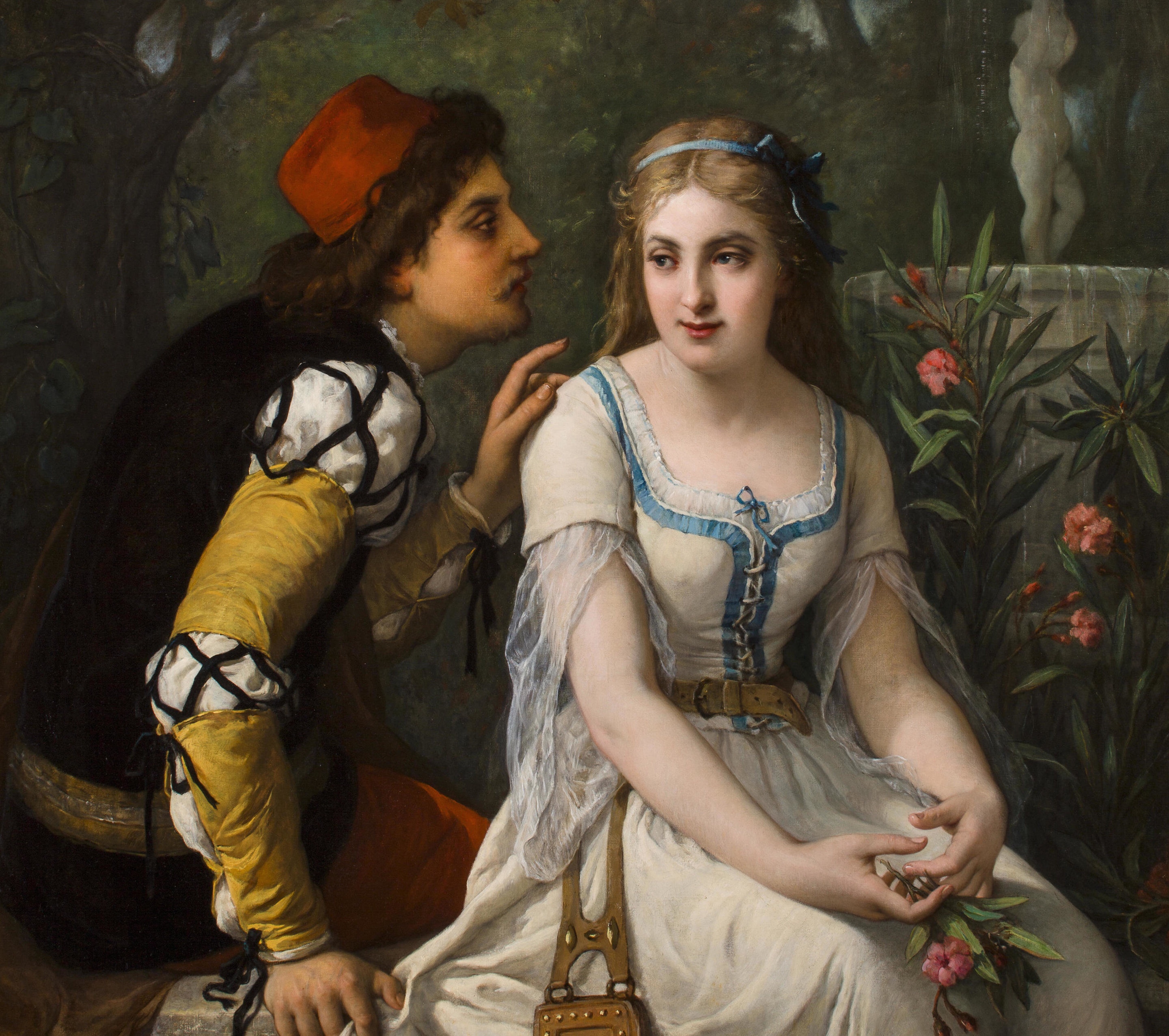
I have seen more examples of toxicity and hypocrisy among men than anywhere else.  Maybe these are not inherently male traits, but I grew up in a male-dominated environment—which is to say, the world—including four years in an all-male prep school. I have been bullied and been a bully. I have seen puffery masquerade as accomplishment. I have seen might valued over intelligence. I have watched as surface characteristics outshone deeper wells of strength. In To the Lighthouse, when Woolf takes Mr. Ramsay to the cleaners for failing to see the world outside of his carefully constructed “a, b, c…” hierarchy, I knew of what she was writing. But that came later.

After college my father brought me to his company once, to ask his colleagues what career path I should pursue. One of the men counseled, “Don’t go into business.” This was a man my father had often spoken of as one of his few friends at work. This man did not offer an alternate suggestion, just “Don’t.” Then he spoke of a working world in which the soul found no home. That resonated with me. My father was often unhappy after a day of work, and I had seen that unhappiness first hand.

I drew a line between the life of the soul and the world of business and ambition—the world of men.

I spent a number of years in career limbo and ended up managing a restaurant and working 80 hour weeks. Ambition always finds a way, even in limbo, even when one says, “No.” Part of being a man, I suppose, at least this man, was finding my way into positions of authority. During this time, I started writing—the very definition of authority—something I had done in fits and starts in high school then in college. I applied to graduate school in creative writing and was accepted.

So in my late twenties, I became a student of writing and literature. I went all in.  I was never interested in “finding my voice”; I was interested in hitting the metaphorical home run, of, and pardon me for this, catching the big fish.  There was always a bigger fish in the ocean.  Joyce, Woolf, Dickens, Marquez, Dickinson, Whitman, Marquez, and Calvino were among the literary fish that pushed me forward. The critical fish were there too.  Each set out a mark and said, “Meet me here.” And, right or wrong, I chased that mark.

I sought work that broke the hierarchies and offered more possibilities to all. Brilliance the only goal. Brilliance the reward. I reveled. My classmates often complained of this course or that course, or of school altogether. I did not. There was no class—even bibliography—that did not unlock some possibility. My purpose, clear and simple, was to learn and to write.

I was at graduate school at a time when feminism was fully asserting itself, and I allied myself with that movement, in part under the guise of being a creator, which I identified as a feminine act. I was full of it. In the end, I divided the world not between men and women, with all the problematic tangle that came between those energies, but between writers and non-writers. I saw a kinship between Charles Dickens and Jane Gallup. If you know the work, you know what a leap that is. Or, and this is easier, Hélène Cixous and James Joyce. Words held a primal energy for me, an energy that bridged gender and sex. The only ones who could experience jouissance, truly experience it, not simply having it happen, but calling it forth, meeting it, urging it on—if they could—were writers. And so I wrote fervently, seeking a pleasure beyond limits. And I found it.

Now, I realize that I had harnessed a most basic form of male sexual energy, of masculinity. If I had classmates who imagined me in black leather pants, well, there was a reason. I chased something bigger than me, something vital. And chasing is what men do—secretly or not. Part of our deep-seated masculinity drives us to seek—“to bear it out,” as Shakespeare writes, “even to the edge of doom.” What keeps us from doom, from becoming an Ahab (there’s that big fish) is not avoiding the sea and the hunt, just putting up the harpoon and dreaming of what might have been. We must learn to integrate the hunt with the world. We must listen to the world and find an honorable way forth.

I did not. I stopped. I did not stop all at once, but over a series of years. I let more temporary ambitions, often driven by temporary monetary concerns, take precedence. I grew nervous, even cautious. I stepped off the stage. I continued, as I had when I was younger, to find outlets for ambition. They were circumscribed by my career choices, but they persisted. I became principal of a school and, during a crisis at my church, helped hold a congregation together. But I was not doing my life’s work—the thing that brought me joy, even if it did not pay the water bill.

And, as a man, a life without a driving purpose withers. I’m sure this is true for women too. Finally, at 58, I made a change. It was not an easy, nor a secure choice. It is not the final choice I will make along this way. But it is the first step. And I realize that even though I have been writing—fervently, discovering along the way—that I also have things to learn. About me. About the world. And as a man.

At first sight

Country Living posted a video of Jeff Bridges’s romance with his wife Susan. He first saw her while she worked as a waitress when he was on the shoot for Michael Cimino’s Thunderbolt and Lightfoot. “I knew I was madly in love with my wife the minute I saw her,” he claims. They married, and remain married after forty-some years. How did he know? How does anyone know at first sight?

What the hell. I say, “I love you” easily. It gets me into trouble.

Call it a predisposition—an attitude toward the world. I can walk into a museum and be delighted by things made four thousand years ago, four hundred years ago, and four hours ago. There isn’t one kind of music that is my “favorite”—so long as it avoids cliches, I like it. The same holds true for art. For movies. For most everything. So long as that thing provides some spark of surprise—the world is larger than you thought, old man!—I am, once again, in love with the world.

Cliches interrupt that feeling because there is no surprise. It is the pure unadulterated expression of the absolutely familiar. We’ve seen this show before. I thought about this when revisiting Yeats’s “Sailing to Byzantium” last week in school, and his rail against schools for studying “monuments of [old men’s] magnificence.” How many times have I heard praise for souls that would (or should) “clap [their] hands and sing”? A hundred? A thousand times? More? Surely so. And yet, Yeats’s poem doesn’t feel like a cliche at all, even after all these years. I am surprised again. And in love.

But this is not about poetry or art. This is about falling in love, and saying “I love you”—and for doing it fast—at first sight, before the number of days and months proscribed by articles in Men’s Health or Psychology Today have passed.

Maybe men are more likely to go all in at first sight. Think of Romeo’s quickly fickle heart as he falls from Rosaline to Juliet. But Juliet, young and inexperienced as she is, follows quickly enough. And Susan Geston may have said, “No” to Bridges’s first request for a date, but she traveled home with him after filming in North Dakota wrapped up. I don’t know.

And a quick nerd note here. There is something I protect against: the reifying power of the male gaze. I suspect my gaze—and that of other men and women. It’s a way we have been, what? taught to see the world. This idea took shape when I studied film theory and encountered the work of Laura Mulvey. It’s worth serious consideration.

I do know that finding or creating a bond, and accepting that bond as something deeper than a mutual appreciation for art or wine or politics (I’ve been in those relationships, and what they lack in depth, they can more than make up for in breadth; there is much to appreciate in the world with a sympathetic soul) can help weather the inevitable differences that will occur. Most of my enduring friendships or relationships began nearly from the moment we met. Love provides the substrate for all that follows. And so much does follow.

But, how does one know? How does one ignite a deep and abiding passion based on a look, or a conversation? Experience, and more, has taught me that looks can be deceiving, but words, especially spoken words with all their attendant gestures, rise and fall of voice, and the play of expressions can unmask a heart—mine, hers.

What unmasks me, makes me open to the possibility again, is the blend of surprise and recognition. When someone adds some new aspect to the world, breaks some old pattern (like him, like her, but—somehow—not the same), and also reprises some aspect of the world that I value above all others, then I am laid bare, and I fall. I am less on guard against another person, than I am to my own repeated patterns—Am I doing that again? I am doing that again. Oy.

If I was a cynic, I would wait, and say, why love, when you know what will follow? Why not let the uglier side of each person—either her or me—assert itself, and avoid the disappointment? Go ahead and replace “cynic” with “practical.” And replace “ugly” with whatever euphemism for “real” that suits you. Either way, I am neither cynical nor practical. I am open to surprise.