Stop worrying if your vision is new
Let others make that decision
They usually do
You keep moving on
“Move On”–Stephen Sondheim
You already know how to do it.
If you wait for inspiration, the right moment, the formulated phrase, then all you will do is wait.
Writing is like getting on the boat. No matter what the weather is when you leave the marina, you don’t know what you will encounter in three or four days. And so you get on the boat and sail. Something will happen, maybe something similar to what happened yesterday, or five years ago—an ocean rolled out flat as plate glass that reflects no clouds, only the hot yellow eye of the sun. You will sweat and pray for anything, any change. If you were lucky, you brought a book onboard, and you charge through half of The Pickwick Papers in an afternoon. You will read fast to make up for the blazingly windless day. Or, you will not—you don’t know. You will find out as you go.
You are on the boat, so you dream of dry land and a woman who writes you love letters. The scopolamine patch behind your left ear gives you visions that will haunt you into your sixties: a black-bearded fat man pretending to have a heart attack, but you have discovered his lie, and he winks at you, knowing, somehow, that you will keep his secret, and in doing so, will enter a world of lies. Of course, you didn’t ask for this vision; you didn’t know what was coming. You thought you were sailing to Bermuda—the island of The Tempest—and would find stories of Sycorax and Caliban (you will: she serves breakfast at a restaurant in Hamilton, and he rents mopeds that break down on the winding North Shore Road).
There are no visions if you do not get on the boat. There is no hard, stupid sea, no Bermuda, no gingerbread at a restaurant in Flatts. Your father does not tell you to take the helm and hold it until the mountainous sea subsides. “I can’t do it anymore,” he tells you. “I will send your brother up, but you have to hold the helm. He can’t sail in this.” So you become the necessary sailor.
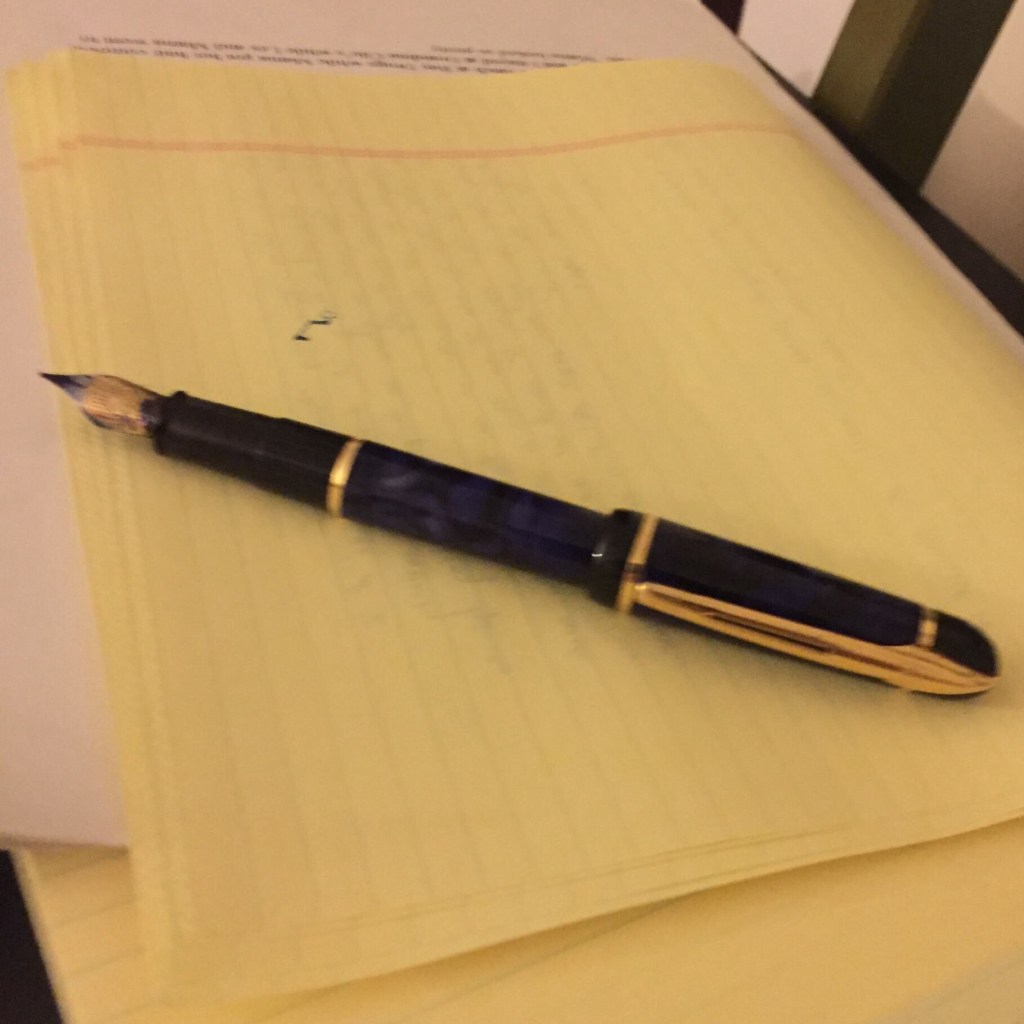
Writing is not like getting on the boat. Writing is getting on the boat. As much as you prepared, you discover, adapt, and grow. You don’t become a better sailor by reading about sailing—although, of course, reading can help. But remember Antonio Machado’s advice: “Mankind owns for things that are no good at sea: rudder, anchor, oars, and the fear of going down.” What you read is the rudder—an idea of where you should (or could) go. The rest is sailing.
I spend my Sundays wandering through the galleries of Washington DC and writing while I wander. That’s not true. I spend my Sundays writing in the galleries of Washington DC, and when I pause, I wander. I spend 8-10 hours resetting my writing brain for the week and return each week to reset again. The shadows on the walls of the Calder room remind me that there is the thing—the made thing (art, literature, as you will)—and then the accident of the moment—the way the mobile turns above my head and the light casts its silhouette against the wall. I watch as people stand in front of his Birdsong, and the one photographs the sculpture and shadow while his companion kisses him on the cheek. A 10-year-old girl asks the docent, “Are we allowed to take pictures of the sculptures?” She walks around the room with a small camera, recording everything she wants to remember.
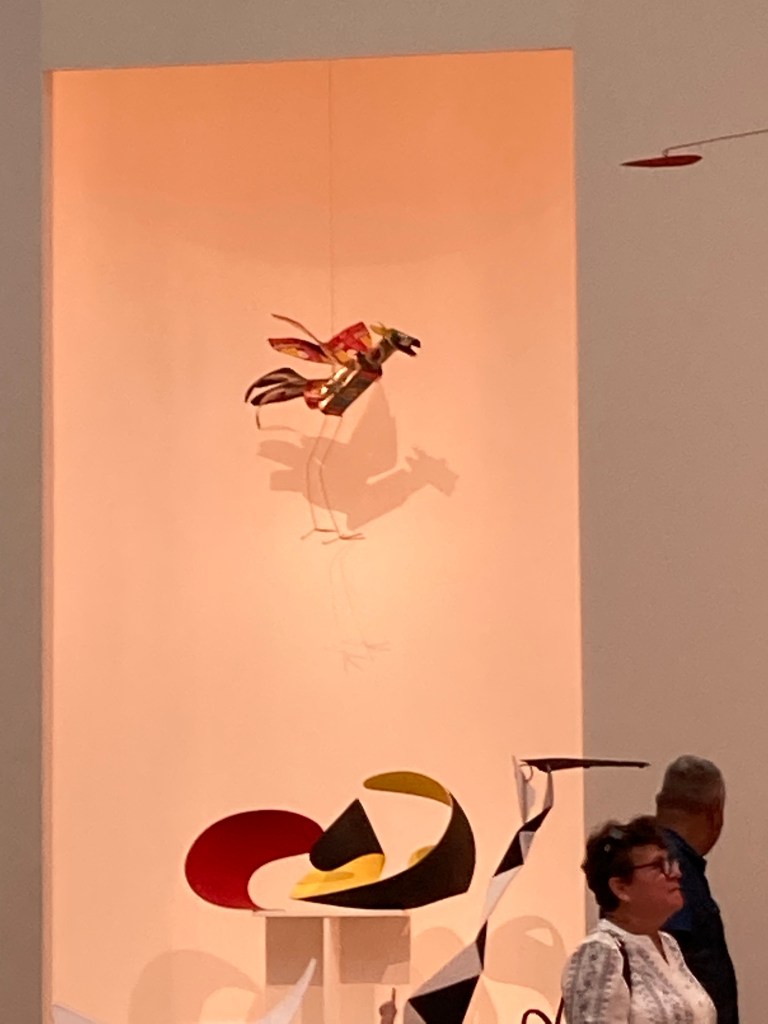
I sit beneath a wire armature horse and write.
I write in galleries because I am surrounded by finished work. The artists painted or sculpted every day. Monet? There are ten paintings by Monet in Gallery 80. 2500 works have been attributed to Monet. Alongside the Calder sculptures, there is a photograph of his studio. It is work to create works. They were all, always, on the boat.

I love to write surrounded by people in the galleries because of their response to the art. Yes, there are people on their phones. Some walk through the National Gallery and do not see that in Gallery 81, on the wall opposite Constant’s The Favorite of the Emir, the three Renoir paintings (Young Spanish Woman with a Guitar, Odalisque, and Bather Arranging her Hair) reflect the figures in the Constant: musician, dark-haired woman, red-haired woman. Accidents and intentions abound. Unless you go and pay attention, you do not see. Write and pay attention.
But write. Write every day. Find a space that energizes your writing. Annie Dillard claims that she needs a blank wall and no distractions. Who can argue? Know what works for you. But write. Write for hours every day.
When you sail, unless you are in one of the science fiction yachts of the America’s Cup, you cross the ocean at an absurd 5-7 knots. Except you proceed, like the tortoise, every hour of every day. You may read 400 pages of Dickens in an afternoon, but you cannot write 400 pages in an afternoon. Well, maybe Dickens could. Get used to the steady, inexorable pace of the work, knowing that the words and pages will pile up as you write. Don’t be afraid to count the miles, the hours, the days, or the words. If you set out each day, they will accumulate. Get on the boat and go.
You need to become the necessary writer. Do not wait for inspiration or rely on that inner voice that weaves stories and does not write (I know I have a novel in me if only I had time to write). You have the helm—on dreary, monotonous days when the Iron Genoa churns out diesel fumes and artificial speed and for the hours when your mastery balances your life on the crest of swells. You are the only one who can fulfill the wishes you make walking past fountains, rubbing strange lamps. You are the djinn, the captain, the writer. So get on the boat, and don’t look back.


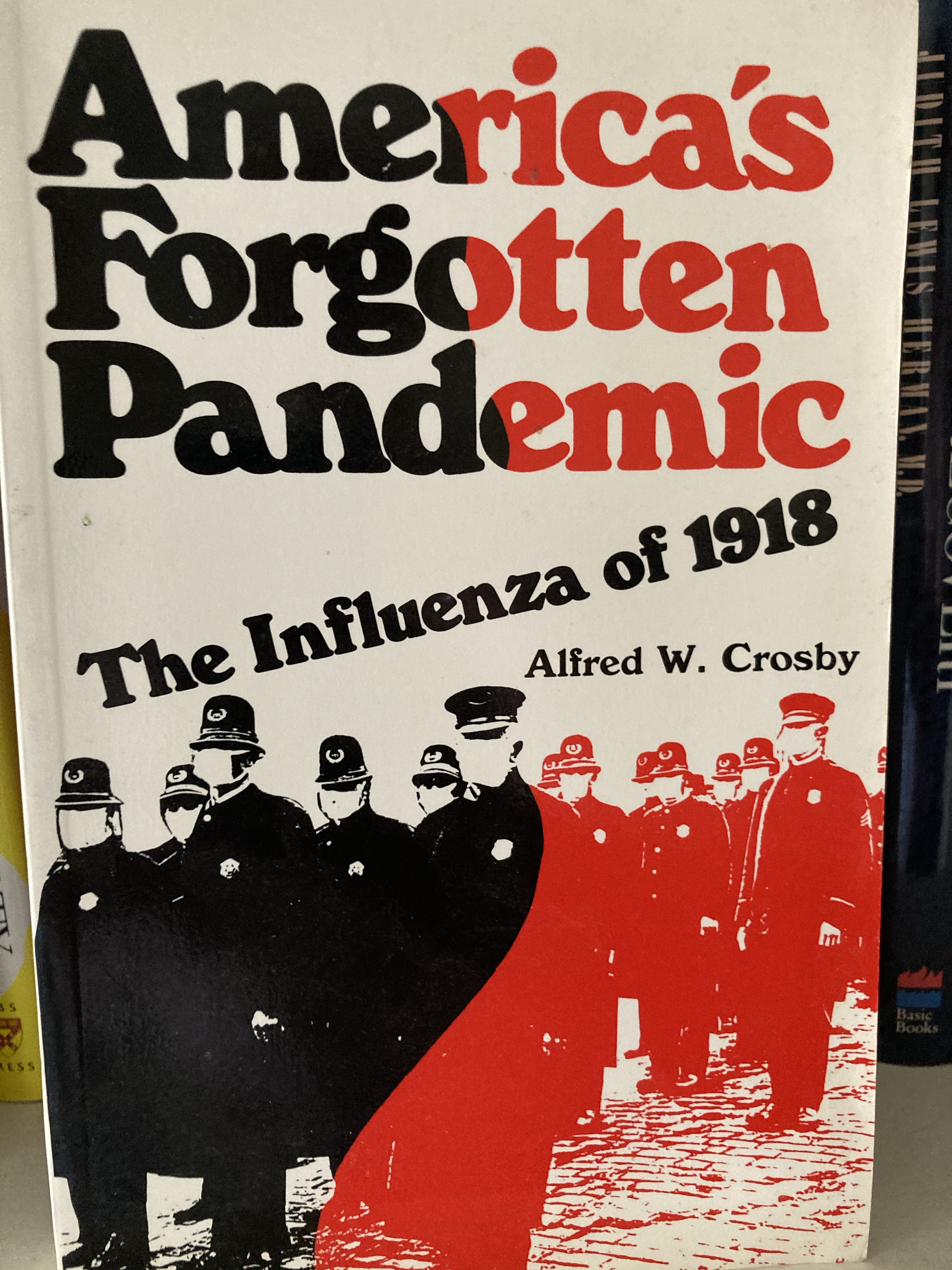
 Out of the Past (1947)
 None of this is surprising or unexpected. It’s almost too easy and too obvious. Out of the Past is a movie that continually works between the obvious and the hidden. The main character, Jeff Bailey, is hiding in Bridgeport, a sleepy little California town with a diner owner who knows everyone’s business. Jeff is the wild card, which draws the attention of the town’s beautiful Ann Miller. She is straight out of a fairy tale. We first meet her fishing in secret with Jeff, he declares, “You see that cove over there? Well, I’d like to build a house right there, marry you, live in it, and never go anywhere else.” She answers, “I wish you would.” Ann comes from a world where wishes come true. Jeff does not.
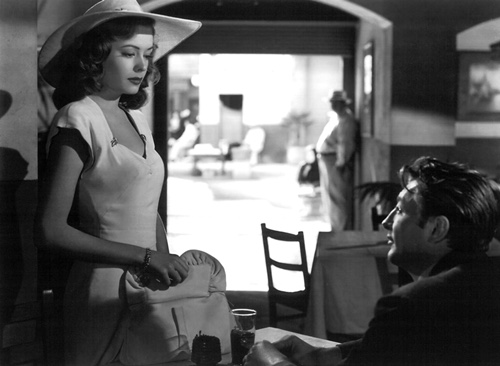 Some critics will let Jeff off the hook—an appropriate metaphor in this film because we are introduced to Ann and Jeff while they are fishing—and claim that the film frames Kathie. After all, Jeff acts nobly at the end of the movie, when the Kid tells Ann, in unspoken accordance with Jeff, that Jeff was leaving with Kathie. This clears the way for Ann to return to her old reliable beau. And Kathie did kill three men.
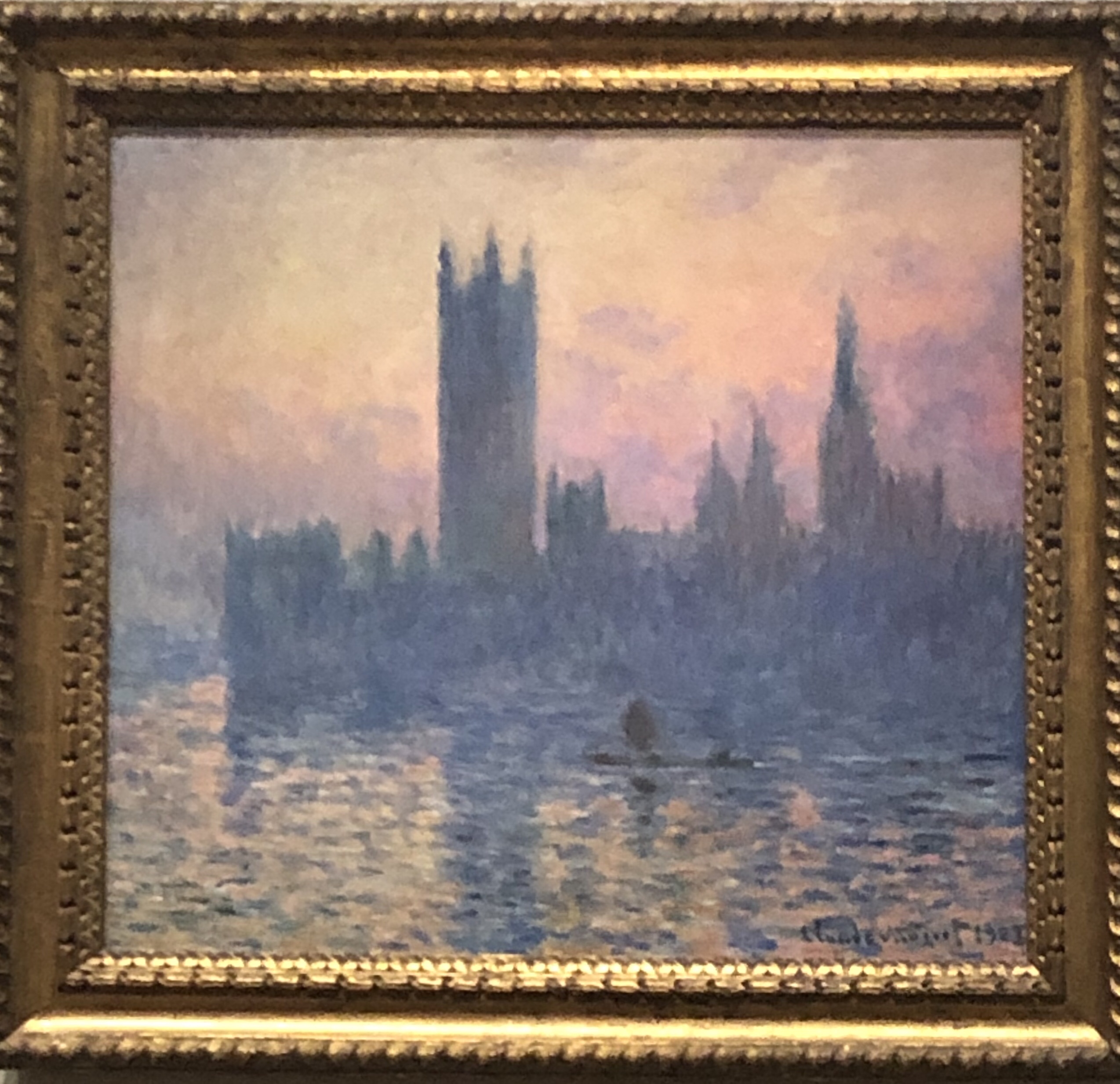 It has been a year and a few months since I was in London. I’m thinking about London while I sit and study Monet’s “Houses of Parliament, Sunset” at the National Gallery of Art. The memory of looking across the Thames at that building, with Big Ben swathed in the latticework of repair, has faded only a little. The memories of walking the streets of the original square mile and beyond remain startlingly vivid. I used them to paint scenes when the characters in my novel walked through London. The memories of the places and the memories of the feelings.
 When I was last in London, I was taking steps into a world where I knew I could live, where I had longed to live. Just like in the dream, writing—flight—was not foreign to me, but something I had traded in for a more certain, more directed existence. While “You are…You should” can feel like shackles, flying—writing—is formless and uncertain. Anywhere is possible. Everywhere is almost a mandate. Just like in the dream, I had written before—had flown—and had lived closer to the limits of my existence. But I had to leave my self-imposed limits. I had to accept that I might fall—and fail—but just as I accepted that in my dream—soaring up the side of a steel and glass edifice, wondering, “What if I forget? What if I fall?—I thought, even as the thrill of fear invigorated me, “You are flying now. Even if you fall, you will remember as you fall, and fly again. Keep flying.”
 Two women look at the Monet—taking seat in the National Gallery beside me. They think it is beautiful, but claim, “It doesn’t look like that.” Of course, the Houses of Parliament look like that, as does the river Thames, as does the sunset. “We didn’t see it,” they claim, “We were tourists, doing touristy things, like thinking about where to have dinner.” I did not think about dinner when I was in London. As much as I love dinner, even food became a secondary thought while I was in London. Even the pubs and ales became little more than way-stations along the bigger task—the journey, the seeing, the walking, and the flying. And the writing.
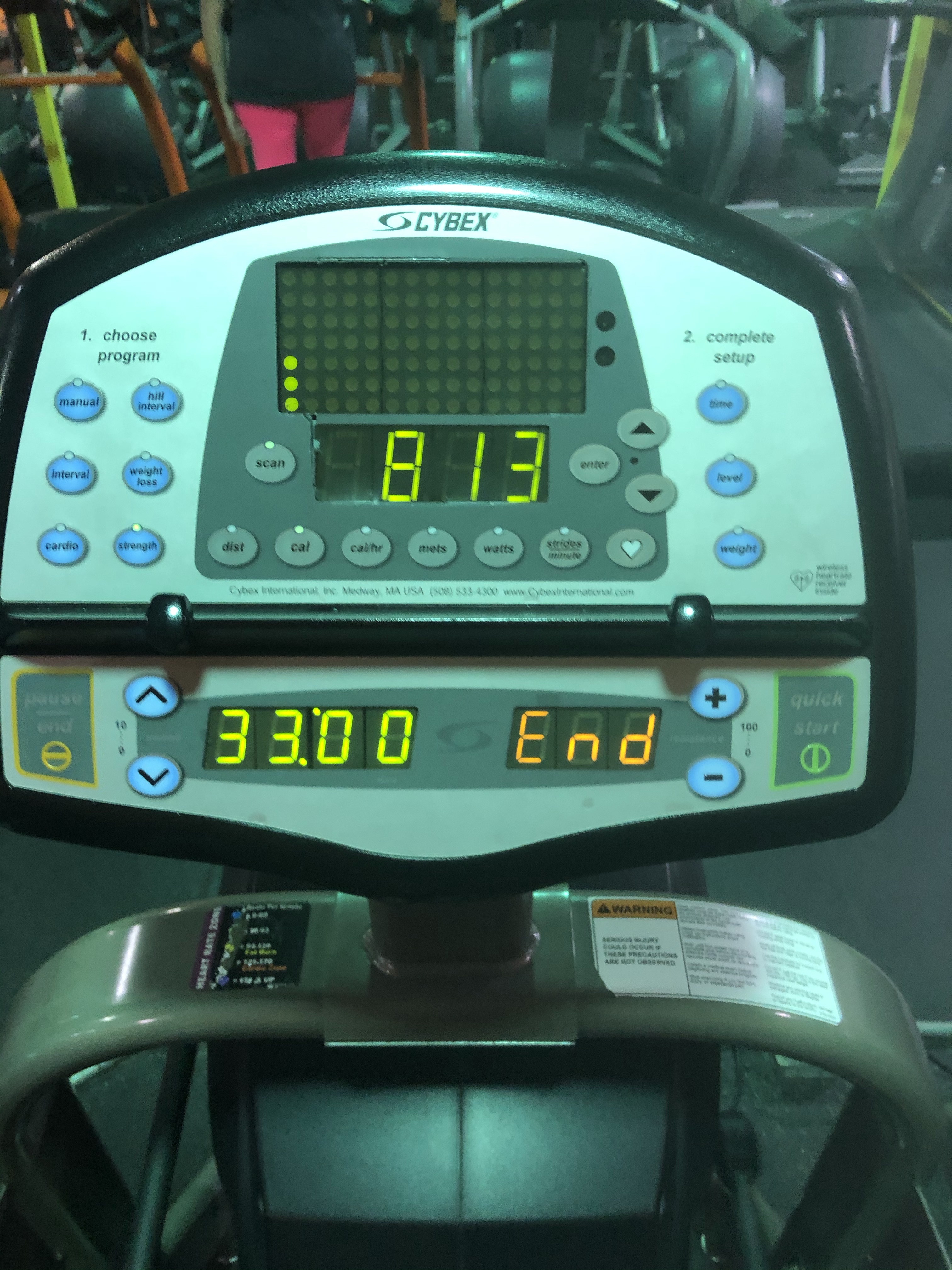 I start paying attention after 17 minutes or so — the meter on the elliptical estimates that I am burning 24.3 calories every minute. I am about halfway through the current “run,” and I will burn through 720 calories in 30 minutes and well over 800 when I include the five minutes of cool-down time that the machine grants me at the end of the workout. I get pissed because the timer starts as soon as I start moving my feet, and the first 15 seconds are “slow.” I make up for it. After a five minute break, I jump on another machine that allows me to take longer strides, and run for 12 minutes, aiming for 7-minute miles. It’s a workout.

 continuoussearch