
I started writing poetry in the 10th grade, stopped, then started writing fiction in my final year of college. I got into a writing workshop on the strength of a story about a mine disaster based on fact (there were/are/will be mine collapses) and was inspired by the immediacy and detail of a scene in Conrad’s Lord Jim (a boiler explodes). After college, I tried to write a mystery/thriller novel with Monet’s Haystack paintings as its centerpiece. It didn’t get far. Then I started another about a pair of young men who masqueraded as even younger men so they could be freshmen again and restart the process. No. Then, another about a young man with no memory who happened to be an all-star pitcher. This one also died a quick and quiet death, but the idea of someone without a memory persisted, and 40 years later (after several odd turns) became the spine of the novel I finished.
I will leave out the other fits and starts and hazard to mention that I attended a Ph.D. program in Creative Writing for six years and have published a few stories and poems. My writing life has centered more on frustrating periods of silence than flourishing runs of production. I have written other things along the way—articles, curricula, and this blog—but the impetus (novel, novel, novel) that started me writing was not fully engaged until I set aside other obligations. I am no longer the manager of an Italian dive restaurant in Philadelphia. I am no longer a director of religious education or the principal of a small boys’ school. I am no longer a full-time teacher. I continue to teach part-time but spend the better part of my workday in a well-lit corner of the library chasing pages.
When I was younger, I thought I had plenty of time to figure out my writing and that I would somehow perfect the creative process to get properly tuned into the muse. Many of my teachers focused on quality, brandishing red pens, and working as gatekeepers, and I ate that up. Only one teacher wrote an encouraging “Keep Writing!” at the bottom of every story I delivered to workshop, no matter what other positive or adverse comments he made. Maybe my teachers took for granted that the most significant driver of creativity is not perfection in all its glory but a desire to spend hours every day at the task. And—and this is the hard pill to swallow—the world is not just set against providing anyone with the hours required to do the work; it will also sponge up and divert the emotional and intellectual attention that writing requires.
I acknowledge that some writers get by on an hour borrowed here and there, getting in a solid jag on their off days. Some. I had one—and only one—teacher who advised against attempting to balance writing with a full-time teaching job. He suggested that driving a soda delivery truck would be a better option. And he taught. He recognized how easy it was to get wrapped up in the briar patch of teaching. Even when it is a bed of roses. However, writers, novel writers at least (okay, this particular novel writer; I really can’t speak for anyone else), revel in the unceasing details of life. Even driving a truck full of soda bottles can provide grist for the attention mill. Writing is more about limiting the scope of one’s vision, on not-seeing. One either ignores everything that doesn’t advance the progress of the current project, or the attention-seeking device in the writer’s mind will fly with a preternatural attentiveness to every corner of the room, out the window, and down the street to a vast and varied countryside. Again, yes, some novels venture into the encyclopedic (including some novels I love), but once you lash yourself to the mast of a story, you must learn to pass through the siren songs of everything—anything—else.
As previous posts note, I value distraction. I welcome something (anything?) that nudges ajar the closed doors of perception and lets in the light of inspiration. Except. The distractions I choose are just that: my choice. The inexorable enforced distractions that modern life promulgates, especially those that are delightful, noble, or profitable, will not contribute to the necessary accumulation of pages that a novel requires. Virginia Woolf recommended a room and three guineas as the basis for a creative life; something like that still holds.
In the end, I have become significantly less concerned about the origin arrival of the next idea and whether it is good than with securing time, place, and inspirational distractions. The mind will generate ideas as surely as it produces dreams night after night without prodding or worry. Back to work!



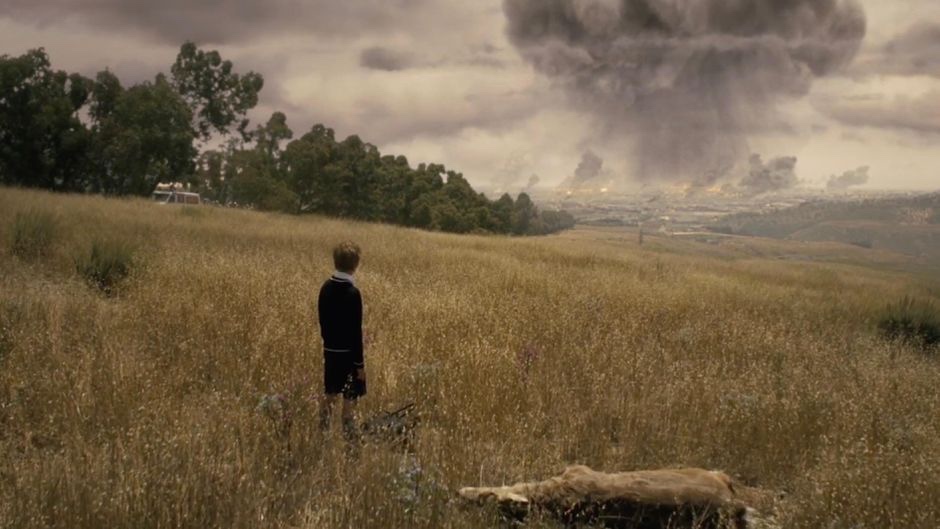 In 2016 HBO aired a radical revisioning of Michael Crichton’s clunky trash science fiction thriller, Westworld. The old movie issued a direct threat and moral: technology combined with profit motives is bad. Nothing new here, just a variation on the muck-racking novels of late 19th century America or a schlockier version of Fritz Lang’s Metropolis. The series that launched in 2016 delved into deeper issues: consciousness formation, the nature of humanity, and, yes, the moral bankruptcy of late capitalist culture. There was more if you wanted to find it, all wrapped up in a glossy, sexy, and violent package. Quintessential HBO.
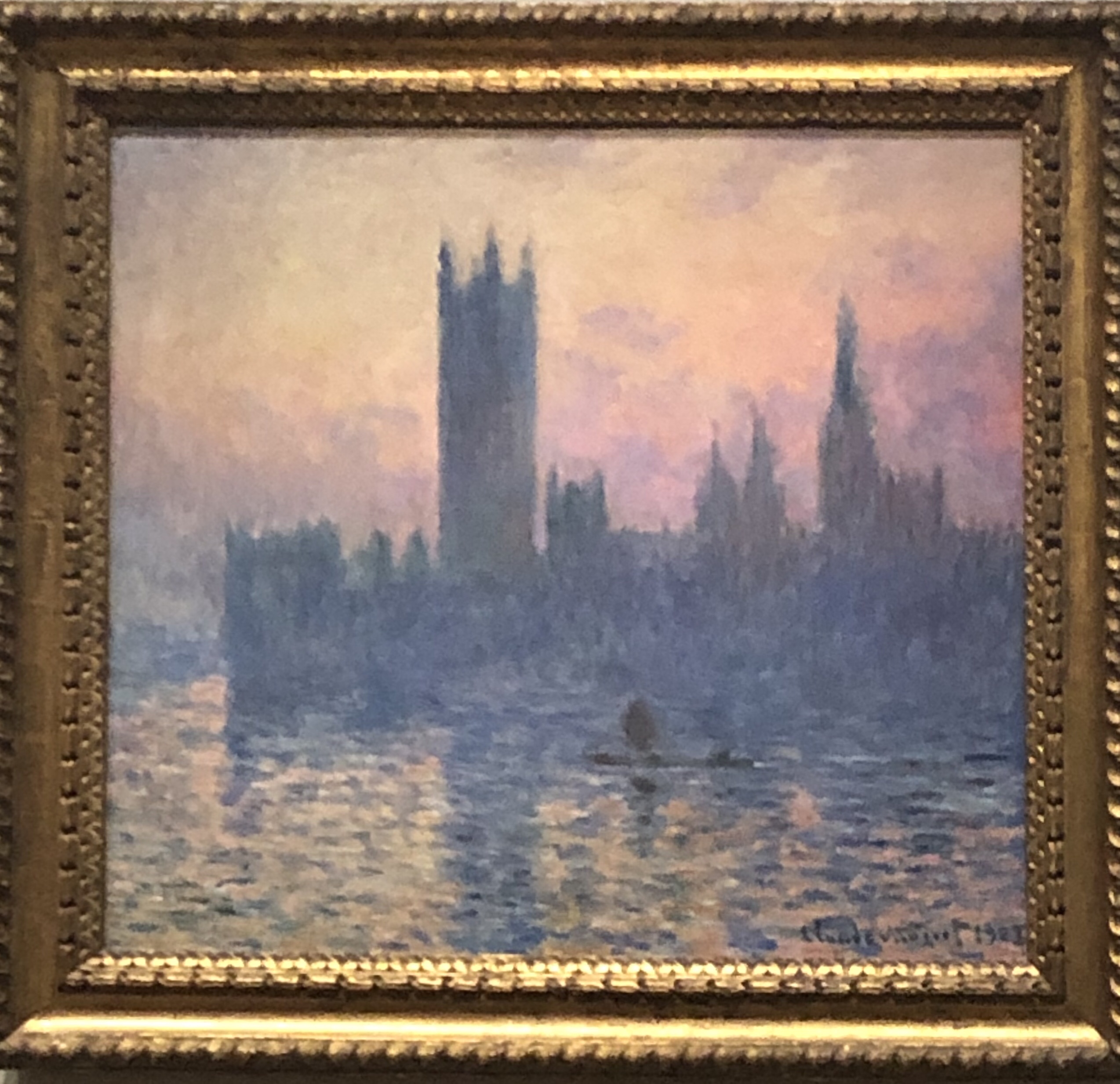 It has been a year and a few months since I was in London. I’m thinking about London while I sit and study Monet’s “Houses of Parliament, Sunset” at the National Gallery of Art. The memory of looking across the Thames at that building, with Big Ben swathed in the latticework of repair, has faded only a little. The memories of walking the streets of the original square mile and beyond remain startlingly vivid. I used them to paint scenes when the characters in my novel walked through London. The memories of the places and the memories of the feelings.
 When I was last in London, I was taking steps into a world where I knew I could live, where I had longed to live. Just like in the dream, writing—flight—was not foreign to me, but something I had traded in for a more certain, more directed existence. While “You are…You should” can feel like shackles, flying—writing—is formless and uncertain. Anywhere is possible. Everywhere is almost a mandate. Just like in the dream, I had written before—had flown—and had lived closer to the limits of my existence. But I had to leave my self-imposed limits. I had to accept that I might fall—and fail—but just as I accepted that in my dream—soaring up the side of a steel and glass edifice, wondering, “What if I forget? What if I fall?—I thought, even as the thrill of fear invigorated me, “You are flying now. Even if you fall, you will remember as you fall, and fly again. Keep flying.”
 Two women look at the Monet—taking seat in the National Gallery beside me. They think it is beautiful, but claim, “It doesn’t look like that.” Of course, the Houses of Parliament look like that, as does the river Thames, as does the sunset. “We didn’t see it,” they claim, “We were tourists, doing touristy things, like thinking about where to have dinner.” I did not think about dinner when I was in London. As much as I love dinner, even food became a secondary thought while I was in London. Even the pubs and ales became little more than way-stations along the bigger task—the journey, the seeing, the walking, and the flying. And the writing.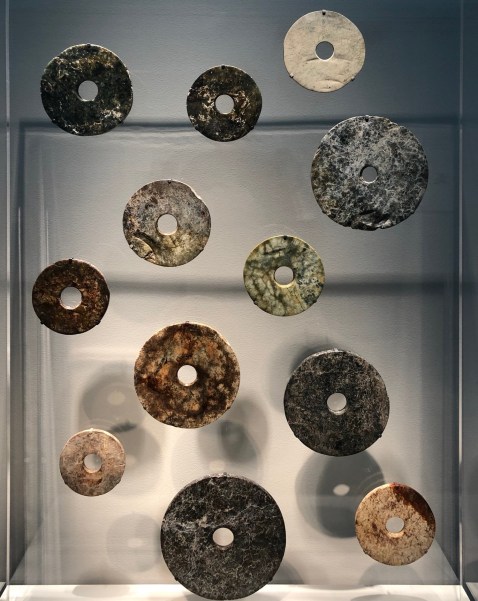
 In the other corner of the Freer Gallery, an exhibit of Hokusai’s paintings and illustrations includes quotations from the artist about what he intended—not just in the specific works, but as an artist. He wrote about discovering himself as an artist late in life. He was already an artist, but he claims to come into his own in his 50s and thought that he might attain his most complete vision if he lived to 110. He died at 90. His work is sweeping and intimate—monumental nature and quiet personal moments—fantastic and humorous—heroes wrestling demons and uproarious coworkers. Whatever else he meant to last in his work—why that hero wrestled that demon (as if one could easily answer such a question)?—he meant it to last. He aspired to capture a vision that would last long after he died.
 While I like to write while surrounded by people, once my eyes are on the page, and once my fingers are working, a kind of wall goes up. Writing is solitary. And it is not.
 There is a plate at the Freer Gallery in Washington DC. Around the rim are an elongated set of letters in Arabic. Even if you knew what those letters meant, would you know about the person who wrote them before the platter was fired in a hundreds of years old kiln? Or what to make of the carved insignias on a Neolithic disc from China? Sometime, 5000 years from now, will these shapes still make sense? Will they point some future reader back to me? Or to anyone else who writes now?
 continuoussearch