Roethke writes, “I learn by going where I have to go,” which is the story of writing—which is also to say the story of life. For the moment, lets stick to writing. There is no book, no instruction manual, and no teacher who can replace the hours of work you will spend at the work. You will learn to write by writing—by going where you have to go. The going is, of course, the writing. The “have to” is the need you do the work—perhaps the need to tell a story, but in the end, the need—compulsion, obsession—to to put words on the page.
You can redirect that need—turn it into a need to teach, a need to organize buttons in a jewelry box by size, color, and the number of holes drilled through their centers, or even the need to make a living. You can track your paychecks, note the yearly fluctuations in tax deductions and insurance payments, allot funds to various savings accounts, investments, and because you are not a pre-reformation Scrooge, charities. You will know where every cent ends up, and although you have plenty, there will always be a deficit—a shoe that pinches your toes together just a bit too snuggly, a pair of jeans that fits but is a shade away from the right color, a partner who looks at you as if you smell a little too much like their childhood doctor’s office.
Which is to say, no matter the wealth of lapis lazuli buttons with three holes bored into what must be the vertices of an isosceles triangle—should the sharp end point down or up when sewn onto the back of a blouse?—you will feel unnameably dissatisfied.
Writing will not solve the problem of dissatisfaction. You will be frustrated in a thousand and one new ways. You will complain about your inconsistent use of semi-colons—complaining to anyone who will listen, but mainly, and with a tone bordering on abusive, to yourself. You will natter on about story shapes, query letters, and the predominance of Latinate words, but your feet will slide into your shoes, into every pair of shoes, with an ease you forget to notice because you are working. And you must work.
Perhaps not. Sublimation—damned Latin—is a powerful force, a whirlpool that can suck you into something like a normal life. Writing is not normal—not the way she does it, or he does it, or you do it. You may have snuck it in, adding unnecessary flourishes to your annual report (your supervisor redlined that entire paragraph), but you never did it because you “liked to write.” You may not like to write. You might rather binge the entire run of Buster Crabbe’s Flash Gordon serials, or sew, or take your dog for interminable walks. Writing may make you fundamentally unhappy, but, to be honest, you are fundamentally and essentially unhappy, so writing was never the problem.
You have to write. You don’t like it, as a date once said to me as an offer of amnesty—red, not white, flag. If you have given into the work, it pursues you the way the bottle chases the alcoholic, or the tulip chases the sun—logotropically. You may choose some attendant activity that grants you the release of completion—all those pick-up basketball games that end when one side score 21 points, poker tournaments, or clean plate after clean plate—but until you learn that completion is a grift as glittering as accolades, you have not learned that writing is where you have to go. The ticket is sewn into the lining of your coat, with any luck you will know when it is time to rip it out and show it to the conductor.
This train is for you and you alone, and you will never arrive anywhere but here. And before you know it, you will be the conductor, the engineer, the porter, and the signalman. The train will shake as it crosses the trestle over what—a ravine, an ocean, a galaxy, just a street in Tokyo?—but the shaking will help settle and steady you on your way. You have already arrived.
The end of Lent means that I can eat sweets again. Even though I am years removed from my Catholic upbringing, and I don’t recall my parents ever guiding us through some chosen fast during the six-week run-up to Easter (although we did not eat meat on Fridays, enjoying fish sticks and cheese pizza during that time), I try to give up something I enjoy during Lent. My practice is partly an exercise in self-control but also, and perhaps mainly, an extended ritual. I wonder how many rituals I practice.
I used to work for a Unitarian Universalist congregation, and they treated rituals like a kind of smorgasbord (one of these, one of those, absolutely none of those), depending on the season. While I understand being open to possibilities (I often quote Dickinson: “I dwell in possibility, a fairer house than prose”), that kind of openness can too easily lead to egoism: my belief reflects what I think and feel and want. When egoism is brandished without the perpetual interrogation of the self (What do I want? Why do I want it? And: what are the consequences of my desire?), it tends to become a rather sloppy exercise. We may fall back on Whitman’s handy “Do I contradict myself? Very well then, I contradict myself” (If he can do it, why can’t I?) but without putting in the hard work of loving the contradictory multitudes of the kosmos.
Belief is more like weather. You know that it is there and part of an intricate system, but the weather does not care if you have a picnic scheduled for Saturday afternoon. In fact, the weather does not care; it simply is. Sailing taught me that hard lesson. We would huddle around the satellite radio for the computer-generated voice that told us what was likely to be around us in the nights and days ahead, but short of sailing out of the way of a microburst—sometimes reversing course for hours—we plunged through. Stormy sea, or sun-drenched calm with the motor running to push us out of windless placidity, forward was our only way.
Much of life, the universe, and everything is like that: out of our control and uncaring. Either that casts you into an existential crisis (as it should), or you declare, “Fuck it (choose your exclamation)! I’ll do whatever I want,” or you put on clothes that suit the moment and struggle on. I’m a fan of the struggle. Many of my rituals—you might think of them as routines—engage the struggle. My 5-6 day-a-week workouts are arduous enough to get my heart rate above 170 bpm. My Sundays in the museums set a benchmark for my writing—the art beckons: Beauty and brilliance are possible. Attain this! Even my mornings, jump-starting my brain with some puzzle before driving 30-40 minutes accompanied by music that sets the course for the work day ahead, are parts of my daily ritual.
What is the difference between a ritual and a routine? Perhaps intention. My brain switches to full-on during ritual. I recognize that some who meditate (and meditate as a ritual) do so to quiet their minds. I recall sitting in Quaker Meeting, having left the world at the Meeting House doors, and waiting for that still, strong voice to rekindle my spirit. Some days, it did; many days, it did not. Many days the world clattered too noisily. Many more days, my mind was dropping plates and banging a wooden spoon against a dented pot. I can understand the wisdom in trying to quiet the mind of its desires.
Perhaps I use ritual to find music in the cacophony of life. The external and internal noise blend together to create something like order in the chaos. I write “something like” because part of my writing ritual is to transcribe something that doesn’t simply seem real but mimics the real in all its disorder.
I try not to say this part out loud too much, but as a writer, the whole idea of silencing the mind is antithetical to my craft. I always listen for a voice that is sometimes still and strong, sometimes bumptious, sometimes shrill, sometimes serious, sometimes frivolous, sometimes the voice of two women discussing the responsibilities of sovereignty, sometimes the voice of a horse who charges into the abyss, sometimes the voice of a man contemplating the relationship between light and gravity, and sometimes something like my voice. Ritual helps me set aside voices and noises that make claims on my precious attention. More often than not, those noises are not discordant but precisely organized like steps in a march, and they would regiment my music out of me—even if that music is a march, or a waltz, or some mad scramble on some impossible dance floor, or just the call of birds at dawn.
Ritual does not preclude thought (or my self) so much as it helps me tune out everything that stridently insists: “not your thought, not your self.” Ritual is an exercise of will against everything outside the demands of my work—so that I can listen freely to all the voices; so that I can be distracted into flights of fancy; so that I can (and will) think more deeply, reflect more keenly, and write.
“But, isn’t that just egoism? Aren’t you just doing what you want? And weren’t you just complaining about that?” you ask. And yes, if writing were just a routine, something I did by rote, or just to accumulate something else (appreciation, remuneration), then I would agree. But ritual is also sacred, part of a trumpet call from the unknown, wherever and everywhere that is. To borrow from Kafka: “Ich weiß es nicht,” sagte ich, “nur weg von hier, nur weg von hier. Immerfort weg von hier, nur so kann ich mein Ziel erreichen.” Ritual opens the door back into the unknown world.
I’m sure it’s happened to you. Someone has told you the right way to do something. It could be something as simple as folding towels and then hanging them up on a towel rack in your bathroom, folding a t-shirt and putting it in a drawer, or wrapping a birthday present. Maybe you offer such advice, although it’s not really advice. It’s a dictum: THE RIGHT WAY. I wonder where people get these ideas, and I suppose, as often as not, they come from parents who explained how to wash a fork or how to tie shoelaces. Someone once watched as I tied my laces and corrected me. “That’s not the right way.”
My parents never offered such advice. After my mother taught me the wrong way to tie my shoes, I became a free-range kid—long before there were such things as free-range kids. My brothers and I roamed through our exurban neighborhood, sent on our way for hours every day with only a momentary return for a PB&J at lunch. When I was eleven, I read the instructions on a box of Chef Boy-Ar-Dee pizza and made pizza dough from scratch on Saturday afternoons. I asked for and received a pizza tin for a birthday. My father set out the chess pieces, and after explaining how the pieces could move, I was on my own. Did I find a book in the school library that offered suggestions? Yes, I did, and then, eventually, beat my father. I learned to tie a bowline knot in Boy Scouts (the rabbit runs around the tree method), and my father didn’t care how I tied it when we sailed on the ocean together, so long as I could do it when the ship was bucking over chop.
I can’t tell you how many things I learned on my own, occasionally seeking guidance. While I took swim lessons, first in the pool of a local family, then at a Red Cross class at a nearby pond, later when I wanted to ascend from the junior varsity to varsity team at my very competitive high school, I turned to Doc Counsilman’s Science of Swimming to work on my breaststroke. My first car was a Volkswagen Beetle, and I owned a copy of John Muir’s How to Keep Your Volkswagen Alive and used it to guide me through replacing the clutch; it was more complicated than I imagined. Replacing the McPherson struts was beyond my ken, mainly because I didn’t own something to compress the springs in the suspension. Even with expert advice, I knew when to turn to a professional.
I learned to cook by deciphering recipe instructions in my mother’s worn copy of The Joy of Cooking—the only cookbook she suffered to own. I watched cooking shows on PBS when I was a teenager, and in my early twenties read James Beard’s Theory and Practice of Good Cooking for fun. When I worked there as a waiter at La Fourchette in Wayne, I asked the head chef how to make a beurre blanc, which I needed to know to make scallops stuffed with pesto in a beurre blanc. I asked about the pesto, too; there was no internet. I learned about pastries from the pastry chef. For one Bastille Day dinner, I replicated his white chocolate mousse recipe, straining raspberry coulis through a well-cleaned lint screen from the dryer in my apartment’s basement. Not the right way, but one of many possible ways.
My early school teachers remain a blur. I remember one who told me my world map looked messy—my crayon blue oceans were too streaky. But there was Mr. Hecht, who asked me to join the math club, and Mrs. Vandergriff, who had us do a lesson in prejudice by segregating the blue-eyed blond students to a single table. We weren’t allowed to use our hall’s water fountains or restrooms. My seventh grade history teacher (Mr. Moore) taught us how to take notes, and I can still organize any lecture into a fairly plastic but organized outline. I made deeper connections with my teachers in high school, in no small part because we ate three meals a day with them; I attended a boarding school. But besides dates and processes (which I loved), I don’t recall learning how-tos. Ryck Walbridge did not walk us through how to work an autoclave; we had one, but how it worked was a lesson beyond us all. Buzz Gardner read Catcher in the Rye from start to finish aloud in class. Neither Dick Broad, Buzz Gardner, Arthur Jackson, nor Alexander Revell taught me how to read more effectively—or “Read Like a Professor,” as Thomas Foster advises. I came to reading on my own.
I was not an early reader. Sure, my mother dropped us off at the Paoli Library while she shopped. My brother and I wandered through the small dark corners, pulling books from shelves, settling on Dr. Seuss’s preposterous rhymes and Richard Scarry’s encyclopedic illustrations. We had few books at home: a multi-volume photographic history of World War II, another multi-volume medical dictionary acquired volume by volume by shopping at the Acme grocery store, and a few Reader’s Digest compilations of abridged novels. I must be misremembering a little because, at some point, the shelves in my 11-year-old bedroom began accumulating books, among them E.B. White’s Stuart Little and the anthology Rod Serling’s Triple W: Witches, Warlocks, and Werewolves, and a hard cover dictionary. In seventh grade, I met a boy who was reading Alistair MacLean’s Where Eagles Dare,and when he was finished, he loaned it to me. Thus began a reading bender that has not ended. I tore through those adventure novels, some early Michael Crichton, all of Vonnegut in paperback (Player Piano through Slaughterhouse Five).
Somewhere in that jungle of pleasure reading, I started to pull books apart. While reading MacLean’s The Way to Dusty Death, finding the title phrase buried in a description deep in the novel delighted me. I was 11 or 12 and began to dig through books looking for interconnected words as if the repetitions would unlock the book. I read books like puzzles. Of course, I never considered that MacLean alluded to Macbeth (I had, at the time, neither read nor watched a play by Shakespeare). Later, my magpie mind would make that connection and a thousand more.
I guess my point is that no one said, “Brian, look for repetitions” as a method for unpacking a novel (or, for that matter, the world). I learned to read, moving from Dick and Jane to The Story of Ferdinand the Bull to “Who Am I This Time?” to Leviathan to The Waves without anyone saying, “This is the right way to read.” Did I stumble along the way? Yes. Even in graduate school, one of my professors marveled at my compendious collection of interlinked parts of Donald Barthleme’s The Dead Father but suggested that I hadn’t stumbled on a reason for that compendium. “This lacks a thesis,” she wrote—as if connection wasn’t the thesis. Sometimes I think that what I believe to be so obvious that it beggars definition. It’s not. I have to be painfully clear.
So, I want to tell you there is no right way; there is only your way.
But.
You will only find your way by working at it. You will need to test your method in several unrelated fields. “But I don’t like math,” you will complain. Or, or, or I don’t like “fill in the blank.” Look, even if you don’t like math, or Latin, or chemistry, you can’t say, “I don’t like trying.” You may be at a loss for knowing what you want to spend the rest of your life trying. The whole point of school is not to teach you some balance of everything. School is here to give you a reasonable amount of exposure to things you would not necessarily consider as avenues for something like success. And—and this will frustrate you—school teaches you that effort—genuine slog through the mud, sweat in the field, freeze on the mountainside effort—has lasting value. You may not remember the Krebs cycle or the quadratic formula, but you will remember the effort.
Let’s suppose you are that rarest of rare birds, “the natural.” What you are a natural at is not baking, auto repair, baseball, drawing, or writing. Naturals have the ability to expend genuinely unfathomable effort in some—usually one—direction over and over again without giving in to the fear of failure. They begin every day and try. The rest of us, the regulars, must learn how to try. “The right way” is just a shortcut—and when replacing a clutch, I’m happy to have that shortcut. Imagine winging a clutch. Good luck.
Even if there is a right way, there is no right way to try. That you have to figure out for yourself. Figure it out. Try. And you will find your way.
No writer sits down without some darling in mind, whether that darling is a reasonable payday, fame, or a glimpse behind truth’s brocaded curtain. Sometimes the writer doesn’t know at the beginning of their current project what the darling is. They just feel compelled to reenter the swamp—hip deep with words and ideas—and trust that something worth their love and attention arises from the murk.
Then it does.
Whether you rescue your darling from a crocodile’s gnarled teeth or the soul-sucking mud of despair, the writer wades in and declares, “This darling is mine!” Then you fight to the death. Everything else you have written—all those flat sentences and chapters that advanced something like the plot—must go.
Keep your eyes fixed on your darling; that’s why you write, not to serve some “should”—even if it is a self-inflicted “ought.” Save that old draft (it may surprise you later), but carry on in the service of love. Be a hero. Save your darlings.
I pulled the paddle into my lap and raised my gaze from the bow of the canoe to the sky. Insects thrummed from both banks of the river. Over my head, the telltale wings of raptors drifted. The smaller sets of wings belonged to hawks, the larger to the few eagles that patrolled the river. One began to circle—head down, eyes scanning the water, wings in a sturdy glide—one loop then another, as it made its way upriver, as slowly as my canoe drifted downriver. “Does it see me?” I wondered. “Does it care?”
I hadn’t looked up much. I paddled alone; that’s not true. I paddled in a group of sixteen students and five adults. A momentary miscalculation and late invitation made our group oddly numbered, which does not suit traveling in canoes. Yes, of course, one canoe could have set off with three. Still, three in a canoe with a river running low after a summer of less rain (I opened an umbrella once or twice and almost always—and only—during summer afternoon downpours) leads to too much scraping through what would have been more boisterous water. As our party assembled, I suggested that I would paddle solo. There was one slightly smaller canoe. Advice was offered. Off we went.
A very long time ago—almost fifty years now—I was required to solo to pass a course. I remember being in some quiet part of Pickering Creek and rocking the canoe from side to side to watch the ripples cascade against the shore. The instructor chastised me and threatened to withhold certification. What fourteen-year-old boy does not revel in the movement of water, whether caused by throwing rocks as heavy as he could muster from whatever height was possible or watching a leaf float down a dreary current in August? YMCA instructors advocate safety and not exuberance. I passed.
So as I took my seat—the molded plastic bow seat now used as a midstern soloists bench—I began simple “J” strokes, gauging how much my pull would shift the canoe on either side. One of the joys of canoeing with a partner is that you can take full strokes. While it’s not like lifting weights, catching the water and pulling the canoe forward with the strength of one’s arms, shoulders, back, and hips is gratifying. Exertion that has an immediate result is a pleasure. With a partner in the canoe, finding a rhythm and effort that matches and propels the boat forward in a resolutely straight line is like singing in an improvised harmony. Get it right, and it’s beautiful and swift.
I realized quickly that I was slower than the other canoes in the flotilla; I paddled with half the horsepower of the other boats. If the day before my partner and I had led us at a crisp, easy pace, today I would be challenged to keep up with eighteen-year-olds who were quick to fire. If the young like ripples, speed—whether running, swimming, paddling, or (prepare for this) driving—is an intoxication. Fortunately, after the first flurry, effort abates. I played the part of the tortoise and kept at it.
However, when soloing, each stroke contains a moment of counterpoise. Paddle too strongly, and the canoe will veer hard to the right or left, depending on which side of the boat you paddle. Fast in the wrong direction will not do. And so each stroke ends with a curl—the bottom of the “J”—that corrects direction but slows the boat. You are constantly foiling your effort to proceed forward. Think of it as “Yippee! Damn! Yippee! Damn!” I learned quickly that my right-armed strokes were too strong; they needed more “J” and, therefore, more slowing than my left-armed strokes. I am, after all, right-handed—naturally unbalanced.
The whole reason we were on the river was to forge bonds going into senior year. My school gathers the seniors for an overnight trip during which they hike and canoe together. Paddling alone ran counter to the purpose of our journey. Yet, there I was as they pushed ahead. I caught them when they rested, proceeded onward while they snacked, and then greeted them again as they passed me. Again. And again.
I scanned the water ahead and planned and planned and planned, reading and, almost as often, misreading the lay of the river. Paddling alone, I stayed focused on the water because the water was low, and I needed to find a way forward. Too often, I lacked the speed to catch the right course through the rocks that rested just below the surface and scraped to a halt, losing all the advantage of the river’s brief flurry of forward momentum.
The Hound and Hunter, Winlsow Homer
However, keeping my eyes at river level meant that I witnessed turtles sunning themselves on rocks, a family of brown feathered ducks tucked in against the river bank, and once, when I was well ahead, a doe and fawn swimming across the river. At first, it looked like one small brown lump—I thought some small river mammal. I had never seen a deer in the water; the closest thing was a painting by Winslow Homer, The Hound and the Hunter. The deer I saw transforming from a brown lump to a full-bodied animal had no horns. She slowly emerged, an entire brown body of deer, picking its way across the rocks and onto the ledge at the river’s edge. Then the second body, still adorned with a fawn’s spotted coat, followed its mother. They stood by the water, then proceeded through the weeds covering the bank—eschewing a man-made stairway that led from a shed to the water—and into the woods. I was aware that they were aware and that if I had been surrounded by my group, their passage would have been quicker, affording a glimpse at best. Alone, I had moments with them.
Later, when I joined the crowd for lunch, one of the grown-ups recounted all the raptors they had seen along the way. I left the lunchers for a final three miles and put my paddle down, this time looking up. I had not looked up, my attention so much on the water and the passage.
On the final stretch, the wind picked up, and because canoes are keel-less, it pulled arrow-like into the wind, pulling me off the straight line of the river. However, if I paddled on my left side, I discovered that I could lay into my strokes more aggressively. The wind corrected my course without the impediment of the “J.” I began, over otherwise flat water, to make speed. I watch the blade of my paddle cut whirlpools that trailed deep. I watched my arm and hand as they worked lightly with effort. I may be sixty-two, and my knees ache, but movement delights me. I was delighted. Then the wind slackened, and my course went cattywampus. Everything is adjustment.
I arrived at our pick-up spot minutes before the students and teachers arrived. I pulled my canoe onto shore, tipped it over to expel the little water that had trickled into it while I shifted my paddle from side to side, and waited. Not long. One of my fellow grown-ups said, “You’ll sleep well tonight.” Little did he know that what would blanket me wasn’t lingering exhaustion but abundant happiness.
As I write, I realize that I have so much out; brief conversations as students and colleagues paddled around, then by me; a turtle that fell from a branch of a fallen tree; the angle of the sun. More. There is always more. And I acknowledge that there are several metaphors and lessons just below the water, and for once, I will ask you to avoid them as best you can. You won’t miss them all, just as I did not miss all the rock ledges that cut along the bottom of the south fork of the Shenandoah River. This is just about canoeing solo and together and the three and a half hours it took to go from Point A to Point B. Of course, it’s not, but put the paddle in and see where you go.
Okay, I don’t know if this scene will stay or not, but while drafting (and until someone snatches it out of my hands, it is all drafting), I wrote this:
We walked into the sunlight outside. The sidewalk was empty; Willi and Benjamin had already turned at the corner and another corner. Cars crept slowly down the one-way street, pausing at the stop sign and squeezing into city traffic. The waft of a pizza oven turned my nose in another direction, away from lunch with these men.
“Are you ever not paying attention?” Carlo asked. “It’s like you are everywhere else before you realize exactly where you are.”
“Isn’t that how everyone is? You pay attention—”
“Not like you,” he answered. He strode forward quickly. “If we don’t hurry, Benjamin will clean them out.”
Aletheia and the Thieves
My hero, Aletheia, has just managed a draw in a chess match with her mentor, Carlo. They are walking to lunch at the Reading Terminal Market, where they will join their friends. I had just finished writing the scene of the match and was getting them out the door and onto what was next, but I had an appointment to keep and didn’t want to leave the project on a closed note (the match was finished). I like to stop, when I stop, midair. Sometimes I stop mid-scene. Sometimes I stop mid-sentence.
When I want to move on with intent (write this tomorrow), I will end a writing session with a “tell” (as opposed to a “show”). I know the “tell” is not doing the work, and telling invites immediate revision. I set it down even if I have a glimmer of what the “show” will be. Tomorrow calls. Of course, as we know all too well, tomorrow is never guaranteed, but this novel writer must wrap himself in a heavy blanket of hope. More words will come.
This was not always the way.
In his column “The Greatest Life Hacks (For Now),” David Brooks included “The biggest lie we tell ourselves is, “I don’t need to write this down because I will remember it.” As much as we value multi-tasking, our brains don’t hold onto the gems. We think they will, but they don’t. We are eminently distractible. Something bright and shiny (or dark and jagged) will capture our attention, and flashes of brilliance dull quickly as we fall back into the morass of the already known and easily predictable. Surprise is the enemy of the homeostatic mind.
I carried a journal (hard cover, unlined) with me for years, taking notes about everything: movies, meals, architectural details, people. I accrued notes on pages of yellow, narrow-lined legal pads. Years of art history classes taught me to write quickly and legibly in the dark. I could (years of typing has muddled my handwriting) watch and listen and take notes simultaneously. I wrote everything down.
Yet, for all my writing, I did not have a daily specific writing practice. Even in graduate school, working toward a Ph.D. in Creative Writing (yes, that’s a thing), I wrote to meet deadlines. One short (1500-2000 word) and one long (6000 word) essay in each Literature class. Weekly seminar essays. Scrambling toward workshop slots (sure, I’ll have a story next week). I did not have a body of work to mine for revision. No particular point of view, no overarching theoretical approach, no “story of my life” that I wanted to unfold, refracted in fiction and poetry. I had come from a restaurant job where I worked 60-80 hours a week and had squeezed out enough chapters of a novel to get me into school, but once there, I was on terra incognito.
So I wrote everything down. Most of my work came about because I discovered new ways of writing each time I read something new. And everything was new. I wrote in response to—response through,really—the fiction, poetry, and philosophy I encountered in classes and on my own. I read constantly. My program’s joy (and hazard) was that the writing program was ensconced within an academic department. The creative writers met the exact requirements of our academic classmates: area distribution, exams, translation, and dissertation. In the course of my study, I didn’t just write. I learned about writers and writing, about processes and the vast array of forces that influence process. I took volumes of notes, repeatedly surprised by ideas and approaches, by the workings of minds so different and similar to my own.
Except.
Even though a biography of Dickens, Woolf, or Joyce will point out the peccadillos and triumphs, one thing rarely mentioned is the hours at work. Dickens could write in the company of friends as they gathered before a night out. Later, his study was off-limits to his family; he was not to be disturbed. Woolf wrote fiction in the morning, then focused on essays (or the other way around) after lunch. Yes, there were interruptions. Of course, there were interruptions, but writing became a habit. Are there writers for whom habit is anathema, who wait in a field with their pen held high, waiting for the jagged lightning of inspiration? Sure.
When you establish the habit of writing every day—and putting yourself to work for several hours every day—you never actually stop writing. You may not be typing. You may not be scribbling in your favorite notebook. However, your mind simmers. If you commit to 1500 words a day and stop after two or three or five or six hours, your mind will continue to work. You will not passively wait for pearls (or bakelite beads), so you will not be surprised when they come.
And you will not need to scurry to the pad when lightning strikes. You will be the blaze. Back to work.
We walked into the sunlight outside. The sidewalk was empty; Willi and Benjamin had already turned at the corner and then another corner. Cars drove slowly down the one-way street, pausing at the stop sign and squeezing into city traffic. The waft of a pizza oven turned my nose in another direction, away from lunch with my friends. My head turned toward the smell.
“Who’s driving the green sedan?” Carlo asked.
“A woman,” I shot back. “Was she wearing jewelry?”
“Wait. What?”
“Jewelry. Was she wearing jewelry?”
“Earrings. Something dangling. Not hoops. I think.”
“No, you don’t ‘think.’ You know. What were they?”
“Fish,” I answered, recalling the glint beneath the voluminous red hair pulled back in an unkempt ponytail. “Gold fish hanging head to tail. Probably real gold. The sedan was a Mercedes 300.”
“Good.” Carlo hadn’t stopped walking. He hadn’t even turned toward me while he questioned me.
“Did you see her?” I asked. “No,” he answered. “Why would I? We’re walking to the Market, and I was thinking about the crowds.” He turned his head and glanced at me. “Besides, I knew you would.”
“Is that good?” I slowed down, and Carlo stayed on pace. I caught up to him at the corner. “Should I not pay attention?” The light for the cross traffic turned from green to yellow. I shifted my weight, ready for the walk sign. Carlo raised his arm to stop me when the white “WALK” sign lit up.
“Why are you stopping me?” He nudged me back from the curb and tilted his head to a space beneath a shop awning that was out of the flow of foot traffic.
“Do you want to pay attention?” he asked in front of a store that promised fast copies, faxes, and passport photos.
“What do you mean?”
“Do you look up and down the street and think about what you notice? Do you want to pay attention, or is it just what you do?”
“It just happens.”
“All the time,” he stated without a hint of a question.
“All the time.” A car horn barked at a man who had stepped into the intersection too late. A woman with red fingernails smoothed the back of her dress as she walked past. The man at the fax machine looked up at Carlo and me, and when I met his gaze, he looked away.
“Let’s walk.” Carlo reached out and guided me by the elbow. I felt adrift, like I would collide with everyone else on the sidewalk as he pushed me forward.
“Stop,” I insisted when we were less than halfway down the block. The city—all of it—seemed foreign, as if I had ever been here before. I felt out of breath.
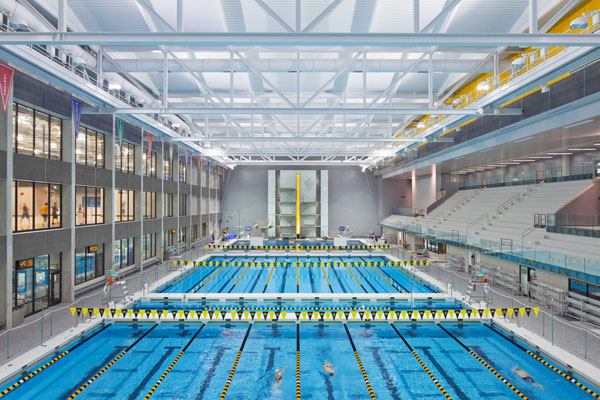
When I was in grad school, one of my teachers told me that swimming (I was doing 3000-4000 yards, 3 times a week) benefited my writing. I understood why. Putting one’s head down and churning away for an hour compares well with writing. You pile up the painful laps the same way you pile up the words, and there is no immediate end. You just have to do it every (other) day.
Pool at the University of Iowa
Sometime in my thirties, I decided that I had worked out enough for the rest of my life, that all those miles had inoculated me against the exigencies of time. After all, I was averaging 24,000 meters a day at my peak. You might wonder, “What is 24,000 meters, really?” The fastest runner ran a mile in a bit under four minutes, and the fastest swimmer swam four hundred meters in just under four minutes, so 24,000 meters in the pool is a rough equivalent of sixty miles. 6-0. Six days a week. Even the piddling 3000-4000 yard workouts I managed later in life amounted to five to eight mile runs. All those miles earned me something besides shoulder and knee injuries. Whether this is what I learned from swimming or if something already inside me made all those laps possible, I cannot be sure. All I know was that afterward, I knuckled down to a world of tasks, whether unpacking a truckload of books, driving all night to a funeral in Maine, or doing the daily work of marriage.
But no matter how hard I worked, no matter how much thinking or interacting I did, eventually, my body let me know that the actual workouts had to start again. By my middle forties, I was back in the pool, gobbling down yards. After one knee surgery, another looming on the horizon, and rotator cuffs that kept me up at night, I decided to stick to dry land training (weights, elliptical). I’m still at it.
Maybe it’s no surprise that I struggled with writing when I stopped working out. There were a dozen other reasons for my hiatus, but the lack of steady physical movement played a part. When I furiously wrote and read in grad school, I swam, then ran, and always took long walks in the middle of the night. I never taught sitting at a desk but prowled in the classroom, even, at one point, doing the backstroke across the length of several tables to demonstrate the power of metaphor.
Writing requires resilience. You have to be able to face down the blank page and the open ended-ness of your project. Most of us do not write with a guarantee of publication (or adoration). We write, compelled to add word to word, stringing together sentences, scenes, and scraps of dialogue, until something like a novel accrues. Some writers don’t need the physical analog to bear them forward in their pursuit of words on the page. Their minds take flight and find their ways through the canyons of words without having to ride the rapids through them.
We think of the imagination as free of physical constraint, even when we write scenes replete with physical—sensed—detail. It’s pretty to think that this works. I can write a depiction of flight even if I can’t fly because I can imagine it. My mind is not bound by what I cannot do.
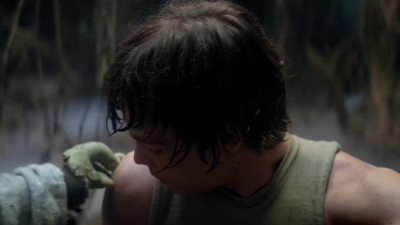
Yoda pinches the “crude matter”
I am reminded of a movie I saw ages ago. In The Empire Strikes Back, Yoda castigates Luke about the force. He grabs Luke’s arm with his claw-like hand and insists, “Luminous beings are we, not this crude matter.” And that’s the whole point: what’s inside you matters. Of course, this appealed to me when I was a sophomore in college. What does imagination—the expression of the soul—have to do with “crude matter”?
My belief in an inner self separate from bodily suffering—or ecstasy—was fundamental to my worldview. I wasn’t alone. Whether in theology or philosophy, the notion of something like a soul runs deep. Descartes’ cogito ergo sum (the first principle of his philosophy) locates being in the process of thinking—rigorous and effortful thinking, but thinking and certainly not feeling, and definitely not tasting, seeing, smelling, hearing, or touching. There is a longstanding division between the spiritual (the imagination included) and the physical. The mind is that “luminous being” within or around us. I learned to ignore the crude matter while I swam—playing songs in my mind while lactic acid built up in my muscles and my body cried out for oxygen. I was happy to engage in the separation of body and mind.
Except they are not separated.
While neurobiologists distinguish between the brain—a profoundly physical, almost mechanical thing—and the mind, which arises (or descends) from the machinery, they see the connections between the brain/body and the mind. Caroline Williams’ recent book Move tracks current science about movement—whether dancing or walking or crawling about—and how it impacts our mind. Reading her book alongside Anil Seth’s Being You, Mark Solms’The Hidden Spring, and Iain McGilchrist’s The Master and his Emissary, I find it hard not to see our minds as a product of evolution—much in the same way that our brains and bodies evolved. We got opposable thumbs, eyes, and consciousness. Our thoughts—even the most abstract thoughts—are grounded in the dynamic range of physical existence. This thing we imagine as a brain-based entity is formed in concert with sensory signals from our bodies. We are made up of our smell, sight, taste, touch, and hearing. Our minds did not blossom while we sat at a desk and contemplated, but as we moved through and sensed the world.
Whatever else we are, we are sensory data collectors. Maybe the dog does a better job of sniffing or the bat of hearing. Our brains are tuned to the sensual world—it seeks and expects constant sensory stimuli. Mark Solms argues that our consciousness results from the perpetual influx of information coming into the brain. Our consciousness checks that flood of information against our brains’ equally endless sets of predictions. Whether we are regulating the temperature of our bodies or the emotional tenor of our workplaces, our brains and minds (I am using “mind” almost interchangeably with “consciousness”) govern unconscious and unspoken expectations. Stimuli that occur outside the narrow predictions trigger error messages, and our minds leap into action—defending the status quo with alacrity.
However, what happens when our minds expect smells, sounds, and sights (and the occasional taste and touch), and there are none? What happens when we remove the wealth of stimulation? I hypothesize that the lack of signals about the world creates an error message in our brains akin to the kinds of error messages about our temperature. Our body-brain-mind system adjusts for too much heat or too much cold, but it adjusts because it constantly surveying for information; the system expects information. Without that information, it must (I surmise) recalibrate the sensory array and how the information is processed. Our brains don’t atrophy—that’s what you would guess, yes?—but reach out in new overexaggerated ways.
However, I do not suggest stimulating children in expanded versions of Skinner boxes. Our body-brain-mind systems develop through self-directed use. We are designed to move through a world of sensation—to process on the fly and on foot. We learn to think, read, and imagine—we write—by moving through the world. Williams cites the work of Kyung Hee Kim on the value of movement. Kim states that “[c]reative thinking is stimulated by physical activity, whether walking, running or active playing”—all of which run counter to the dictum of “writing=ass in chair.”
And creative thinking does not contribute to just writing or sculpting; it’s a matter of finding solutions that don’t plop themselves down in front of your nose. Or just behind your nose in your prefrontal cortex—although this too is vital. Creative thinking must veer from the straight-ahead planning that our prefrontal cortices make so fabulously possible. Planning in a straight line—our preferred method—bound by the powerful predicting mechanisms in our minds does not always lead to the best outcomes. We discover solutions by getting lost, encountering (and embracing) the unexpected, then adapting. We have to trigger error messages in our brains and become comfortable with the inevitable mistakes. I think of my students who more and more routinely fight against reading because they “do not relate” to a particular text. What is “do not relate” other than a self-reflective (“It’s not me”; “It’s not something I already know”; “It’s not something I can easily predict”) error message?
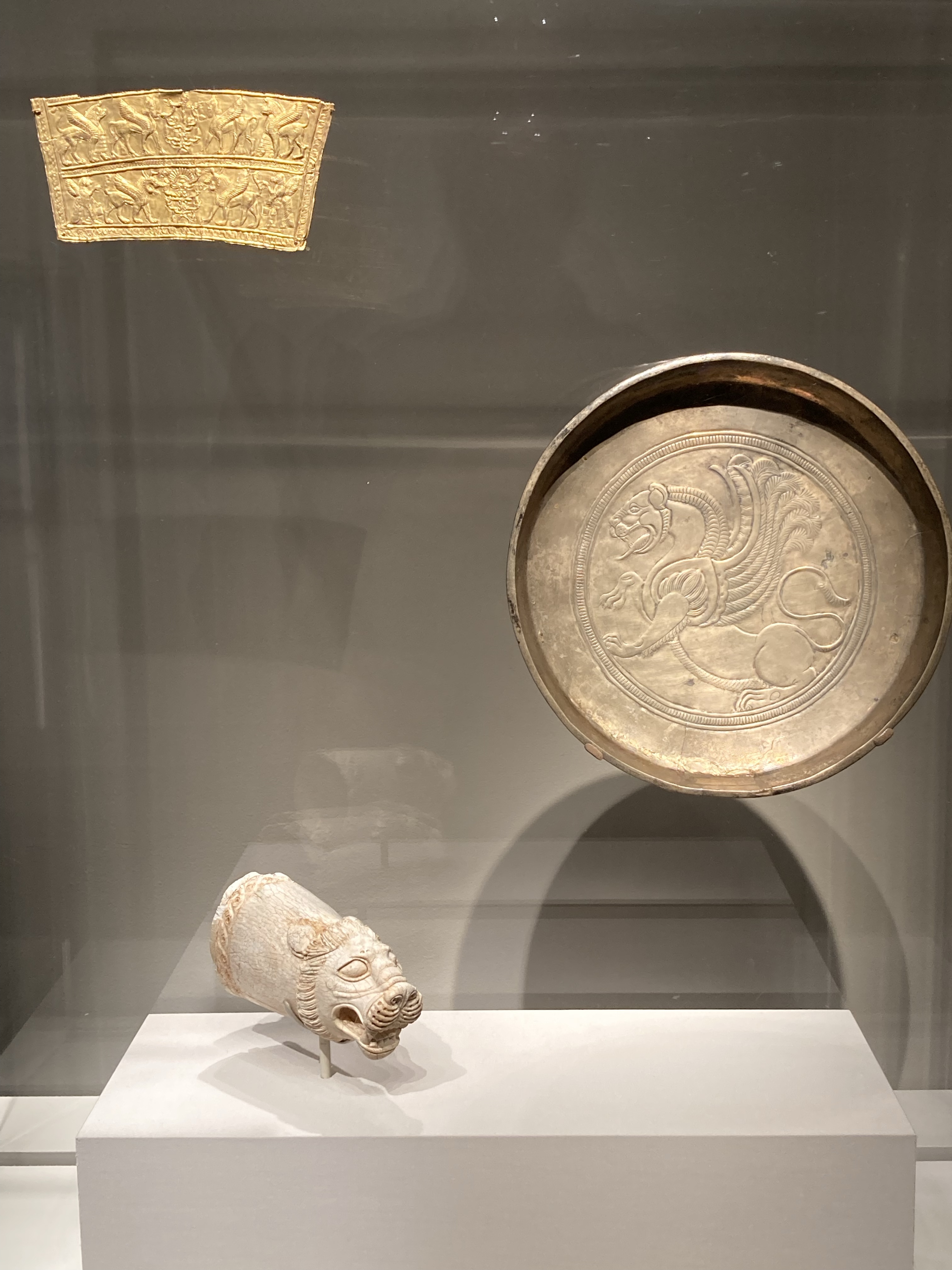
Every Sunday, I rely on long walks through museums to help reset and reinvigorate my mind. I walk through space (about five miles) and time. I proceed on a well-worn route: garden to museum to garden to museum to lunch to museum, and within the museums, I travel from Neolithic China to Philadelphia in 1984. In one display at the Smithsonian National Museum of Asian Art, objects displaying nearly identical winged protectors encompass fifteen hundred years. It’s a visual echo that resonates over millennia.
More than that—if that wasn’t enough—the walk takes me gradations of the unknown. We don’t know why the jade bi were sliced from jade. I return every week to them to revel in not-knowing—not ignorance per se, but engaged wonder. The bi remind me that some wonderful human-made things have no explanation. We can guess—we should guess—but our guesses should always be acknowledged as such. Precise and well-informed whenever possible. However, we must never let our desire to know ONE answer outstrip our willingness to learn as we go. Remember that you don’t know. I sit in front of a row of paintings by Monet, and I listen as someone explains how he had cataracts, which was why he painted like that. I do my best not to correct or alter the assumption, but it’s hard. Borofsky put the number “3277542 ” on his Man with Briefcase, and I may know how he numbered his work and why he said that he counted into the millions (these are documented facts), but as far as what motivated the artist, well, that’s an educated guess.
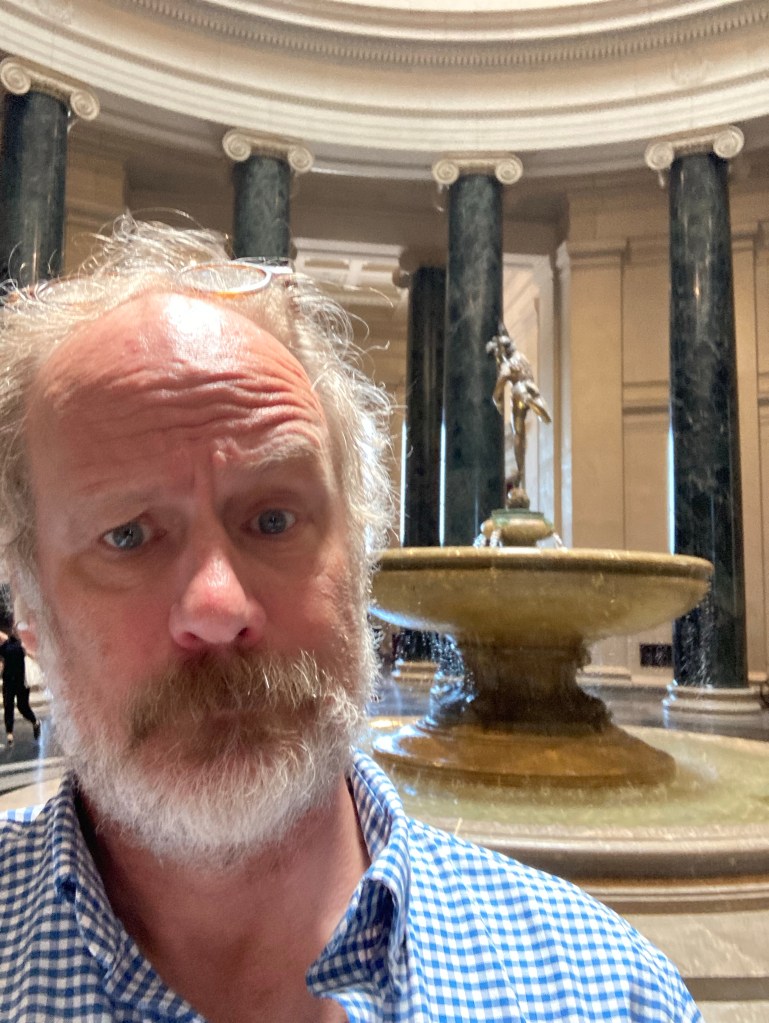
I constantly compile lists of things I know. People congregate in doorways. The left lane holds an uncanny attraction for slower drivers. Most people have not noticed that in Gallery 81 of the National Gallery of Art, the figures in the three paintings on the westward wall mirror those in the painting on the eastern wall. Children sometimes fall asleep in their parent’s laps. A man will ask, “Are you writing the great American novel?” (Answer, yes.) Elizabeth Winthrop Chanler sometimes looks strident, sometimes annoyed, but rarely befuddled. People take photographs of themselves that feature Mercury’s bottom, and I am sure that often this is an oversight. The people who work at the Courtyard Cafe will put aside the last napoleon for you. After that, mystery is certain. And necessary.
The writer and the fountain
To return to movement: swimming was always a venture into the known—the well-loved, effortful known. I swam with my head down and eyes focused on the line on the bottom of the lane, chasing yards and time, sure that neither would fundamentally change. Fifty yards is always fifty yards, and a minute is always a minute. Yes, I filled those minutes with more yards (or spent fewer minutes swimming more yards), And, most of all, pain is always pain. Variations in the depth and texture of pain were a cause for concern (the knees, the shoulders), but pain was always a given.
While writing requires sustained effort, one must also embrace the unknown. Moving helps.
I became a better reader (which helped me become a better writer) by moving between tables in various restaurant jobs. I wasn’t a bad reader in college, but that was because I could do the determined slog of three hundred pages between a Tuesday and Thursday class. I read with my committed swimmer’s mind. Whatever brilliance I glimpsed only came into full view after turning my head in seventeen directions and delivering service, hot food, and cold drinks, all in the proper order. And because I moved in a dozen other, unexpected ways. Words on the page became easier and more ecstatic. And no, I don’t think one needs to wait on tables to be a better reader (or thinker). However, learning to think on my feet and realizing that the persistent thrum of “I, me, mine” became more powerful when it moved through the music of “him, her, them,” helped me become a better reader and writer.
“I, me, mine” are necessary, especially when writing. You cannot hope to enchant some unknown “them” until you find a way to please yourself as you slog away hour after hour. And then you may fall into a rut. That’s not always the worst thing. There are plenty of creative and successful people who hew to the ditch they dig. Their neural pathways run straight and certain down deep gulleys. Helpful habits will keep you returning, chairbound, to the work.
And yet, stuck happens, and sometimes banging our heads in the mud only makes it worse. Seat of pants dully applied to seat of chair risks stagnation. And no amount of instruction (this is the structure of plot; this is the value of metaphor) and mental exercise (write a paragraph in another character’s voice; write a story about an animal) will return you to the light. Go for a walk, breathing through your nose so you can smell the world. Take out your headphones and listen to the world as you pass through it. Dance in a crowd. Break a sweat, and forget your brilliant, luminous mind. You don’t have to go to the woods, the mountains, or the ocean. You are a wild animal wherever you are if you just remember to be one.
There is a wildness to writing, and not just a wildness of mind, although, please, a wildness of mind. But our minds, we forget, are grounded in the crude animal matter of our bodies. The glorious, perfectly imperfect body will help us move the words, ounce by ounce, page by page, and pound by pound into the world. What happens next is a mystery, but by moving my body and mind, I have learned the value of mystery. It’s what comes next.
I began the day in a foul mood. That’s not true. I shook the snooze on my phone enough times to drift back in and out of a dream I was having, gathered the cats’ feeding mice (they retrieve their food from a set of “mice” that I secret throughout my apartment twice a day), and poured a small cup of coffee. Traffic was inordinately painless. Then there was a line outside my first Sunday stop, a French bakery off Logan Circle in DC. People bundled in the late March chill. Flurries on the 27th? So be it.
Then the first blow, no almond croissants. Routine is terrible; I accept the necessity and know that I must make adjustments—perpetually. I arrive by ten to ensure my weekly extravagance of three almond croissants, which I portion out across the awful early days of the workweek. So be it. The friendly counter assistant offered almond croissants with chocolate, but I prefer not to mix my pleasures. “I’ll have three pistachio croissants.” There were, fortunately, plenty. “I’ll suffer,” I told her as the owner of the bakery looked on, noting my disappointment and smiling nonetheless.
And then the descent. As I left the shop, a young man burst through the open door and into the crowded shop. A wiry blonde fellow carrying a blue paperback textbook. Physics or economics—it hardly matters. He charged in without acknowledging his rudeness—one other person was waiting to exit. Unlike Ishmael, my first impulse was not to knock his hat off; he wore no hat. I wanted to deck him. “There’s more room out there,” slipped from my mouth, and then, “Dumb ass.”
In his 2005 commencement speech at Kenyon College, David Foster Wallace warned against such flares of anger. He suggests “that the Hummer that just cut me off is maybe being driven by a father whose little child is hurt or sick in the seat next to him, and he’s trying to get this kid to the hospital, and he’s in a bigger, more legitimate hurry than I am: it is actually I who am in HIS way.” I get it. That young man might have had some life-saving advice to give to the people he was meeting at the bakery. Or he may have been on the spectrum and not in control of his social cues. I have many more moments when I can find the deeper solidarity of human experience, but I am keenly aware of my disdain for what? the failure of something like social grace.
The next twenty minutes of my morning descended in a spiral of disgust and disdain. Bad drivers multiplied like fleas and ticks on a lost dog. The sensor in my car alerted me that the air pressure in a reasonably new tire was low. The news and Joe Biden’s slip of passion—too much like my own. The world.
Except there are always bad drivers and people who back up without looking on crowded sidewalks or couples who stand conversing in entryways as if no one else wants to enter or exit. There are also kind shop owners, docents who recognize you and wave at you over the heads of a crowd, women who pet dogs, and dog owners who say, “Yes, she loves people.” Part of my Sunday ritual casts me pointedly and intentionally into the sea of museum-goers. The way people gaze at art—their comments and commiserations—delight me. We are at a concert, dancing and singing along with the masters of the world.
No wonder I write surrounded by all this—and all of them.
So, why such hypos today?
I just killed one of the characters in my novel. Yes, of course, someone else in the book killed him; I didn’t do it. But I did it. I knew I would do it and try as I may—and did—to distract myself from this inevitable passing, it had to happen. And today’s writing would carry me into the aftermath of that realization. I would have to begin the slow work of grief with the characters who remain. Writing has consequences, and no number of almond, or pistachio, croissants will salve the emotions that the work stirs. Yes, other characters have died in other works, but this was the first time a central character died because of another character’s cruelty. He will haunt the rest of the novel and haunt the characters who loved him.
I used to tell students in my college classes that they could miss a week of classes and needed to provide no excuses. “You’re adults,” I told them, “Life happens.” I also said, “Do not invent excuses. Do not claim sickness or death that did not happen—no, ‘I had to attend my great aunt’s funeral.’ Words have consequences. They are magic and can change the world.” I still believe this.
So today, on a perfectly ordinary day in a perfectly ordinary world, my brain hunkered down in advance of the pages that waited. Huzzah for belated self-awareness. I haven’t broken anything yet. Lesson: writing will shape your world, even if you aren’t aware of the shaping, even if it doesn’t change the rest of the world. Get to work at your own risk. Risk it all.
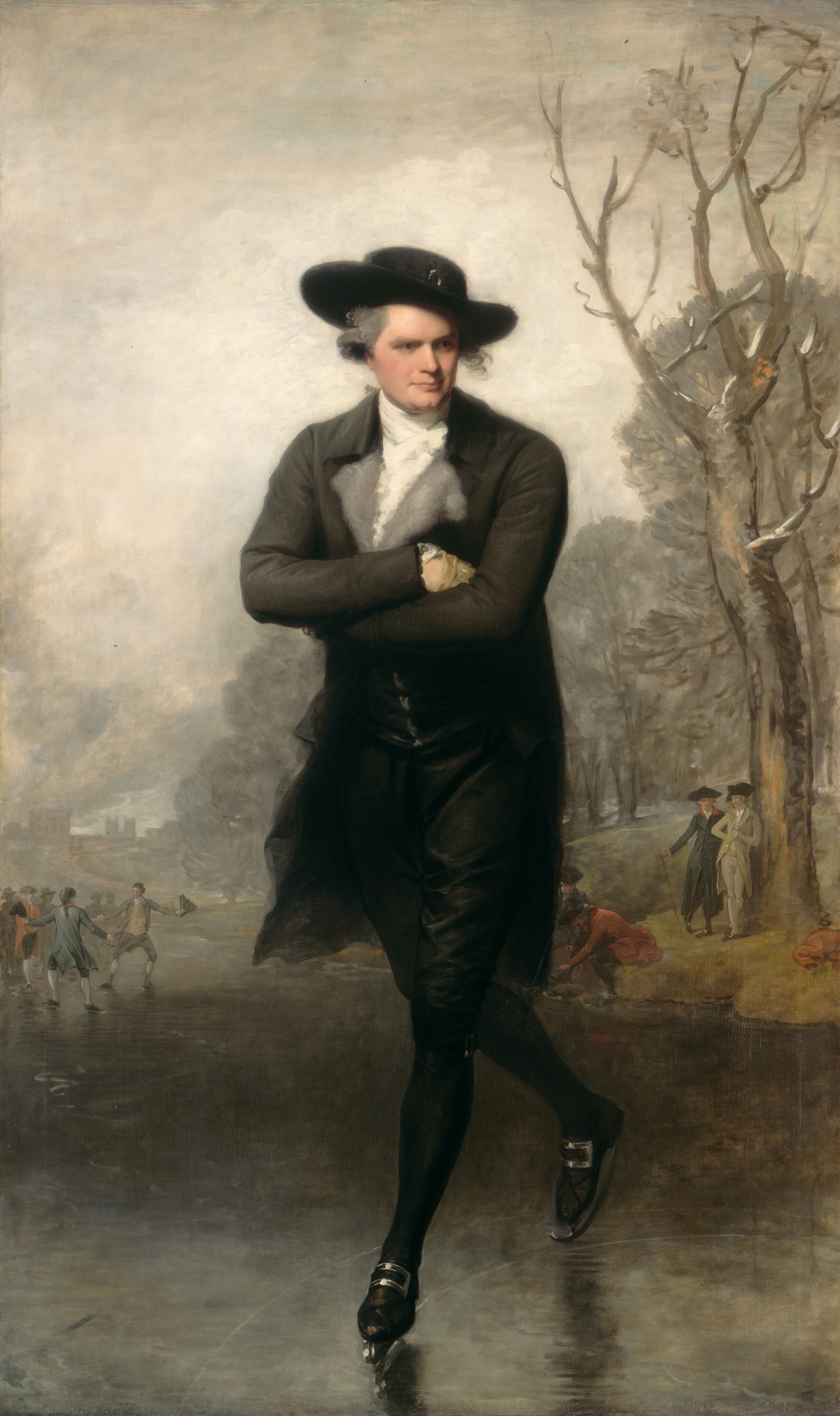
As a coda, there is a painting by Gilbert Stuart—he of the famous portrait of Washington—of a skater (called, The Skater). The man is utterly self-possessed. Unflappable. And yet, he is inscribing perfect circles on the ice. He has a nice hat. I don’t want to knock it off. I see him and think, “abstemious” (Either that or he just came from a long ocean voyage). Just as Prospero advised Miranda and Ferdinand, “Be more abstemious.” Advice well given. Back to work.
“I saw Ms. X___, and she said, ‘That’s what it must be like to be in one of his classes!’”
“That part was written for you!”
Yes, there were compliments, for which I am grateful, and all of which I could better hear after setting aside my natural predilection for self deprecation—why is it that I will always be more aware of my mistakes than my successes? I found some easy connections with Fagin: “What happens when I’m seventy?”; my current novel is about a gang of thieves; like Fagin, I am a teacher. However, I am not the outsider he has no choice to be; if I am, I choose that route. After the play, I washed off the make up, hung up the pants with gaping holes at the knees, and when Monday came, I put my pressed blue shirt with metal stays in the collar when I returned to classes. A costume is a costume
Still, some of the compliments rankled. That’s hard to admit, because it feels as ungracious to write as it must sound. I was delighted by the kindnesses that came my way. But no dear reader, I am not Fagin. Neither was Clive Revill, Ron Moody, Jonathan Pryce, or Rowan Atkinson, though all did excellent work in the role. Hear me out.
Once upon a time, a friend assessed another friend’s new book without reading it. The new book centered on a novice (an aspiring nun) who had stigmata (wounds that mirrored those suffered by Jesus on the cross). Previous efforts by this same writer included westerns and a book of short stories that had been described as “hardware store prose”—so, maybe a novel about a nun was unexpected. The pre-baked critique was along the lines of “What does he know about women?” As it turns out, the book fully understood the struggles of its protagonist and included passages of luminous, protean prose. It was just plain—and absolutely not plain—good.
Writers wander into new territory warily. Those who have long and successful careers tend to work the same plot of land—even if that plot covers ten thousand acres. Dickens stands out as the exemplar—popular beyond imagination and perpetually revisiting themes and character types—all those damned orphans, all those criminal step-fathers. But think of Austen, James, King, Grisham, Tyler, Hoffman, Rice. A writer like Virginia Woolf whose vision may be singular, but whose books vary in structure and approach, is rare. Joyce? Calvino? “Calvin-who?” you ask. Exactly.
And it isn’t just writers. I had a minister who sermonized that “The one thing was figuring out the One Thing.” Most of us spend years figuring out who we are and then hew tightly to that semi-self-defined course. In the public sphere, politicians who change their minds are lambasted by their critics. Over the course of the recent pandemic changing guidelines and responses drew salvos from all quarters. People want One Thing; anything more draws complaint and criticism.
Fuck it. We change. Life changes. Only an idiot sails into a hurricane (I’m thinking of you, dad) because that was the course he set months in advance. Granted, change is not easy, except when we are young and change is a daily and inevitable event—the voice, the hair, the height, the hormones. What’s the line from “Bittersweet Symphony”—“I’m a million different people from one day to the next?” A million may be too much, but just when you think, “Finally, the One Thing!” along comes life. Maybe we should take a lesson from all those years of change. Maybe.
At the end of the play, Fagin sings, “Can somebody change? It’s possible. Maybe it’s strange, but it’s possible.” Okay, I’ll own that connection. But really, possible? I can’t help but think that it would be horrible to be one person all one’s life. I clamor for the fourth and fifth act—or the 1001 Nights. I splash in Heraclitus’s river, changed and changed and changed again.
Why else write? Even these pieces are meant to dip into the river. Even when I visit and revisit a work of art, my parents, love, teaching, or writing—they are all stops at some bend, newly dug by the course of time. The writing barely binds them together.
“But they’re all about you.” As if. They’re just stories, ramblings and meditations on this strange journey. And really, they are all for you—the same as when I sang as Fagin. I’m singing to you, kid. Always.
I was in my classroom one morning in April of 2021, but later in the month, so no fooling. and Mike Hughes, the director of my school’s theater program, stopped by. “I have an idea,” he said and asked whether I had been on the stage or sang. “We’re putting on Oliver! next spring, and I think you would be a good fit for Fagin.”
Here’s the skinny: I had a small part in a school play in the 6th grade and again in the 8th grade (King Ferdinand in a historical pageant). My mother made my costume—a cape—by ironing brown stripes onto a cheap yellow beach towel. In high school, I sang in the choir—we sang four days a week, and I could read the music for about a year. There was a play in Philadelphia—an avant-garde piece about the French Revolution; I was recruited by regular customers at my restaurant in Manayunk for this strange one-night venture. The congregation I served might remember me singing “Jingle Bells” during a holiday service and when a minister asked me to mime a juggler while she read Robert Fulghum’s “The Juggler.” Another holiday performance. That’s my resume.
Maybe you’ll argue that teachers are always on stage, and up to a point, that’s true. But one of the reasons we teach is to have our own meager fiefdom to direct what we will. Whether you do it, either as a sage on the stage or facilitator par excellence, your class is your own. Every class reflects its teacher, and even Bibliographic Methods could have been a lively and engaging experience (it wasn’t). Putting yourself in the hands of a director and in service to someone else’s vision—all those words, all that music—requires an entirely different discipline.
The closest I ever came was reading my work in front of a live audience. I recall the first time at a Friday night graduate school event. I was anxious, and the poet Ruth Stone told me that anxiety was an appropriate emotion any time you do something meaningful. Later, when I read for a panel of judges, I admitted my nerves—I am always too honest about such things—and was counseled by them to treat them like my students. I was a young teacher at the time but already a classroom performer. I once swam across a run of tables to demonstrate the difference between simile and metaphor. Either one does, or one does not do—there is no “like.”
However, a teacher’s job is to get out of the way and let our students succeed or fail on their own terms. When I mentioned that I had been “recruited” to take part in the school musical, someone I had just met suggested that I should let a student take the part. Even if I had been invited, even if I knew that my school was currently short on depth, was I extinguishing a nascent flame? Nonetheless, I asked my colleagues, and they trusted that the request came from a place of need and respect.
But, what was I thinking? How much I can possibly suck crosses my mind at every rehearsal. If I haven’t performed, I have watched my share of excellent and delightful performances. And star turns that should have been eclipsed. We all have. This is not simply “imposter syndrome” run wild. I have done nothing like this before.
Daring and humility are uncommon psychic partners, and I am often genuinely ambivalent. People who almost know me make the mistake of either seeing my geysers of chutzpah or my lakes of self-doubt. In “The Waking,” Roethke writes, “This shaking keeps me steady”; my two minds do that dance. If only there were just two. In the second of his thirteen ways, Wallace Stevens offers this:
I was of three minds
Like a tree
In which there are three blackbirds.
A writer must learn to inhabit at least two minds—the writer’s mind and the reader’s mind. A fiction writer is even more fractured. We are, as often as possible, out of our minds. I was going to write, “Perhaps I embraced this too late in life, but better late than, well, you know.” I spent years in the maelstrom of one, then the other, then the other. And then, and then, and then. I have learned how to push the storm forward or in some direction. I won’t get stuck swirling on one spot, a dervish without purpose.
What does this have to do with playing Fagin? Taking a risk and facing doubt expands the mind. And learning to do something new—working at it and, possibly, finding success—opens the world. I could claim that I took on the part of Fagin—leader of a band of thieves—because he has something to do with the characters I am writing about (thieves). While this is true, doing something I had never done before—committing to a process and seeing it through to its end—drove my choice.
A writer must explore possibilities—this is the heart of Socrates’s dictum about the unexamined life. Too often, people quote “the unexamined life is not worth living” to justify the attitude that life is like a buffet and every morsel must be piled onto one’s plate. “I tried it” is not the same as “I examined it.”
And so, I played. I will continue to play. As should you, dear reader—and dear writer. There are worlds to examine and lives to live.








 continuoussearch