 In 2016 HBO aired a radical revisioning of Michael Crichton’s clunky trash science fiction thriller, Westworld. The old movie issued a direct threat and moral: technology combined with profit motives is bad. Nothing new here, just a variation on the muck-racking novels of late 19th century America or a schlockier version of Fritz Lang’s Metropolis. The series that launched in 2016 delved into deeper issues: consciousness formation, the nature of humanity, and, yes, the moral bankruptcy of late capitalist culture. There was more if you wanted to find it, all wrapped up in a glossy, sexy, and violent package. Quintessential HBO.
The drive for climactic set-pieces led to a gruesome and fairly well-earned massacre at the end of the first season. However, gruesome massacres are not easy to build on. The second season stumbled through the aftermath of all that death—even if many of the dead were robots. The rest of the dead were the rich—or servants of the rich—and, as such, were easy prey. The third season addressed the “real world” (such as it was portrayed in the show) consequences of those deaths and added human characters whose lives were made robotic by, yes, you guessed it, the rich.
I teach creative writing. When I started teaching, I forbade my students from killing characters in their stories. Yes, the presence of death galvanizes fiction, bestowing instant importance on what might otherwise be a mundane series of events. When I think of some of my favorite short pieces, death abounds. Think of Shirley Jackson’s “The Lottery,” or J.D. Salinger’s “A Perfect Day for Bannafish.” At least the threat of death—real complete annihilation—hovers around the characters. However, when it does, it has weight. Great—and most good—writers acknowledge mortality as a meaningful limit.
The first season of Westworld used cavalier attitudes about murder and violence to make a point—all the while delighting viewers with plenty of simulated death (the show walked on a sneaky edge) The point was that the cavalier attitude about death and violence revealed a moral failing in the characters. Even when the violence was simulated. That edge has become more and more blunted with each new season, finally becoming little more than a heavy and dumbly wielded club.
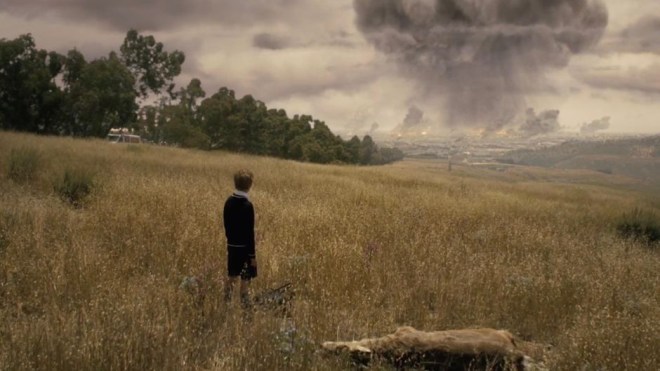
Halfway through the third season, the main antagonist, Serac, reveals that he and his brother built the monstrous AI, Rehoboam, after witnessing the nuclear bombing of Paris. The bombing is not explained. It exists only to justify Serac’s desire to prevent either another such event or series of such events. Boom! goes Paris. And Boom! Westworld tottered off into the realm of irretrievably bad writing.
I teach my students that anything can happen in their fiction. I try not to put false limits on their work (no fantasy, no science fiction, no romance). I only ask that whatever they do, they must avoid cliché, which is hard for young writers because everything seems so new to them. And this is hard for older writers too, because everything seems to have been done. How many ways can two people arrive at “I love you”? Or “I hate you” for that matter? And everything in between. Make it your own, and find the surprise.
Also, I advise that they treat their fiction as if it is true, that they should consider themselves magicians of a sort, wielding magic words to create reality. They must be responsible for the world they create, not just for the beetles that scurry across the floors of the houses they build with words, but for the vision of the world they invent. If someone falls in love in one of their stories, then they are nothing less than Eros, conferring love on the world. If someone dies in one of their stories, then they wear the grim reaper’s long black robes. No, not all writing is made with such high purpose. Plenty of successful prose falls back on sheer entertainment. Love and death are little more than emotional levers that the writer pushes and pulls to keep the reader reading. So does plenty of literary fiction—thank goodness.
Sometimes writers break the compact with the reader. They pull the levers without any concern for what they have made. A friend once asked whether I could just do what I wanted in my work. I can, of course, I can, but I must grapple with the repercussions of what I write. Does what I want to happen fit the world which I have created? Not just, “Does it make sense?” but does that sense bear up to moral, emotional, and intellectual scrutiny? Not only must there be a feeling of necessity in the work, but that necessity must be guided by an inner logic that binds all the images, all the ideas, all the characters, and all the vision. That is no easy objective.
One way to guarantee that a work will miss that mark is to play fast and loose with life, to use death as a plot enhancement. By its own logic—by the claims it made in its first season—Westworld has fallen off the horse. Yes, the show remains pretty (sexy and gruesome) picture, but the writing no longer cares to do anything but sling gore and blow up cities. Nothing matters. Time to move on.
 Viruses are the prototype for the “lilies of the field: … they toil not, neither do they spin.” How they may be arrayed is entirely in the eye of the beholder. The virus of current interest wears a crown—or presents something crown-like on its exterior. It’s almost too satisfying to try and picture it, or to quibble over which depiction is more accurate.
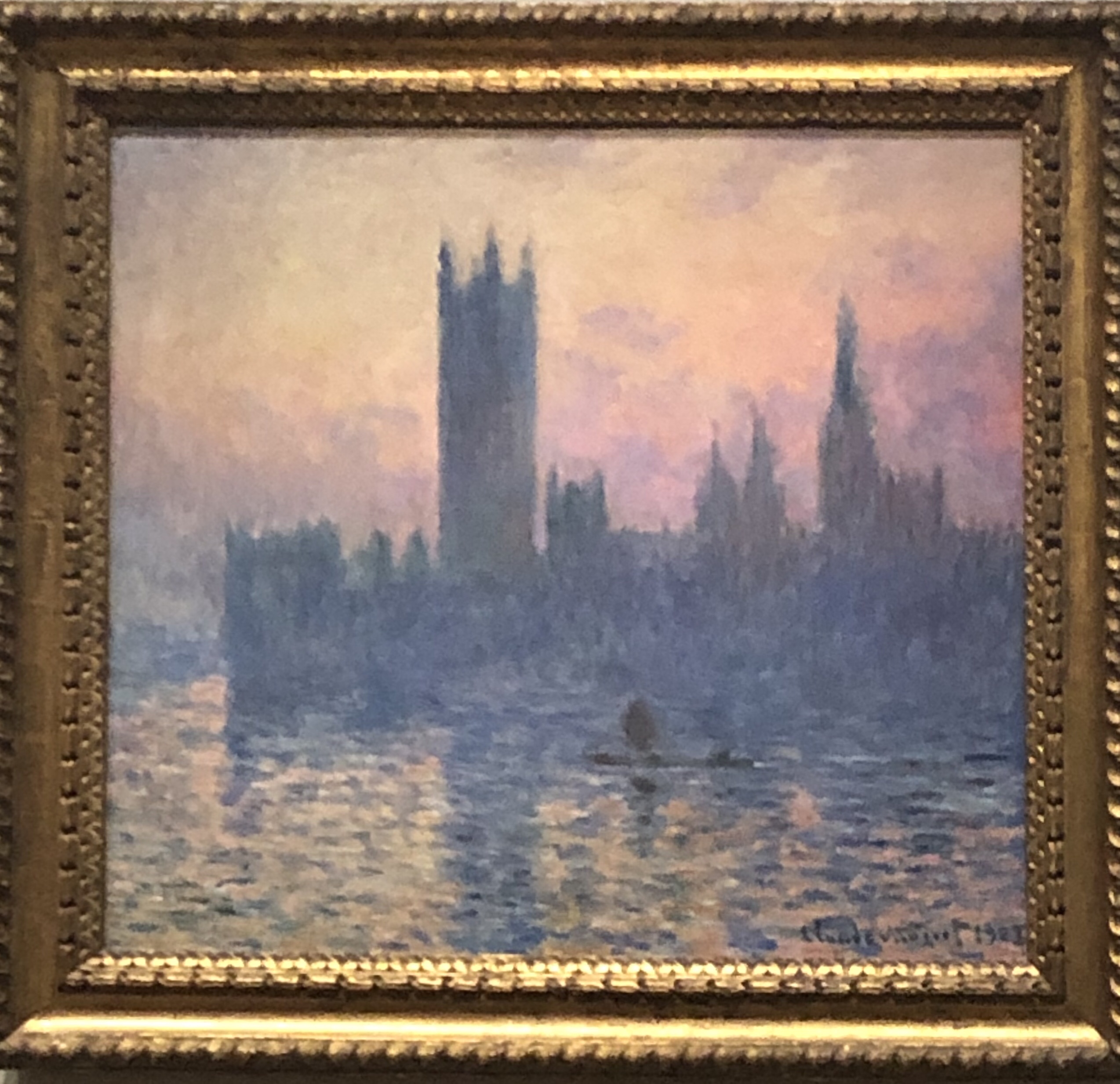 It has been a year and a few months since I was in London. I’m thinking about London while I sit and study Monet’s “Houses of Parliament, Sunset” at the National Gallery of Art. The memory of looking across the Thames at that building, with Big Ben swathed in the latticework of repair, has faded only a little. The memories of walking the streets of the original square mile and beyond remain startlingly vivid. I used them to paint scenes when the characters in my novel walked through London. The memories of the places and the memories of the feelings.
 When I was last in London, I was taking steps into a world where I knew I could live, where I had longed to live. Just like in the dream, writing—flight—was not foreign to me, but something I had traded in for a more certain, more directed existence. While “You are…You should” can feel like shackles, flying—writing—is formless and uncertain. Anywhere is possible. Everywhere is almost a mandate. Just like in the dream, I had written before—had flown—and had lived closer to the limits of my existence. But I had to leave my self-imposed limits. I had to accept that I might fall—and fail—but just as I accepted that in my dream—soaring up the side of a steel and glass edifice, wondering, “What if I forget? What if I fall?—I thought, even as the thrill of fear invigorated me, “You are flying now. Even if you fall, you will remember as you fall, and fly again. Keep flying.”
 Two women look at the Monet—taking seat in the National Gallery beside me. They think it is beautiful, but claim, “It doesn’t look like that.” Of course, the Houses of Parliament look like that, as does the river Thames, as does the sunset. “We didn’t see it,” they claim, “We were tourists, doing touristy things, like thinking about where to have dinner.” I did not think about dinner when I was in London. As much as I love dinner, even food became a secondary thought while I was in London. Even the pubs and ales became little more than way-stations along the bigger task—the journey, the seeing, the walking, and the flying. And the writing.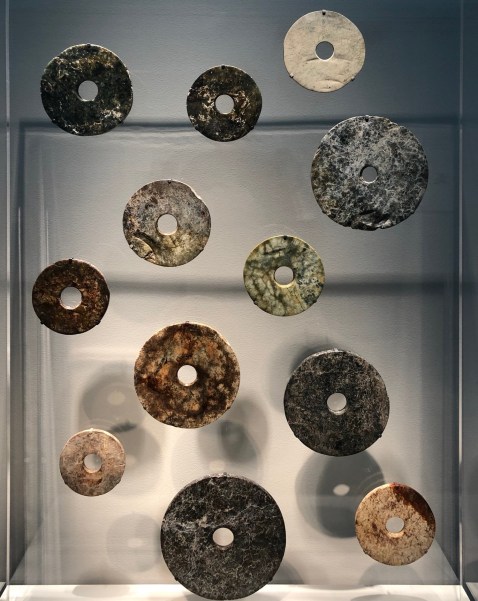
 In the other corner of the Freer Gallery, an exhibit of Hokusai’s paintings and illustrations includes quotations from the artist about what he intended—not just in the specific works, but as an artist. He wrote about discovering himself as an artist late in life. He was already an artist, but he claims to come into his own in his 50s and thought that he might attain his most complete vision if he lived to 110. He died at 90. His work is sweeping and intimate—monumental nature and quiet personal moments—fantastic and humorous—heroes wrestling demons and uproarious coworkers. Whatever else he meant to last in his work—why that hero wrestled that demon (as if one could easily answer such a question)?—he meant it to last. He aspired to capture a vision that would last long after he died.
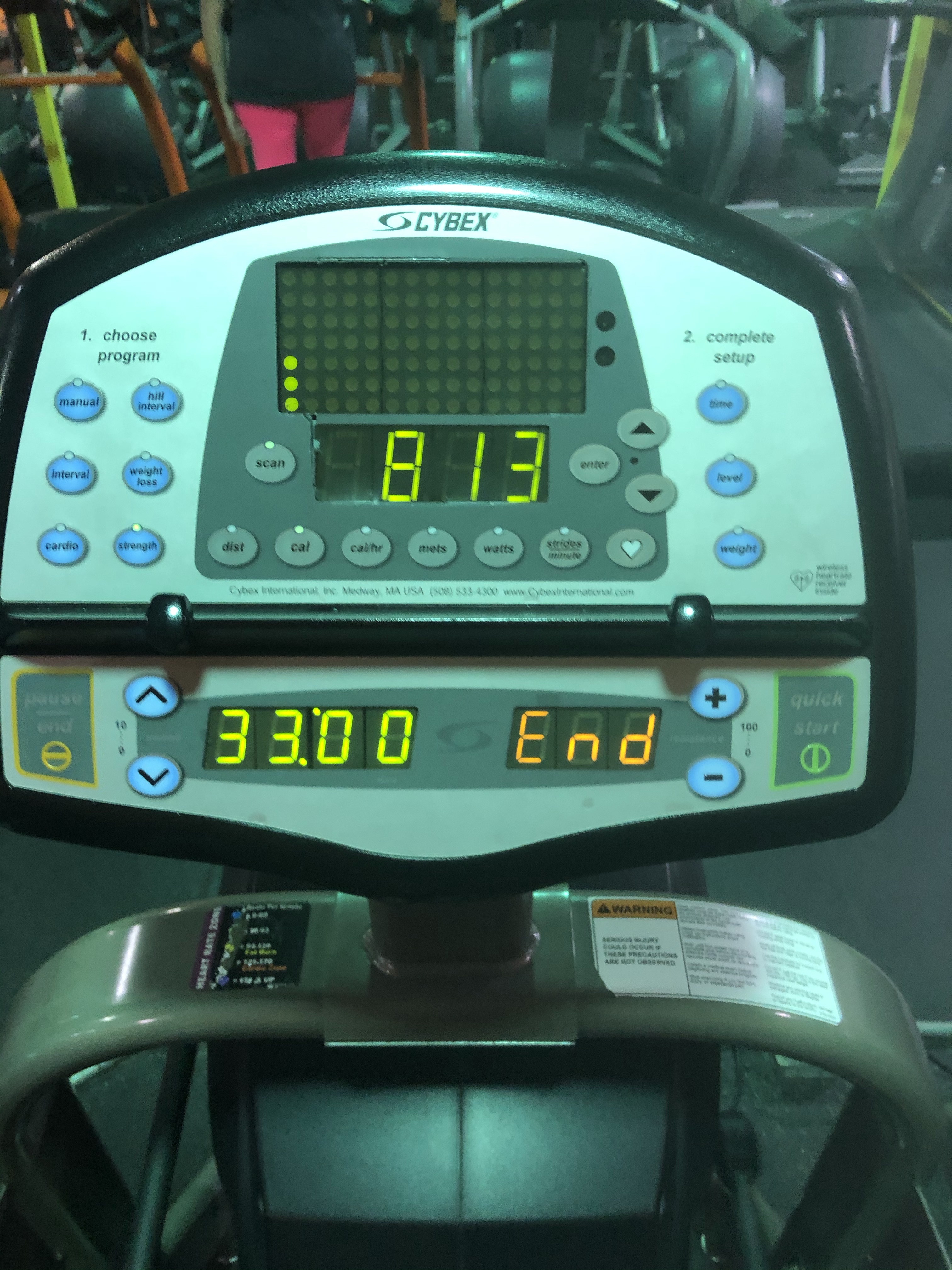 I start paying attention after 17 minutes or so — the meter on the elliptical estimates that I am burning 24.3 calories every minute. I am about halfway through the current “run,” and I will burn through 720 calories in 30 minutes and well over 800 when I include the five minutes of cool-down time that the machine grants me at the end of the workout. I get pissed because the timer starts as soon as I start moving my feet, and the first 15 seconds are “slow.” I make up for it. After a five minute break, I jump on another machine that allows me to take longer strides, and run for 12 minutes, aiming for 7-minute miles. It’s a workout.
 Just over a year ago, I went to the LA Bar in Arlington and did karaoke. It was New Year’s Eve, and I had just come from a fairly routine party, where we had counted down the end of the old year and beginning of the new. It wasn’t enough. And so, away I went with my date, and we signed up to sing the Talking Heads’
  While I like to write while surrounded by people, once my eyes are on the page, and once my fingers are working, a kind of wall goes up. Writing is solitary. And it is not.
 There is a plate at the Freer Gallery in Washington DC. Around the rim are an elongated set of letters in Arabic. Even if you knew what those letters meant, would you know about the person who wrote them before the platter was fired in a hundreds of years old kiln? Or what to make of the carved insignias on a Neolithic disc from China? Sometime, 5000 years from now, will these shapes still make sense? Will they point some future reader back to me? Or to anyone else who writes now?
 continuoussearch