
A couple of weeks before Thanksgiving of 2014, I moved into the attic in my family’s home. Things had fallen apart in my marriage, in spite of the trip we had taken to China to bring home a daughter in the previous May. We knew. My wife stopped wearing her wedding ring—not making any formal fuss about it. Cataclysms had intervened to help clarify our struggle, and so, as sad as it was, we began the process of unraveling.
The universe was ready for change. Stephen Colbert stepped down from the Colbert Report, which had lasted just a tick shorter than our marriage. Craig Ferguson walked away from his gig. And then the two seismic shifts: Jon Stewart would leave the Daily Show and David Letterman would exit late night television after 33 years. Is it strange that I gauge my life according to who is performing a monologue on late night television? Perhaps.
 I started watching comedians late at night with my father, who was a Carson devotee. My dad would take a nap after dinner—short, maybe 20 minutes in his chair in the den—before watching television or reading until the news and then the Tonight Show. He would stay up until Carson finished at 1 am (later only until 12:30 am). My mother absented the scene well before 11.
My dad was a reasonably well-informed man, coming home each night with a copy of Philadelphia’s evening newspaper—The Bulletin. We did not watch much nightly news—my mother was not interested in the ugliness. Strangely, she has become a avid listener of talk radio and NPR, but not then. In the 60s and early 70s the Vietnam War hung like a grizzly threat over her sons, and so, no news except for what we read.
I learned to pay attention to the news both by scrambling through the Bulletin and Time Magazine, which came every week. For a few years my father changed the name on the subscription to those of my brothers and I, whether for the savings or to delight us, I do not know. As much as any other reason, I knew I had to follow the daily news to keep up with Carson’s monologues. Without knowing the daily facts, the jokes fell flat.
 In 1982, the year I graduated from college, Letterman took over what had been a fairly straight talk show slot. Tom Snyder’s Tomorrow had ended NBC’s programming. Snyder was as hip as could be imagined at the time, smoking a cigarette and asking pointedly bemused questions. Letterman rolled in on a wave of calculated whimsy and sarcasm. He was a genial wiseass—smart enough to host Fran Leibovitz, foolish enough to wear a suit of Alka-seltzer tablets into a dunk tank. While Carson chuckled at the world, Letterman was in perpetual eye roll. “These people are idiots,” he seemed to say, “And if we aren’t careful, we are too.”
Somehow, the line between “the joke’s on them” (the politicians, the hypocrites, the too-big-for-their-own-britches), and “the joke’s on us” got thinner and thinner. When Letterman jumped to CBS in 1993, the eyebrows raised response to the woman who said, “They’re not going to put this on CBS, I’m sure,” admitted that he—and we—were getting away with something.
I didn’t watch lots of Letterman after a while. For years I did not own a television—a sacrilege, I know. I started watching Jon Stewart, and then Stephen Colbert, and by then, the comedy of “the joke’s on us” landed too close to home. Letterman never stopped being a smartass—as if that is ever a choice—but the times I did stop by, he seemed gentler, weathered, and maybe perplexed.
 When he left in 2015, it marked the end of my Second, and maybe Third Act. From graduation from Swarthmore to graduate school at Binghamton, from adjunct teaching to secondary ed teaching, from occasional church goer to religious professional, from single, to committed cohabitation, to marriage, and finally to separation and divorce. I still watch late night comedians, but now they function almost only as an antidote to the news. Please, someone make light of the daily made-up facts. Maybe that will end when the current administration leaves, and maybe a sequel to Ionesco’s Rhinoceros will have everyone gleefully turning back into humans.
On May 20th, 2015, I sat in my condominium watching an end, and knew something had changed. Everything. Me included.
 When I was 11, I started sailing with my father. We took lessons together and practiced on a lake. He kept a boat on the Chesapeake Bay, which was rarely choppy. In my thirties, I joined him on the ocean—home again.
 Deep time? Not thousands of years—a blink. Millions begin to register. Billions of years. I once had my students hold one hundred feet of rope, and marked the history of the planet on it. Those who held on to human historical events: Lucy, the Pyramids, the Great Wall of China, the Renaissance, man walking on the moon—could barely wrap a finger around the rope they were crowded so close. Our Western Mountains—the Rockies—and Eastern Mountains—were flung apart, but well after our continent had formed.
 Where does sadness, the inexorable seriousness in my writing originate? My friends would tell you that I am puckish in real life—if anything, a bit too unrestrained. Why doesn’t that same sense of things stripe my writing? Why do I seem stuck hitting the same damn dour note?
 I packed my suitcase and drove out of Philadelphia. Whether that was yesterday or twenty-five years ago, I am not sure. There is so much to do, so many cities to visit, all those people waiting. I lose track of time. Before I have barely begun, I am completely exhausted. I have to stop. I ask the manager at the motor hotel for a quiet room, and flop into bed. I set the alarm clock for morning.
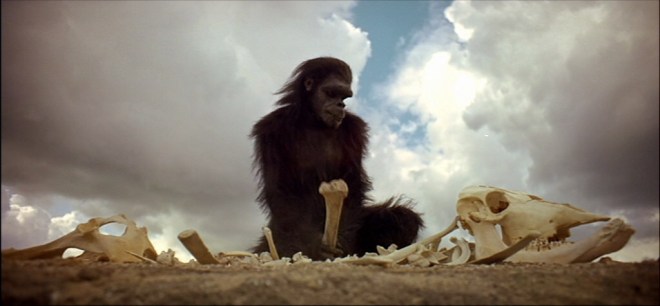 And yet we build, and not every tool—Kubrick’s 2001 aside—is a refinement of a club. Certainly Kubrick’s 2001 won’t help one win a war, or woo, unless, of course, the object of desire is imbued with an essential and unmitigated nerdiness. Nonetheless, even without some mysterious aid, we grow. Maybe not today, maybe not tomorrow, but soon enough, and we find our way to each other.
 I recently swapped the nicknames that we give our kids with a friend. We had both, surprisingly and strangely, settled on “Bug.” I’m not sure that our daughters will appreciate that longer into their lives, but for now, it will do.
 And I do know the other side. I know how easy it is to let upset slide into hate. And I know that once uttered—by an adult, not by a child, because children must experiment with all words and all emotions—it breaks the bonds in a nearly irrevocable way. I have said it, out loud—either in the perpetual external conversation I have with the world or directly the object of scorn—and the immediate thrill is followed by a deep remorse as the tendrils that connected me to another person wither immediately into dried spiked vines, like the hedges of multiflora rosa that grew brown and foreboding in winter. All that was planted must be uprooted. Maybe something can be saved, some sprig, somewhere.
 I wrote this years and years ago. Later, I sat down on a stone wall in a tony neighborhood in Baltimore to wait for a bus, thinking about nothing other than the weather—it was a late spring, the sky was all but cloudless—when I realized that the stones were swarming with ants. I quickly stood up, and brushed many, too many, off my pants. I knew what I had done. I laughed, and started walking.
 I am unpacking and repacking old boxes. I have no fantasy that I will throw away old essays or my notes from Joyce and Woolf classes. But there are things I threw into boxes as deadlines approached, and now, when I look at them, nothing. I have whole boxes of emotional and intellectual cul de sacs.
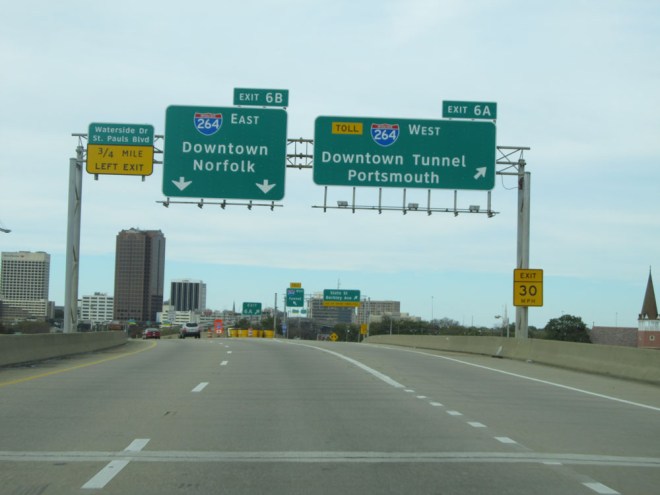 Every time I reach a particular traffic light in Norfolk, I can hear, clear as a bell, the not so gentle prodding that “You can turn right on red from the middle lane. There are people behind us.” Heading west out of Norfolk through the Downtown Tunnel causes a surge of ineffable joy, even when it’s just a trip into Portsmouth. The long drive across the Bay Bridge Tunnel reminds me of the day I took my daughter to drop flowers in the bay to commemorate the day my father fell into the water.
 There is hardly a street corner, a stop sign, or a stretch of highway that does not bring back flashes of memory. I stood on that plot of grass, took photos of the flooding at my church, and then sent them to a friend. I walked past the giant number “9” at West 57th in New York City with another friend, on our way to the Hard Rock Café. There is a house on the back way into the Paoli Shopping Center that my father told us belonged to Chester Gould, the illustrator and writer of the Dick Tracy comic strip. This seems as dubious a claim as that Dr. Seuss lived in a house visible on the hill above Yellow Springs Road—my father had a predilection for harmless invention.
 I have read that places become memorable when significant emotional events have taken place there. Memory formation is my hobby horse. What constitutes a significant emotional event? What allows the creation of two, three, four, more memories to occupy a single green exit sign on the Route One into Bath, Maine?
