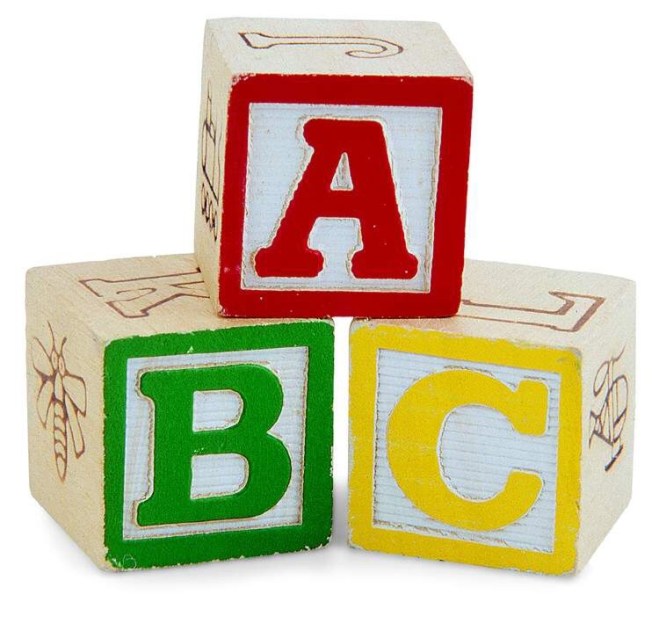
 When kids are little, you can play peek-a-boo with them, and delight them for hours because they have not yet developed their sense of object permanence. Objects that drift out of their sensory field cease to exist—the perfect “out of sight, out of mind” circumstance. It does not occur because of anything they will—it just happens. Sometime during the second year of life (and this is an imprecise measure), children learn that there is a world beyond their immediate senses. Trial and error teaches them that parents and food and comfort exist (or, do not!).
Jean Piaget proposes that we learn schemas—models for understanding the world. As we mature—during our early life—these schemas become more complex. They show us how to navigate a world that is not in our immediate grasp—at our egocentric beck and call. But how much do we simply extend our egos—using the schemas as a way of organizing the world in accordance with our desires?
I wonder how this applies to how we develop a sense of the world—how the schemas we develop shape our senses of morality and mortality. Do the schemas imbue more ephemeral things with a greater permanence than is warranted? Can the trial and error of early childhood be subverted by experiences that teach us about the ambiguity and ambivalence of the world? Or do we, from an early age and onward, cling to one master vision that cannot waver?
Because, as we age, we learn that impermanence is the standard. People come and people go. There must be some kind of formula for this: for every two people who enter our orbit, one must be released. Later, the ratios rise, switching to 1:1, and then 1:2. The causes are myriad—death, disaffection, dumb luck. People appear and disappear with stunning frequency, with hardly a moments notice for peek-a—
For example, I often think of my father, and miss him. I know that he is dead and cannot be a part of the life I lead now, however, his presence feels like the lingering effects of object permanence. Somehow, I have located him in my schema of the world, and no loss, no absence can remove him from that schema. Just like the child who can hunt for the toy hidden beneath the sheet, I can find my father behind the darker veil.
And yet, I am also fully aware that he felt often absent while he was still alive. He entered my life at intervals—holidays, sailing trips. There were stretches of time when I only saw him once a year, other times when when he was without more than with—present in the dimes and nickels that he left on his dresser for us to buy milk and ice cream at school, but only appearing, briefly, in the flesh, at dinner, and then disappearing into his den. Was he really there, or have I constructed a vision of him that became a durable substitute for the times he was away?
My parents championed independence in their children. While we were expected to be independent from them, did we, by happenstance, learn independence or absence as part of the schemas on which we built our early lives? We became free-floating, detached, prepared, in advance, for the disappearances that life would throw our ways—not the peek-a-boos of play, but the more enduring, and finally, more heart-breaking absences of adulthood. There is some solace in that, but also a modicum of sadness. We were pre-lost, almost, before we were found.
 When I am out walking with my daughter I have one, simple repeated lesson: pay attention. Crossing a street? Pay attention. Walking past a flower bed? Pay attention. Meeting people? Pay attention. It is the cornerstone. I point out when I fail, as she does: Pay attention, daddy. Did you look? Did you see me? Two eyes seem like slim equipment for the work of days.
 An occupational hazard of a career of reading English Literature is an almost fiendish doubt in the power of love. Just think of all the novels—serious literary novels—that you have read, and multiply the effect by a thousand. Sure, Jane Austen has something to offer, but seriously, Pride and Prejudice without Darcy’s fortune waiting to bail out Elizabeth Bennet is a tragedy.
 What preoccupies me is less what is beneath some other surface, than what is beneath mine. I can hardly utter the first word, “I,” without replaying every other time I finished the phrase. No matter how many versions of love I have seen others act out, or that I have seen portrayed, my single clearest—or least clear—vision of love comes from my own experiences. I am sure this is true for everyone. Who, in the final moment before she or he declares her or his love, trusts anything other than the one set of experiences that illuminates only one heart?
 It wasn’t until I started teaching—when I actively had to think about how what I said and did would further the progress of my students—that I began to have a serious idea about love. Teachers never think about themselves. Okay, that’s clearly not true. Great teachers think about their students, even when they think about themselves. I don’t know how I learned that—probably from the examples that great teachers gave me. I do know that the first serious relationship I had in graduate school was made more potent, and ended more peacefully—if not less painfully—than any romantic relationship I had up to that point.
 One of the questions—there are thousands of questions—on the OK Cupid dating website is:
 Complain all you want about online dating, and there is plenty to complain about, but if you are of a certain age, and you cannot (will not) date people from work—which also makes up your immediate social circle—then it’s off to the great internet meet n’ greet.
 Look, some dates will get annoyed if you are courting too slow. Advice: who cares? Anyone who wants to light the fuse after the first date, or third date, has most likely lit the wrong fuse. 5, 4, 3, 2, 1, Duck! And if you feel annoyed or anxious to get moving, remember this: everything you learn about this person now will help you know whether or not you will want to go on a second date, or a fifth date, or more. Introverts, you know that someone has to meet certain criteria to get past your healthy defenses; spend the time needed to discover. “But I don’t want to have to go through all this again,” you complain. Of course not, so slow down and maybe you won’t, later. Extroverts, you know how easily you can be charmed by a single aspect of another person (I’m giving myself much needed advice here)—remember that people are multi-faceted and that more than a first date requires connections across many facets.
 Before I collapse into, “This is all about me,” let me say, what works for me (the words) may not work for you. Chances are it will not. But you know what does work for you, don’t you? A little self-knowledge about this goes a long way. Revel in it, slowly. Well begun is half done, goes the maxim. Here! Here!
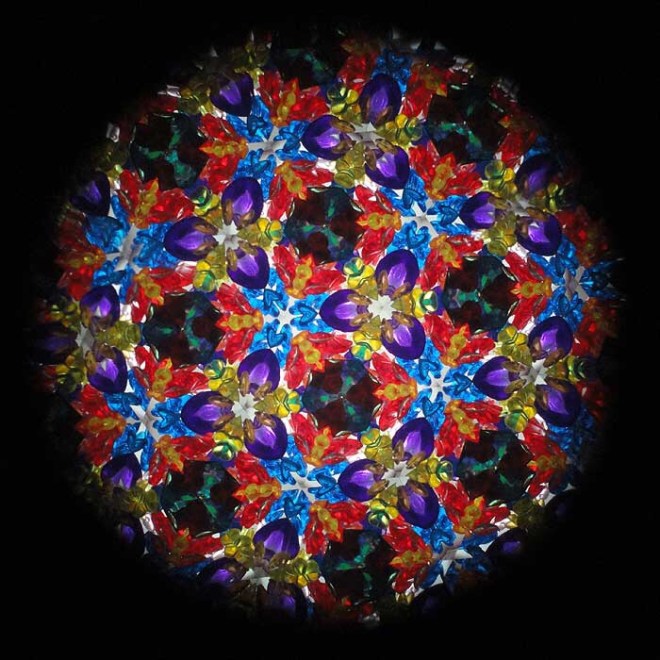 I don’t believe in fate—providence, if you will. If there is a plan, it does not proscribe outcomes. Rather we wander in and out of circumstances bumping into two sets of patterns—those we make out of our lives, and those that are beyond our immediate control. Life goes out of balance when we cannot get the two patterns to jibe—when we cannot reconcile ourselves to the patterns that exist. Out of balance we can neither accept what has happened in our lives or we cannot break those patterns and create new ones that are made from familiar pieces but reflect possibilities that we had not imagined. Out of balance we fight against the patterns that life provides, missing obvious signs (rising temperatures, repeated cruelties, even the tender messages of love) and careening against the walls of a maze that we cannot perceive and causing damage to ourselves and those around us.
 Sometimes I step right in it. It could be good, could be bad, but somehow, my foot comes down right into it. All I was doing was taking a walk—could be to anywhere, the post office, the grocery store, down the aisle. The destination is of no importance—tell yourself that Brennan, assure yourself that you are a man on a journey, drifting happily so long as there is a journey whose destination is, truly and fortunately, impossible to predict. And then, splat, I tumble forward—because that is how we fall.
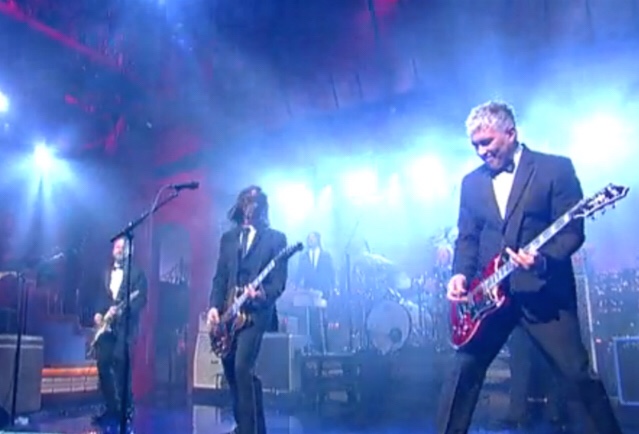 Play it loud.
