Hurt, Pain, and Agony (swimming and writing)

At the end of a day at work, I had a low grade fever on Monday, and so I had a choice to make—go home or go to the gym.

When I was in high school and college, I swam competitively. I was a good swimmer, not a great one, but I had made myself a better one and took pride in the effort. I enjoyed practice, in spite of the fact that practice hurt. The predominant swim coach of my youth was James “Doc” Counsilman. He prescribed—preached, really—the progression of hurt, pain, and agony as the single lane toward improvement. I gobbled up his Science of Swimming, and pushed myself into agony and better results. I never became an elite swimmer. I came to the sport too late and without the technical proficiency needed to excel beyond my willingness to work to the point of physical failure, but I did become a much better swimmer.

I hated to miss practice. I went when I had a fever. I went my my shoulders felt shredded. I went if I had the flu. I pushed my body hard enough to compromise my immune system, and plunged my body into a staph infection that ravaged me for a month. I kept at it.

I briefly considered quitting when I was in college. While Swarthmore was a place to be committed to study, most of the swimmers on the team joined to be fit, or to explore the sport. I was maniacal, and therefore, felt more often than not alone on the team. I missed the hard driven team of my high school. Also, I was not used to being out ahead of everyone else. This is not a boast, just the nature of the circumstance. There were other teams on which I would have not made the cut. I knew that.

I rejoined the team, refocused my effort, and pushed on.

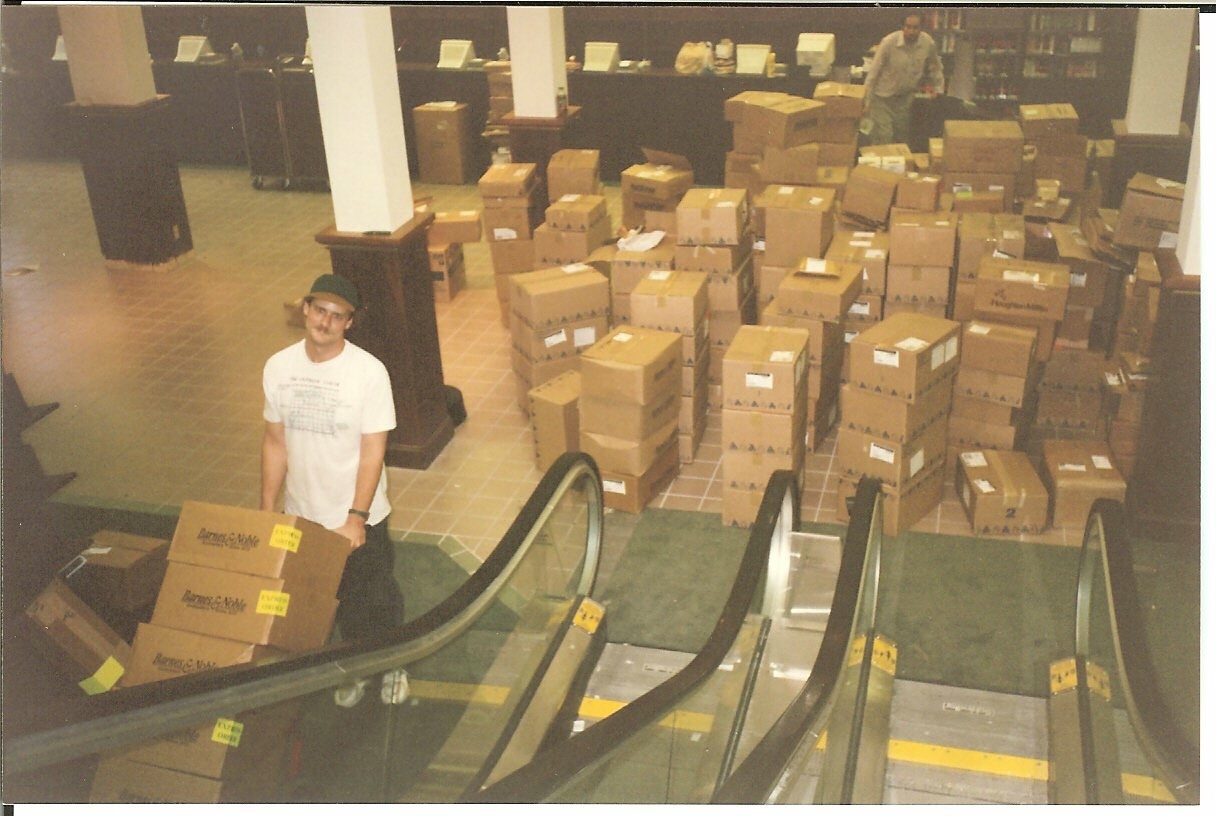
So, I felt under the weather on a Monday. Let me put this into context. Nearly every day at my job, someone calls out sick; I have enough free time in my schedule that I am able to cover other people’s classes. I do not understand being sick and missing work. I know it happens—I have had migraines, back spasms, and bronchitis in the past fifteen years. I had knee surgery fifteen years ago (torn meniscus). I get it. Illness happens. I admit to being stupidly judgmental about this.

For many recent years, I worked seven day weeks. If I got sick, my body, as if on cue, waited until I had a break in the school year. And then, I somehow avoided being ill on Sunday; I worked for a church. It just happened that way. The little stuff—a headache, some intestinal discomfort, a low fever—was just part of the day. Buddha might have said that desire causes suffering, but it seemed to me that a small amount of suffering was simply part of life. Swimming had taught me that.

I claim that swimming taught me that lesson, but I am not so sure, because there were—are—aspects of my life that suffering has upended. While I could fight through a workout, or endure lengthy stretches of difficulty in a relationship or job (perhaps endure too willingly and for too long), when it came to my writing, I backed away from the agony. Agony for writers, I think, is a bit different from agony for swimmers. Muscle pain and, what? brain pain—I hesitate to call it heart pain—are different creatures. Physical pain ends—for most. Certainly the kind of agony I courted in the pool stayed mainly in the pool, at least until my knees needed surgery. Mental pain permeates the day—you can stop writing and still feel the agony of an unsuccessful scene—anything less than glowing prose. And when even the good writing does not find a reader, then the agony feels for naught.

Writing does not quantify the same way swimming does. More writing does not necessarily guarantee better writing (There is a correlation, but it’s more slippery) the way that more (more yards, more effort) swimming leads to faster times. Nor does it compare well with work, where improvement and accomplishment have monetary results. Does a higher salary indicate a job better done—or for that matter a more valuable job? I guess that depends on how you ascribe value.

Maybe because good writing—whatever that means—is dependent on the reader, if one seeks to write well, one either needs a fairly reliable ability to dissociate from the absolute creative process and read one’s own work as a stranger might, or have a reliable enough reader to sort through her—or his—work. But more than that, one has to engage the work almost without a thought for oneself. There is a second dissociation—and this is like swimming: one must be attuned to the pain and the pain cannot matter.

For instance—and this is an insight into my judgmental brain—I described a character whose skin turned browner while he worked for weeks and months outside as “brown as a berry.” This is an old cliche, and one that I first overheard in the British Virgin Islands while sitting at dinner. Some old man—I was 12 or 13, everyone was “old”—described me in his British accent as “brown as a berry.” I did not know then that it was a cliche, and the phrase stuck, because my experience of berries tended to berries of red and blue and possibly black—the blackberries that grew wild on bushes near my home. It felt foreign and I enjoyed that the phrase had some unexplained—for then—British origins. The phrase dropped into my work, and I knew it was hackneyed when I wrote it—a minor disaster, I suck as a writer—and when I revised, I took it out. I knew that I would. But I had to move on while I was writing, I could not spend five minutes, let alone twenty-five, figuring out some turn of phrase. In the end, I let it be simple: “his arms turned brown by the sun.”

Does that sound like agony? Sucking as a writer is agony. The realization that my work would not please everyone—and that I still had to do the work—was not easy to accept; secretly, I believe that the whole point of writing workshops is to learn to ignore critiques as much as to learn from them. How does one know when the work is “not good”? Or, for that matter, “good”? Rickie Nelson sang, “You can’t please everyone, so you’ve got to please yourself” (more hackneyed advice from my childhood). There is agony in those questions.

And so, on Monday, I headed to the gym. I shortened my workout, burning down 500 calories in 23 minutes. It was shorter, not less arduous. I was in various forms of discomfort through the first half of the week—my insides disagreed with something I ate. I kept at the gym anyway. And then—always and then—I read the first chapter of my novel out loud at an open reading on Friday, and sent off the first set of query letters to agents on Saturday. The book, for now, is done. I wrote this. And I started the next book.

I am prepared for the work, even if it hurts, even if I am in agony. I have trained for this all my life.

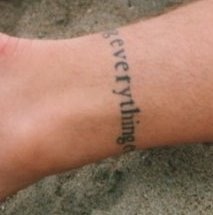
Why the Djinn?

A friend asked where I got the idea for the Djinn. Here is the long story.

I wrote poems when I was in ninth and tenth grade. They were lengthy works with regular rhythm and rhyme. They told stories. Men turned into dogs. Warriors battled ferociously. Queens and princesses sent boys on impossible quests. When I asked my school to allow me to do an independent study in poetry writing, I was turned down, but one of my teachers suggested working with him to write sonnets and other formal verse. He might have suggested an early round of talk therapy. Stung by early rejection, I refused his offer.

Every night before I fell asleep, I made up stories and told them in my mind. They reflected the source material I grew up with—books of myth and tales that I found in the Schuylkill School Library; comic books that my father doled out on trips to my grandparents; anthologies compiled by Rod Serling that I bought at book fairs.

I did not start reading adult novels until I was in 7th grade and a friend lent me his copy of The Guns of Navarone, after which I read everything that Alastair MacLean wrote. I made a mad dash through Kurt Vonnegut in 8th grade. I read all of Ursula K. LeGuin’s books before 9th grade. All this is a fairly slim bit of literature. My parents were not big readers—we had collections of Reader’s Digest Condensed Novels on our few bookshelves. My mother did read to us, sharing Beowulf and Poe stories. But we were not a bookish family. My brothers and I found what we looked for with relatively little guidance.

I was an able enough reader in high school, but short of Billy Budd, little of what I read stuck with me. On my own, I read all of Neil Simon’s plays, and other plays, and took up with science fiction and fantasy (Asimov, Tolkien, and a little known writer named Zenna Henderson). I read and reread Robin Graham’s account of his trip around the world, Dove. Mostly, I spent long hours listening to progressive rock, watching old movies, swimming, and driving the family car as far and as fast as I could.

In college, I discovered William Blake, James Joyce, Thomas Hardy, Henry James, and Gustave Flaubert. It was also when I read all of John Le Carre’s spy novels, The Joy of Sex, and the only Daniell Steel novel that ever passed my way—The Promise. The main focus of English Literature courses was exposure to more—and I share the story of having a short novel assigned between a Tuesday and Thursday class with my students now. I read widely and gleaned what I could as quickly as I could. I discovered that after reading Portrait of a Lady, my sentences changed. They were better: complicated and analytical.

In my junior year, I switched focus to Art History (same deal: memorize as many works of art—in order and with an understanding of importance—as fast as possible), which, fortunately included a Cinema class that greatly expanded my limited knowledge of film.

I started writing fiction in college, and was accepted into a workshop in my senior year. After graduation, I began an espionage novel that had something to do with Monet’s Haystack paintings in the Hermitage, in St, Petersburg. I fiddled with a story about a baseball player. I wrote a few chapters of something about two friends who decided to go to college and pretended that they were ten years younger than they were.

I had a sense of the novel, and novel length stories, but at this point in my life, I had only read a few hundred novels. I had never heard anyone explain rising action or a three act structure. I grasped scenes and could understand the books in an intuitive and intimate way. I wrote into the unknown without a plan, without having any idea of where to go, or what to do.

When I was 28, I went to graduate school to study writing, and even there the basics were not tended to. What I knew of Freitag’s pyramid, I garnered from John Barth’s “Lost in the Funhouse.” But fiction had never been about plot as much as characters and feelings. Maybe because I had never been drawn to plot. I often knew in a page or two what was going to happen in a novel—not the exact details but I could chart the end of the rainbow from the first curve of the arc.

So, what does any of this have to do with Djinn? I suspect that strains of all this—and of all the events of my life to date—appear in this work. Mainly, there is the myth, the early fascination with and appreciation of the fantastic as a genre, and the long interest in things that were away from here.

I encountered the djinn—as genies—in Sinbad and the Tales of the 1001 Nights. A widow who lived next door to us had those books. This book re-entered my life while I was in graduate school, in large part because of John Barth’s insistence on non-western sources of and for stories. But also because, once I encountered the djinn (or jinn), I was impressed by their wiliness and cruelty. I wondered—right or wrong—whether they had been mis-portrayed by the writer of the 1001 Nights. Why would such power need to be cruel? To refer back to Blake—“…what shoulder & what art,/ Could twist the sinews of thy heart?” I wondered. But I did not pursue the djinn, not yet.

I wrote in other ways. Although I have a set of prose poems set in Philadelphia that delve into the fantastic, I followed the realist tropes of my time. Perhaps this is what kept me from finishing—I was writing away from the story in my heart. Last year, when I dropped everything to take on new responsibilities—to myself and my work—I set aside the piece I had feverishly labored over for over ten years. During that ten years, I had written down a brief thought about a character who was keeping a secret (secrets will be something I grapple with forever). Five years ago, I was waiting for friends in a Mexican restaurant, and dashed out to buy a composition book, wrote a couple of pages before they arrived , and promptly forgot the book at the restaurant.

That story became the story of the Djinn.

I was dating a woman who shared my appreciation for the 1001 Nights—you have a copy too?—and that was enough of a spark to light the fire in this book, because the kindling, and the logs, had been waiting all these many years. Suddenly, I had a character whose secret was so closely held that he did not even know he was keeping it. He had forgotten that he was a Djinn.

There are other connections to other parts of my life and my studies that fueled this fire. Some of those will remain secret. Others are perhaps too obvious for me to mention here. For those of you who wonder how novels—or anything—gets written—by others or by your own hand—the short answer is that we tell the stories that enchant us. The shorter answer is that we sit down and write every day. No matter what. Perhaps because we are enchanted and under some infernal command—I wish that you write a novel, Djinn. So be it.

The Vision before the Travel

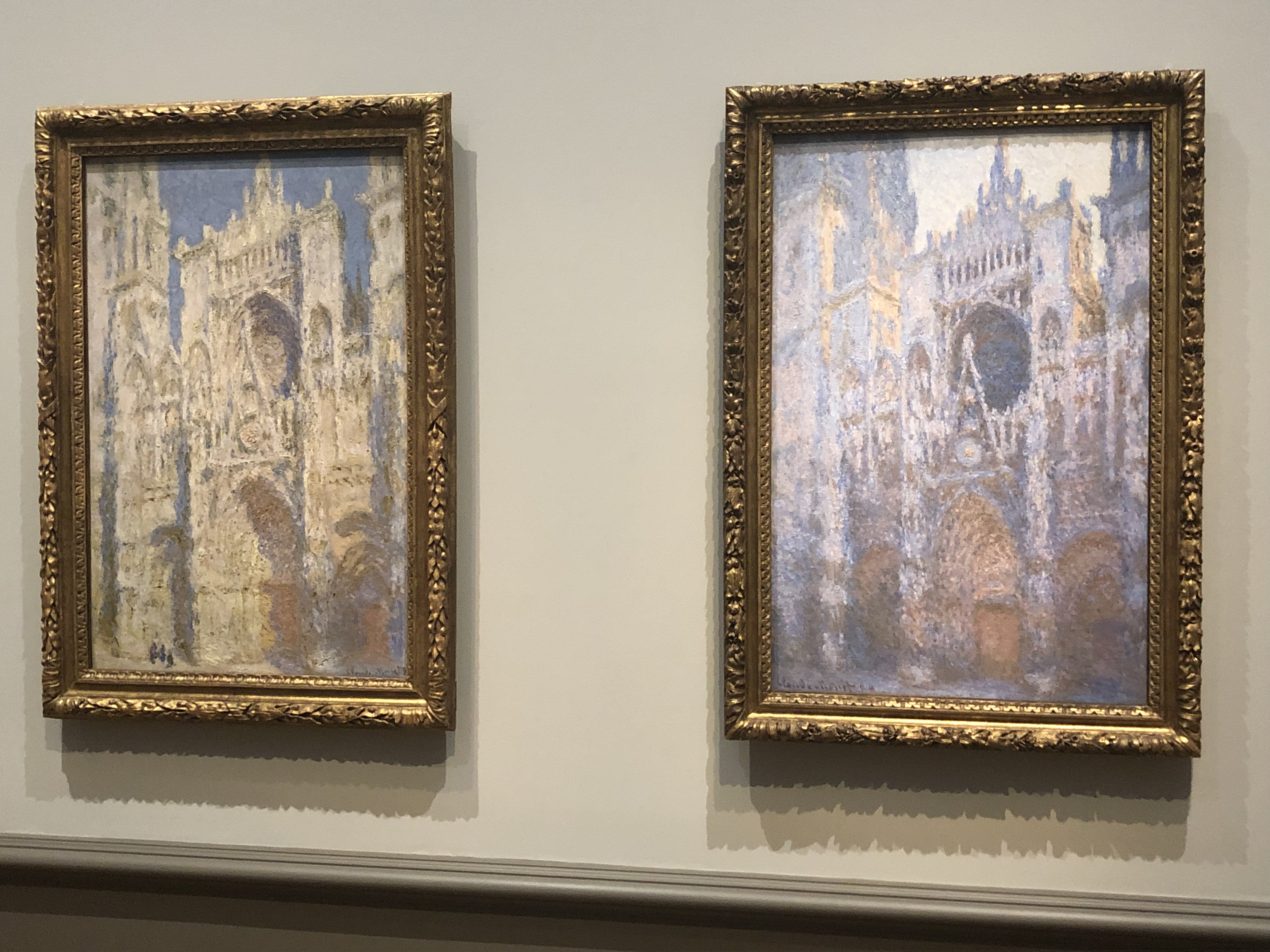
It seems impossible to me that when I finally see the cathedral at Rouen, I will already know the shadows of the late afternoon sun, and the way the morning light illuminates its porticos. How much of the world do I already know through the eyes of artists—the representations and words of painters and writers?

And not just buildings, but people as well. How have Uriah Heep, and Cassius, and Peter Walsh shaped my understanding of certain kinds of men? Or the countless representations of “The Man of Sorrows”?

If I have not traveled, I have imagined, and born witness to hundreds—no, thousands, more—of depictions of the world. I know that I have only traveled through the eyes and thoughts of others, but what others!

And yes, each place I have traveled enters my work, makes it larger, gives me insight to reveal some feeling in each of my characters. However, the travel out into the world is like practice for the travel I must do into the imaginary world I wish to create. I write, again and again, about the gifts that the universe provides, but, in the end, I must make something of them. I must use my imagination to recreate the world.

Which brings me back to the two views of the Rouen Cathedral by Monet at the National Gallery of Art—and all the other renditions I have seen in books and projected onto screens. I see these, and begin to build—in my mind, based on all the cathedrals I have seen in my travels, on all the slants of light, on all the play of clouds—a vision that will become my own. I look forward to seeing the actual building—soon! soon!—but I also know that it exists, somewhere, in my mind already.

Horses: Memory and Inspiration

This past fall, I went horse riding for the first time since I rode at a neighbor’s farm when I was 6 or 7. I rode on a horse named “Old General,” a sleepy footed follower of faster horses, but a step up from a rocking chair. Or so I was told. At one point in the ride, our trail guide asked if we wanted to run. It was actually the second time she had asked us; the first time I had gotten my sense of it. The second time, I was ready. Old General and I dashed, finding speed where it had not been before, and we covered the field ahead of my riding companions. Yes, I am competitive. It was one of the best days I had had in a long time.

Deborah Butterfield, Smithsonian American Art Museum

The horse made it into the book. Lots of horses made it into the book. I find inspiration where I can, and the museums in Washington DC (the National Gallery of Art and The Smithsonian American Art Museum) include sculptures that snuck into my work. At the very least they gave me ideas that acted as guideposts for the work.

I’m sure that there is some significant invention in this book. I am also certain that I used as much as was provided, whether it was experience or image from the world around me. As far as invention, I recall someone making the claim that all we experience in the first years of life is enough to fill several novels. Perhaps all invention is simply reforging those first few years—shifted through fractured memory.Alexander Calder, National Gallery of Art

Alexander Calder, National Gallery of Art

And, perhaps, there are deeper memories, deep from within our genes, stored among things like eye color and height. I know the Celts came from Central Europe and further South in Asia Minor. I wonder what they brought along in their genes, in their deep memories. I wonder if these stories are just what were, once, somewhere. For now, here is the horse, and a ride I will not forget.

“The horses flew through the forests without urging. With no path to follow, they crashed through low hanging limbs of trees, over bushes filled with thorns, and in and out of muddy streams. Their riders crouched low in their saddles, reins held close to the great sweating necks of the stallions. They rode like that, blurs against the dappled light, until the sun had set, and the sliver of the moon had risen, and the lead horse had slowed, finally, to a mere gallop. What pace they had been keeping has no name.

“Behind the other two riders, Thomas rode on the balls of his feet, crouching forward as his companions had done, but lifting himself out of the saddle by inches. The black horse beneath him felt him there, out of the saddle, and remembered a journey made by such a one as this, when she had run eastward toward the sun, when the sun would not rise. Then the rider had guided her to the edge of the world, and with a rope made of salamander skin, impervious to fire, had pulled the sun into the sky, and started the day. After that, it always rose, bright and warm in the east. When Thomas reached down to stroke the neck of the speeding mare, the touch of his hand confirmed the horse’s memory. ‘He has returned.'”

Libraries

I attended an event at the Meridian International Center last week. One of the rooms at the Meridian House is a library. There is a strange surprise about a library in a foundation. The odd assembly of books—all the Russian history (because the foreign service world centered on Russia for decades), a case of biographies of men and women important in the 1940s, 50s, and 60s, and then the random exception, a book by Carly Fiorina (published as she was making a run at the Republican presidential nomination), and then a shelf that jumps from A Woman in Egypt to Lee’s Lieutenants to The Great Influenza. Organization sometimes struggles when books are added.

I notice, besides John Barry’s book about the pandemic of 1920, there is also a copy of Louis Menand’s The Metaphysical Club; both these books are on my shelves at home. I will guess that if I looked more meticulously that I would find other overlaps in our collections. I wonder about the constellation of editions that connect library after library, and how I have felt a kinship with those who share editions with me. This person, this place, is not so strange.

I have written about my books before, both about the joy of having—and unpacking them—them and the burden that they signify. My books are a kind of roadmap, both the orange Home Depot Home Improvement 1-2-3 and Italo Calvino’s Six Memos for the Next Millenium. Some books I have not opened in years, others I revisit with uncanny frequency. They all point to something, somewhere.

Writing: Sludge and Frustration

I spent the past 24 hours writing in what I described as “sludge”–not exactly “ten million pounds of sludge from New York and New Jersey,” but close. It happens. I admitted this to a friend, who asked, “You’re not feeling frustrated?” I answered, “Frustration is part of writing. One cannot write without it.” Let me explain.

First, as you will recognize from previous posts, I used to sail on the ocean, heading back and forth from the Chesapeake Bay to Bermuda with my father. Setting aside the variability of the weather (from windless and flat to howling and mountainous), I was sick nearly every time I took the trip: 24-36 hours of plain and pronounced discomfort. I eventually discovered that a vertigo medicine helped settle the sea for me, but up to then I kept at it, and accepted the retching as payment for the joy. So, I have that experience to draw on.

Second, I was a swimmer, and while I was not an Olympian, I practiced hard. Improvement came with pain, and I learned to adapt to the persistent ache in my shoulders, arms, and legs. During practices, the immediate feedback for how fast I was going came through either the proximity I had to faster swimmers, or, when I was one of the faster swimmers, from how much pain I felt. Pain—of a certain kind—equaled speed. There are, of course, other kinds of pain, such that denote injury and not improvement, and I was fortunate to avoid these until later in life.

Some days writing is just going to be like a bad day on the ocean, or a crap day in the pool. Some days my brain just does not connect to anything brilliant, or worse I think it’s brilliant, but I have done none of the necessary work of getting my characters in and out of rooms. I have left out simple gestures, and replaced action with explication.

Sometimes when sludge is all there is, I scrap large chunks. Sometimes it just takes connective tissue—so that the ideas get bound to motion. Sometimes, it is a signal that I am not being wild enough. Once I was told that a character was boring. Tough criticism, but, a sludge encrusted character needs to be set free—or buried.

So, frustration will happen. So will boredom, says the man who puts in 26-32 minutes on the elliptical six days a week. Raucous music keeps the heart rate over 160 bpm, and sometimes works for writing. And metaphoric raucous music too—add a crazy scene as needed. Even Dickens used spontaneous combustion to advance the plot.

But the frustration also comes when we get close to the sludge, and the sludge covers what we don’t want to engage. Sometimes we need to treat ourselves roughly when we write, and work what makes us, not just uncomfortable, but downright upset. The sludge can be like a makeshift bandage, covering some old hurt. Hey, you don’t have to own the hurt, but see it, and work it. Pain can clarify and properly unsettle the writer—and enliven the writing.

So, here’s to frustration. And writing through it.

Discovery

So much of this project (#thirdwishnovel) has been centered on twin acts of discovery. First, I have been overjoyed to discover this story, and the way that it has unfolded itself to me in the past several months. Each time I faced a quandary (What should this character do? How will “this”—whatever this is—happen? Why does this world behave the way it does?), the universe opened up and provided some essential part of the story.

I have written about this part of the process in bits and pieces in this blog. I have never been the welcome recipient of so many gifts. There were lions from Assyria, streets in London, a silver tree in Washington DC, heartbreak (yes, even this was a gift), and, of course, love. Each of these, and so many others, found their way into the book.

I cannot tell you, dear reader, how this process of discovery has sustained me. One of my friends asked that since I was the writer, couldn’t I just make up what I wanted? Another chided that since I was a creative writer (with a degree to prove it), couldn’t I just make what I wrote funny (or sad)? Couldn’t I just determine the mood of what I wrote?

The joy of discovery comes in not willing the outcome. I have learned to trust what comes. In addition to the gifts from without, there are also those from within. For instance, I was struggling with some action in the story, a movement that would precipitate a series of events. I found the movement—and an actual movement, an action—through reflection about the characters and reflection about physical exertion. And then, suddenly there was physical labor in the book: two characters moving large stones. Had I moved things? Oh yes. Had I taken some strange joy in physical labor? Oh yes. Were the actions of my characters simple mirrors of myself? No. However, the actions also suited them, and the tenor of what I was writing. They fit.

At the beginning of the school year one of my students interviewed me, and asked about writer’s block. I told her that I did not believe in writer’s block. I do not. I had been writing this blog consistently for almost a year, and felt that the images and ideas that were bubbling up were coming from a (finally) durable source. I talked (a little) with my student about searching for the source. That has been the second discovery.

All my life I have struggled with the twin poles of being in and of the world and also being me. I have had a hard time feeling at home in a world that felt selfish, and that valued self-obsession. Yes, there are some truly altruistic souls, but that drive—or simply drive itself—always seemed suspect to me. It created, more often than naught, a narrowing of vision. And anything that narrowed the world gave me a pain.

Remaining open to connection is a tricky business. It can create a kind of ant-gravity shell around a person, because any ground, any focus, limits the openness to connection. Fortunately, I do not approach my romantic relationships with the same predisposition (or do I? Damn!). But without focus, what will one achieve, except by accident? Accidents do happen—fortunate falls are around most corners. But as a plan, relying on accidents is a hazard best avoided, unless one wants to plan on injury and decides to play in traffic.

But for life—and writing a novel is like life—one needs a more directed plan, more than let’s play in traffic, or let’s dodge life’s slings and arrows. And committing to the living—and to the writing—has made the difference. It took a rearrangement of my life, a reprioritization of what I did, and a willingness to risk. Writing for months on end without the promise of brilliance (let alone publication) is not for those who seek guarantees. The only guarantee is the doing. I have been satisfied with the doing, with the daily writing, in ways that I have never felt satisfied before.

This is because I can no longer wait for the happy accidents. I have asked for them, engineered them, gone where I could be in their presence, and taken a hand in making them happen. While I have been happy to have some advice as I have written, mainly, I have trusted my own ability—and this has been exhilarating.

I have made the turn for home in this current project, and I have no idea how it will end up. Where I do know that I will end up, is with another project, another set of discoveries. Just as this one started almost on a whim—a glimpse—that changed and changed and changed again as I wrote, somehow watching how this has proceeded has helped me discover myself and my purpose. And that purpose is discovery in all its glory.

The grain of sand—intention and writing

While explaining a quandary I was having as I waded into one of the more difficult portions of my novel, a friend asked, “You’re the writer. Can’t you just make them (your characters) do what you want?” And that, dear reader, is always the rub. Of course, I could, but, even when writing about magical characters (djinn and such), there is no magic wand. Everything must seem real, and if not real, plausible, and if not plausible—if wild and genuinely surprising—then I have to prove it.

The writer doesn’t have to avoid those deus ex machina moments, so much as show them in their complete and total glory. You place a grain of sand on the battle field, and then the whole balance is shifted—but you do not, never, ever, forget the grain of sand. You carry it in from some desert or beach (preferably one from which the ocean has retreated and left barren), and you drop it under a horse’s hoof, or into the eye of the hero (or worse, the eye of his lieutenant), and let it have its way.

So much of writing is about discovering the grains of sand. The larger narrative components are there: beginnings, middles, and ends. What holds them together are small moments. Images, lines of dialogue, secondary characters who stumble into a scene. You don’t know that they will be there when you begin, but you find them—or they find you.

And yes, they come from you—unintentionally, more often than not. They sneak in from your childhood, or something you just saw on the news, from a museum display, or from a clutch of conversation overheard while in line at Shake Shack. Your brain files all these away, and then, at the right moment (or the wrong one—but only if you’re lucky) drops them back in on you. “Thought you were done with that, eh?” your writing brain asks, while you have sent a character through a hole in time to receive a secret from his future self, and suddenly you are reliving a kiss, a gesture, from 25 years ago—or last year. Can you even keep track anymore?

No, but once you start writing it, everything floods back, and you are reliving and living and inventing and discovering something you never knew before. But there you are, and everything you write surprises you, and the ending for which you thought you were aiming changes. Because of a grain of sand that you have been carrying with you for 55 years. Here comes the sandstorm.

The Writer’s Character (and work)

I began graduate school in the fall of 1988. Writing was still new to me. I had written in high school then in college, but the daily life of writing was only a shadowy presence. I had begun a novel, and tended it during the free time of my six day weeks managing a small Italian restaurant in the Manayunk neighborhood of Philadelphia. Which is to say, that I had written enough to gain admission to a program, but not enough in any real kind of way.

Graduate school was a relief and a release—it was the thing all my friends and customers were hinting at when they asked, “What are you going to do?”—recognizing long before I did that there was something specific that I was going to do.

I had drifted after college. It was as if I wore an anti-gravity suit that kept me from becoming grounded. There were reasons. I had encountered “purpose” as a rationale for selfishness and intentional moral blindness. The latter I found incredibly troubling. I believed in an inherent goodness—found in man or god—in spite of my experiences in the world. And when I wrote, I explored that possibility.

When I arrived at Binghamton, I poured myself into the work, writing with avaricious fervor, and studying gleefully. I learned quickly that a “B” was an “F,” and after one failing grade on an essay, turned to successful outcomes. I earned a scholarship after my first year, and with it, the right to teach, which I welcomed with the zeal of the recently converted. I was hooked.

One of the hooks at Binghamton was the presence of John Gardner, the author of The Art of Fiction and several novels I had not yet read. I had read Grendel when I was much younger, drawn by the monster after my mother had read us some version of Beowulf as our bedtime entertainment. What attracted us, some of us at least, was the myth of John—driven, irascible, generous, and demanding. As often as not, when describing ourselves as writers, we focused on our characters-not the characters in what we wrote, but out own personal strengths and foibles, and how we matched up against this fabled presence. He had been dead for 6 years, but he hung around the program (his ex-wife became my dissertation director).

One of my teachers, I think it was Liz Rosenberg, introduced me to On Becoming a Novelist, in which Gardner laid out some characteristics of the novelist:

Like other kinds of intelligence, the storyteller’s is partly natural, partly trained. It is composed of several qualities, most of which, in normal people, are signs of either immaturity or incivility: wit (a tendency to make irreverent connections); obstinacy and a tendency towards churlishness (a refusal to believe what all sensible people know is true); childishness (an apparent lack of mental focus and serious life purpose, a fondness for daydreaming and telling pointless lies, a lack of proper respect, mischievousness, an unseemly propensity for crying over nothing); a marked tendency toward oral or anal fixation or both (the oral manifested by excessive eating, drinking, smoking, and chattering; the anal by nervous cleanliness and neatness coupled with a weird fascination with dirty jokes); remarkable powers of eidetic recall, or visual memory (a usual feature of early adolescence and mental retardation); a strange admixture of shameless playfulness and embarrassing earnestness, the latter often heightened by irrationally intense feelings for or against religion; patience like a cat’s; a criminal streak of cunning; psychological instability; recklessness, impulsiveness, and improvidence; and finally an inexplicable and incurable addiction to stories, written or oral, bad or good. Not all writers have exactly the same virtues, of course. Occasionally one finds someone who is not abnormally improvident.

We looked inside ourselves to see whether we met the unholy criteria that John threw down—gauntlet-like—for us to match. It became a weird check list. There were dozens of weird checklists that we tested ourselves against: pre-work habits and rituals, kinds of writing implements, time that we wrote. I think that many of us were hoping to awaken a writing practice that could sustain us, and so looked for that one thing, the one trick that would allow the words to tumble out as effortlessly as possible.

Of course, we focused on how damnably hard writing was—and is. The metaphors we used to describe writing—like Virgilio Pinera’s man who decides to eat a mountain, one rocky mouthful after another—emphasized the difficulty, futility, and irreverent commitment. Perhaps the real solution was a correction to our character—some unbridling of our sinful writer manqué natures, and a resurrection into some more saintly (or demonic) deranger of the senses. If only we could rid ourselves of our flaws, and get to work.

I came to grad school, and to writing, after years of 60+ hour weeks. I rose early enough to get to the pool and down 3000 meters, then head across town to the restaurant. When I arrived in grad school, I found a job, and worked 3-4 nights a week in a high end restaurant. After I started teaching, I took a job in a bookstore ran by the husband of my mentor (he had been a student of Gardner’s as well). I swam, and then started running several days a week (I could listen to music while I ran!). Some of my classmates complained about the workload. I did not. Work was in me. Writing was not.

But it was. I wrote some inspired pieces, and won praise from mentors and classmates for my work. I didn’t know what to do with it—I had some things published, but what do a few stories and prose poems amount to in a world driven by novels? Besides, I confused inspiration with work. Work, that simple, boring, daily activity, with simple, boring, daily and measurable rewards. I was seeking star fire, supernovae, and earth-shaking prose. In order to do that I had to remake myself in the image of whom? John Gardner? Stephen King? Virginia Woolf? Some Norse God?

And what is the measure of good (let alone brilliant) writing? A great sentence doesn’t blaze as distinctly as the time on the clock when you touch the wall after one of ten 200 yard swims (That’s good; keep going). You write without a clear standard, and a novelist bangs out 60,000 to 100,000 words into the blind space of “who knows what will happen to all this?”.

So we focused on character, the one thing we could control or change. This, of course, is poppycock. There are good and bad people who write. Character is no Holy Grail, and no simple gateway or guarantee to writing. Work is. I wish we had simply talked more about work and habit and word count in grad school. How do you sneak in an extra 200 words? Have you done your work for today? Do you need a new pen? God only knows, make it work, let it be work, and demystify the process. It’s just work. It’s not about whether the muse is singing to you, or the dread siren, or anything or anyone. It’s just work, a job, a practice, and all you need to do, is to do it.

In the long run, Gardner’s description of the writer, and, once again, that sense that a purpose that led to blindness to everything other than IT, drove me away. After all, what was the lesson of nearly every novel, short story, or poem we read? Connect. Connect. And for the sake of everything that’s holy, or valuable, or worth saving: connect. The pursuit of art never matched the message. Picasso was a sonofabitch, but Guernica. Dickens philandered. Woolf suffered from limiting snobbery and mental illness. Joyce? Don’t even. Our contemporaries wandered into the forest of “immaturity and incivility” with a stridency that was matched only by ignorant blowhards and professional athletes.

I recognize that now, all of it, as a kind of armor. I know what it allowed, and what costs they incurred for strapping it on with such easy regularity. I saw it for a kind of blindness, and doubted. And in that doubt, returned to the anti-gravity armor that had supported me years before.

I turned, for years, to teaching and a kind of preaching. I tried to reach out, to convert the sensible—and others—to deeper understanding (reading) and brighter thought (writing). These are not fool’s errands, to be sure. But once you have tasted brilliance—and writing done well is brilliance—every other work other than the work that is the most brilliant, makes your tongue recoil. Even your dog would turn away from that feast. Not me. Not for years. And though I still fight with gravity, I feel the pull, and this is what binds us together—separate planets careening into each other with cataclysmic potential. I tried to resist, but, really, why?

So I’m left with these questions: How does one balance the work and the meaning of the work? How does one have purpose and character? Ah, as always, the trick of balance, and not in Gardner’s list of a writer’s characteristics. We will have to figure this out ourselves.

Of course, equanimity (balance) is not Gardner’s list, but the safety net is the work—stupid, dull-witted, and quotidian. Be an angel or a devil, but get to work. It comes back, and, if done well, connects us, once more, to the world, to each other, and to the gravity that holds us all.

Risking it all

It is difficult to explain the existential risk that the writer—at least this writer—undertakes when working. It is tantamount to this:

One time we (my father, two crewmates, and I) sailed out of the Chesapeake Bay and onto the ocean in a gale. A gale is wind at 40 knots. There was already 6-8 foot chop in the bay. One of us (a first-time sailor) slipped into his bunk clutching his life jacket, stricken with an indomitable case of seasickness. We sailed short-handed into stupid weather and bigger seas.

For the next four days, 30-50 knot winds harassed us, and the sea that was more like a protracted set of sand dunes, the water whipped by the wind into twelve-foot peaks that barely seemed to move. They were moving though, faster than we were in our 36-foot sailboat. The ship sailed up and down these wet rolling hills, making ragged progress toward our goal: Bermuda.

Sensible men would have waited, but for all my father’s strengths (long-range planning, and in-the-moment decisiveness among them), he had a stubbornness that did not waver. Once he had a plan, he stuck to it. Later in life, this supported him as he battled g on with Parkinson’s Disease. He suffered with the adaptations the illness forced on him, but refused to be stopped. In the end this led to his death. On this trip, his drive took us into conditions that would test us.

I should also note that when I point to a crewmate who became seasick, I do not cast aspersions. I get seasick, and had each time I had sailed on the ocean before this. It always struck me when I took my first late watch, when the horizon was shrouded in black, and my eyes and inner ear could not properly make sense of the several directions that my body was moving. It is an ugly sickness, driving the guts empty in rebellion until there is nothing left but bile. I never missed my turns at the helm because of it. The nausea would strike, and I would turn my head, and do what I needed. I did not eat or drink while it was on me, and it passed, for me it did, and after 36 hours.

On this trip, in this ocean, I was entirely spared. All my other crewmates, even my father, were struck. In retrospect perhaps the swell of the sea was so distinct and regular, that the three-way (pitch, yaw, and roll) motion did not take grip of me. Or perhaps the danger created a necessary clarity. As with all retrospect, I cannot be sure.

After four days, we finally passed into the fringe of whatever had driven the gale. In a matter of hours, the wind created new swell patterns. Around midnight, the sea that had been a reasonable set of rolling hills, turned, and became more like waves breaking over an invisible reef or sand bar. 18-24 foot waves rose and broke, all headed in one direction. They are called following seas, which means the breakers were rising behind us, and rolling toward us. They were moving faster than we were and lifted our boat to each peak, at which point our boat would slide down the front of the breaker like a sailboard.

That sounds easy enough, but as the boat fell down the surface of each wave, it carved a path driven by gravity and the force of the wave it was riding. Its path down the wave became, temporarily and repeatedly, unmanageable. Pushed by wind, pushed by water, pulled by gravity, the rudder merely suggested a direction. And yet, when at the helm, every suggestion made a difference. Caught at the top of a breaker, the boat could easily go sideways and roll over. Sliding down the side of the breakers, it could turn too sharply and roll over.

A sailboat is not a surfboard.

My father and I took the helm when the sea turned. We held it in half-hour turns, and it was exhausting work that required dense and specific attention. And, we were exhausted after the previous days of sail. Usually, in harsh conditions, one man took the wheel, and the other took refuge propped against the cabin in the leeward side of the cockpit, using the cabin as a wall against the constant water that broke over the windward gunwale. In this case, as we planed down the sides of the swells, the leeward gunwale cut into the water, and the water rushed into the cockpit. This added a new threat. The boat could be capsized, swamped with water if the helmsmen was not attentive. And, because no attention was enough, at the very least, we were soaked, the water pooling in our yellow foul weather gear, which was not designed for repeated submersion.

At 4 in the morning my father looked at me and said, “I can’t do it anymore. I’m going to send another crew member up, but you cannot let him take the helm until the sea settles down. You have to sail until then. The boat is yours.”

I brought a waterproof Walkman on these trips. While I took the helm that night, I listened to an array of the loudest songs I had: Dinosaur Jr’s “I Know You’re Out There,” Medicine’s “One More,” and Sonic Youth’s “Sugar Kane.” Nothing was loud enough. Nothing matched the ocean or my attention. Nothing matched my awareness of what might happen, or when my father relented, what had happened.

I sailed. Every time I turned the wheel, I felt like I was making a decision that could imperil the lives of all of us. We would go down fast, without time to throw the life raft overboard. It would happen in an instant. We were at sea—tempest-tossed as Shakespeare wrote. The end would come quickly. Each time I turned the wheel, each millimeter I moved it to port or starboard, I felt as if I was making a decision for speed and forward motion. It felt, again, as the bard wrote, giddy. Not happy, and not drunk—although I felt as drunk as I could be—drunk with sailing, with water, and with wind—but transported out of my mind, beyond all thought, and into every thought possible. I sailed as I never had before, as I would always want to sail afterward.

Friends ask me if I have been sailing in the years since my father’s death. I have not. But even before he died, I knew that I would not—not because of fear or seasickness (an anti-vertigo drug helped allay that)—but because I had done something then that I would never replicate. Not on the ocean. I have sought it ever since.

I do not know what has ever led me back to safety. I know that what calls me is not simply mastery (I have a Ph.D. in English, I have some level of mastery there), but the exhilaration of being over the edge of control and into the realm of the impossible. To be the captain, which I became that night. Sometimes, too often, I have exercised the caution I faulted my father for lacking. I have stayed controlled, almost too calm. In some measure, this is because I feel a lack of control and a lack of mastery around me. Even the experts profess a quietness or steadfastness, when sometimes what is needed is to go out of one’s mind. To forgo safety. To risk. But also to carry the responsibility for the lives on board. We are, truly, in this together, and must all go out of our minds, together.

I have over-prepared, or tried to know, to tame the ideas in my head, worried that they were unintelligible, or that they were somehow too strange. I feel myself now, at the top of the breaking wave again. And look down into the night sea. This way. Now. Down. For life.