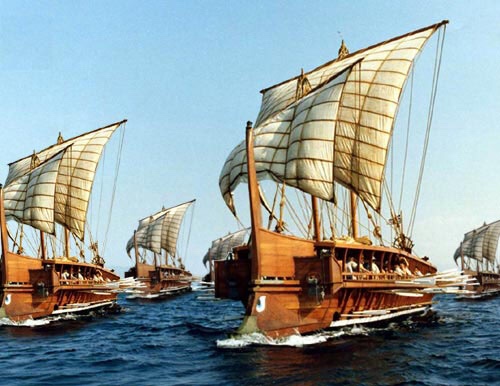
 Sing in me muse, and through me tell the story…
So began the first translation, by Robert Fitzgerald, of The Odyssey that I read. Later, I taught another translation, by Robert Fagles, that began:
Sing to me of the man, Muse, the man of twists and turns…
More recently, Emily Wilson offered this:
Tell me about a complicated man,/ Muse…
No matter the translation or framing of the tale and Odysseus, the poet turns to the muse to provide the story and the song. It seems like a quaint notion. These days we mine our lives for the sources of stories.
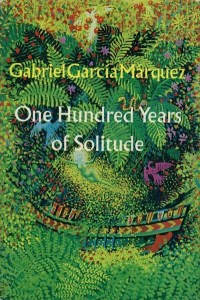 Even Gabriel Garcia Marquez, perhaps somewhat disingenuously, claimed that all the impossible elements of One Hundred Years of Solitude were true. His memoir, Living to Tell the Tale, reads like a revelation, and it makes all that seemed strange in his novel strangely normal—at least for that time and place. Of course, Marquez famously recounts the genesis of that novel—he was headed away on vacation with his family when he realized that the voice of the book was the voice of his grandmother telling incredible stories in the most matter-of-fact voice. He turned the car around and started the work that would define him as a writer. His grandmother was, in a way, his muse.
Why do writers have muses—things, people, animals—outside of themselves to give their work a nearly mystical, almost divine impetus? The writer faces inward and outward tidal forces. A writer works the tension between the inner voice—the thing that writes—and the outer world—what she or he writes about. Writers attempt to portray the outer world, even if it is a fantastic and impossible world, truthfully, crafting a vivid continuous dream in words, crafting it with the inner voice.
Of course, what a writer makes is not the world: it is an approximation, a copy, a simulacrum, an aspiring reality that with a combination of skill and luck convinces the reader. Or hoodwinks. I can never tell. Perhaps enchants. The writer makes a world, or something like a world, and populates it with minds and bodies, cities and mountains, oceans and sea monsters. Even if all these elements resemble something found in the real world—the world of the reader—each part comes from within the writer.
This act of creation is nearly divine. The writer is the maker of worlds. Even when Dickens charts London’s streets—we can locate Scrooge’s counting house and guess, fairly accurately, where his lonely lodgings were—they are shoved two inches to the left of the world we know. This London is not London. By creating a new world, the writer seeks to emulate the world that is, but also to replace it. For the time the reader enters the dream, it is a world that could be, not a world that is, and the dream reveals something particular, something full of twists and turns and complications.
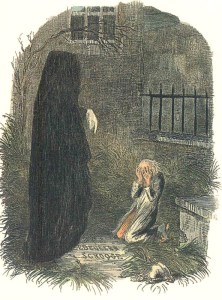 While the writer uncovers the words that capture this world, she or he enters the world, and if the writer believes the words—and she must! he must!—then the inner world threatens to obliterate the outer one. After all, there is something about that outer world that the writer seeks to correct. The ghosts visit and Scrooge reforms—is literally made into someone new. This is the world that should be—where a miserly and selfish investor can become “as good a friend, as good a master, and as good a man, as the good old city knew, or any other good old city, town, or borough, in the good old world.”
The writer sees what could be, like Cassandra, the unheeded prophet of myth. Some writers simply disgorge the terrible truth of what is, like an oracle who disdains both irony and hope. There is no redemption, just inexorable weight—think of the novels of Stephen Crane, or Gustave Flaubert. Their worlds may be imagined, but the imagined reality is cautionary: there is no escaping this gravity. Let me pause to say that dystopian fiction while cautionary, by making the possible reality so obviously awful, opens a kind of door to redemption: all this could be avoided. The realist, on the other hand, sees no way around the unbearable truth.
Either writer—redemptive or admonishing—seeks some anchor outside the work. By locating the inner voice in some external force, a muse, whether divine or closer at hand, the writer can dissociate from that other world. It isn’t in me! It comes from Erato, or my lover, or my cat, or the messages on the television. The muse is a hedge against being swallowed by that inner world. Madness is a double edged sword, and there is divine madness in writing. “Much madness is divinest Sense,” Emily Dickinson begins her poem. The muse keeps the madness at a distance.
I am not suggesting that writers are mad—that trope has little interest or value to me. Writers bear the weight of vision, and seek ways to allay that weight. Some retreat from the world—the noisiness of life interrupts the vision that animates their existence. Some bound into the world—seeking febrile connections to the world, and allowing all those connections to illuminate their visions. Some stop writing, and I believe that even then they suffer. I know so. Vision is persistent and obstinate.
Sing, sing, or tell. We seek a trick, a magic act, inspiration to crack through the hard shell, and once again, create and fly. A muse, or otherwise, a simple spell of words to open the way.
 Is it any surprise that repetition plays a significant role in my life? I came of age as an athlete knocking out sets of 30 200 yard freestyle swims. They were yardage eaters—a quick and dirty way to lay in 6000 yards of workout and buy time for rest of the yards that the coach had in mind. We finished them at intervals of 2:30, 2:20, and 2:10, which left 50 minutes for the rest of the practice—an easy pace for the two to four thousand yards to come. Pushing off the wall every two minutes and thirty seconds, there was time for conversation between swims. Leaving at every two minutes and ten seconds put a crimp on anything other than brief exchanges: “This sucks,” “Stop hitting my feet,” “I’m hungry.”
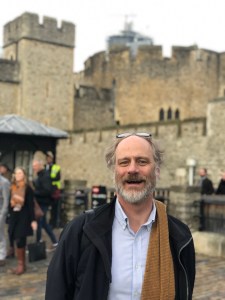 This past December, I traveled to a new place, London, to which I had meant to travel almost thirty years ago. I traveled after I did a series of new things, each one satisfying, but each fueling a desire for more. Almost everything that has been part of the solid ritual of my daily routine tastes bland. I don’t hanker for extremes—a solo sailing venture around the world, or an ascent up some foreboding mountain, or a year in a seraglio—I yearn to encounter something as if for the first time. I wish to be a beginner again, with a clean slate ahead of me.
 The thing about writing that some people will never understand is that for the writer, it is not cerebral. Writing is physical. I feel exhausted, physically spent, after writing. Not exactly the same as after a work out, or after a night of intimacy, but I will push myself until my body shakes. I stop when I am done, when I have hit a physical limit. I do not believe that people who do not write, seriously write, understand this.


 I have been struggling with masculinity as of late. Which is to say, struggling with ambition. Or struggling with my career choices. Or struggling with relationship choices. Or, simply struggling. Because I am a man, I am struggling on the somewhat closed field of masculinity. I haven’t always thought of it that way, and yet, there it is. I have avoided masculinity for dozens of reasons.
 I had always shrugged off the idea of traveling to the Grand Canyon. I was one of those, “what’s the big deal about a big hole in the ground” skeptics. I was wrong. Of course I was wrong. The Grand Canyon is an amazement—and of course, I was properly amazed when I saw it—looking into two billion years of rock will do that, should do that. I realized that what I had held aside was not the geology or the landscape, but the travel. Why had I discounted my ability to be amazed by travel? I had done it all my life. Going, all kinds of going, even if so much of it has been more local—on this continent, in this country—has been part of me all my life.
 I loved airplanes and airports. Departures were invitations to new adventures. When I traveled with my family, I usually sat alone—the hazard or benefit of being an odd numbered group. I took my first plane flight alone when I went to Iowa to swim; I was 15. I traveled by train and bus alone all through my early adult life. I usually traveled to visit friends. However, I also went to cities to simply see them, to look at buildings, and camp in museums—visiting and revisiting works of art that held sway over my imagination.
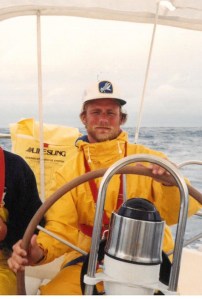 There were trips under sail with my father and brothers. These were tests as well as trips. The ocean makes us foreign to ourselves, our bodies not made to be perpetually wet, and perpetually in motion—shaken and stirred. I have never been anywhere larger than surrounded by sky and ocean, never felt as alive, nor as alone.
 continuoussearch