 I had always shrugged off the idea of traveling to the Grand Canyon. I was one of those, “what’s the big deal about a big hole in the ground” skeptics. I was wrong. Of course I was wrong. The Grand Canyon is an amazement—and of course, I was properly amazed when I saw it—looking into two billion years of rock will do that, should do that. I realized that what I had held aside was not the geology or the landscape, but the travel. Why had I discounted my ability to be amazed by travel? I had done it all my life. Going, all kinds of going, even if so much of it has been more local—on this continent, in this country—has been part of me all my life.
When young, my family would take day trips—Sunday drives—through the Amish country in Pennsylvania. We got in the car and headed out Route 30. Or we would go to the West Chester airport and walk among the privately owned single prop planes. In the summer, we headed to Longwood Gardens for fountain shows. There were trips to nearby parks—I remember lakes with small patches of added sand for “beach.” We routinely drove to Long Island—heading up the New Jersey Turnpike past the refineries—to visit family. When I was ten, we headed to Maine, a day long drive with three boys and a dog. Once we began sailing, it did not take long to head to the British Virgin Islands—my first plane rides, and first swimming in warm Caribbean seas.
 I loved airplanes and airports. Departures were invitations to new adventures. When I traveled with my family, I usually sat alone—the hazard or benefit of being an odd numbered group. I took my first plane flight alone when I went to Iowa to swim; I was 15. I traveled by train and bus alone all through my early adult life. I usually traveled to visit friends. However, I also went to cities to simply see them, to look at buildings, and camp in museums—visiting and revisiting works of art that held sway over my imagination.
I loved driving, and would sometimes eschew expedience for country roads, foregoing straight, broad, multi-laned ribbons for winding paths along mountain sides and down by river beds. Landscapes called to me as well as vaulted ceilings. Beauty was everywhere.
And, I loved walking. I hiked 500 miles when I was 12. As an adult, when I took myself to Maine, I would walk the beaches in Phippsburg, breaking up my study sojourns with hours long ambles. When I arrived in Bermuda, I walked off my sea legs with long walks and runs around the island, walking into local places, on roads no taxi or rented moped hazarded. Once, on a trip to NYC, I walked, in winter, from Soho to the Met, freezing along the way, but surrounded by shops and towers and people. When I spent a conference week in Portland, Oregon, I took a day off to wander to Portland Museum of Art to see Native American artifacts from the Pacific Northwest, and a painting by Clifford Stijl. Afterwards, I headed onto Powell’s Bookstore, then to the DeSchutes brewpub. All on foot.
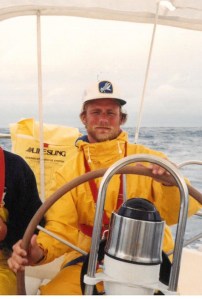 There were trips under sail with my father and brothers. These were tests as well as trips. The ocean makes us foreign to ourselves, our bodies not made to be perpetually wet, and perpetually in motion—shaken and stirred. I have never been anywhere larger than surrounded by sky and ocean, never felt as alive, nor as alone.
This blog began with travel some four years ago—a trip to China, to a strange land to bring a stranger into my life. There are so many strange places yet to go—so many friends to visit—people I have not yet met, whose tables have an open seat waiting.
So, walking to the edge of the canyon should not have surprised me. I am sure that some snobbish impulse to avoid what millions of others had done informed my thought. But I am not like millions of others. I forget that sometimes. On purpose—as a bulwark against being a snob, against falling into the easy habit of travelers to simply bring myself wherever I go. I would rather be a stranger—not just to the place, but to myself, and welcome this new person into my already teeming life.
And so, finally, after one long ago missed opportunity, I am traveling to London. It is an easy enough first step to Europe. I wonder what I will find there, what old memories will rise up, what new experiences will awaken. And I wonder, who I will find there in among the histories and wanderings. Who will come home, amazed, this time? And what will happen if the wanderlust takes a firmer hold of me this time? How will that change me–or, rather, change me again. Eyes up, here I go.
 A current meme on Facebook compares what Moms used to say to their kids with what they say now. It is held up as a clarion call to the virtues of yesteryear, when Moms—and their kids—knew what was what. Over and over again, stuff (stuff) like this careens around the internet, in casual banter on news shows, in conversations in my workplaces. Those of us who grew up in the mythical “then” look back with nostalgia, and look at this moment with a jocular disdain. I would like to call “bullshit” on the whole enterprise.
 My mother did what she thought and felt was right. She learned her lessons from her mother and family—and what lessons they were. Some things, she changed. She never leashed us to trees in the front yard. Others were more indelible. I am certain that most of us parent in the same way—sifting through the conscious and unconscious lessons that we received from our parents. What we do, we do almost on a kind of autopilot—in the heat of the moment, dumb memory takes over. Change is hard.
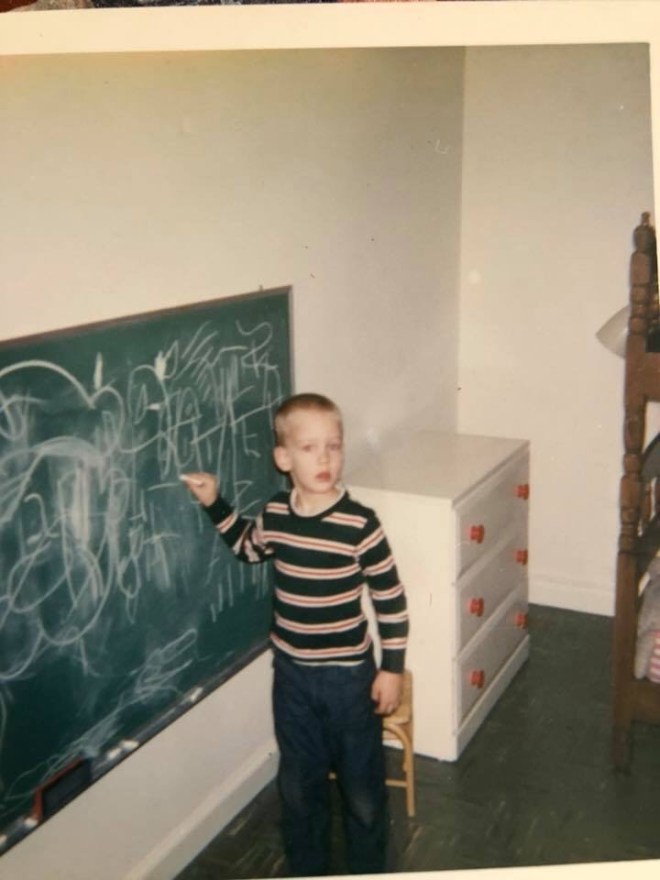 In many ways, I take solace in being surrounded by memories, and there are some that I purposefully mine. The routine of the same lunch—on most days—reminds me of years of similar lunches from the time I was five—earlier—until just last week—and all the lunches in between. I feel comforted by the way those memories permeate my present so easily.
 I have written about the powerful memories associated with places—a rolling set of hills on a road headed north, an intersection with two right turn lanes, a road sign, the curve of a shoreline, a buoy. But, it is everything else as well. All the things. My walls at home are lined with books, and the books speak—not just of what is contained in their pages, but of the times I read them, the places I was, the company that surrounded those moments. And there is more, a gesture, my hand on a doorknob, the sudden turn of my head when I look for something, the way my foot falls on a stair. I am out of myself in a flash, or at least out of this time—even though I know that I am inextricably in it—and another older time surges through me. Even when still, this heartbeat explodes into a thousand, a million other heartbeats, and time collapses.
 And so, beside my own strange face, I also take pleasure in crowds of strange faces, all of whom present unknown avenues, untapped sources of experiences and memories. I know the echoes will come to the strange person I will again be tomorrow.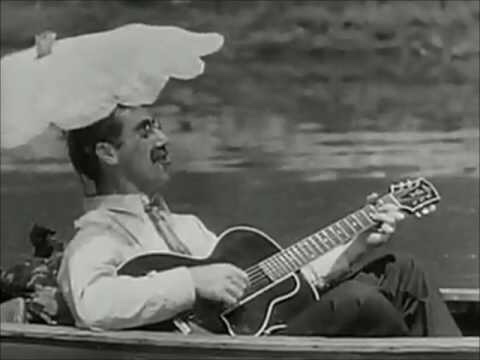
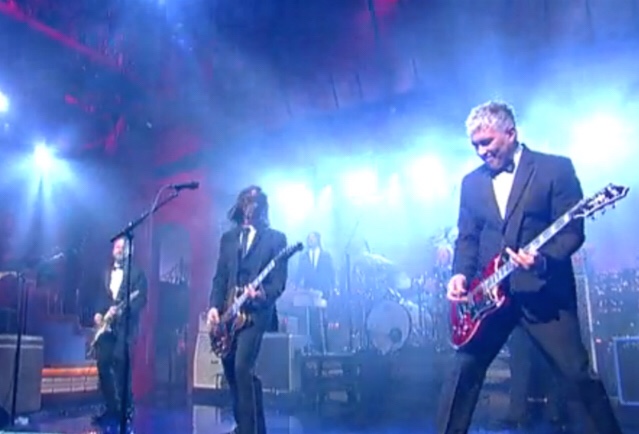 Play it loud.
 I wrote this years and years ago. Later, I sat down on a stone wall in a tony neighborhood in Baltimore to wait for a bus, thinking about nothing other than the weather—it was a late spring, the sky was all but cloudless—when I realized that the stones were swarming with ants. I quickly stood up, and brushed many, too many, off my pants. I knew what I had done. I laughed, and started walking.
 I am unpacking and repacking old boxes. I have no fantasy that I will throw away old essays or my notes from Joyce and Woolf classes. But there are things I threw into boxes as deadlines approached, and now, when I look at them, nothing. I have whole boxes of emotional and intellectual cul de sacs.
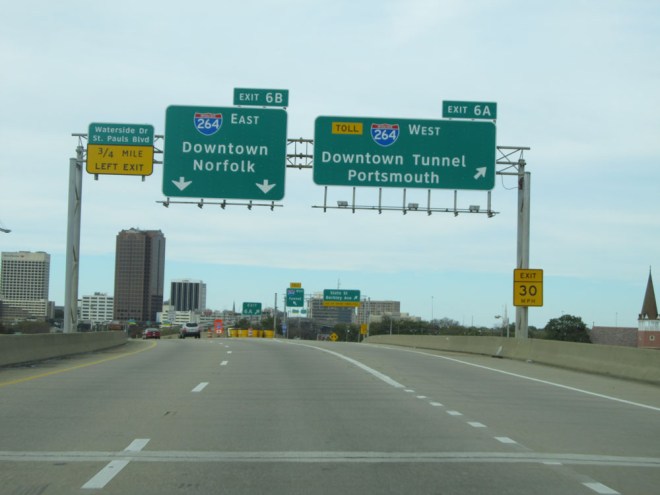 Every time I reach a particular traffic light in Norfolk, I can hear, clear as a bell, the not so gentle prodding that “You can turn right on red from the middle lane. There are people behind us.” Heading west out of Norfolk through the Downtown Tunnel causes a surge of ineffable joy, even when it’s just a trip into Portsmouth. The long drive across the Bay Bridge Tunnel reminds me of the day I took my daughter to drop flowers in the bay to commemorate the day my father fell into the water.
 There is hardly a street corner, a stop sign, or a stretch of highway that does not bring back flashes of memory. I stood on that plot of grass, took photos of the flooding at my church, and then sent them to a friend. I walked past the giant number “9” at West 57th in New York City with another friend, on our way to the Hard Rock Café. There is a house on the back way into the Paoli Shopping Center that my father told us belonged to Chester Gould, the illustrator and writer of the Dick Tracy comic strip. This seems as dubious a claim as that Dr. Seuss lived in a house visible on the hill above Yellow Springs Road—my father had a predilection for harmless invention.
 I have read that places become memorable when significant emotional events have taken place there. Memory formation is my hobby horse. What constitutes a significant emotional event? What allows the creation of two, three, four, more memories to occupy a single green exit sign on the Route One into Bath, Maine?
 continuoussearch