Cynicism and Hope

I re-read Joyce Carol Oates’ story “Where Are You Going, Where Have You Been” (http://brainstorm-services.com/wcu-2005/pdf/oates.pdf) for “homework” last night. It’s wonderful but horrible. It is a story of nascent sexuality blossoming into horror. The main character draws the attention of something like the devil—a human devil. It is Flannery O’Connor territory—minor sins, or none at all, punished with absolute and random finality.

I know why I haven’t taught it much before.

I can see the darkness—and take up arms against it. How can one not see it in this time—in any time—in every time. It is a terrible thing to see and know. And too easy to slouch into a raw kind of cynicism. That is the safe havens of scoundrels.

Let me pause on that for a moment. Cynicism is the safe haven of scoundrels. There is no time for cynicism—espousing the essential corruption is a cheap holiday in other people’s misery. And a retreat to a false high ground: because I can cast aspersion I am better than the lot, even if I am corrupt. No. Thank. You.

Whether or not we are corrupt, there is something in us that calls to hope and connection. “But we are animals!” a friend proclaims, “Our genes emerge from the savannah and the jungle. We can be nothing more.” And so scientific fatalism opens the door to nothing. Instead of Homo sapiens we are Homo inertians—unable to escape the gravity of our deeper history.

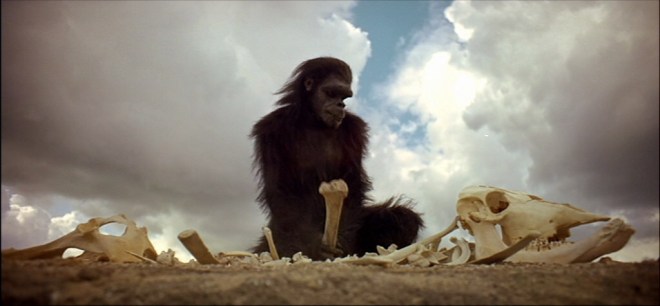
And yet we build, and not every tool—Kubrick’s 2001 aside—is a refinement of a club. Certainly Kubrick’s 2001 won’t help one win a war, or woo, unless, of course, the object of desire is imbued with an essential and unmitigated nerdiness. Nonetheless, even without some mysterious aid, we grow. Maybe not today, maybe not tomorrow, but soon enough, and we find our way to each other.

Names

landscape-1435262834-cotswolds-homeI recently swapped the nicknames that we give our kids with a friend. We had both, surprisingly and strangely, settled on “Bug.” I’m not sure that our daughters will appreciate that longer into their lives, but for now, it will do.

The first time I met her, my younger daughter bounded across the room shouting, “Baba”—Chinese for father—and into my arms. I was a goner. The names I am called matter.  When my daughter calls me, “Daddy,” it stamps me in a more definite way–not just as a father, but as her “daddy.” Sometimes when she is in a softer mood, she will call me “Papa,” and I know to take a gentler stance. She will sit next to me in the car, and say, in that drawn out imploring way, “Da-a-a-addy,” to which I volley, “Dau-au-au-aughter.”

Years of being called “Doctor”—which is more reliably shortened to “Doc,” by my students—has turned me from a reluctant, begrudging authority, to a genial, self-effacing curator of knowledge. A “doc,” in the rural veterinary or GP sense. But I still feel a mild shudder, because of my first “Doctor”—“Doctor Groton,” who taught Latin at my high school, and had an imposing, almost menacing presence. Besides, which of my friends with similar degrees who teach in college would ever sidle up to the honorific with less than irony?

Even more powerful are the words we use around someone. I tell my daughter with almost casual splendor, “I love you.” To which she responds, “I love you too.” Recently she has started initiating these exchanges, “I love you daddy,” which is followed before breath is drawn with “I love you too, daughter,” or “I love you too, bug.”

Giving something the imprimatur of “love” is easy, perhaps too easy. Perhaps I should gird on cynicism and protect myself a little more than I do.  Instead, when I feel the connection, which reveals all the connections in the universe (“every atom as good belonging to me belongs to you”), I find love to be the easiest, truest response.

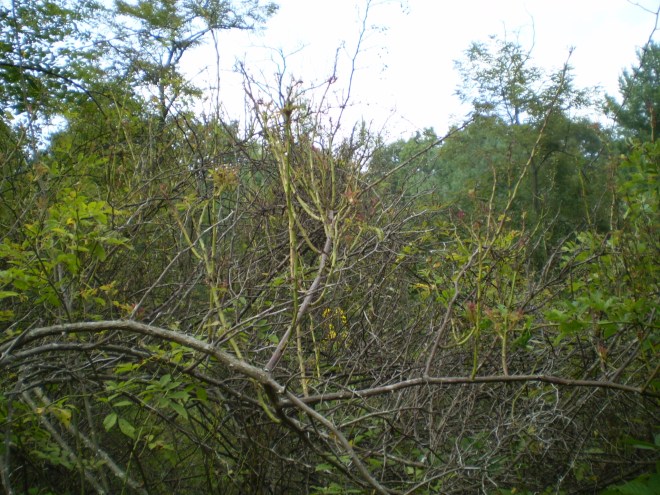
OLYMPUS DIGITAL CAMERAAnd I do know the other side. I know how easy it is to let upset slide into hate. And I know that once uttered—by an adult, not by a child, because children must experiment with all words and all emotions—it breaks the bonds in a nearly irrevocable way. I have said it, out loud—either in the perpetual external conversation I have with the world or directly the object of scorn—and the immediate thrill is followed by a deep remorse as the tendrils that connected me to another person wither immediately into dried spiked vines, like the hedges of multiflora rosa that grew brown and foreboding in winter. All that was planted must be uprooted. Maybe something can be saved, some sprig, somewhere.

And because love is, well, love, there is fertile soil. The assurance and reassurance that I give and receive from my daughter spreads new life, almost instantaneously. My bug is a pollinator and the fruits are plenty–the golden apples of the sun, the silver apples of the moon.


A Sonnet

“I wander” starts the simple song. I know

The rhythm, how to walk, but not the way.

I watch as others scatter on the road

Each scramble nine directions hurriedly.

An open bag of wind unspools my will,

Spins me into schools, houses, sheets, and arms—

Not one’s a home, but they will do until

I steer out of miles and into hours.

The course charted with whys—uncertain winds—

Comes clear in shadow dreams and memories—

To a sea of grass lapping autumn woods,

And last night’s dress hung until morning.

You whisper, “No more wandering for you.

This is your home. This all you have to do.”

Magic Words

I wrote this years and years ago. Later, I sat down on a stone wall in a tony neighborhood in Baltimore to wait for a bus, thinking about nothing other than the weather—it was a late spring, the sky was all but cloudless—when I realized that the stones were swarming with ants. I quickly stood up, and brushed many, too many, off my pants. I knew what I had done. I laughed, and started walking.

ANTS

I fall asleep on a park bench. What a long day it’s been. I wake up to a dull itch all over my body. I think, this is what I get for falling asleep on a bench. I scratch at my side, and in my hand: ants. Everywhere ants. I am being eaten by ants. I can’t get up; they’ve already done with most of my legs. I am going to be eaten away by ants.

As they chew at me I think, why couldn’t something have taken me whole, all at once? But there are no whales swimming between the buildings, waiting to swallow Jonah. No bengal tigers, orange striped, royal, ready to leap from office doors and dispatch me in one great kill.

No. I’m being eaten by ants. They take one pincer-full at a time. There must be millions of them, and as many other kinds of insects under the bench absorbing the flow of blood. I look up and down the street, hoping no one has noticed. Who but a fool would be eaten by ants?

I feel a tap on my shoulder. “Aren’t you?” she asks, “I’ve been dying to meet you.” She’s beautiful. Of course she’s beautiful; I’m being eaten by ants. She tells me how much she has looked forward to meeting me. “Why thank you,” I say. Please don’t notice, please don’t notice, please go away.

Then a man in a suit. “There you are, if you could just sign the contract, the advance money will be wired to your account.” My account? Advance money? I’m afraid to sign. Do I still have hands? I would look, but what would I see? Ants, ants, everywhere ants.

Packing again

I am unpacking and repacking old boxes. I have no fantasy that I will throw away old essays or my notes from Joyce and Woolf classes. But there are things I threw into boxes as deadlines approached, and now, when I look at them, nothing. I have whole boxes of emotional and intellectual cul de sacs.

Some of it is technological detritus. Phone cords? Old phone earphones? Some are records from past lives. A checkbook from Pittsburgh? A W-2 from Binghamton? There are kindnesses. A condolence card from my father’s funeral. There is a sweat stained baseball cap from a beer festival. Short ceramic candlestick holders and half burned candles. Another hank of phone cord.

There are more ringing memories. As she was moving from her home of forty years, my mother sent two packages of photos and records from my youth that include a hand made report card in which I earned hand-made A’s in subjects no school ever taught and a photo of the Varsity Swim Team with a dour me in a letter sweater. Other things. Almost twenty years ago, I set aside a bag of Philadelphia Inquirers containing my father’s obituary. A windup nun that shoots sparks as she walks patrols the corner of a now empty box.

These will all make the move, except, this time, I will reopen each box when I settle into my next home. I will spend time going through some of the boxes with my daughter, just to share strange pictures of her father and family, odd toys, and other remnants of my goofier life. Other boxes I will map out—actually going back over notes and essays.

And then, of course, there are the dozens of notebooks containing scraps of thought, dreams of beginnings of stories, hints of recipes, names collected and noted in lectures. As I was packing, I noticed a phone number on an otherwise blank page. There is no name, no feathery reference, just a number. Some mysteries will remain mysteries, and they will travel with me, just as surely as certainty will.

The Planet of Memory

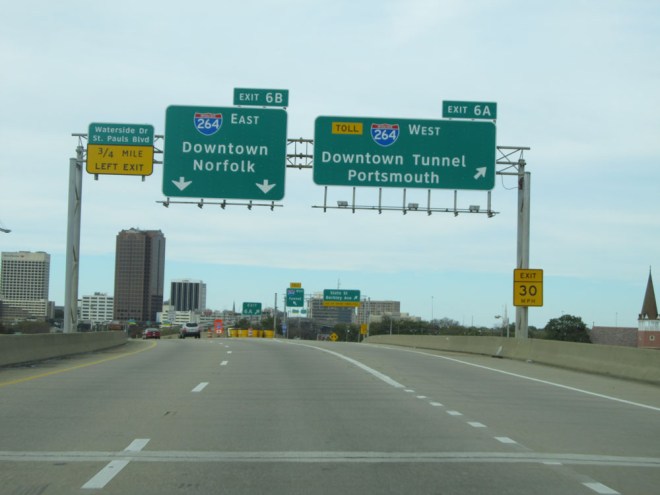
IMG_6913Every time I reach a particular traffic light in Norfolk, I can hear, clear as a bell, the not so gentle prodding that “You can turn right on red from the middle lane. There are people behind us.”  Heading west out of Norfolk through the Downtown Tunnel causes a surge of ineffable joy, even when it’s just a trip into Portsmouth. The long drive across the Bay Bridge Tunnel reminds me of the day I took my daughter to drop flowers in the bay to commemorate the day my father fell into the water.

BigRed9There is hardly a street corner, a stop sign, or a stretch of highway that does not bring back flashes of memory. I stood on that plot of grass, took photos of the flooding at my church, and then sent them to a friend. I walked past the giant number “9” at West 57th in New York City with another friend, on our way to the Hard Rock Café. There is a house on the back way into the Paoli Shopping Center that my father told us belonged to Chester Gould, the illustrator and writer of the Dick Tracy comic strip. This seems as dubious a claim as that Dr. Seuss lived in a house visible on the hill above Yellow Springs Road—my father had a predilection for harmless invention.

Before I learned the names of streets (which are still all but meaningless to me), I carried vast mental maps of all the places I had been. Even now, some fifty years later, those old memory maps are vivid.  When I travel to places where I lived or visited as a child, I see two (or more) places at once—the heights of trees and plants, the placement of curbs, buildings, or playground equipment, and sometimes even the sunshine or snow shimmer against each other.  I know which one is real now, but the other waking dream of a place asserts itself.

IMG_8216I have read that places become memorable when significant emotional events have taken place there. Memory formation is my hobby horse. What constitutes a significant emotional event? What allows the creation of two, three, four, more memories to occupy a single green exit sign on the Route One into Bath, Maine?

I am moving from a place that I have lived for fourteen years and heading to a place that is entirely new. I try to venture forward without insisting on emotions—instead of North, South, East, and West the cardinal emotions of Joy, Anxiety, Hope, and Despair each create on some new direction, some new map point. And yet, I have taken my daughter, and watched as she skipped down Main Street in Warrenton, or happily ate blackberry ice cream at Moo Thru in Remington. A place takes shape and becomes part of the memory planet on which I walk.

Two Sides: Ambivalence Part 2

When we are young, we change.  The hurtling forward into growth exhilarates us. We learn at full gallop, disastrously adding new ideas before old ones have taken shape. We are gluttons, and the table is richly laid out and endless. Our Apollonian and Dionysian sides eat together—the only rule is More, and more we do have. We learn and learn, good gods I hope we do, like gods.

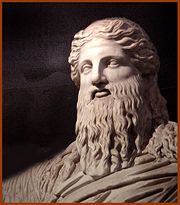
rr-apollo-quiz-apollo-lyre_23f7551cSome people, most people, grow up, and cast their lot on one side or the other. Apollonian selves dream into an idea of logic and order—think a sonnet by Shakespeare, glorious in its arrangement of rhythm, rhyme, and idea. This is Apollo brought to earth, walking firmly on the ground. Dionysian selves trumpet feelings and instinct: Ginsberg’s “first thought, best thought” is as much a dictum as can be borne.

180px-Dionisio3

Rule three thousand one hundred and sixty-two: if you are one, do not marry the other. And do not ask about the other five million rules.

And recognize that just because one is Dionysian, do not think there is a lack of rules about how to go wild. A little Apollonian memory slips in.  You need to party like this, or you aren’t really partying, dude.  On the flip side there may be a wild inconsistency built into that Apollonian logic—call it hypocrisy if you feel like it but know that wildness finds a way.

A few people never settle into one side or the other.  The two halves bristle within like ions in a storm cloud. Ambi-valent: charged in two directions, fire in both hands.  We don’t grow up, but out, finding hidden paths through the forest, wanting one last opinion, and reassessing as we charge into conflict. Yelling at our superiors and demanding a reckoning.  Being schooled by our students and admitting our blindness. and always, always learning.

I bemoan my ambivalence; I cherish my ambivalence. It’s a dirty little secret about my life. I hate being fenced in, and I love the elegant symmetry of a well written novel. You point out chaos, and I will chart the forcelines that create paisley swirls. I want to love someone and build a life with them and I want them to dance right out of the picture on their own. I want to lead the way, and I am happy to chase comets.

Oh, it’s the worst. And the best. Or the other way around. And the other way around.

Some folks tell me that I’m too strict, or not enough of an adult, or that I have too many rules, or that I don’t follow their rules. Dude, this is how we party. How am I a teacher? How could I be anything else? How can I not shake up my life and take my daughter along for the ride: reassuring her, giving her the foundation she needs, and teaching her that when the earth shakes, the ground still loves her. And that everywhere I am, I will love her.

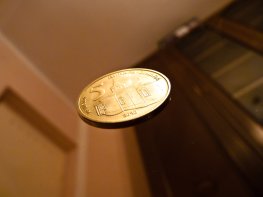
coin_flipping_by_uroskrunic-d36x79rMy youngest brother has told me many times that I am too serious. And of all the boys, I am. And not. My wildness is serious, and my seriousness is wild. Flip a coin, and watch the light glint off side after side after side as it tumbles through the air. Heads or tails, the glinting wins.

Wrestling with ambivalence

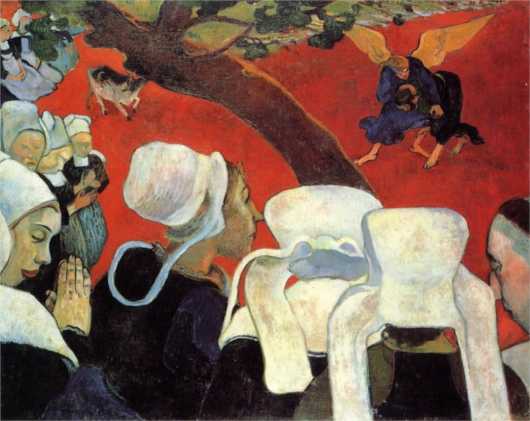
jacob-wrestling-with-the-angel

My younger daughter randomly pronounces “I’ll miss you, papa,” or “I’ll miss you, daddy.” We could be doing anything: folding laundry, driving to the store, watching a video about geysers. It tears me apart every time.

My daughter stays with me three nights a week, which has been the arrangement with my ex-wife for the three years we have lived apart. We live blocks from each other, so I have seen my daughter between times as well. In a few weeks, I will move three hours away, and our comfortable schedule will change. We will spend weeks and months together throughout the year, and manage weekends, but I will not be the nearly daily presence I am now.

So why move? Why tear the central chamber of my heart to shreds? I don’t see myself as a horribly selfish man, which kind of negates the entire, “I’m doing this to be happy” argument—or belies it. Maybe I am a selfish man.  Wear that feather in your cap for a bit, and feel how heavy the crown really gets.

“You can’t let yourself think that way,” I will be, have been, told. And that’s fine, but when Socrates trots out “The unexamined life is not worth living,” this is the kind of thing one is meant to examine—not every sandy beach in the Caribbean or every dive bar in Baltimore.  Saddle up for self-examination, or get off the trail.  And yeah, keep your eye on the trail, greenhorn. See them rocks over there?  That’s ambivalence, and we’re here to fill your packs with it.  Get digging!

So many things—too many things? –pull in opposite directions.  Half of life seems a paradox, and the other half I just can’t make my mind up about which direction it’s headed. And I don’t simply throw my hands up and say, “Oh well.” I wrestle, intently, with the angel of ambivalence.  In “The Waking” Theodore Roethke states, “This shaking keeps me steady.” Damn right.

I don’t hold with those who don’t engage ambivalence—being of two minds about things.  People who insist “you’re either with me or you’re against me” give me a serious pain. People who say such things and then claim, “It’s okay if we disagree,” help me find my way to the exit tout suite. You cannot claim an absolute and then say it doesn’t matter—or vice versa. Be afraid of those who claim an open mind while harboring a stone heart.

I cannot claim that this is an easy path. I think a reasonable amount of comfort and privilege makes it possible. I have walked away from the comfortable certainty of doctrine, in large part, because I felt that a life without doctrine would be neither dark nor disastrous.  I knew that the monsters hidden in the chaos were as deeply entrenched within the staunchly defended halls. Beowulf never had to go far beyond the mead hall to find adversaries as deadly as Grendel.

While I understood what Obama was getting at when he talked about economic insecurity driving people to cling, I knew that there were plenty of secure people who traffic in certainties and verities.  Maybe that’s what helped make them secure. Or maybe there’s something else at work—a digression for another time.

As for me, now, this decision, to leave my secure and certain life, has immediate repercussions. I may have reasons, and good ones, to move.  But I know that I am unwinding the steadiest relationship in my life for uncertainty.  Of course, it is not as uncertain—my daughter and I have a firm bond.  And a happier father will, in the end, be a better father. Or so I hope. Nonetheless I make this move with a serving of ambivalence, and perhaps, that will be enough to keep us steady.

The Center of the Universe—words from a Graduation

I tell my students lots of things. There is the teaching, of course, but there are certain phrases that have become, well, worn. I repeated a story with my ninth graders just a couple of weeks ago. I think that’s a sign.

One of my sayings, usually delivered in class, when a student has interrupted everyone else to declare something like, “There are clouds in the sky,” or “I have a cat”—something that has floated in over the transom of their mind—is this:

“If you have lost the center of the universe, I think I have found it.”

Except, I haven’t told you, there is a secret, and the secret: you are the center of the universe.

Science backs that up—in an infinite universe, everywhere is the center. It’s one of those paradoxes that makes teaching science so much fun. Or like this one from math: which is longer, a ray, which starts at a fixed point and goes on for infinity, or a line, which is infinite in both directions? Something cannot be half as infinite.

That’s why I stick to teaching English.

Take Shakespeare’s universe. In his plays, there is almost—and I’m going to say almost, because unlike math, in English there are always exceptions—almost never anyone more important than the King. The King is always the center of the secular universe.

And you might think, “I’m the king? Cool! I’m the center! I have arrived!” I also tell my students how my daughter thinks that being principal is the best because I get to give out detentions. This is the worst part of the job, and not just because I get to sit on detentions. An authority that gleefully metes out punishments, is truly limited vision of authority. Henry wants—no, needs—his band of brothers to thrive, and they do, because he elevates them. He may be the center, but he is also the first peer, the first equal.

And here’s the trick, In Shakespeare there are only a few truly happy and successful kings. I think he leaves high school principals out altogether. He doesn’t leave students out. And that’s because students can learn. Kings, for the most part, do not. They are, as Caesar claims, as constant than the Northern Star. Once the have become the king they are who they will be. They will not change. And who would wish for an inconstant king? Shakespeare’s tragedies are littered with them: Macbeth, Richard III, even Henry’s father, who mutters, “Uneasy rests the head that wears a crown.” Be a king, indeed.

But, what does it mean to be a center? My juniors and seniors have seen the list of king-becoming graces that Malcolm provides to Macduff: justice, verity, temperance, stableness, bounty, perseverance, mercy, lowliness, devotion, patience, courage, fortitude. It’s quite a list, and like any list we would quibble over each term a bit too much. My students can quibble.

Perhaps it is better to remember that in an infinite universe, if you are the center, so is the person sitting next to you, and so is some person sitting on the other side of the world. We are all centers, and must learn to live and live well with each other. And what better way to live than to live as brothers. Because if we are as brothers, then we shall share a cause—perhaps not so clear as that as faced by Henry at Agincourt, but a cause nonetheless.

And because today is father’s day, again, I am reminded by this:

This story shall the good man teach his son;

And Crispin Crispian shall ne’er go by,

From this day to the ending of the world,

But we in it shall be rememberèd—

We few, we happy few, we band of brothers

And so, today, find your cause, but be sure to make it large enough so that you can be brothers with each other, and with all the other centers that are spinning around you.

And now, I have some diplomas to bestow…
Echoes of Suicide

Here there be triggers…

The suicides of Kate Spade and Anthony Bourdain set off klaxons across all media. People—friends, family, and experts— shared memories, formulated reasons, and dispensed advice. And in my little corner of the world, I quietly melted down as I revisited the suicide that upended my life.

I drove my friend, Jennifer, home on the night she committed suicide. She was more than my friend, she was also my supervisor, colleague, and minister at the church where I work. After her death, I went into crisis mode, helping my congregation as best I could through what was, for some, a challenging year. Because of the timing, no minister could serve our congregation for the year (a neighboring congregation lent us their minister on a once a week basis, and she checked in on us). I talked with a counselor about the events. Friends checked in to make sure I was in reasonable shape. I was.

In a moment of anger, one of my friends suggested that she must must have known it would have been him or me who would have discovered her. I knew then, as I know now, that such calculations or considerations are never present in any meaningful way in the mind of someone who suffers from a mental illness strong enough to cause death. However, that never stopped me from playing and replaying the conversation we had on the night I picked her up from dinner (her car was in the shop) and drove her home.

My rational mind has assured me, and continues to assure me, that nothing I said could have caused her to do anything—or for that matter caused her not to do what she did. I was in the company of a person whose decision—insofar as any decision was actually possible—was already made. And yet over the past few days expert after expert says, “Reach out. Talk. You could save a life.” So my imaginative mind scurries relentlessly into every corner of possibility. “What ifs” pile up like bread crumbs in a tower to rival Babel. And while my rational mind wins the day, I realize this conflict has been with me for years.

The hardest thing I grapple with is the knowledge—certain and horrible—that either there was nothing I could do for my friend, or that I missed an opportunity to do something. The second choice leads to a horror show of self-recrimination. On most days I avoid that. The first choice leads to other struggles, primarily, what difference can I ever make with anyone?

Surely, this is not true. I am reassured repeatedly by the evidence of my experience that I do make differences. Routinely, daily, in the lives of those I teach, of those with whom I work, and of those I love. And yet I daily face unilateral behaviors and actions from people surrounding my life about which I can do nothing. And every time, there is a little (or not so little) twinge. Driver heading two blocks the wrong way down a one way street? Twinge. Student refusing to do work? Twinge. Congregant refusing to meet volunteer obligations? Twinge. I am leaving out the big ones. They are there too.

This happened during the summer after my family had traveled to China to bring home our second daughter. My friend had been at her birthday party in May, and had joined us at my birthday party in June. Jennifer died in July. By November my wife and I began separating. I moved into my own place in April. It was a full year. I am aware now how tangled each and every interaction I had that year, and in the years since, have been with those feelings of guilt and powerlessness–a raw and indefatigable impotence and ineffectiveness.

One of the members of my congregation recently asked how my move was going. I am leaving the congregation I have served for eleven years, and the school where I have taught for nine, and heading to a new school, and no new church, at least not right away. We conferred briefly on the feeling of being in control of the process, and how that was appealing to me. He said that he understood. I too knew it was important, and knew I had felt out of control for some time. My church, by the way, has had six ministerial teams over the eleven years I have served them, with the immediate prospect of two more in the next three years. And we are moving to a new building—a good thing. Still, that twinge, what some might call a trigger, is so wrapped in my in church life, and my life here in Norfolk, that is is nearly impossible to continue.

I know people will tell me, in the most anodyne fashion, that control is an illusion, and that I need to let it go, practice a little Buddhist non-attachment, and set myself free. Or that I need to get tough and face my feelings with Spartan fortitude. And for god’s sake don’t talk about them. But I do not seek detachment, even when the consequence is suffering. Suffering is fine. And I can try not to feel too attached to my feelings, but really, who thinks saltpeter in the milk is a solution? I would rather deal with the struggle. Even four years later. Even forty. In the end, the struggle makes me stronger.

As for sharing? What the hell. I write. This isn’t a cry for help. And it is no “J’accuse!” unless I am accusing myself. I usually wait to write until I have teased out the germs of an idea or feeling until it has grown into words. I admit that here on the blog, I let some unpercolated thoughts trickle in. This one has been in my head for days. Or years. With any luck, the words will be a bridge between us, and not a wall. And with even more luck, perhaps these words will help someone build a bridge in themselves to something they haven’t imagined yet.