 Almost thirty years ago, I was eating dinner at a little restaurant on the edges of Johnson City and Binghamton, New York. My mentor and her husband had invited me along. These were heady occasions, full of discussions about writing and literature, and the program in which we all worked. I was a student, but, still, I worked. On this particular occasion, they started talking about writers manqué—although I heard it as writer manqués. It was a new word for me. Manqué: having failed to become what one might have become; unfulfilled. They started listing writers who had been in the program, writers who had published and stopped, and writers who were currently in the program. It was sharp and cruel, and the sobriquet stood out as one to be avoided at all costs. These may not have been eternal footmen, but there was snickering enough to go around.
The muse is a durable construct for the writer, because the muse can go away. Most writers I know have experienced life-crushing bouts of silence. It is the single worst event in the life of a writer: when the inward eye stares and stares and sees nothing, and all the inward voice can do is wait, or write, less vividly, about less, or about the nothing. Think of Wallace Stevens’ poem “The Snowman,” and the listener, who “listens in the snow,/ And, nothing himself, beholds/ Nothing that is not there and the nothing that is.” A writer who has faced silence has faced the absolute nothing. It makes the writer question her or his ability to evoke a world, to create, to even be. Stevens turns it into a gift—the ability to not see anything but what is, to inhabit a “mind of winter” without preconceptions or preconditions.
The writer carries a slew of preconceptions and preconditions. While most can leave their jobs and go home to become a mother or a husband or something, the writer, like a soldier, is on duty all day. Unlike a soldier, who can remove the uniform, and briefly be, what? human? the writer never becomes anything else. Her or his humanity is bound into this one peculiar characteristic: they make worlds with words. I’m sure this is true of artists of all sorts. A friend recounted an interview with a composer who told how each time when she wrote and felt that the work was wonderful and that she was flying, when she started the next day, she had to learn to fly all over again, that she was rooted to the ground. Success is no bulwark against the feeling of starting all over each and every day.
And so, locating that characteristic in a muse—and those old Greek muses were incredibly flighty—was, is, a safe way to inoculate oneself against the silent times. It isn’t me! It’s that damn fickle muse!
Some writers simply prescribe habit to overcome the silent times. Stephen King wrote the commonplace advice: “Writing equals ass in chair,” which is a grittier take on Mary Heaton Vorse’s “The art of writing is the art of applying the seat of the pants to the seat of the chair.” Getting used to daily practice removes the onus of waiting for the muse. Sit down and write. Repeat. Of course King provides an example of a diligent sitter in The Shining, when Jack Torrance produced reams of “All work and no play makes Jack a dull boy.” A little more than sitting can be a help.
 Nonetheless, the fear of being unfulfilled lurks. In a prose poem called “Ants,” I render it as a mass of ants that eat the speaker, even while success beckons. Having come to writing in stages, and later than many, I was thrilled by the force of words as they seemed to tumble forth. I was also a little suspicious. Was this really what I could do forever? What about money? or success? Hearing my mentor denigrate those poor “manqués”—I imagined little monkey of Isak Dinesen’s tale “The Monkey.” How horrible to lose oneself to that invidious transformation.
Like any great and terrible idea, this one lurked. Even when I was writing every day, and earning the admiration of friends and mentors for my creative and scholarly work, I worried. Perhaps that is exactly because I did come late to the craft, that coming so late, I did not have a firm belief either in it or myself. There are half a dozen other reasons, all of them lying in wait. Monkey. Like the law-seeker in Franz Kafka’s “Before the Law,” I was ready to be stopped at the wall, and wait. I knew better—I even knew the antidote! I did!—but the idea of “manqué,” so formidable, grew out of proportion to all reason.
When the silence came, I was unprepared, or, rather, I was over-prepared. Too ready. I sought and found success outside of my work, and followed those paths for years. However, the muse—or the mind—did not forget. It simmered there, stoking my peripheral vision for years. Characters and stories inhabited the edges of my consciousness, darting away when I turned my inward eye upon them. Chiding me—don’t you know how to see us? I did not. It hurt. I carried half a heart in my chest, wearing an inner funeral black no matter what flags of color banded my body.
And I had success. But what is success to a writer, to an artist, but the work? Teacher, husband, father, religious leader. I had to tear my life apart, reorganize it.
Kafka has another short story, “My Destination” (“Das Ziel”), in which the traveler declares “I need [no provisions], the journey is so long that I must die of hunger if I don’t get anything on the way. No provisions can save me. For it is, fortunately, a truly immense journey.” I knew this long ago, and sang it out to any who asked, but could not hear it, not truly, myself. Physician, heal thyself. I could not. And a silent wound festers until it explodes. Or until the call is heard. Again.
And, as if by magic (and not magic at all, old artificer), seeing that I had given myself back to the craft, that I was writing every day—these blog posts included—the vision began to hold. I wrote, I changed my life, and continue to write, out a sense of surprise and without expectation. I write without a plan—and that is my secret. Without a goal, other than writing, there is no question of staring straight at something, or letting the peripheral vision take precedence. I can move forward by sidelong glances. Into the unknown, ignorant of my former limits—and not, stupid memory—and finding the old useful joy and craft.
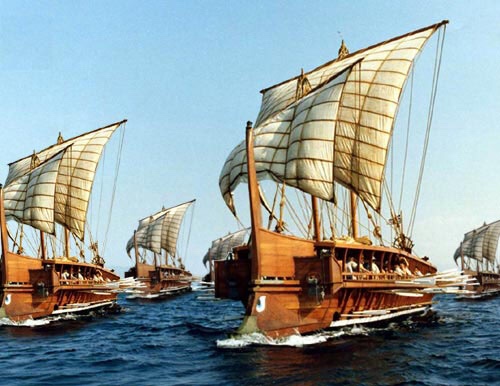
 Sing in me muse, and through me tell the story…
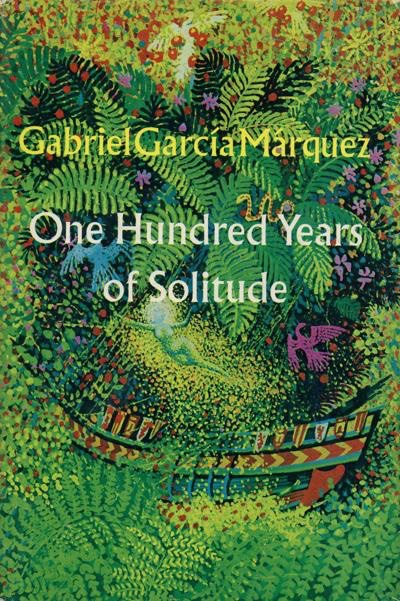 Even Gabriel Garcia Marquez, perhaps somewhat disingenuously, claimed that all the impossible elements of One Hundred Years of Solitude were true. His memoir, Living to Tell the Tale, reads like a revelation, and it makes all that seemed strange in his novel strangely normal—at least for that time and place. Of course, Marquez famously recounts the genesis of that novel—he was headed away on vacation with his family when he realized that the voice of the book was the voice of his grandmother telling incredible stories in the most matter-of-fact voice. He turned the car around and started the work that would define him as a writer. His grandmother was, in a way, his muse.
 While the writer uncovers the words that capture this world, she or he enters the world, and if the writer believes the words—and she must! he must!—then the inner world threatens to obliterate the outer one. After all, there is something about that outer world that the writer seeks to correct. The ghosts visit and Scrooge reforms—is literally made into someone new. This is the world that should be—where a miserly and selfish investor can become “as good a friend, as good a master, and as good a man, as the good old city knew, or any other good old city, town, or borough, in the good old world.”
 Is it any surprise that repetition plays a significant role in my life? I came of age as an athlete knocking out sets of 30 200 yard freestyle swims. They were yardage eaters—a quick and dirty way to lay in 6000 yards of workout and buy time for rest of the yards that the coach had in mind. We finished them at intervals of 2:30, 2:20, and 2:10, which left 50 minutes for the rest of the practice—an easy pace for the two to four thousand yards to come. Pushing off the wall every two minutes and thirty seconds, there was time for conversation between swims. Leaving at every two minutes and ten seconds put a crimp on anything other than brief exchanges: “This sucks,” “Stop hitting my feet,” “I’m hungry.”
 This past December, I traveled to a new place, London, to which I had meant to travel almost thirty years ago. I traveled after I did a series of new things, each one satisfying, but each fueling a desire for more. Almost everything that has been part of the solid ritual of my daily routine tastes bland. I don’t hanker for extremes—a solo sailing venture around the world, or an ascent up some foreboding mountain, or a year in a seraglio—I yearn to encounter something as if for the first time. I wish to be a beginner again, with a clean slate ahead of me.
 The thing about writing that some people will never understand is that for the writer, it is not cerebral. Writing is physical. I feel exhausted, physically spent, after writing. Not exactly the same as after a work out, or after a night of intimacy, but I will push myself until my body shakes. I stop when I am done, when I have hit a physical limit. I do not believe that people who do not write, seriously write, understand this.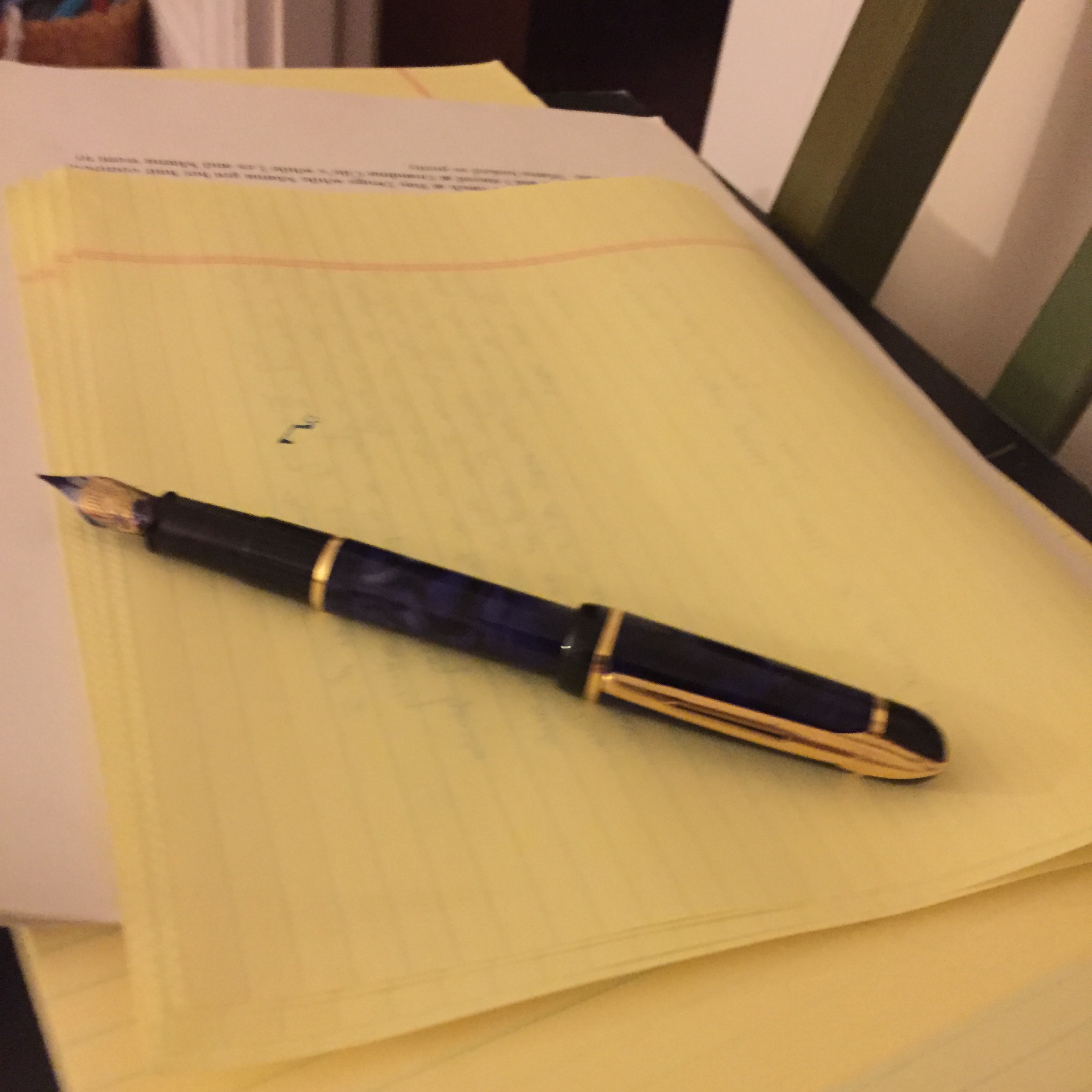

 I have been struggling with masculinity as of late. Which is to say, struggling with ambition. Or struggling with my career choices. Or struggling with relationship choices. Or, simply struggling. Because I am a man, I am struggling on the somewhat closed field of masculinity. I haven’t always thought of it that way, and yet, there it is. I have avoided masculinity for dozens of reasons.
 continuoussearch