 “What do I have to say?”
How I wish that more people asked this simple question before adding to the public discourse. Instead of wondering about their particular expertise, or wondering about how their experiences have shaped them, most people weigh in, almost automatically, on nearly any occasion. We have become a nation of opiners, flexing our incredible verbal muscles in a display that rivals any body-building competition.
And for what? What are the effect of our words? What spaces do they carve out in the public square? How do our voices land in the ears of those around us? How does what we say actually represent our thoughts and feelings, and how much is made to simply compete with what we hear—a kind of verbal pyrotechnics meant to outblast, if not outshine, the sound and fury of our neighbors?
It is enough to make one meek. Since everyone expresses opinions at a level of intensity that rivals Jonathan Edwards—dangling our audience over pits of damnation—a quiet measured voice is like a spring zephyr in February—lost in the midst of winter rain and sleet, unless one can open oneself for that fleeting moment that the season will change, and that the one breath of gentler warmth can ease its way into our winter layers. But who has enough patience to be that harbinger? To breathe softer words? To hint?
And who would listen?
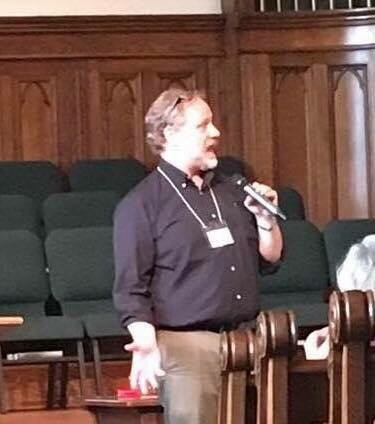
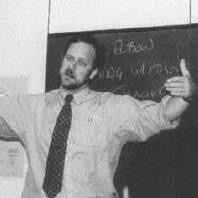
I begin with no grand proclamation to shout. My students would laugh to hear me say that. I have shouted, exhorted, acted—overacted—and entertained in classes for years. Inevitably, I will announce “Dr. Brennan’s Rule for Life #7,362: Buy flowers,” and acknowledge that there are as many rules to the north and south of that number. However, my students are a captive audience—they have to at least pretend to listen to me. The same goes for my daughters, or even the members of the congregation I served for nearly a dozen years. Yet, I never take any listening for granted.
Maybe this is true of others as well, and maybe this is part of the reason that there is so much shouting in the square—as if volume could take the place of wisdom. Say something loud enough and someone will pay attention. Get enough people to pay attention, and some number will believe what you are saying. Get enough people to believe and rule the world—or some slice of it.
What if all you want to do is quietly share. I saw this… I heard this… I thought this… I felt this… What if you wanted to just add to the world and not bend it to your will? To inspire some stranger to go and see, or hear, or think, or feel? To suggest, perhaps to persuade, but not to cajole or chastise?
I do not know. I wonder if there is a wisdom or wisdoms that might be shared, if a thought precisely crafted and shared will find purchase. Is there a value in inspired rumination? My students read Walden and bristle at Thoreau’s adamantine vision. Who is he to insist on how we should live? Didn’t he die penniless? Where did he go to school? Why isn’t he as well organized as Emerson? I don’t think about my pants. The same holds true for Whitman’s kosmic voice, and for Dickinson’s route of evanescence. Writers who stake a claim turn readers away. If that selection seems too narrow, Ellison’s blindingly light filled room, Woolf’s roomier postulations, and Marquez’s endless Aurelianos also turn readers into pillars of salt.
But, declare I must, because silence is not a story, and words may find purchase, somewhere, somehow. Time to work.
 When I am out walking with my daughter I have one, simple repeated lesson: pay attention. Crossing a street? Pay attention. Walking past a flower bed? Pay attention. Meeting people? Pay attention. It is the cornerstone. I point out when I fail, as she does: Pay attention, daddy. Did you look? Did you see me? Two eyes seem like slim equipment for the work of days.
 An occupational hazard of a career of reading English Literature is an almost fiendish doubt in the power of love. Just think of all the novels—serious literary novels—that you have read, and multiply the effect by a thousand. Sure, Jane Austen has something to offer, but seriously, Pride and Prejudice without Darcy’s fortune waiting to bail out Elizabeth Bennet is a tragedy.
 One of the questions—there are thousands of questions—on the OK Cupid dating website is:
 Complain all you want about online dating, and there is plenty to complain about, but if you are of a certain age, and you cannot (will not) date people from work—which also makes up your immediate social circle—then it’s off to the great internet meet n’ greet.
 Look, some dates will get annoyed if you are courting too slow. Advice: who cares? Anyone who wants to light the fuse after the first date, or third date, has most likely lit the wrong fuse. 5, 4, 3, 2, 1, Duck! And if you feel annoyed or anxious to get moving, remember this: everything you learn about this person now will help you know whether or not you will want to go on a second date, or a fifth date, or more. Introverts, you know that someone has to meet certain criteria to get past your healthy defenses; spend the time needed to discover. “But I don’t want to have to go through all this again,” you complain. Of course not, so slow down and maybe you won’t, later. Extroverts, you know how easily you can be charmed by a single aspect of another person (I’m giving myself much needed advice here)—remember that people are multi-faceted and that more than a first date requires connections across many facets.
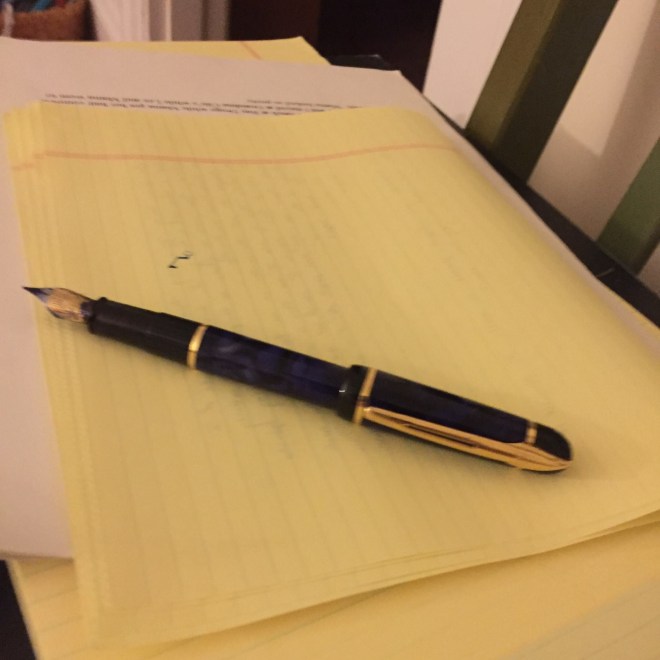 Before I collapse into, “This is all about me,” let me say, what works for me (the words) may not work for you. Chances are it will not. But you know what does work for you, don’t you? A little self-knowledge about this goes a long way. Revel in it, slowly. Well begun is half done, goes the maxim. Here! Here!
 I don’t believe in fate—providence, if you will. If there is a plan, it does not proscribe outcomes. Rather we wander in and out of circumstances bumping into two sets of patterns—those we make out of our lives, and those that are beyond our immediate control. Life goes out of balance when we cannot get the two patterns to jibe—when we cannot reconcile ourselves to the patterns that exist. Out of balance we can neither accept what has happened in our lives or we cannot break those patterns and create new ones that are made from familiar pieces but reflect possibilities that we had not imagined. Out of balance we fight against the patterns that life provides, missing obvious signs (rising temperatures, repeated cruelties, even the tender messages of love) and careening against the walls of a maze that we cannot perceive and causing damage to ourselves and those around us.
 I wrote this years and years ago. Later, I sat down on a stone wall in a tony neighborhood in Baltimore to wait for a bus, thinking about nothing other than the weather—it was a late spring, the sky was all but cloudless—when I realized that the stones were swarming with ants. I quickly stood up, and brushed many, too many, off my pants. I knew what I had done. I laughed, and started walking.
 I am unpacking and repacking old boxes. I have no fantasy that I will throw away old essays or my notes from Joyce and Woolf classes. But there are things I threw into boxes as deadlines approached, and now, when I look at them, nothing. I have whole boxes of emotional and intellectual cul de sacs.
