 Is it any surprise that repetition plays a significant role in my life? I came of age as an athlete knocking out sets of 30 200 yard freestyle swims. They were yardage eaters—a quick and dirty way to lay in 6000 yards of workout and buy time for rest of the yards that the coach had in mind. We finished them at intervals of 2:30, 2:20, and 2:10, which left 50 minutes for the rest of the practice—an easy pace for the two to four thousand yards to come. Pushing off the wall every two minutes and thirty seconds, there was time for conversation between swims. Leaving at every two minutes and ten seconds put a crimp on anything other than brief exchanges: “This sucks,” “Stop hitting my feet,” “I’m hungry.”
We did this day after day.
With my head down in the water, my eyes trained on the feet of the swimmer who left 5 seconds before me—chasing, always chasing. In high school I was far from the fastest swimmer on the team. I made myself a better swimmer. One summer I traveled to Iowa and a training regimen that increased the junior varsity’s load of 3500 yards in an afternoon’s hour long practice, to 22,000-28,000 yards spread over three practices every day. I lost whatever baby fat—and whatever other fat—that my 15 year old frame carried, crashed my immune system—catching a nasty staph infection that laid me up for days after I returned home—and sliced ten seconds off my hundred breaststroke time. No mean feat. I made the varsity team. Repetition was the way.
Years later, when I was a graduate student in English, I read books two and three times. I would attack most of the books for my classes in two weeks before the beginning of the semester, then again as we read them as a class. The initial reading with facile, getting the joys and traps of plot out of the way, allowing the words—and all the ideas in the words—to come to the fore when I read along with the class. If I wrote about a particular book, I read it again, and some passages, dozens of times.
Since I was in school to write, I wrote and rewrote some stories six or seven times. My classmates, colleagues, cow-writers, and teachers, shared the demanding mantra: “All writing is rewriting.” And we practiced what we preached.
As a teacher, I sometimes warn my students that this—and the years to come in college—are the best years, because of the preponderance of the new. Almost everything they learn is, will be, new. Each encounter with something new gives a new opportunity for mastery—another shot at sudden improvement and the giddy transformative moment of adding some unknown idea to the swirl of self.
I warn them because at some point there lives will bend toward repetition. Yes, the repetition may lead to a finer, hard-earned mastery. I think of all the miles that I put into the pool, and how it shaped and shapes my body (still). I think of the ways that great works give up new meanings after repeated shared readings, and how I became a more aware reader. And while I may not rewrite as much as I once did—obsessively, compulsively, debilitatingly—I know that writing begets writing—good, bad, or otherwise. The thing is to write, over and over, every day, without fear, even without hope. The words will bear you up. Push off. Go again.
Well do I know that repetition can suck the joy from the flower of life—making no honey, leaving all empty, colorless, scentless. I do not how how I managed all those laps in the pool, with nothing but the dull roar of water passing my ears, the steady ache and agony of my muscles, and the songs that played in my mind, setting an unimaginable pace. There was joy at the end of each 200 yards—“Good time!”—and these little victories provided enough of a goad to return to repeat success. Who determined what was a “good” time? I did, in concert with the clock—the cold but consistent arbiter of performance. Time, as opposed to opinion, never wavered. The clock was not making a comment because it had a good or a bad day. Go again.
I hope that my students will discover some place where they can demonstrate mastery, and change the long monotonous drone of repetition into a glorious repeated success. That they will find a way to insist, “Again, again,” holding on to that inner childlike joy. That in spite of how hard their task may be, that their arbiters are, if not cold, consistent and consistently challenging. I hope all this for myself as well.
The sweeping red hand of the clock on the wall flies past the black hashmarks: two minutes and one second; two minutes and two seconds, two minutes and three seconds. I breathe deep, and get ready. Here I go. Again.
 This past December, I traveled to a new place, London, to which I had meant to travel almost thirty years ago. I traveled after I did a series of new things, each one satisfying, but each fueling a desire for more. Almost everything that has been part of the solid ritual of my daily routine tastes bland. I don’t hanker for extremes—a solo sailing venture around the world, or an ascent up some foreboding mountain, or a year in a seraglio—I yearn to encounter something as if for the first time. I wish to be a beginner again, with a clean slate ahead of me.

 Country Living posted a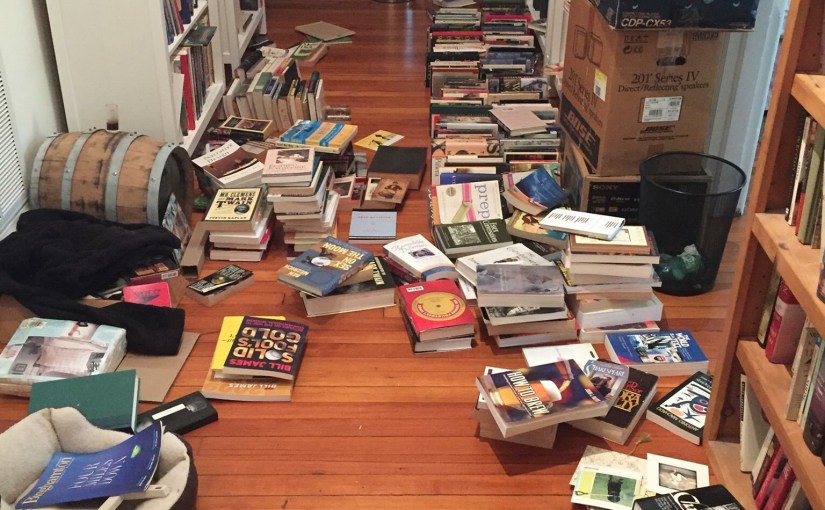
 At some point—and it happens fairly quickly—the life of an English teacher becomes more about re-reading than reading. This is a preposterous change from the life of a graduate student, when everything is reading. As a student, there may be a handful of books that one reads a twice, but those are also the books with which one spends an engaged period of time—there is an essay in the offing. If you read them twice, chances are you read them a half dozen or dozen times. By the time you start teaching, the repetition is no longer driven by your desire or directed curiosity, but by a curricular roadmap that more often than not, you have not decided.
 I feel the loss keenly. I am dissatisfied with the too morbid outcomes that serious writers propose, and with the deathly insistence on disconnection and disappointment. And I am dissatisfied with trudging over this same ground over and over again. There must be the possibility of joy, and please, for gods’ sakes, there must be discovery. Which means new works. In “Seymour: An Introduction,” Salinger allows Seymour to give his brother, Bruno, the single best piece of writing advice—and by extension, life advice—I have ever read. It is hopeful. “Imagine the book you most want to read… Now write it.”
 “What do I have to say?”
 When I am out walking with my daughter I have one, simple repeated lesson: pay attention. Crossing a street? Pay attention. Walking past a flower bed? Pay attention. Meeting people? Pay attention. It is the cornerstone. I point out when I fail, as she does: Pay attention, daddy. Did you look? Did you see me? Two eyes seem like slim equipment for the work of days.
 What preoccupies me is less what is beneath some other surface, than what is beneath mine. I can hardly utter the first word, “I,” without replaying every other time I finished the phrase. No matter how many versions of love I have seen others act out, or that I have seen portrayed, my single clearest—or least clear—vision of love comes from my own experiences. I am sure this is true for everyone. Who, in the final moment before she or he declares her or his love, trusts anything other than the one set of experiences that illuminates only one heart?
 It wasn’t until I started teaching—when I actively had to think about how what I said and did would further the progress of my students—that I began to have a serious idea about love. Teachers never think about themselves. Okay, that’s clearly not true. Great teachers think about their students, even when they think about themselves. I don’t know how I learned that—probably from the examples that great teachers gave me. I do know that the first serious relationship I had in graduate school was made more potent, and ended more peacefully—if not less painfully—than any romantic relationship I had up to that point.
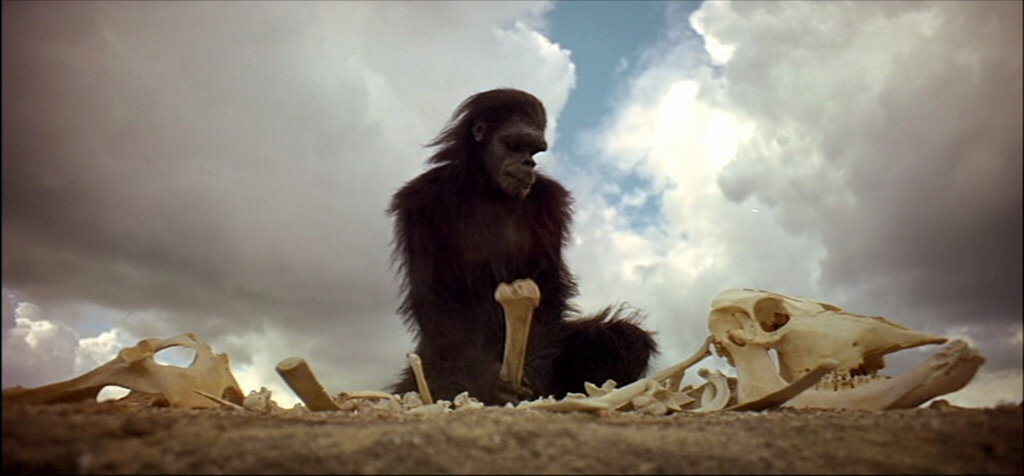 And yet we build, and not every tool—Kubrick’s 2001 aside—is a refinement of a club. Certainly Kubrick’s 2001 won’t help one win a war, or woo, unless, of course, the object of desire is imbued with an essential and unmitigated nerdiness. Nonetheless, even without some mysterious aid, we grow. Maybe not today, maybe not tomorrow, but soon enough, and we find our way to each other.
 continuoussearch