I grew up reading the news. We did not watch it in my house; my mother felt that the news, which included reporting from Vietnam, was too ugly (her word) for her sons. Keep in mind, this was the same mother who read Edgar Allan Poe to us at bedtime. However, my father brought home the Philadelphia Bulletin every night—back when the Bulletin was Philadelphia’s evening newspaper. He also had Time magazine delivered weekly, and my brothers’ names were often on the subscription. Whether my father was honoring us or getting a new subscriber’s bonus, who knows? I read both.

Later in life, I listened to Philadelphia’s all-news radio station KYW-1060 and grew inured to the rhythm of repeated stories. If they were updated over the course of hours, I noticed. Even later, when I was a night owl, I would slot in my 35 cents for a freshly delivered morning paper. A newspaper and breakfast before bed was near to heaven.
Cable news in its early iteration varied little from the repeated scroll of radio news. That was no matter in Philadelphia, which delayed the spread of cable TV until I was on my way to grad school and other obsessions. Nowadays, whatever used to be journalism has faded out of reportage to be replaced by a carnival barker’s promotion of something like the news. Reporting is more about the changing opinions than the changing facts. The internet does better, providing repeated updates of the day’s events: everything from the stock market to an ambassador arriving in Bahgdad to a 3-2 count on a hitter in the fourth inning of a baseball game in Seattle. Information pours out. At first, it came through the box on my desk, but then it glimmered miraculously from my phone. I pay attention.
I get obsessive. I chase the news with the same intensity that I once chased down sources in the library. And worse. I sit as rapt as I had when I churned through drafts of stories until 7 o’clock in the morning—if I slept at all.
I recognize that I had fallen into the trap that Henry David Thoreau noted back in 1854 when he claimed that “[h]ardly a man takes a half hour’s nap after dinner, but when he wakes he holds up his head and asks, ‘What’s the news?’ as if the rest of mankind had stood his sentinels.” I felt that if I knew, then I could be one of life’s sentinels. On guard, on the post, always. There was no radio, no television, and no internet, and still, he bemoaned the obsession with “news.” Go figure, our national illness.
I tried to know everything. When my family gathered, we were all expected to hold forth on any topic of the day: popular music, politics, foreign affairs, movies, the weather. Our knowledge was expected to be sweeping and insightful. I could not understand people who did not consume—and comment on—news as we did. My father spent hours wringing information from the Wall Street Journal and passed that fervor onto his sons. My mother, despite herself, had some news station, finally settling on NPR, blaring in the background.

It was too much. This past year’s perpetual blast of breaking news—the fires, the politics, the case numbers—drove me to distraction. And I realized that I had been distracted for years. I don’t believe that “ [a]s for Spain, for instance, if you know how to throw in Don Carlos and the Infanta, and Don Pedro and Seville and Granada, from time to time in the right proportions… it will be true to the letter, and give us as good an idea of the exact state or ruin of things in Spain.” While there are recognizable patterns to history—and history’s first draft—the distinguishable differences are meaningful and worth noticing. And yet, the news can pile up.
Thoreau was on to something, if only that our drive to know masks another deficit: a feeling that life is out of our control. Information is the salve to uncertainty, but it’s snake oil, especially when opinion is disguised as fact.
Writing, for all my appreciation of the uncertainty, is about control. At the very least, and perhaps the very most, I control when I write and that I write. As for the what, well, I take a gentle hand, relying on surprise and a fair amount of chance. Yet, I am aware that no writer, short of a few Dadaists, Postmodernists, or Pornographers, slaps words on the page and waves, “Voila!” I avoid Prufrock’s “hundred visions and revisions”; I don’t have time for such nonsense. The work needs to be done.
During the first draft, I write to discover—just as I listen to the news to find out what is happening in the world. I research my subject the same way I study how the new vaccines work. I have learned (painfully and too slowly) that I must write to the point where I do not know what will happen next; there must be surprises. I go back, organize the words, and develop the surprises, letting them, and not all my preplanned ideas, serve as guides. The writing must be out of control for me to find control. Otherwise, it all falls flat. That was not an easy lesson. No one can stand that—not the reader and not the writer. Not this writer.
This past year, while everything felt out of control: the fires in Australia, the pandemic, my mother, the election, and its aftermath, I charged back into the news. Did knowing all about it help me? Maybe. But knowing got in the way of the creative uncertainty that I needed to engage. I have spent years wielding some kind of authority, and like it or not, that has been the death of my creative life. I do not know how other writers do it. So, for now, I am backing away from the news, cutting the cable, and heading back into the unknown.
Emily Dickinson writes about the “Route of Evanescence”—the road of fleeting possibility. Take her advice. This way can be daunting, especially for someone who likes—no, loves to know. You too write to be in control, except, finally, we are not. But the route Dickinson so briefly and beautifully delineates is one way to uncover the mysteries that wait: “Some mail from Tunis, soon.” So must it be. The unknown and fleeting. Get there.
 Out of the Past (1947)
 None of this is surprising or unexpected. It’s almost too easy and too obvious. Out of the Past is a movie that continually works between the obvious and the hidden. The main character, Jeff Bailey, is hiding in Bridgeport, a sleepy little California town with a diner owner who knows everyone’s business. Jeff is the wild card, which draws the attention of the town’s beautiful Ann Miller. She is straight out of a fairy tale. We first meet her fishing in secret with Jeff, he declares, “You see that cove over there? Well, I’d like to build a house right there, marry you, live in it, and never go anywhere else.” She answers, “I wish you would.” Ann comes from a world where wishes come true. Jeff does not.
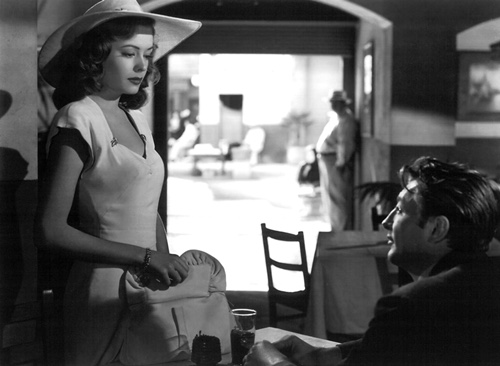 Some critics will let Jeff off the hook—an appropriate metaphor in this film because we are introduced to Ann and Jeff while they are fishing—and claim that the film frames Kathie. After all, Jeff acts nobly at the end of the movie, when the Kid tells Ann, in unspoken accordance with Jeff, that Jeff was leaving with Kathie. This clears the way for Ann to return to her old reliable beau. And Kathie did kill three men.

 It is difficult to explain the existential risk that the writer—at least this writer—undertakes when working. It is tantamount to this:
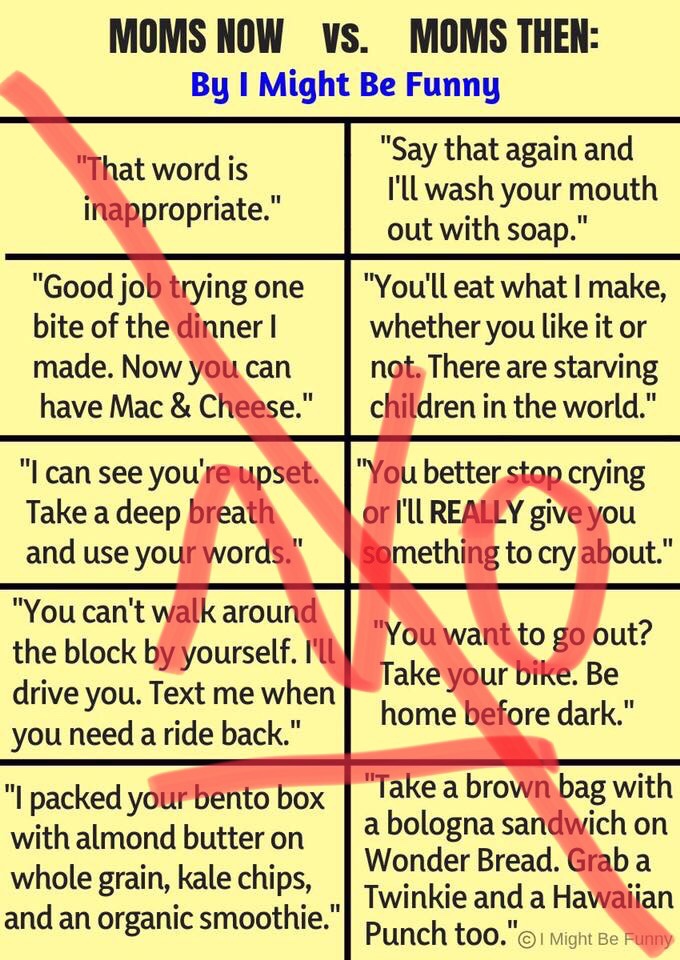 A current meme on Facebook compares what Moms used to say to their kids with what they say now. It is held up as a clarion call to the virtues of yesteryear, when Moms—and their kids—knew what was what. Over and over again, stuff (stuff) like this careens around the internet, in casual banter on news shows, in conversations in my workplaces. Those of us who grew up in the mythical “then” look back with nostalgia, and look at this moment with a jocular disdain. I would like to call “bullshit” on the whole enterprise.
 My mother did what she thought and felt was right. She learned her lessons from her mother and family—and what lessons they were. Some things, she changed. She never leashed us to trees in the front yard. Others were more indelible. I am certain that most of us parent in the same way—sifting through the conscious and unconscious lessons that we received from our parents. What we do, we do almost on a kind of autopilot—in the heat of the moment, dumb memory takes over. Change is hard.
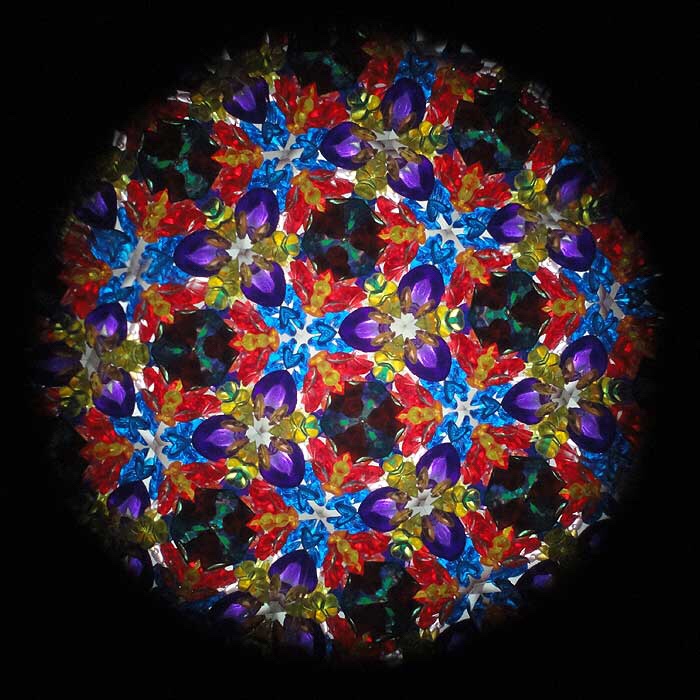 I don’t believe in fate—providence, if you will. If there is a plan, it does not proscribe outcomes. Rather we wander in and out of circumstances bumping into two sets of patterns—those we make out of our lives, and those that are beyond our immediate control. Life goes out of balance when we cannot get the two patterns to jibe—when we cannot reconcile ourselves to the patterns that exist. Out of balance we can neither accept what has happened in our lives or we cannot break those patterns and create new ones that are made from familiar pieces but reflect possibilities that we had not imagined. Out of balance we fight against the patterns that life provides, missing obvious signs (rising temperatures, repeated cruelties, even the tender messages of love) and careening against the walls of a maze that we cannot perceive and causing damage to ourselves and those around us.
 I recently swapped the nicknames that we give our kids with a friend. We had both, surprisingly and strangely, settled on “Bug.” I’m not sure that our daughters will appreciate that longer into their lives, but for now, it will do.
 And I do know the other side. I know how easy it is to let upset slide into hate. And I know that once uttered—by an adult, not by a child, because children must experiment with all words and all emotions—it breaks the bonds in a nearly irrevocable way. I have said it, out loud—either in the perpetual external conversation I have with the world or directly the object of scorn—and the immediate thrill is followed by a deep remorse as the tendrils that connected me to another person wither immediately into dried spiked vines, like the hedges of multiflora rosa that grew brown and foreboding in winter. All that was planted must be uprooted. Maybe something can be saved, some sprig, somewhere.
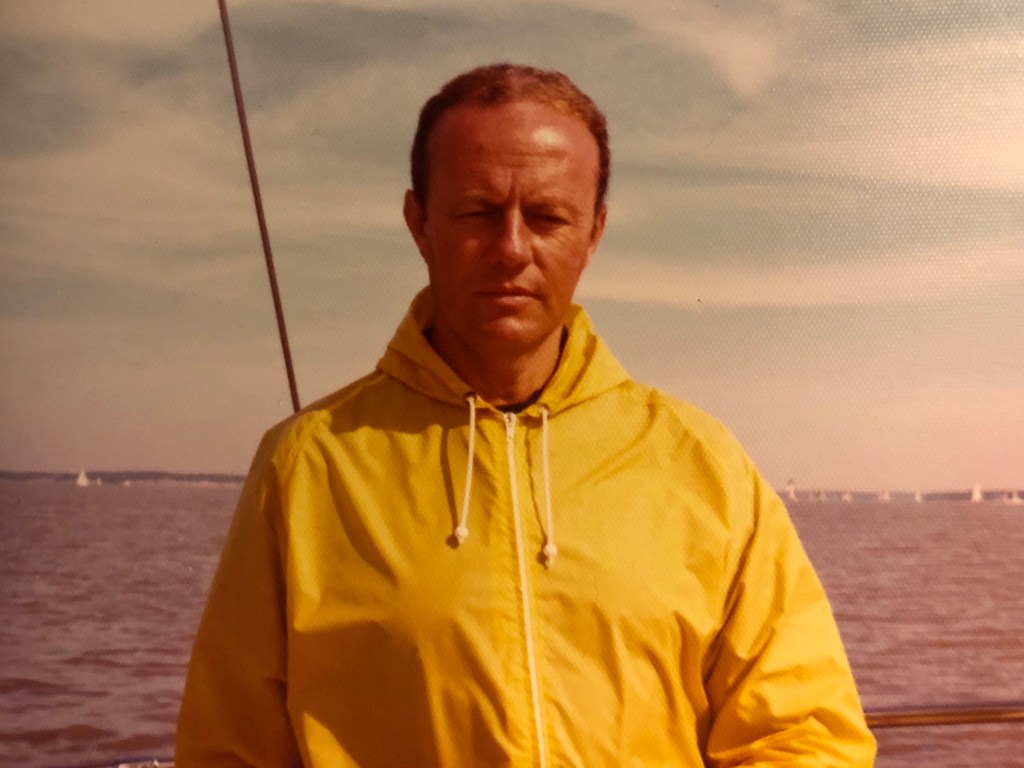
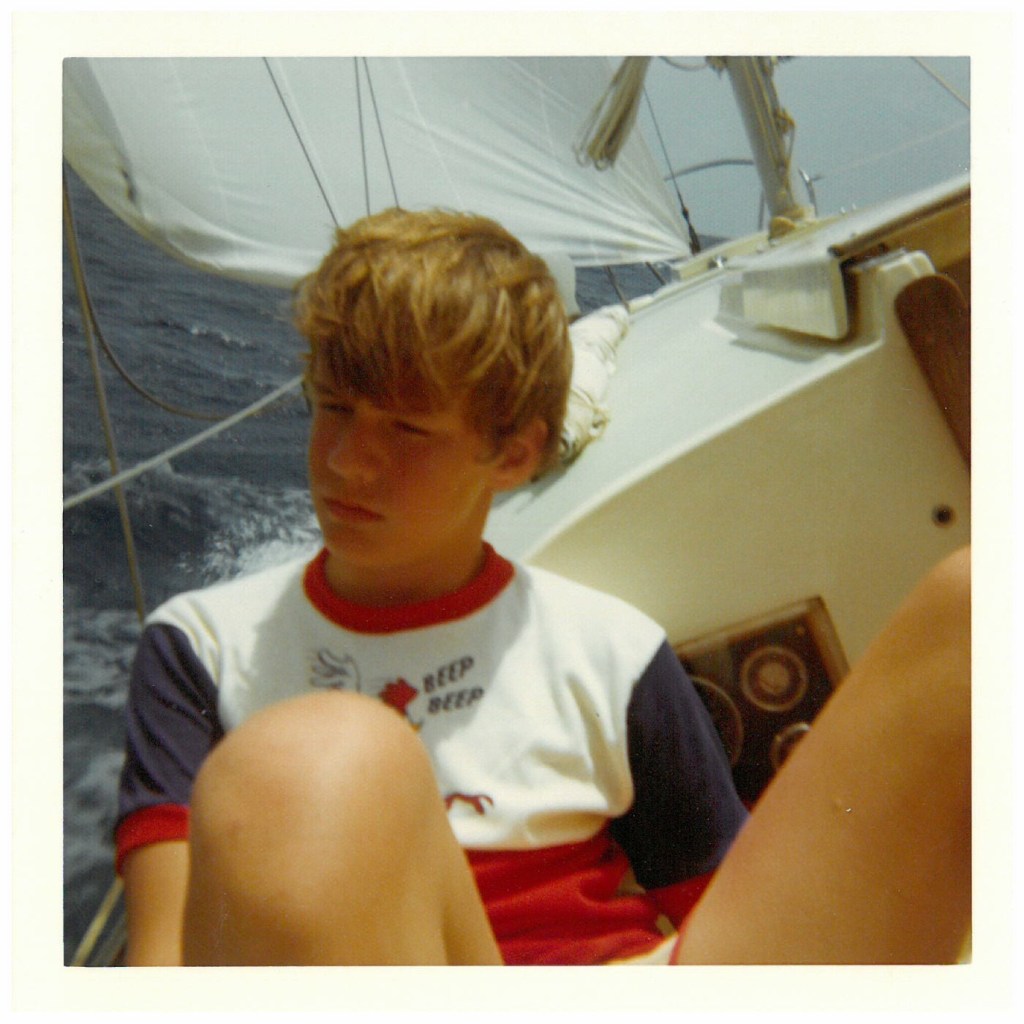
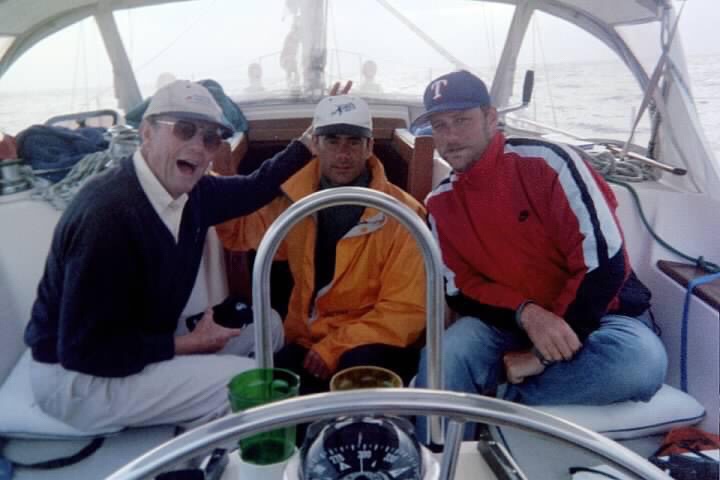 Over twenty-five years ago I started sailing on the ocean with my father. We would leave the Chesapeake Bay in the last week of May and spend five or six days out of sight of land on the way to Bermuda. Some days the weather was lovely. I read The Pickwick Papers on deck during my first trip, lying on the cabin roof in generous sun and a steady breeze. Some days the rain found every gap in the foul weather gear, and every inch of skin wrinkled to a puckered wet mess. There were days when no wind blew, and the foul diesel exhaust clung to the boat like regret, and days when the wind blew too hard to unfurl the smallest triangle of sail.
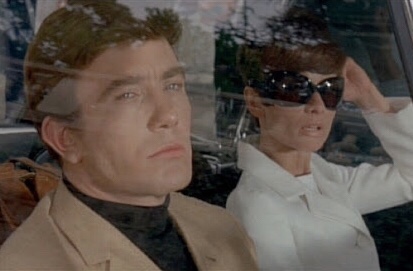 Two for the Road (1967)
 out, an she played a character who ages from about 20 to 30. Finney is meant to be older than her and was 7 years her junior. Besides the simple matter of years, her transformation is the more amazing of the two. She is both more hopeful and more sad over the course of her character’s aging. Finney remains more static, which is one facet of his masculine character.
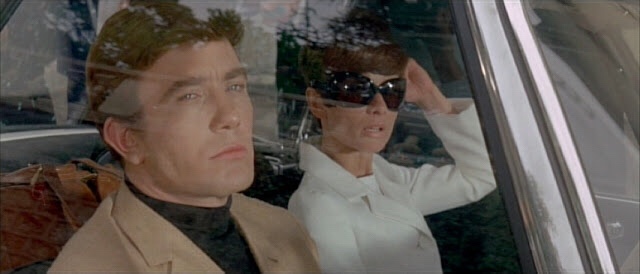 At the beginning of Two for the Road the Wallaces, now ten years into their marriage, drive past a bride and groom in a car after their wedding ceremony. “They don’t look very happy,” Joanna remarks. “Why should they? They just got married,” Mark answers. The movie dances through their relationship, specifically tracing a series of five car trips through the French countryside as they travel from the north to the south of France. Their banter is breezy, charming, sarcastic, and bitter, building to crescendos of “I love you” before tumbling back into doubt and resentment. Marriage seems like an unresolvable puzzle, especially to Mark, and toward the end of the movie he asks Joanna, “What can’t I accept?” She answers, “That we’re a fixture. That we’re married.”
 She captures the look at several stages of the development of Joanna’s feelings toward Mark: from naive hopefulness through the first trembling of doubt, to disdainful resignation, and finally to generous acceptance. Did I understand the complexity of her feelings? Not at all, but I recognized the continuity, and as much as the look, how could a man not want to be loved through all his difficulty.
 At the end of the movie, Joanna tells Mark, “But at least you’re not a bad tempered, disorganized, conceited failure any more. You’re a bad tempered, disorganized, conceited success.” He isn’t angry or upset by her comment. He knows it, and ten years into their relationship, he is happy not to keep his secret from her. She is willing, even happy, to keep it with him.
 continuoussearch