 It is difficult to explain the existential risk that the writer—at least this writer—undertakes when working. It is tantamount to this:
One time we (my father, two crewmates, and I) sailed out of the Chesapeake Bay and onto the ocean in a gale. A gale is wind at 40 knots. There was already 6-8 foot chop in the bay. One of us (a first-time sailor) slipped into his bunk clutching his life jacket, stricken with an indomitable case of seasickness. We sailed short-handed into stupid weather and bigger seas.
For the next four days, 30-50 knot winds harassed us, and the sea that was more like a protracted set of sand dunes, the water whipped by the wind into twelve-foot peaks that barely seemed to move. They were moving though, faster than we were in our 36-foot sailboat. The ship sailed up and down these wet rolling hills, making ragged progress toward our goal: Bermuda.
Sensible men would have waited, but for all my father’s strengths (long-range planning, and in-the-moment decisiveness among them), he had a stubbornness that did not waver. Once he had a plan, he stuck to it. Later in life, this supported him as he battled g on with Parkinson’s Disease. He suffered with the adaptations the illness forced on him, but refused to be stopped. In the end this led to his death. On this trip, his drive took us into conditions that would test us.
I should also note that when I point to a crewmate who became seasick, I do not cast aspersions. I get seasick, and had each time I had sailed on the ocean before this. It always struck me when I took my first late watch, when the horizon was shrouded in black, and my eyes and inner ear could not properly make sense of the several directions that my body was moving. It is an ugly sickness, driving the guts empty in rebellion until there is nothing left but bile. I never missed my turns at the helm because of it. The nausea would strike, and I would turn my head, and do what I needed. I did not eat or drink while it was on me, and it passed, for me it did, and after 36 hours.
On this trip, in this ocean, I was entirely spared. All my other crewmates, even my father, were struck. In retrospect perhaps the swell of the sea was so distinct and regular, that the three-way (pitch, yaw, and roll) motion did not take grip of me. Or perhaps the danger created a necessary clarity. As with all retrospect, I cannot be sure.
After four days, we finally passed into the fringe of whatever had driven the gale. In a matter of hours, the wind created new swell patterns. Around midnight, the sea that had been a reasonable set of rolling hills, turned, and became more like waves breaking over an invisible reef or sand bar. 18-24 foot waves rose and broke, all headed in one direction. They are called following seas, which means the breakers were rising behind us, and rolling toward us. They were moving faster than we were and lifted our boat to each peak, at which point our boat would slide down the front of the breaker like a sailboard.
That sounds easy enough, but as the boat fell down the surface of each wave, it carved a path driven by gravity and the force of the wave it was riding. Its path down the wave became, temporarily and repeatedly, unmanageable. Pushed by wind, pushed by water, pulled by gravity, the rudder merely suggested a direction. And yet, when at the helm, every suggestion made a difference. Caught at the top of a breaker, the boat could easily go sideways and roll over. Sliding down the side of the breakers, it could turn too sharply and roll over.
A sailboat is not a surfboard.
My father and I took the helm when the sea turned. We held it in half-hour turns, and it was exhausting work that required dense and specific attention. And, we were exhausted after the previous days of sail. Usually, in harsh conditions, one man took the wheel, and the other took refuge propped against the cabin in the leeward side of the cockpit, using the cabin as a wall against the constant water that broke over the windward gunwale. In this case, as we planed down the sides of the swells, the leeward gunwale cut into the water, and the water rushed into the cockpit. This added a new threat. The boat could be capsized, swamped with water if the helmsmen was not attentive. And, because no attention was enough, at the very least, we were soaked, the water pooling in our yellow foul weather gear, which was not designed for repeated submersion.
At 4 in the morning my father looked at me and said, “I can’t do it anymore. I’m going to send another crew member up, but you cannot let him take the helm until the sea settles down. You have to sail until then. The boat is yours.”
I brought a waterproof Walkman on these trips. While I took the helm that night, I listened to an array of the loudest songs I had: Dinosaur Jr’s “I Know You’re Out There,” Medicine’s “One More,” and Sonic Youth’s “Sugar Kane.” Nothing was loud enough. Nothing matched the ocean or my attention. Nothing matched my awareness of what might happen, or when my father relented, what had happened.
I sailed. Every time I turned the wheel, I felt like I was making a decision that could imperil the lives of all of us. We would go down fast, without time to throw the life raft overboard. It would happen in an instant. We were at sea—tempest-tossed as Shakespeare wrote. The end would come quickly. Each time I turned the wheel, each millimeter I moved it to port or starboard, I felt as if I was making a decision for speed and forward motion. It felt, again, as the bard wrote, giddy. Not happy, and not drunk—although I felt as drunk as I could be—drunk with sailing, with water, and with wind—but transported out of my mind, beyond all thought, and into every thought possible. I sailed as I never had before, as I would always want to sail afterward.
Friends ask me if I have been sailing in the years since my father’s death. I have not. But even before he died, I knew that I would not—not because of fear or seasickness (an anti-vertigo drug helped allay that)—but because I had done something then that I would never replicate. Not on the ocean. I have sought it ever since.
I do not know what has ever led me back to safety. I know that what calls me is not simply mastery (I have a Ph.D. in English, I have some level of mastery there), but the exhilaration of being over the edge of control and into the realm of the impossible. To be the captain, which I became that night. Sometimes, too often, I have exercised the caution I faulted my father for lacking. I have stayed controlled, almost too calm. In some measure, this is because I feel a lack of control and a lack of mastery around me. Even the experts profess a quietness or steadfastness, when sometimes what is needed is to go out of one’s mind. To forgo safety. To risk. But also to carry the responsibility for the lives on board. We are, truly, in this together, and must all go out of our minds, together.
I have over-prepared, or tried to know, to tame the ideas in my head, worried that they were unintelligible, or that they were somehow too strange. I feel myself now, at the top of the breaking wave again. And look down into the night sea. This way. Now. Down. For life.

 Since the 1987, I have started at least five novels. Some I carried with me for a few months—the story of a wedding, unfolding like the petals of a rose. Others lingered over decades—the story of a woman who stole paintings. None of them lasted beyond seventy or eighty pages, or in the case of the long project, fifteen or twenty starts at initial chapters. I had notebooks full of scenes, outlines, character sketches, dialogue, and thematic connections. All the while I wrote other things. Shorter pieces, poems, prose poems, essays, sermons, children’s stories. Or I wrote nothing at all and suffered in silence. I believe that I was unbearable in those times.
 I was compiling blog posts today—why not a second book about writing and second chances? (Yes, but first things first)—and realized that I had written over 60,000 words in two directions since the beginning of September. While working at a new job. While beginning a new relationship.
 The impulse is to judge, and then to correct. Don’t do that, do this. Or at the very least, Don’t do that.

 Almost thirty years ago, I was eating dinner at a little restaurant on the edges of Johnson City and Binghamton, New York. My mentor and her husband had invited me along. These were heady occasions, full of discussions about writing and literature, and the program in which we all worked. I was a student, but, still, I worked. On this particular occasion, they started talking about writers manqué—although I heard it as writer manqués. It was a new word for me. Manqué: having failed to become what one might have become; unfulfilled. They started listing writers who had been in the program, writers who had published and stopped, and writers who were currently in the program. It was sharp and cruel, and the sobriquet stood out as one to be avoided at all costs. These may not have been eternal footmen, but there was snickering enough to go around.
 Nonetheless, the fear of being unfulfilled lurks. In a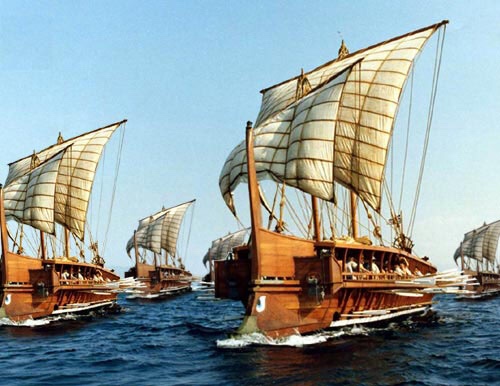
 Sing in me muse, and through me tell the story…
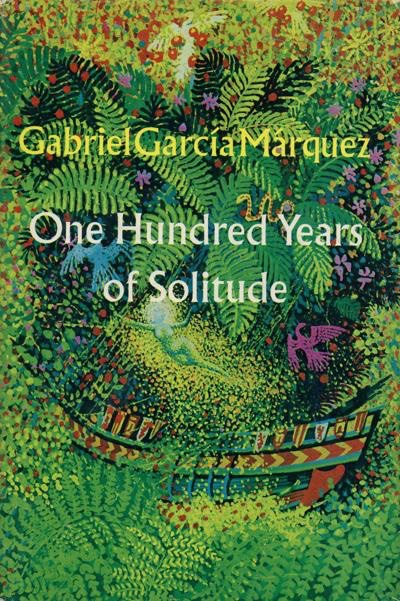 Even Gabriel Garcia Marquez, perhaps somewhat disingenuously, claimed that all the impossible elements of One Hundred Years of Solitude were true. His memoir, Living to Tell the Tale, reads like a revelation, and it makes all that seemed strange in his novel strangely normal—at least for that time and place. Of course, Marquez famously recounts the genesis of that novel—he was headed away on vacation with his family when he realized that the voice of the book was the voice of his grandmother telling incredible stories in the most matter-of-fact voice. He turned the car around and started the work that would define him as a writer. His grandmother was, in a way, his muse.
 While the writer uncovers the words that capture this world, she or he enters the world, and if the writer believes the words—and she must! he must!—then the inner world threatens to obliterate the outer one. After all, there is something about that outer world that the writer seeks to correct. The ghosts visit and Scrooge reforms—is literally made into someone new. This is the world that should be—where a miserly and selfish investor can become “as good a friend, as good a master, and as good a man, as the good old city knew, or any other good old city, town, or borough, in the good old world.”
 continuoussearch