On Sundays, I often camp out in one gallery or another at the National Gallery of Art and let one painting or room of paintings ignite some thought, instigate some scene in whatever I am working on. Between three museums on the National mall, I spend upwards of 8-10 hours on Sundays. Yes, it is delightful, but it is work time. Art recharges my work batteries. This past year, I have missed this weekly ritual.
Today, I breezed through, visiting rooms that I do not normally haunt for hours. But I started someplace familiar.
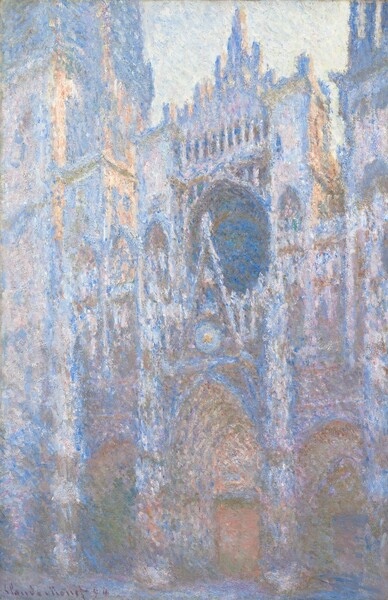
40 years ago, Connie Hungerford introduced me to Monet. She explained his attention to light and changing light, focusing on his series work—Haystacks, Rouen Cathedral, and Waterlilies. Because I had studied Gothic Art and Architecture with Michael Cothren, the Rouen Cathedral series drew my attention. The play of light through and in the crenellations and layered portals gives Monet his subject: light. In Rouen Cathedral, West Facade at the National Gallery of Art, Monet makes it seem like light has fallen like snow. It accumulates and covers surfaces of the cathedral. In this painting, light has substance—perhaps negligible, but there it is. Of course, this is an illusion; light has no weight. In fifteen minutes, the earth will turn enough to change the effect, to give some other momentary impression.
At this moment, though, Monet’s insight is that light does have weight; it can obscure as well as reveal. The glinting ray of sunlight can blind us, blur our vision, and cause us to mis-see. Or, rather, it can give us a new vision. “I didn’t see that before.” Monet’s paintings have continued to surprise me over the past 40 years. Light falls like snow? Why not.

In Gallery 69, Whistler’s Symphony in White, No. 1: The White Girl (1862) has a title that makes clear that the model is a vehicle for Whistler’s intentions—to show the complexities of white. Nonetheless, the girl (the model Joanna Hiffernan) is not a blank. Across the room, Sargent’s portrait of Margaret Stuyvesant Rutherfurd White (1883) stares back across the 20 years that separate the paintings. Some crafty curator has juxtaposed these two “White” women. Hiffernan was born ten years before “Daisy “White, and so, jiggering the ages, she is ten years younger in the painting. She is a bit awestruck in Whistler’s painting, perhaps because she has been reduced by Whistler to a small part in a play of white. “Daisy,” ten years her senior in Sargent’s painting, is self-assured. Her dress is no less “painted,” no less a bravura effort on the part of Sargent. Without denigrating Whistler’s work, Sargent imbues his painting with personality and painterliness.
And whoever put these paintings in a room on opposing walls: Well done!

If you know Dewing from his diaphanous women—in paintings like Before Sunrise or In the Garden—“ his Lady with a Lute shows how precise he can be. He captures not only the craft of the luthier but the richness of the model’s dress, the shadow on her neck, and the line of her jaw. All these are still present in his dreamier paintings: his precision in depicting women’s scapulae is nothing less than erotically obsessive. Lady with a Lute delights me because it shows what had always been contained and not so much hidden as missed.
I think about this in the context of Monet—we see the impressionist technique and miss the underlying details: all that straw, the flamboyant architecture, the ripples in the ponds he built. In Dewing, that lute shows up again and again, but so do those sexy shoulders. It is hard to see the thread in a piece of cloth, but there it is. We often only see it when it comes unraveled, but why wait?

I think that one of my favorite titles of a work of art is: Wealth and Benefits of the Spanish Monarchy under Charles III (1762) by Tiepolo. It doesn’t hurt that the painting is ornately lovely.

And finally, I watched as a couple stood in front of this Rubens and asked to have their photo taken. I get it, it’s a painting of lions (and that in and of itself is pretty cool). But Daniel in the Lions Den stirs some very specific messages about faith and, in particular, Jewish faith. Yes, the lions are cool, but you might ask: are you relating to Daniel or the Lions?
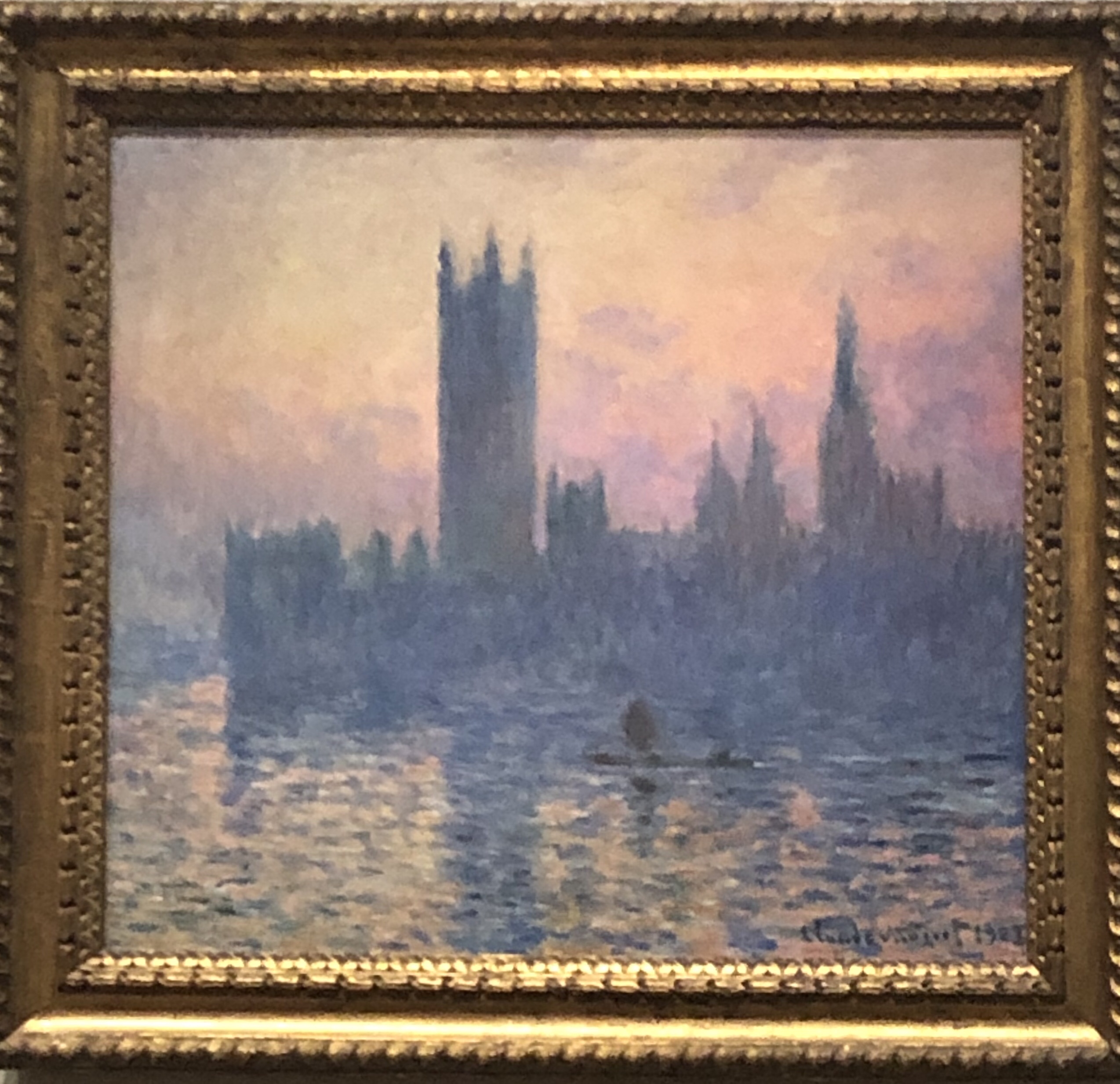 It has been a year and a few months since I was in London. I’m thinking about London while I sit and study Monet’s “Houses of Parliament, Sunset” at the National Gallery of Art. The memory of looking across the Thames at that building, with Big Ben swathed in the latticework of repair, has faded only a little. The memories of walking the streets of the original square mile and beyond remain startlingly vivid. I used them to paint scenes when the characters in my novel walked through London. The memories of the places and the memories of the feelings.
 When I was last in London, I was taking steps into a world where I knew I could live, where I had longed to live. Just like in the dream, writing—flight—was not foreign to me, but something I had traded in for a more certain, more directed existence. While “You are…You should” can feel like shackles, flying—writing—is formless and uncertain. Anywhere is possible. Everywhere is almost a mandate. Just like in the dream, I had written before—had flown—and had lived closer to the limits of my existence. But I had to leave my self-imposed limits. I had to accept that I might fall—and fail—but just as I accepted that in my dream—soaring up the side of a steel and glass edifice, wondering, “What if I forget? What if I fall?—I thought, even as the thrill of fear invigorated me, “You are flying now. Even if you fall, you will remember as you fall, and fly again. Keep flying.”
 Two women look at the Monet—taking seat in the National Gallery beside me. They think it is beautiful, but claim, “It doesn’t look like that.” Of course, the Houses of Parliament look like that, as does the river Thames, as does the sunset. “We didn’t see it,” they claim, “We were tourists, doing touristy things, like thinking about where to have dinner.” I did not think about dinner when I was in London. As much as I love dinner, even food became a secondary thought while I was in London. Even the pubs and ales became little more than way-stations along the bigger task—the journey, the seeing, the walking, and the flying. And the writing.
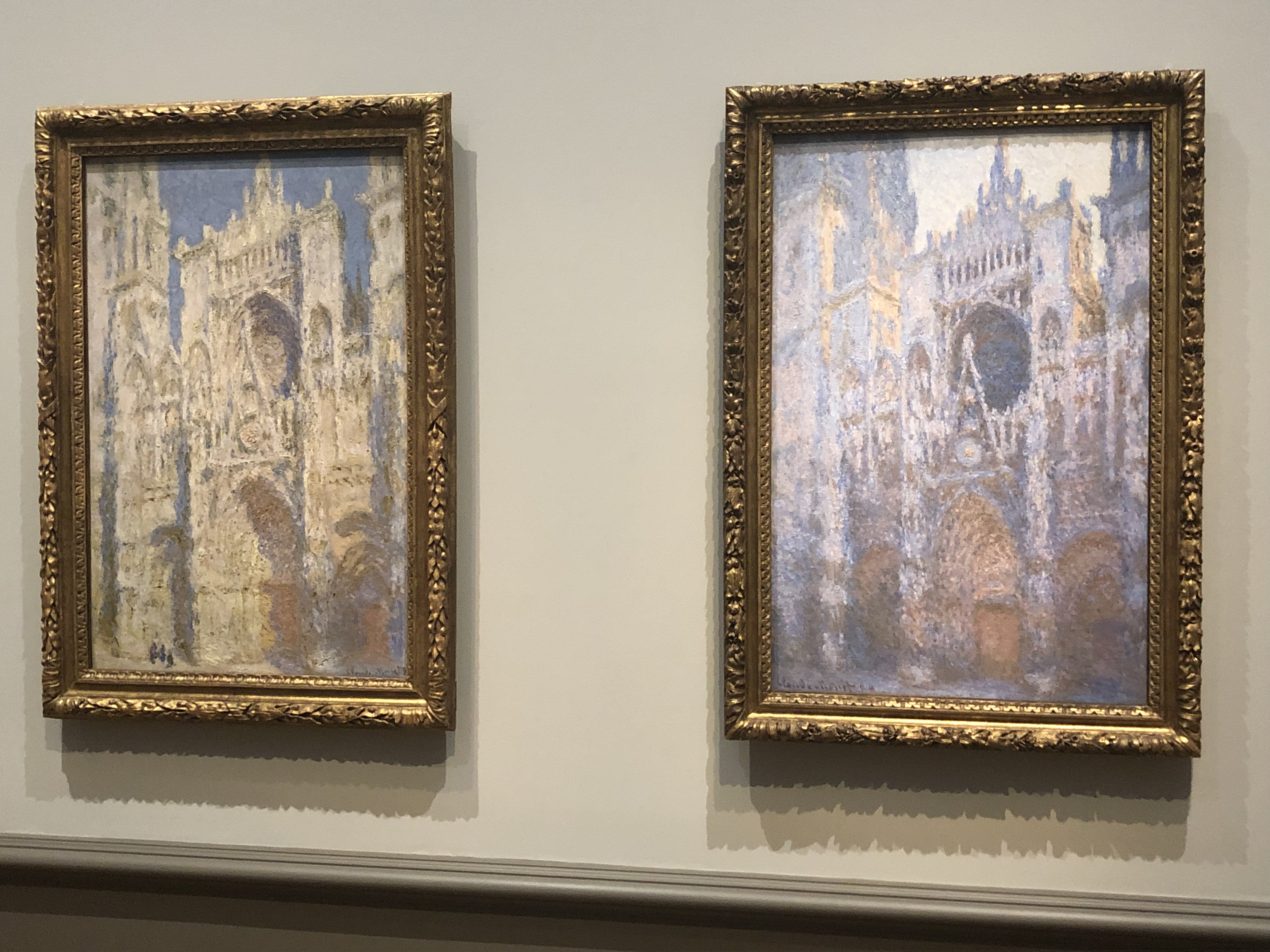 It seems impossible to me that when I finally see the cathedral at Rouen, I will already know the shadows of the late afternoon sun, and the way the morning light illuminates its porticos. How much of the world do I already know through the eyes of artists—the representations and words of painters and writers?
 continuoussearch