What drives us to claim that someone must “earn” our trust?
Maybe we look at children, and their innocent acceptance of our magical disappearances and reappearances—silly children who haven’t figured out the mystery of object permanence. Or we recall the way dogs will chase the imaginary sticks we have thrown when we hold the actual sticks behind our backs. Dogs are so stupid. Or we remember how Uncle Max had two mistresses—at the same time!—breaking Aunt Sylvia’s heart; how did she not see the signs? Or, or, or…
How many thousand lessons does life provide, proving that if we let our guards down for even a moment, that life will either make fools of us, or render us hapless victims? And earned trust? Surely there are just as many examples when our earned trust was upended like a cheap pine table in an earthquake. We proceed like penurious bankers, giving out loans at interests rates that would humble Rajahs, and still, we are repaid by grief and betrayal. What hope can we have?
How much armor is needed—lead, steel, or titanium—to get us from our bedside to the fringe of the world? Who cares that accident statistics show that SUVs—great exoskeletons that we wear like Gregor Samsa wore his carapace—are more likely to be in a crash than the nimble little roadsters that weave in and out of danger? More armor! More protection!
For what? Wrapped inside a traveling sarcophagus we are pre-entombed—already arrayed for the burial. And trust is just another layer—a shroud that hides a face.
Why not just trust? Why not embrace foolishness, stupidity, Aunt Sylvia’s blissful ignorance (until it finally becomes too much)? How many moments of easy grace do we pass by in the name of incredulity? Protecting our fragile hearts and minds (our bodies are so rarely at risk, and so much easier to protect)? From what?
What price do we pay for the blanket of distrust we wear over our shoulders—leaded, like the dentist’s leaded sheet, to prevent the harmful rays from reaching within? How many more might we more easily trust? What fruits might we more readily sample? What lessons of hope and joy might just as easily fall into our outstretched hands, if we only stretched them out?
 I don’t believe in fate—providence, if you will. If there is a plan, it does not proscribe outcomes. Rather we wander in and out of circumstances bumping into two sets of patterns—those we make out of our lives, and those that are beyond our immediate control. Life goes out of balance when we cannot get the two patterns to jibe—when we cannot reconcile ourselves to the patterns that exist. Out of balance we can neither accept what has happened in our lives or we cannot break those patterns and create new ones that are made from familiar pieces but reflect possibilities that we had not imagined. Out of balance we fight against the patterns that life provides, missing obvious signs (rising temperatures, repeated cruelties, even the tender messages of love) and careening against the walls of a maze that we cannot perceive and causing damage to ourselves and those around us.
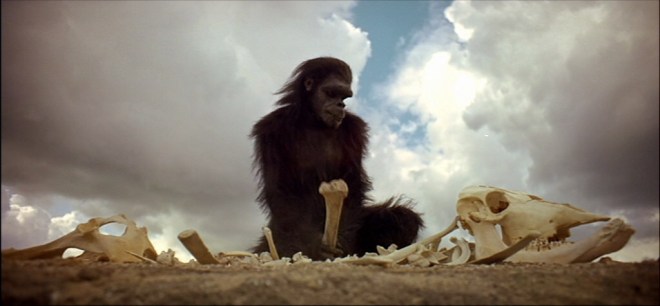 And yet we build, and not every tool—Kubrick’s 2001 aside—is a refinement of a club. Certainly Kubrick’s 2001 won’t help one win a war, or woo, unless, of course, the object of desire is imbued with an essential and unmitigated nerdiness. Nonetheless, even without some mysterious aid, we grow. Maybe not today, maybe not tomorrow, but soon enough, and we find our way to each other.
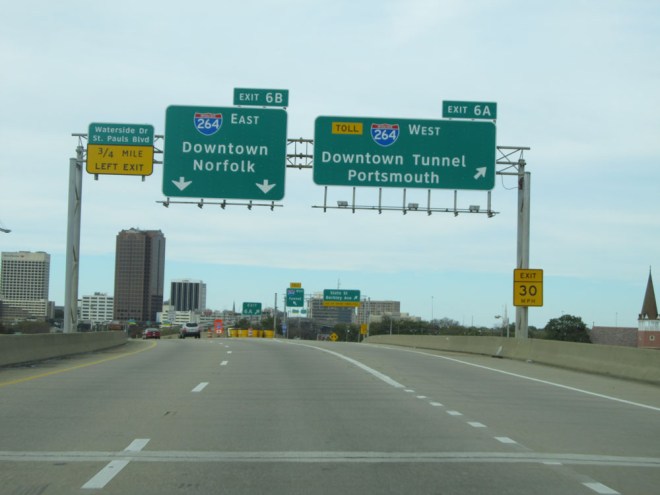 Every time I reach a particular traffic light in Norfolk, I can hear, clear as a bell, the not so gentle prodding that “You can turn right on red from the middle lane. There are people behind us.” Heading west out of Norfolk through the Downtown Tunnel causes a surge of ineffable joy, even when it’s just a trip into Portsmouth. The long drive across the Bay Bridge Tunnel reminds me of the day I took my daughter to drop flowers in the bay to commemorate the day my father fell into the water.
 There is hardly a street corner, a stop sign, or a stretch of highway that does not bring back flashes of memory. I stood on that plot of grass, took photos of the flooding at my church, and then sent them to a friend. I walked past the giant number “9” at West 57th in New York City with another friend, on our way to the Hard Rock Café. There is a house on the back way into the Paoli Shopping Center that my father told us belonged to Chester Gould, the illustrator and writer of the Dick Tracy comic strip. This seems as dubious a claim as that Dr. Seuss lived in a house visible on the hill above Yellow Springs Road—my father had a predilection for harmless invention.
 I have read that places become memorable when significant emotional events have taken place there. Memory formation is my hobby horse. What constitutes a significant emotional event? What allows the creation of two, three, four, more memories to occupy a single green exit sign on the Route One into Bath, Maine?
 Some people, most people, grow up, and cast their lot on one side or the other. Apollonian selves dream into an idea of logic and order—think a sonnet by Shakespeare, glorious in its arrangement of rhythm, rhyme, and idea. This is Apollo brought to earth, walking firmly on the ground. Dionysian selves trumpet feelings and instinct: Ginsberg’s “first thought, best thought” is as much a dictum as can be borne.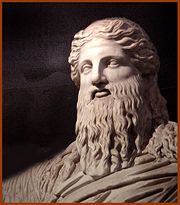
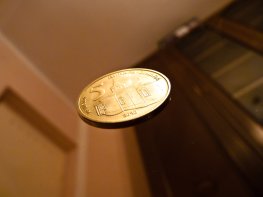 My youngest brother has told me many times that I am too serious. And of all the boys, I am. And not. My wildness is serious, and my seriousness is wild. Flip a coin, and watch the light glint off side after side after side as it tumbles through the air. Heads or tails, the glinting wins.
 I have been thinking about feelings. Which means, of course, that I have been having them, or rather, overwhelmed by them of late. I wouldn’t bother to write about them if they were good feelings. When I am in love, I tend to write less about that feeling, in part because my need to communicate to the world is being so generously satisfied by the person I love. The feeling of being so thoroughly understood (she gets me!) is like putty in the gaps through which the words drift out (or in). The feeling of being misunderstood blows all the putty out.
