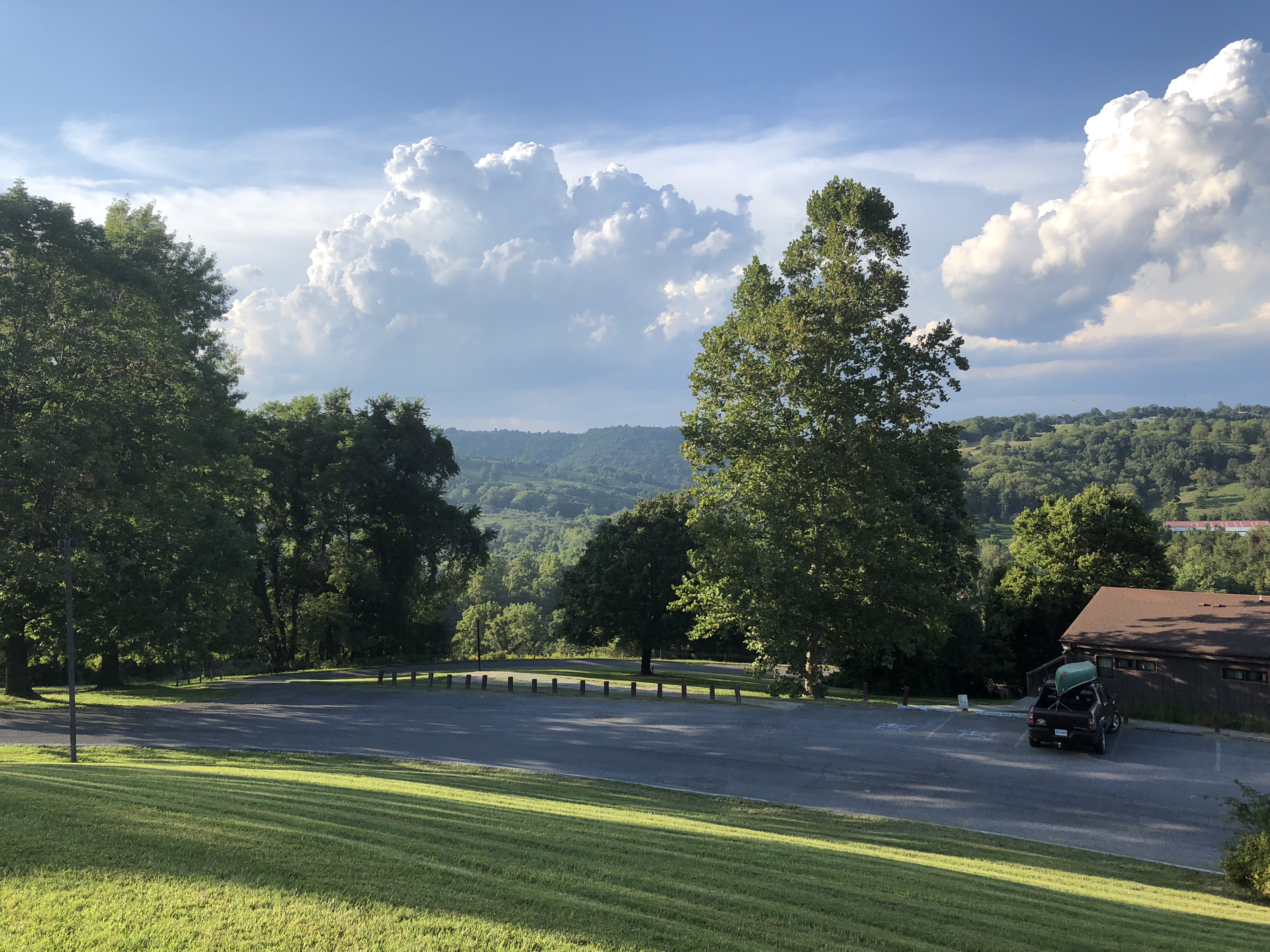
Once a week I take my tablet and head someplace at least an hour away from home to write. I will find a strange coffeehouse, or a park, or a museum. I will write at a table, on a bench, or sitting on the floor or ground. No matter how far I go, I try to write at least 1000 words, letting wherever I am seep into what I am writing—that café au lait, those trees, this painting.

My students obsess over the idea of writer’s block, and having been away from my writing for years at a time, I can understand why. They see their relationship with their writer as a relationship between themselves and the void—the blank page or blank screen, waiting to be filled. And to be sure, there is a void. Before one writes it, nothing of what the writer sets down exists, not in that exact form. That is, of course, part of the thrill of writing. While there may well be a void, the writer fills it—as much as she or he can.
I disarm the fear in a number of ways. I write every day, whether I feel inspired or not. It is like sailing on the ocean: gale, steady wind, or little or no wind; the sails go up and progress is made. Some days are tedious, at least to begin; fortunately, I find that the act of writing can ignite vision. A friend of mine posted about “Static Writing”—how the grind of daily writing can feel stagnant and stagnating. I get that, and yet, I feel that in the creative endeavor, having a “static” process, one that is not bound by outcomes, but by the power of filling the void (It can never be filled! Keep going!), will lead the writer to their best work.
I also acknowledge that writing is a physical as well as psychic act. Sometimes pushing a pen or pencil over paper can help remind the writer of this, or by the way one pounds out letters on a keyboard (old manual typewriters made this experience easier to understand). Directing the passage of the words from an abstract (thought) into a concrete medium (onto the page/screen) requires physical effort.
In addition, I am aware of my surroundings when I write, and when I write, am aware that the transition into my writing time and space. I often play a specific song to help usher in that time. But I learned not to bind myself to a specific place.
A few weeks ago I attended the DC Authors conference, and someone asked the first book writers (a novelist and a historian), where they wrote, whether they had a special set up for their writing space. I can remember those kind of “what’s your ritual” questions from grad school. Writers would concern themselves with pencil or pen (and what kind of pen), or how much cleaning to do beforehand, or what was in the candy bowl next to where they wrote. I can understand why this is a preoccupation with writers; writing is hard. Writers risk their very sense of self when they make the effort to create a world out of the void. If they fail, not only does the world threaten to spin into unmatched threads, but their hands threaten to unravel as well. Ritual can be a talisman against disaster.
And yet. Writing is movement. While it may be a move toward a center, some still, quiet, and contemplative space (or raucous, ecstatic, unrestrained dance), it is a movement. A writer who can tap into this seems less likely to be caught when his or her ritual is interrupted. “Wanderer, worshiper, lover of leaving,” writes the old poet. We leave this world and enter the void, and make what? Some strange caravan.
So, I go, physically, and in the going drop the pretense of metaphoric movement, embracing actual movement. I allow myself all the charms and dangers of distraction, but I know, all too well, that giving myself this time and this freedom of space will reinvigorate my work, that if some of the threads which I am spinning together have become hackneyed or too full of my will, I can energize and brighten them. A bite of this slice of cake. The sound of that woman exhorting her child in Arabic, the presence of this sculpture of the Buddha.
And so now, cloistered in a room of students taking exams, I can write. Again, and always.
 Since the 1987, I have started at least five novels. Some I carried with me for a few months—the story of a wedding, unfolding like the petals of a rose. Others lingered over decades—the story of a woman who stole paintings. None of them lasted beyond seventy or eighty pages, or in the case of the long project, fifteen or twenty starts at initial chapters. I had notebooks full of scenes, outlines, character sketches, dialogue, and thematic connections. All the while I wrote other things. Shorter pieces, poems, prose poems, essays, sermons, children’s stories. Or I wrote nothing at all and suffered in silence. I believe that I was unbearable in those times.
 I was compiling blog posts today—why not a second book about writing and second chances? (Yes, but first things first)—and realized that I had written over 60,000 words in two directions since the beginning of September. While working at a new job. While beginning a new relationship.
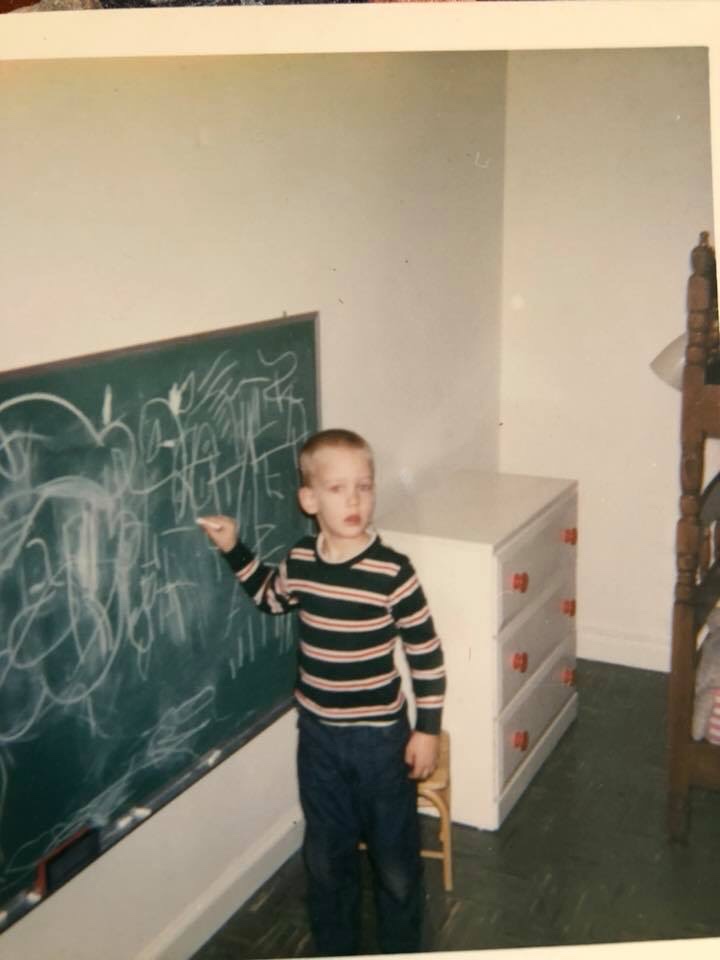 The impulse is to judge, and then to correct. Don’t do that, do this. Or at the very least, Don’t do that.

 Almost thirty years ago, I was eating dinner at a little restaurant on the edges of Johnson City and Binghamton, New York. My mentor and her husband had invited me along. These were heady occasions, full of discussions about writing and literature, and the program in which we all worked. I was a student, but, still, I worked. On this particular occasion, they started talking about writers manqué—although I heard it as writer manqués. It was a new word for me. Manqué: having failed to become what one might have become; unfulfilled. They started listing writers who had been in the program, writers who had published and stopped, and writers who were currently in the program. It was sharp and cruel, and the sobriquet stood out as one to be avoided at all costs. These may not have been eternal footmen, but there was snickering enough to go around.
 Nonetheless, the fear of being unfulfilled lurks. In a
  Is it any surprise that repetition plays a significant role in my life? I came of age as an athlete knocking out sets of 30 200 yard freestyle swims. They were yardage eaters—a quick and dirty way to lay in 6000 yards of workout and buy time for rest of the yards that the coach had in mind. We finished them at intervals of 2:30, 2:20, and 2:10, which left 50 minutes for the rest of the practice—an easy pace for the two to four thousand yards to come. Pushing off the wall every two minutes and thirty seconds, there was time for conversation between swims. Leaving at every two minutes and ten seconds put a crimp on anything other than brief exchanges: “This sucks,” “Stop hitting my feet,” “I’m hungry.”
 This past December, I traveled to a new place, London, to which I had meant to travel almost thirty years ago. I traveled after I did a series of new things, each one satisfying, but each fueling a desire for more. Almost everything that has been part of the solid ritual of my daily routine tastes bland. I don’t hanker for extremes—a solo sailing venture around the world, or an ascent up some foreboding mountain, or a year in a seraglio—I yearn to encounter something as if for the first time. I wish to be a beginner again, with a clean slate ahead of me.
 continuoussearch