After watching Luhrman’s The Great Gatsby, and his introduction of Gatsby to Rhapsody in Blue, and reading Fitzgerald’s description of New York as Nick and Gatsby cross into the city:
Over the great bridge, with the sunlight through the girders making a constant flicker upon the moving cars, with the city rising up across the river in white heaps and sugar lumps all built with a wish out of non-olfactory money. The city seen from the Queensboro Bridge is always the city seen for the first time, in its first wild promise of all the mystery and the beauty in the world…
“Anything can happen now that we’ve slid over this bridge,” I thought; “anything at all. . . . ”
Even Gatsby could happen, without any particular wonder.
I cannot help but recall Woody Allen’s opening of Manhattan. Manhattan elates and saddens me.
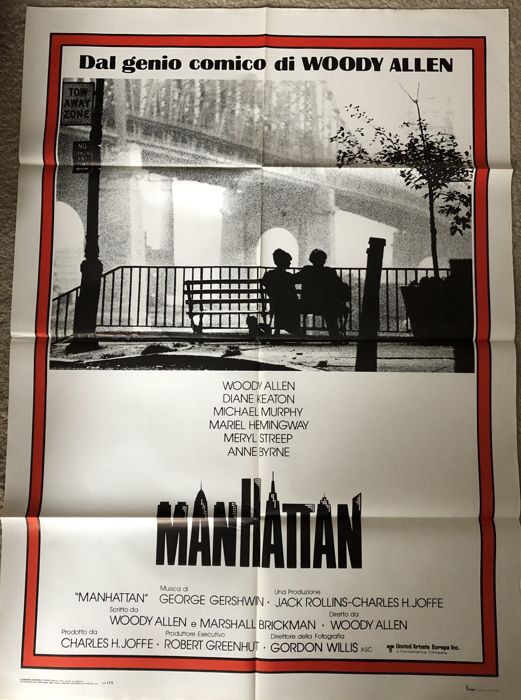 I first saw Manhattan in 1979, when I was 19 and thought myself precocious. I was a sophomore at Swarthmore College, a school full of young people who rebelled in their precociousness. Tracy’s relationship with Isaac simply echoed my sense of myself. Who among my friends would have put a limit on the seventeen-year-old Tracy? We were only steps away from that age; we were not intimidated by 42-year olds. What did we know about power dynamics or anything more than our own blossoming worth in the world? Blossoming? Fuck that—we were valuable and powerful as we were.
If anything, we looked at the adults: Isaac, Yale, and Mary, as failures. They were warnings against what adulthood held for us. How many of those warnings were broadcast directly to us—adults, even bright, hyper-intellectual, and connected adults, failed miserably at the single focus of life: true and abiding love. (Is that the focus of life? Should it be?) They were even willing to ensnare us in their tangled ruin. And yet we were becoming those adults.
I still hear Rhapsody in Blue as flirtatious, triumphant and orgasmic—just as Allen used it to begin his movie. It starts with the clarinet ensorcelling the listener, almost drunk, almost like the opening of “West End Blues.” Then it is answered by the horns—overwhelming in their insistence, and unable to be subdued even by the speedy-fingered piano that interrupts the answer. There will be horns. There will be crescendo and climax. Yes, there is more. It is hard not to feel movement through that city when hearing this music, but that city is full of sexual vibrancy, and sexual competency. We do it, and we do it right.
The sadness with Manhattan comes, of course, with the knowledge of what happened to Allen-—that youth and vigor swept him away. That romanticization won out over, what? Adulthood? And couldn’t we see in Manhattan all the signs of that? Where was there a space to be an adult in his work? Who knows what Tracy was going to come back to the city as—still full of possibility? or wrought into something, somehow less?
And here’s the thing—we are all going to be wrought by life, by struggle, by disappointment. It’s what we do after the first act that determines who we will be. Or the second act. Or the third.
Life contains an element of the bipolar—there will be elation and sadness. I embrace both. I struggle with both—or I try to. I tell myself to get ready for the fourth act; Agincourt, after all, takes place in Act IV. Still, the bitterness of disappointment is hard to set aside. And there have been so many disappointments, so many sadnesses, so many disenchantments. Heroes fall. I fail. What was once sweet on the tongue no longer pleases. My knees hurt. “I ache in the places where I used to play,” sings Cohen, and he sings in spite of his indelible croak. “Born with the gift of a golden voice,” indeed.
Manhattan elates and saddens me because it lays bare all the trouble to come and makes a statement about the seductive power of the city—a power I felt every time I visited it, every time I visit any great city. Life—like the city, the film about the city, and the novel by Fitzgerald—is rich and dense and confusing—and infuriating. I wish it was not so, and yet, it must be.
 Is it any surprise that repetition plays a significant role in my life? I came of age as an athlete knocking out sets of 30 200 yard freestyle swims. They were yardage eaters—a quick and dirty way to lay in 6000 yards of workout and buy time for rest of the yards that the coach had in mind. We finished them at intervals of 2:30, 2:20, and 2:10, which left 50 minutes for the rest of the practice—an easy pace for the two to four thousand yards to come. Pushing off the wall every two minutes and thirty seconds, there was time for conversation between swims. Leaving at every two minutes and ten seconds put a crimp on anything other than brief exchanges: “This sucks,” “Stop hitting my feet,” “I’m hungry.”
 I had always shrugged off the idea of traveling to the Grand Canyon. I was one of those, “what’s the big deal about a big hole in the ground” skeptics. I was wrong. Of course I was wrong. The Grand Canyon is an amazement—and of course, I was properly amazed when I saw it—looking into two billion years of rock will do that, should do that. I realized that what I had held aside was not the geology or the landscape, but the travel. Why had I discounted my ability to be amazed by travel? I had done it all my life. Going, all kinds of going, even if so much of it has been more local—on this continent, in this country—has been part of me all my life.
 I loved airplanes and airports. Departures were invitations to new adventures. When I traveled with my family, I usually sat alone—the hazard or benefit of being an odd numbered group. I took my first plane flight alone when I went to Iowa to swim; I was 15. I traveled by train and bus alone all through my early adult life. I usually traveled to visit friends. However, I also went to cities to simply see them, to look at buildings, and camp in museums—visiting and revisiting works of art that held sway over my imagination.
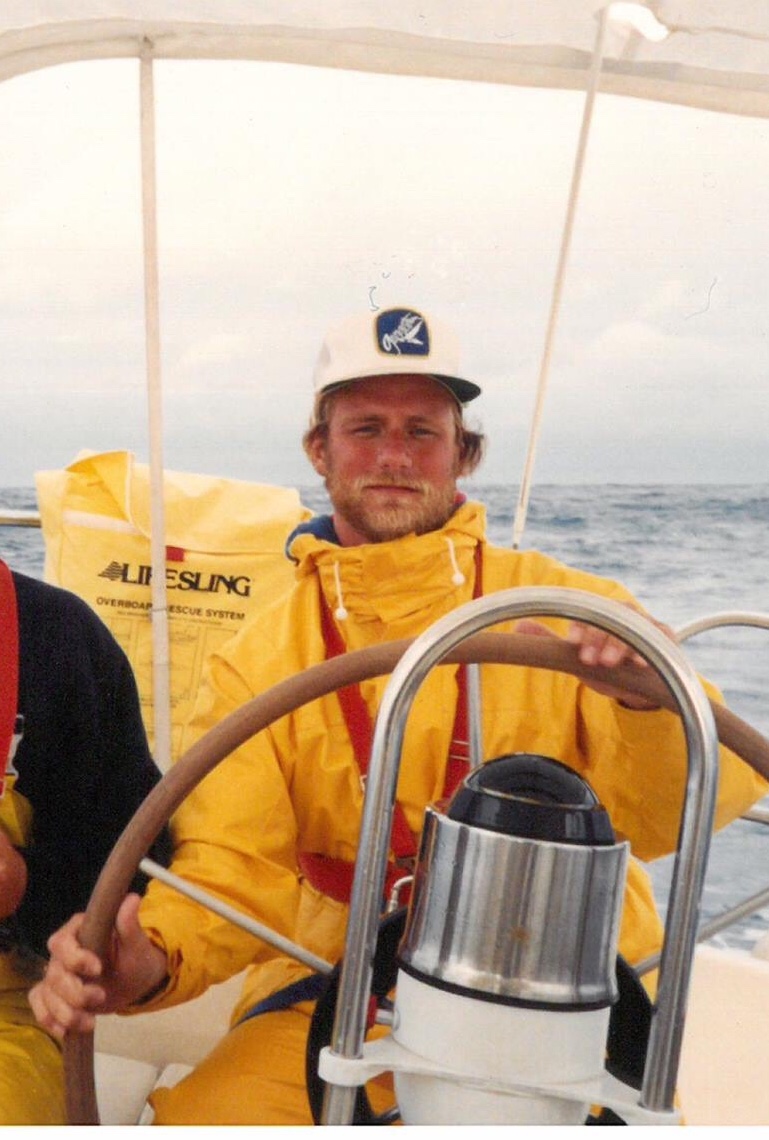 There were trips under sail with my father and brothers. These were tests as well as trips. The ocean makes us foreign to ourselves, our bodies not made to be perpetually wet, and perpetually in motion—shaken and stirred. I have never been anywhere larger than surrounded by sky and ocean, never felt as alive, nor as alone.
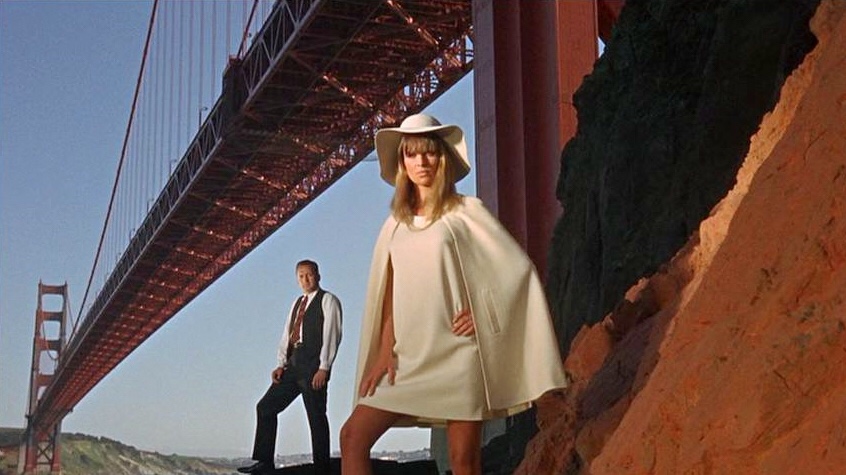 This is at once a fanciful and a grim movie. The pace is jaunty, and the editing jumps the viewer forward, back, and side to side. Janis Joplin and The Grateful Dead perform in the film. Lester creates momentary tableaux that are discordant and arresting. A happy person, well ensconced in a healthy relationship would dismiss it as an over-intellectualized and cynical film. Since, at 17, I was neither particularly happy, and never had a relationship, it struck me as a warning about what waited in adulthood, and what a horrible warning it was.
 perpetual theater of feelings and opinions (and by the gruesome broadcasts of news from Vietnam). Lester’s film frames these performances as shallow, even callous. When asking for help speaking with a Spanish speaking man, one cool answers, “I only know Polish.” That’s how it is: the joke’s on you.
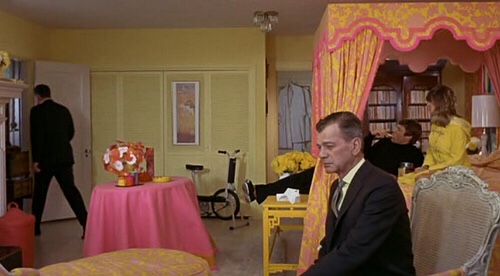 Petulia has a secret. She is fighting for her life. She witnessed Archie perform surgery on a small boy she and her husband became tangled up with—fixing the mess she and her husband made. Her husband abuses her. Archie is the solid, generous, and cool alternative to the privileged, abusive, and secretly volatile world she inhabits. She shows up at Archie’s bachelor apartment, bearing a tuba. Romance of a sort follows. And ends. Archie is perplexed, and then angry that Petulia stays with a man who beats her. And then knows there is nothing he can do.
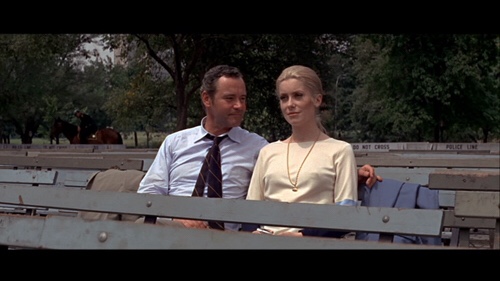 Deneuve’s character, named Catherine Gunther (the boss’s wife), is sad and no longer fits in a society built on attraction and platitude. Brubaker catches her eye because he is unpolished. Even though he can be inept, he is genuine. She is convinced to give him a try when they spend a night in the company of a quirky couple, the Greenlaws, played by Myrna Loy and Charles Boyer, who live in a castle located somewhere in New York City. She tells fortunes. He practices fencing. They inspire Catherine to seek out a more enduring love. She chooses Brubaker.
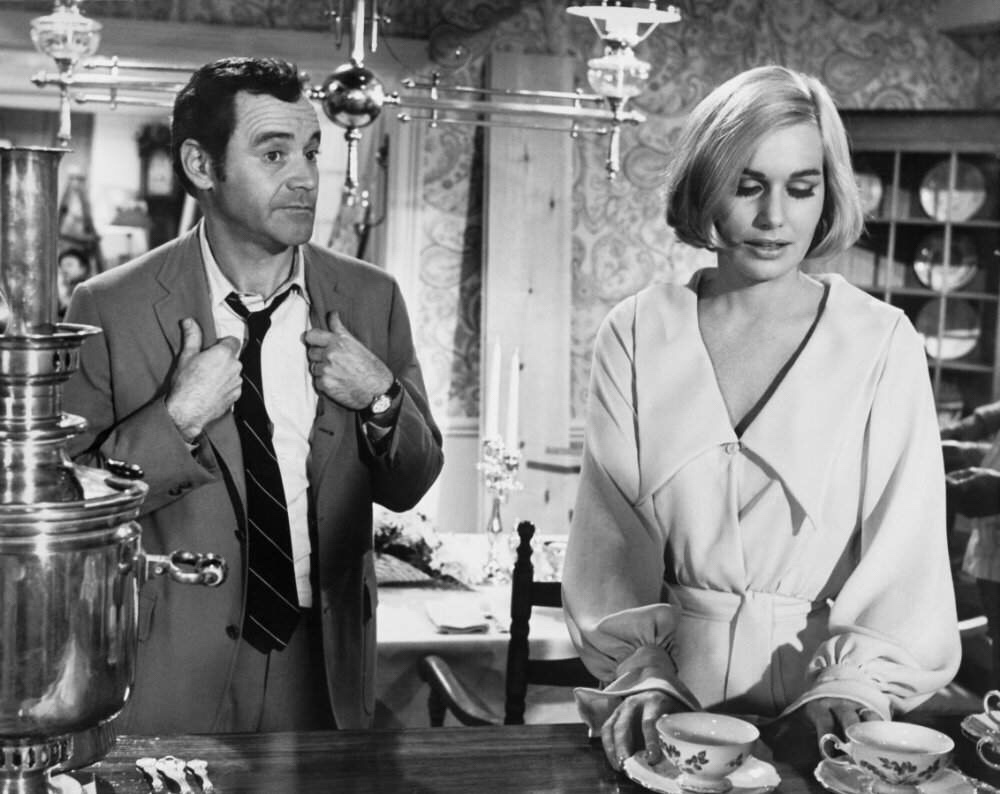 It should be noted that both Brubaker and Catherine are married. They leave their spouses, and the rest of their world’s behind. Ted Gunther is a smoothie who hits on other women and depends on his wife’s willingness to ignore his behavior. Sally Kellerman (an early heartthrob because of her part in a Star Trek episode) plays Brubaker’s wife Phyllis as distant and focused on her own projects. She talks at, not with, her husband and rushes off the phone to whatever actually holds her interest.
 All except for the magical Loy and Boyer, whose wealth does not stigmatize them so much as separate them from the herd. They spend the days asleep, because of all the bad things that happen in the sun. There is no explanation given for their presence, the same way that fairy godmothers have no explanation in fairy tales. I longed for quirky friends, even as a youth. My classmates talked about Happy Days and the Pittsburgh Pirates. I had other, more shadowy interests, and no one to share them with.
 The April Fools implies that happiness derived from love is so rare that it will require a rule-breaking intercession to achieve it. What a strange foundation on which to build an idea of love, and at 14, that is what I was doing. And to think that a kiss ought to lead to a trip to Paris and a new life. How many kisses would come that did not bear that freight, that betrayed that wish?
 continuoussearch