What is Enchantment?

At the outset, it is only liking, not understanding, that matters. Gaps in understanding … are not only important, they are perhaps even welcome, like clearings in the woods, the better to allow the heart’s rays to stream out without obstacle. The unlit shadows should remain obscure, which is the very condition of enchantment.

Andre Breton

Enchantment only happens when one is uncertain—when one is drawn to the obscure. Otherwise, there is no spell. Affirmation shines a light on what we already knew. Or, at the very least, what we thought we knew. Enchantment takes us into the shadows.

Yes, some will call confirmation or affirmation by the name of “enchantment.” They mistake the feeling of returning home with walking, almost asleep, into the unknown.

The condition of enchantment requires that we are pulled out of our shoes toward something on which we will walk bare-footed, but cannot see. Will our feet be cut or burnt? Yes. Will the road be rough? Yes. Or will we float, unable to touch the ground, yearning for the familiar in spite of our flight? Yes. We will like the flight, but will not understand how we suddenly sprang out of our shoes. Who untied our laces? Am I still wearing socks? Do I have wings? Look down and behind yourself and be prepared for an answer you did not imagine.

Enchantment calls you out of yourself, possesses you, and makes the world new and strange. And in doing so, makes you new and strange to yourself.

Who would dare enchantment? Who would step out into the unknown, girded only with some semblance of a suddenly out of date idea of oneself? By slips and stumbles one finds something—or is found by something. Either way, because without a self to cling to—why hold fast to the raft when one might grow gills?—the world becomes the self. Enchantment makes me match the call of the world. Be all of this.

And so, I take the obscure way. Enchanted. It waits and welcomes me.

Reclaiming Enchantment

SAAM-1929.6.127_1It happens to us once or twice in a lifetime to be drunk with some book which probably has some extraordinary relative power to intoxicate us and none other; and having exhausted that cup of enchantment we go groping in libraries all our years afterwards in the hope of being in Paradise again.

Ralph Waldo Emerson

Why did I think I would have to live without enchantment?

Maybe, because enchantment—sheer magic—seemed all but impossible. Or if not impossible, somehow immature. Children believe in magic, not rational, brilliant adults, and I am both reasonably rational and brilliant within reason. Still, I fell in love with reading by pulling every book from the shelf about myths from all over the world. Later, I would come to appreciate the ache of Hardy and James. I discovered that after reading James, I could write like him, plumbing the mind with prolix sentences. But I wasn’t enchanted, either by the reading or by what I was writing. These sentences were not mine, even if the ideas came from my heart. I found truth, and truth would have to do in a world that had banished magic.

And then…

“Many years later as he faced the firing squad, Colonel Aureliano Buendía was to remember that distant afternoon when his father took him to discover ice.”

I had written some before I read Gabriel Garcia Marquez’s One Hundred Year of Solitude. There was a story about a disaster in a mine that I cribbed from Conrad—or it felt cribbed—it had the same sense of urgency and dread that Jim felt before the explosion in the ship. But it wasn’t until every impossible thing happened in One Hundred Year of Solitude, combined with the steady implacable voice of that novel, that a work of literature echoed the voice in my head.

While growing up, I had read some fantasy and horror—Ursula K. LeGuin’s Earthsea Trilogy delighted my adolescent heart, and Stephen King was good for an easy shock—but for the most part that kind of writing calls too much attention to itself. The tone does not so much enchant as cudgel. And yes, I understand, some people like to be cudgeled. Marquez’s tone created a silkier enchantment—so much so that some of the sentences forgot that they had ended. It was all spell, but a spell told at the dinner table.

Art is enchantment and artists have the right of spells.  Jeanette Winterson

During the in-between years, I also read Mark Helprin’s novel, Winter’s Tale, which begins: “There was a white horse, on a quiet winter morning when snow covered the streets gently and was not deep, and the sky was swept with vibrant stars, except in the east, where dawn was beginning in a light blue flood.” The novel careens into twists and turns of incredulity—what the hell is that ship?—however, the horse that began the novel enchanted me as it ran over the streets of New York City, and became, years later, my horse, although of a different shade.

A friend gave me a copy of Italo Calvino’s Cosmicomics, which blends science with whimsy. Two stories, “The Distance of the Moon” and “Dinosaurs,” are touchstones of longing—a sure sign of enchantment. Calvino’s Invisible Cities remains unteachable for me because I cannot help but fall into its spell each time I read it.

If I am not enchanted, what is the point?

I tried to write impossible stories when I began writing, and instead, returned over and over to stories from my life. The examples of writers who had preceded me on that path were innumerable—and many of those writers are among my favorites: Joyce, Woolf, Dickens. Even Marquez, it turns out, was mining his past—a magical realist past, but a past that existed nonetheless. Reading his memoir, Living to Tell the Tale was surprising. Perhaps impossible things can really happen.

Magic is hard to write. Too often magic feels like a trick, some cheap deus ex machina to shorten the distance between here and there. I tried. I had struggled with a story about a father who became the Cat in the Cat in the Hat (a great absent father story), and that became another story, of all things, about a man driven by love to masquerade as a Russian carpenter.

I wrote prose poems about my city of origin, Philadelphia. Philadelphia, as much as any city, rises from contradiction after contradiction. I had lived in West Philly when the MOVE fire took place. I had worked in an Italian restaurant with dubious connections. I had done other things. Philadelphia seemed impossible enough. I wrote stories and poems in which the sun failed to rise or a girl shot the moon out of the sky or angels gathered after the end of the world or a man gave away parts of himself as he walked through the city one morning. One of my mentors chased me away, asserting that I was singing in one key. I was still young enough, and tender enough (my great flaw) to step back.

After all, it was simpler to write about disenchantment. It felt more realistic, more, what? truthful. Disenchantment and disillusionment are the foundations of so much literary work. Even One Hundred Year of Solitude ends on a thudding note of despair.

 Like all dreamers, I mistook disenchantment for truth.  Jean-Paul Sartre

I took many steps back. I grounded myself, got a series of real jobs, and lost my sense of magic. No, of course, I did not lose it. I put it away. I attempted to replace it with something like a reasonable substitute—an honorable and valiant substitute. A wiser soul would insist that there is no substitute, no more valiant way forward. They would not have been fooled by my efforts at sublimation. I tried to fool myself, and threw myself into work and life, and lost sight of myself.

How did that work out?

There are times when we can feel destiny close around us like a fist around a doorknob. Sure, we can resist. But a knob that won’t turn, a door that sticks and never budges, is a nuisance to the gods. The gods may kick in the jamb. Worse, they may walk away in disgust, leaving us to hang dumbly from our tight hinges, deprived of any other chance in life to swing open into unnecessary risk and thus into enchantment.

 Tom Robbins

This time last year I was a mere 30 pages into a new work. It did not have a shape, and I did not know how it would end. I hoped that it would end with a love that persisted over thousands of years, but what did I know? There were some 270 pages ahead. All I did know was that I had allowed myself to become entirely enchanted by what I was writing. Was it good?  Was it bad? What did I know? I kept writing.

I began writing and trusting in enchantment—rough magic to be sure—because I changed my life to reclaim enchantment. I set aside a life I had lived. I left two jobs—and a career of sorts—that had made the distance between my heart and hands more pronounced and distinct. And I began calling enchantment back into my life.

There must be people, writers, whose lives and work can take separate but equal tracks. I cannot. One part of me still feels that is a failure. As a mature adult, I should be able to compartmentalize the various parts of my life and live with the contradictions between what I dreamed of in my fiction and what I did at work and how I lived as a father and husband.

One of the great attractions of writing is that one is in complete charge of what one does. And what one does is, in the end, something like the most profound and energetic kind of play possible. The only rule of this game is: play more. Play more precisely. Play more wildly. Play more passionately. Play more broadly, quickly, intensely, blithely. Play into and out of contradictions. Play. More.

Try and lead the rest of life with that dictum in mind. Especially when one is a principal of an Orthodox Jewish boys school, or the director of religious education for a Unitarian Universalist congregation. Or as a husband. Or as a father. It all worked fine while I played in graduate school and wrote essays about William Blake or Virginia Woolf or Charles Dickens or George Chapman. Or dropped everything and sailed for a month. Or ran through streets at midnight. Or. Or. Or. The ability to take play in many different places became a strength. It even was a strength while I tried to write fiction and explore where my craft would take me—and the field seemed open and endless. It was also a field without guarantee, which can be daunting, even to a 34-year-old newly minted Ph.D. I had to learn to make peace with unnecessary risk and enchantment. It took a while.

I am in the middle of it: chaos and poetry; poetry and love and again, complete chaos. Pain, disorder, occasional clarity; and at the bottom of it all: only love; poetry. Sheer enchantment, fear, humiliation. It all comes with love.

Anna Akhmatova

Allowing myself to be enchanted again meant allowing myself, for the first time in a long time, to fall inescapably in love. I do not know if other writers struggle with this. If they are like the rest of humanity, they all come to their work from different places and with different impediments. I came freighted with years away from writing, years of attempting to lead a life that was a little more guaranteed—a life that would make sense to others. I let much of that go and, without ballast, took flight. For me, that meant opening myself up to love. I realize that you, dear reader and (possibly) fellow writer may have been able to balance life—your craft—and love more successfully. In order for me to fall back into writing’s long dark spell, I had to give in to the complete chaos of love. All of it. I had to be vulnerable to unnecessary risks. I had to risk everything—it was the only way that I could reconnect with the bright source of possibility that inspires my work.

Enchantment had to be unreasonable and total. I could not corral it into one part of my life. Or I could, and did. And I could not, not this time, not with everything waiting ahead of me in the gloaming.

I once argued with a friend that the whole point of writing (I was talking about critical essays at the time) was to praise. I know that many writers would strenuously disagree. They leverage opposition to create—resorting to a kind of perpetual Hegelian dialectic. My best work simply praised. Why note failure, when some more glorious success awaits? It is so much easier to look back in anger—or disgust or disdain. Looking forward means looking into something that does not yet exist. When I praised writers in my essays, I praised them for their forward-looking vision.  I praised the chances they took. I have been singing to the risk-takers for a long time.

How did it take me so long to hear my own old song?

At the outset, it is only liking, not understanding, that matters. Gaps in understanding … are not only important, they are perhaps even welcome, like clearings in the woods, the better to allow the heart’s rays to stream out without obstacle. The unlit shadows should remain obscure, which is the very condition of enchantment.

Andre Breton

I am in the shadowlands. Looking back will not get me where I am going. Asking the questions only serves to remind me that although I lost my way, I also found my way. There are some parts of this journey that are beyond my comprehension. Part of me hates that. I am a bright man and should be able to make sense of what happened and what changed. I have written these short posts as a way of reminding myself—and with any luck you—that the way ahead is not limited to the past. We can—and do—move in and out of understanding. But we move guided by our deeper inclination—what Breton calls “liking.” Let me suggest “loving,” which seems more committed, and therefore, riskier. I learn to live with the obscurity, even to court it, at my own peril, and for my own reward.

Writing must take us toward some inexplicable place. We read to be surprised and delighted by what we did not know when we began. Affirmation is fine. Discovery is essential. And when we write, we seek that same experience again—something like paradise. And again. And again. And this is how to live.

 

Writing is a fountain of youth

I was asked, “Do you feel old?” It was a question and an accusation.

I have reasons to be aware of my age. Over ten years ago, I had knee surgery as a result of years of overuse in swimming. My right shoulder has a tender rotator cuff; like my knees, my shoulder woes began when I was 17 and had a hitch in my freestyle stroke that put stress on the joint. Injuries never exactly go away as I am painfully reminded each time I lift weights with my hands out of a neutral position.

When I trim my beard, the hair falls from the electric razor like snow. The tide of my hairline has ebbed far enough to reveal another furrow on my brow. There are feathery lines that betray my transit. I do not always recognize the face that stares back at me, but I never truly recognized it. I have been surprising myself since before I can remember. Is that me? It is. It still is.

I know more than I did when I was 20, 30, or even 55. The accumulation of knowledge never stops. Each new day brings new articles of knowledge. I learn new ways of seeing the world or thinking about what I do. I gravitate toward books and lessons that show me something I did not know before I began. I am a specialist in my own ignorance. Every few years I feel a desire to overturn my life—uncomfortable in anything that feels like mastery, or rather, what might be mistaken for mastery. Yes, there is a value in going deep into a subject—in tunneling to the heart of a matter. But, to extend the metaphor, does the heart matter if one does not connect it to the bones and nerves and skin? What does the heart matter if it does not move out into the world and connect not just to the other 8 billion human hearts, but to everything living heart, and every other thing that does not have a heart? The more I learn, the more the connections pull at me.

I write—the single consistent strand of the past thirty-five years—because writing is not bound to any single subject. I write about movies, families, love, death, writing, baseball, anatomy, and art. I write about poems I love, and people who anger me to the point of distraction. I write about them to quell the dull ache of calcification and the even duller sense of disappointment with a world that replaces genuine surprise with momentary thrills. I write fiction and poetry to reach into the world and to describe a world that is thrilling—momentarily and for so much longer—but also deeply mysterious.

Writing is a time machine. It returns me to the giddy, carefree, and fearless time of youth. When I was ten, a flood brought the creek water a dozen feet higher than usual. The water rose above the bridge on the road below our house—a house on a hill. I went to the bridge and marveled at the swift brown water that reached the rails that spanned each side of the bridge. I waded into the water and held onto the rails. My feet lifted from the road and trailed behind me as I went hand over hand across the bridge. And once I crossed, I came back the same way.

Later in life, I did similar things, but the feeling then—water rushing past me, my feet straight out behind me, the weight of my body held by my extended arms—only fully returns when I write. And writing lets me shake off the years, not just mine, but all the years. I travel to any time I wish, unstuck from this moment, unlocked from expectation. In The Great Gatsby, Fitzgerald writes about romping in the mind of God. Writing is like that. It can be. It must be.

Do I feel old? Positively. I am ancient because my writing carries me to that world—to every world. And I am young, still. Always.

Breaking Up with a Novel, Falling in Love with the Next One

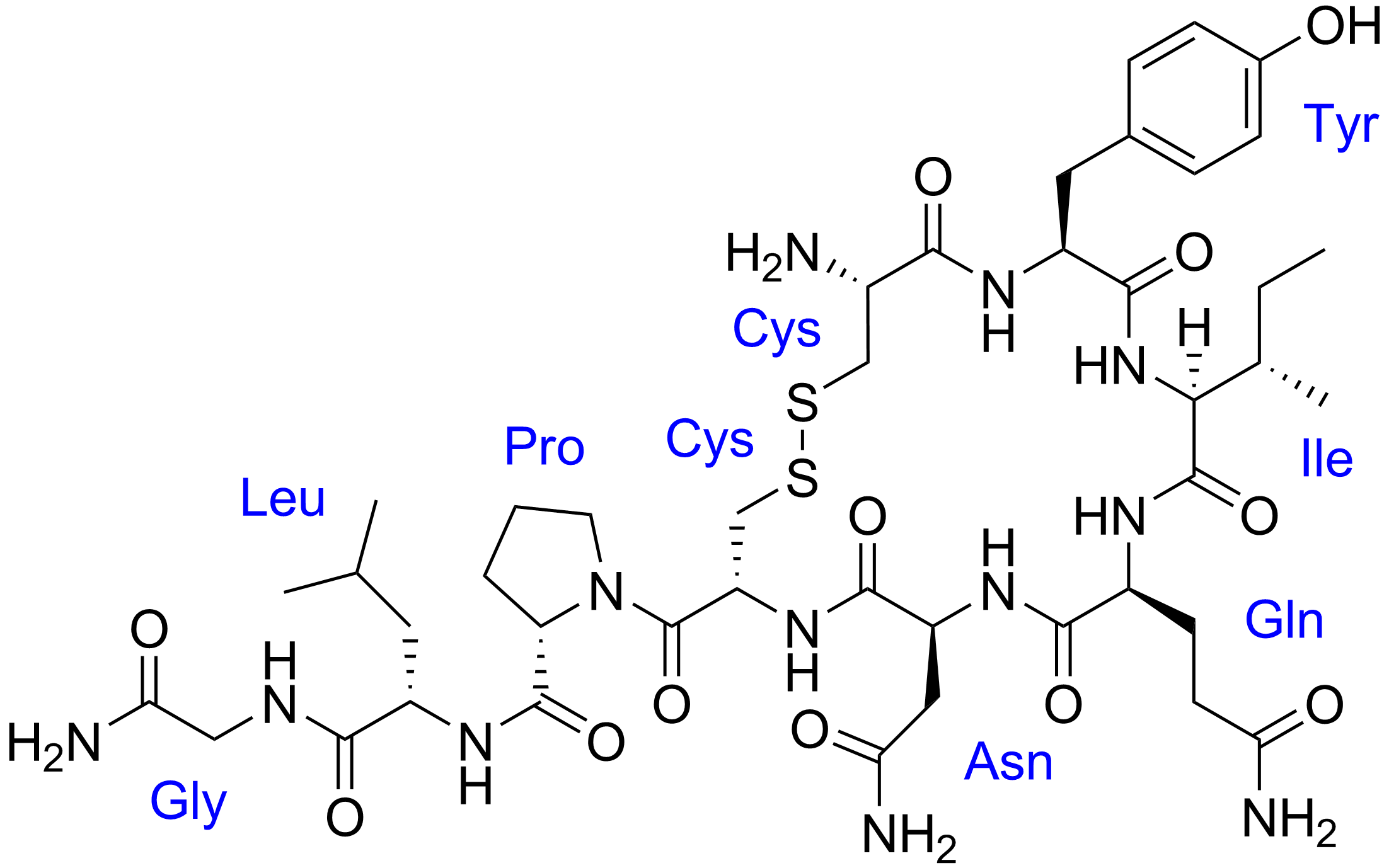
So, your brain works like this when you begin a relationship: a steady stream of oxytocin lasts about two years and gets you through the infatuation stage. During that time, you are giddily in love, and you do the due diligence (or you don’t) that gets you to something more lasting, something, possibly, permanent.

img_0009
Oxytocin

Here’s the trick. If you are still working on a novel after two years, it is time to throw it overboard. No, seriously. Part of what gets a reader to pass into the dream you wrote is a similar flood of hormones. Reading requires infatuation. Yes, you can pack a novel with drama and with exotic wildness, but somehow, somewhere the depth of infatuation a writer feels for his or her work will emanate from the page and enchant the reader. Or it will not–keep in mind that each reader will be enchanted with something different. But we tend to fall in love with willing partners. Enchantment breeds enchantment.

Novelists are oxytocin junkies. We fall in love—or we fall in love enough—to write and write against all expectation of a result, daftly believing in what we are doing in spite of no promise of permanence. And then, when we finish, we move on—or try to. Some novelists visit and revisit characters, unable to move on. There are a number of reasons: security (this stuff was published once, so why not try again?); habit (I already know these characters, this time and place); anxiety (how will I find another novel to write? I’ll just do this again—sort of).

Great novelists work the same material over and over. Think of all the orphans in Dickens, or all of his switched and hidden identities. Or all the women negotiating lives surrounded by powerful if vision-impaired men in Woolf. Faulkner built Yoknapatawpha County and then inhabited and re-inhabited it again and again. Maybe J.K. Rowling knew that she was beginning a 7 volume world at the start, but how could commercial success not have impacted that world? I could go on.

I could just as easily line up novelists who produced one, maybe two books and then stopped. Might I suggest that they were not prepared for the jarring and harrowing experience of finishing a book—of feeling bereft, broken up with? Their lives were intertwined with that book. It had been the one (as it should be, as it must be!). Yet, once the flow of oxytocin stopped, that’s where they were. Done. And done.

Would falling in love with the process be a solution? You get the oxytocin for two years, it doesn’t matter what—or who—you fall in love with. After the infatuation, you have to learn another way to love. Something more indelible. Love your process like that. I have been writing every day for years—fits and starts, fiction and nonfiction. I used it as a base on which I found a more fiery, single love (that book). After finishing it, I crashed hard, but I also had the writing, some kind of writing, to propel me forward.

I will find another, brighter love as I go forward. Another novel beckons. Before I berate myself too much for the difficulty of beginning the next, I must acknowledge that I am still haunted by the ghost of the last. My brain misses the rush of turning to those words, those characters, those places. So to will your brain. Be ready. It’s just the oxytocin. Just.

And so, I revisit places—the Calders at the National Gallery of Art remind me of the value of clean lines, whimsy, and balance (always balance!). In spite of the heartache, there is beauty—beauty made by hands, not simply discovered in nature. Although that beauty too—the changing fall colors, the scent of the season even as I walk on the National Mall—fills my sails with new wind.

I take my iPad to bed and write as I imagine Proust did, propped up among the pillows. If only the cats would bring me coffee. I have a table in a library on which I arrange my materials, and where I make progress. I wait for the next rush of crust-breaking hormones, chipping away with sad hands until that day arrives—when the glimmer becomes a fire again. I am ready.

Writing is like Dating

Recently, when I bemoaned re-entering the dating world—I don’t know what I am doing; it feels awkward; I’m not sure if I’m ready—a friend told me, “You have been dating. You’ve been dating your novel.” 

It seems strange to think about writing like a relationship. And yet, over the past year, my writing has been the single most reliable part of my life. For more than a year. My work has not stood me up once. It has waited patiently while I worked, or went on actual dates, such as they were. I wrote before so many dates, in the time I gave myself between here and some other there. I wrote in London. I wrote when I was supposed to be doing schoolwork. Sometimes the writing did not wait, and neither did I.

“Yes, but your writing isn’t going to satisfy you,” I can hear some churlish naysayer assert. Indeed. But, as I once tried to explain to someone who should have known better, when I write I feel rapturous, more connected to whatever one might consider ecstatically sexual, and more open to love than at any other time. I feel more able to love—and lust, the big lust—while I write. Writing is my way of loving the world. If anything, when I write, I feel less able to put up with the kind of trifling little lusts that casual dating provides. I am all but insufferable in my insistence on deep connection—match my intensity and magic or, please, don’t bother me.

That sounds terrible. It is.

Writing, done properly, is meant to engage absent readers; I write for them. However, I am also one of the readers—I write for me as well—not simply to write, but to read what I have written. I follow Seymour Glass’s advice to his brother, Buddy: “If only you’d remember before ever you sit down to write that you’ve been a reader long before you were ever a writer. You simply fix that fact in your mind, then sit very still and ask yourself, as a reader, what piece of writing in all the world Buddy Glass would most want to read if he had his heart’s choice. The next step is terrible, but so simple I can hardly believe it as I write it. You just sit down shamelessly and write the thing yourself.”

And, equally terrible, instead of waiting to find someone to love, let alone like, when I write, I get to be that person and get to love myself—and my writing!—without reservation or judgment. Have I ruined myself for anyone else? I don’t think so, but I’ve set a high bar. Not just for you, whoever you are, but for me. I have to love this writing and love generously and unfailingly. And shamelessly. I can. I will.

In Praise of Outcomes

I was listening to a presentation on meditation; the speaker explained how we are not our thoughts. It’s a tenet of Buddhism—you don’t get attached to your thoughts or your feelings, but acknowledge them as passing events. You can—and do—hold them, but only as you choose to do so. Or, rather, you are meant to make a choice. We are not always the best choosers of our thoughts or feelings.

As a person who relies on thought (and there is no thought that is unaccompanied by a feeling) to do my work, and as a person who casts his mind into the ocean of inspiration and lets it carry him as it will, I am sensitive to both seeking a direction and to changing course when needed.  I do not hold with Shelley, who wrote: “Poetry is not like reasoning, a power to be exerted according to the determination of the will. A man cannot say, “I will compose poetry.” The greatest poet even cannot say it; for the mind in creation is as a fading coal, which some invisible influence, like an inconstant wind, awakens to transitory brightness…” Fuck that. I will make a world of words, and when I feel more powerful, I believe that I can change the world with my words. They are magical, wish-fulfilling words.

Because I have a wish. I have a thousand wishes: one for every unfulfilled night of dreams, and another for each daylight hour I have spent do anything but this.

In the end, for all the talk about process and not paying attention to outcomes, I want an outcome. I want the damn thing to be good. I want people to turn their eyes back to the page and keep reading. I am motivated by the sheer selfish desire for fame—the kind of fame Beowulf seeks and gains—nothing fleeting, nothing easy. I will meet the monster on his terms and I will match him hand-hold for hand-hold. I will wrench the fucker’s arm off and I will wave it over my head and I will howl in glory.

And so, I choose. And choose again—thoughts and feelings that may be fleeting billow like a sand column in the desert, stirred into shapes that defy sensible reckoning. I am at work — full of will and intention. For better or for worse.

Vulnerability (sadness and happiness) and Writing

I have had long stretches of sadness in my life. Not depression, mind you. I dipped an oar in that black river at the end of my annus horribilis; I learned the difference. Sadness is not intractable. It will seem odd to hear this, but I cherish my sadness. I do not revel in it, nor do I valorize it, but when it comes, as it must, I do not turn away from it as from an unwelcome guest. There are good reasons to feel sad. This past year has laid a few at my feet. I have made decisions that would, at some point, along with a bounty of other emotions, cause me sadness.

Sadness passes. So does happiness. I am happy by default. I have a sleep app that prompts me to reflect on how I feel at the end of the day. I almost always designate “happy,” even on days that I also tag as stressful. Even on days when I have felt sad at some point during the day. However, I do not feel happy exclusively, nor do I adamantly cling to that emotion.

When I grew up, my mother warned my brothers and me away from things that would make us feel sad. She policed movies and television shows that grappled with serious and discomforting issues like nuclear war or actual (not fictional) crime. The ugliness never plagued me as much as the shutting off of truth did. Information—truth—drew me with powerful magnetism. Even now after watching the news of the day, I can let anger and sadness pass even as the information remains. There are rare occasions when the cacophony of information drowns out other, happier possibilities. There are times when the information mixes with personal challenges and setbacks. The personal is harder to overcome.

I fortify my day with opportunities for joy. I surround myself with students—people who are younger than I am. They have avoided the cynicism that adults wear too willingly. I go to the gym and lift weights, then charge ahead on the elliptical for 23 hard minutes (530 calories burned!). This summer, I took my place at the table in the school library and worked at my book. I go home, cook dinner (steak, broccoli, and brown rice with avocado), then read. I head to bed at a reasonable hour.

Sometimes, happiness—extreme happiness—is necessary. The first big push for a new writing project requires a kind of ignorant and unabated bliss. There are 100,000 words ahead, and no one may ever read them, but I am going to write them anyway. I began this past book in the bountiful throes of such exuberance. Boundless joy carried me into the first hundred pages of my book. Fortunately, when the cause for that joy left my life, the writing continued. I was writing—at last!—and that became the source of joy for me.

The Doctor on Horseback

Even now, writing this, I feel happy. I look at a photograph from a year ago: the doctor on horseback. I am ecstatic. The novel had not yet begun. As far as the horse carried me, the novel carried me farther—and further. It helps to know the difference.

When I was depressed in 2002, I sought out a counselor, and he advised me that happiness was, if not an illusion, then, at least, a particularly difficult aim. He made this suggestion because I was tangled up in feeling that I was mistaken for not being able to feel happy. My relationship of the past 6 years had ended. I was teaching in a strange place, and my friends were hundreds of miles away. My mother had just gone through a harrowing battle with cancer. My father had just died. Happiness was, at best, elusive. And, perhaps most damning of all, I was not writing.

Writing is difficult—for the reasons I pointed toward above, but also because it requires a kind of vulnerability. One must, at once, care and not care at all about the reader. One must care, and not care at all, about the outcome of the effort. One must learn to love the process above all. This is true of life as well, but writing lays this truth bare in ways that many other kinds of work do not. It is work, and it is, absolutely, not.

No matter what other happiness—even joy—passes from my life, this more vulnerable happiness remains. It was always there, waiting for me to find it, perhaps waiting for me to need it. Finding it, and needing it, I am vulnerable now—open to a more profound sadness—but also open to a deeper joy. I write and proceed.

500 pages

I graduated from SUNY-Binghamton with a Ph.D. in English Literature/Creative Writing in 1994. Before I went to graduate school, I did not know what I wanted to be. I had written a little earlier in life, and had taken a fiction workshop while I was an undergraduate, but my sense of myself as a writer was hazy at best. Still, I had done some work and I applied to writing programs in the spring of 1988. I was accepted at Binghamton.

While I was in graduate school, I wrote stories, a novel that I shelved, some poetry, and essays. I also wrote a slew of academic papers. Mostly, I read furiously and widely, delving into a world of literature and philosophy that had not existed for me before I began this turn in my life. I still have many of the books that I read in those six years and they are either a bulwark or an anchor. Now, they seem more like part of a wall that divided my life into the time when I did not write, the time I discovered writing, and the time I stopped writing.

That time ended in 2018 when I considered moving away from family and the jobs I held in Norfolk. I had been separated and divorced for four years. Calamity at one of my jobs resonated in my life. I was at sea. I needed to find a ground that was not defined by the needs and desires of other people. I needed, frankly, to be selfish and directed. I do not believe that it is a surprise (to me at least) that my colleagues sent me packing with the book, The Subtle Art of Not Giving a Fuck when I left in August of 2018. Message received.

Because I did give a fuck — too many fucks — not just in my professional work and personal life, but in my writing. Unlike some of my one time classmates, I felt called to writing not so much because I had a need to express myself, but almost in spite of any need to exclaim, “Here I am!” I was obsessed with getting at some ineffable and intractable truth that existed outside my narrow sense of self. I wrote with an evangelical zeal. Can I say that art motivated by such a keening has little easy air to breathe? It does not. My stories, even when they were fantastic, needed to tread more often on the ground.

When I started writing this blog in 2014, I was in China to adopt my daughter. I started to write about simple human truths that were grounded in my simple human experiences. I hoped that my observations would have some resonance with others, but I wrote without too much of a concern for an audience. The work proceeded in fits and starts after that initial push. And then it flared into this—a daily practice of reflection and direction. That fire lit the flame of the novel I finished in August and has carried me into a second.

My writing projects since May of 2018 have produced over 500 pages of words. Some are good. Some are better. My nonfiction has been largely about my writing and writing in general. My fiction has just been a story about a Djinn, almost a retelling of an older—much older—story, with some of my preoccupations thrown in for good measure.

Writing (fiction and nonfiction) has felt revivifying. I have enjoyed the deeper reflection and playful invention. The writing has come more easily and far more consistently than anything else and at any time I have ever written. Ever. I have looked forward to the task and have left it—whether I write for an hour or the better part of a day—feeling replenished. More will—and does—come.

When I shared this insight—500 pages! More is coming!—with a friend, I did so with the proviso: “in spite of the past year.” She corrected me: “Because of it.” Perhaps so. Perhaps I spent the past year and a half knocking myself off my moorings just so that I could get this work done, just so that I could reclaim all that I had feared was lost.

I told another friend that I felt a kind of urgency to write. She worried that I was ill or distressed. Yes, I have been distressed. Old wounds have haunted me and focused my attention. I have allowed them the space to heal. And have used the writing to help me heal.

While the writing has helped me gird myself against that distress, it has also allowed me to wrap myself in joy. I feel that joy more profoundly now than when I was starting out some thirty years ago. The old uncertainties have fallen away. I do not ask, “Is it good enough? Will there be another? Do I have the right?” Instead, I take solace in a more durable method that suits my heart and mind. I go this way.

What’s next…

I am in between.

Leaving the world of one book for another—even though I was only in that other world for just over ten months—is a discomforting experience. I feel as if I have broken up with my old book. I have put away the music I listened to while I was at work on that book. No more symphonic Led Zepplin. No more Gorecki’s Symphony of Sorrowful Songs. I wonder about the habits of place and duration that propelled the writing of that novel. Can I still go to my Sunday retreats? My place in the library? I’m not married—a blessing and a curse—but I can see how putting one book down would have seismic effects in my personal life. Fortunately—and unfortunately—those changes were already built into this project.

Hahn/Cock by Katharina Fritsch

I spent an hour or so in front of the blue chicken in the tower display of the National Gallery of Art’s East Building going through songs to build a playlist of new music. I have resorted to familiar places—they are still full of energies that may urge this new project on. But “Monekana” by Deborah Butterfield will not call to me, reminding me what constitutes my magical horse, Bellapari. I will miss Bellapari.

Monekana by Deborah Butterfield

What I take forward is a method—because although Butterfield’s sculpture will no longer sing its mythic song full of infinite purpose, something else will open doors to vision that I have not yet seen. I recall that even the Gorecki that drove two months of writing came only after I heard a snippet of it in an episode of Legion. Gifts come from everywhere. Even my Emira untethered herself from her initial source. All that remained constant was my presence at a keyboard, and my presence will be what carries me.

I messaged a friend as I headed into the last chapters “How did it take so long?” That is a long story, and it feels sadder and more pointless on reflection than it was while I went through it. Maybe the years away will end up having whet the creative blades to such a point that I will cut through the next and the next and the next book with the same—if not ease, then precise and playful resolve.

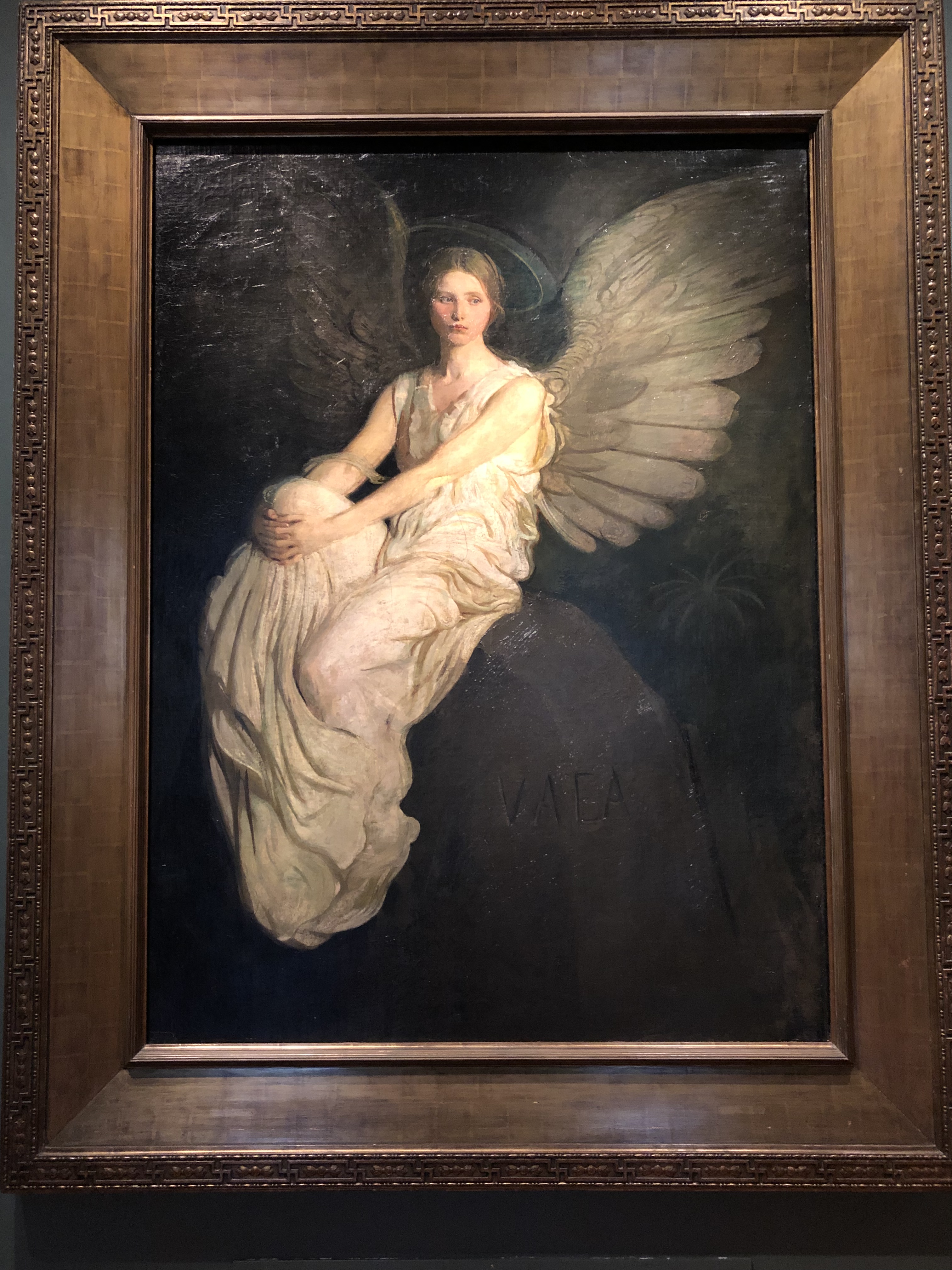
I have loaded the playlist, and gone to visit the angels. Bring on the thieves.

Stevenson Memorial by Abbott Handerson Thayer

Hurt, Pain, and Agony (swimming and writing)

At the end of a day at work, I had a low grade fever on Monday, and so I had a choice to make—go home or go to the gym.

When I was in high school and college, I swam competitively. I was a good swimmer, not a great one, but I had made myself a better one and took pride in the effort. I enjoyed practice, in spite of the fact that practice hurt. The predominant swim coach of my youth was James “Doc” Counsilman. He prescribed—preached, really—the progression of hurt, pain, and agony as the single lane toward improvement. I gobbled up his Science of Swimming, and pushed myself into agony and better results. I never became an elite swimmer. I came to the sport too late and without the technical proficiency needed to excel beyond my willingness to work to the point of physical failure, but I did become a much better swimmer.

I hated to miss practice. I went when I had a fever. I went my my shoulders felt shredded. I went if I had the flu. I pushed my body hard enough to compromise my immune system, and plunged my body into a staph infection that ravaged me for a month. I kept at it.

I briefly considered quitting when I was in college. While Swarthmore was a place to be committed to study, most of the swimmers on the team joined to be fit, or to explore the sport. I was maniacal, and therefore, felt more often than not alone on the team. I missed the hard driven team of my high school. Also, I was not used to being out ahead of everyone else. This is not a boast, just the nature of the circumstance. There were other teams on which I would have not made the cut. I knew that.

I rejoined the team, refocused my effort, and pushed on.

So, I felt under the weather on a Monday. Let me put this into context. Nearly every day at my job, someone calls out sick; I have enough free time in my schedule that I am able to cover other people’s classes. I do not understand being sick and missing work. I know it happens—I have had migraines, back spasms, and bronchitis in the past fifteen years. I had knee surgery fifteen years ago (torn meniscus). I get it. Illness happens. I admit to being stupidly judgmental about this.

For many recent years, I worked seven day weeks. If I got sick, my body, as if on cue, waited until I had a break in the school year. And then, I somehow avoided being ill on Sunday; I worked for a church. It just happened that way. The little stuff—a headache, some intestinal discomfort, a low fever—was just part of the day. Buddha might have said that desire causes suffering, but it seemed to me that a small amount of suffering was simply part of life. Swimming had taught me that.

I claim that swimming taught me that lesson, but I am not so sure, because there were—are—aspects of my life that suffering has upended. While I could fight through a workout, or endure lengthy stretches of difficulty in a relationship or job (perhaps endure too willingly and for too long), when it came to my writing, I backed away from the agony. Agony for writers, I think, is a bit different from agony for swimmers. Muscle pain and, what? brain pain—I hesitate to call it heart pain—are different creatures. Physical pain ends—for most. Certainly the kind of agony I courted in the pool stayed mainly in the pool, at least until my knees needed surgery. Mental pain permeates the day—you can stop writing and still feel the agony of an unsuccessful scene—anything less than glowing prose. And when even the good writing does not find a reader, then the agony feels for naught.

Writing does not quantify the same way swimming does. More writing does not necessarily guarantee better writing (There is a correlation, but it’s more slippery) the way that more (more yards, more effort) swimming leads to faster times. Nor does it compare well with work, where improvement and accomplishment have monetary results. Does a higher salary indicate a job better done—or for that matter a more valuable job? I guess that depends on how you ascribe value.

Maybe because good writing—whatever that means—is dependent on the reader, if one seeks to write well, one either needs a fairly reliable ability to dissociate from the absolute creative process and read one’s own work as a stranger might, or have a reliable enough reader to sort through her—or his—work. But more than that, one has to engage the work almost without a thought for oneself. There is a second dissociation—and this is like swimming: one must be attuned to the pain and the pain cannot matter.

For instance—and this is an insight into my judgmental brain—I described a character whose skin turned browner while he worked for weeks and months outside as “brown as a berry.” This is an old cliche, and one that I first overheard in the British Virgin Islands while sitting at dinner. Some old man—I was 12 or 13, everyone was “old”—described me in his British accent as “brown as a berry.” I did not know then that it was a cliche, and the phrase stuck, because my experience of berries tended to berries of red and blue and possibly black—the blackberries that grew wild on bushes near my home. It felt foreign and I enjoyed that the phrase had some unexplained—for then—British origins. The phrase dropped into my work, and I knew it was hackneyed when I wrote it—a minor disaster, I suck as a writer—and when I revised, I took it out. I knew that I would. But I had to move on while I was writing, I could not spend five minutes, let alone twenty-five, figuring out some turn of phrase. In the end, I let it be simple: “his arms turned brown by the sun.”

Does that sound like agony? Sucking as a writer is agony. The realization that my work would not please everyone—and that I still had to do the work—was not easy to accept; secretly, I believe that the whole point of writing workshops is to learn to ignore critiques as much as to learn from them. How does one know when the work is “not good”? Or, for that matter, “good”? Rickie Nelson sang, “You can’t please everyone, so you’ve got to please yourself” (more hackneyed advice from my childhood). There is agony in those questions.

And so, on Monday, I headed to the gym. I shortened my workout, burning down 500 calories in 23 minutes. It was shorter, not less arduous. I was in various forms of discomfort through the first half of the week—my insides disagreed with something I ate. I kept at the gym anyway. And then—always and then—I read the first chapter of my novel out loud at an open reading on Friday, and sent off the first set of query letters to agents on Saturday. The book, for now, is done. I wrote this. And I started the next book.

I am prepared for the work, even if it hurts, even if I am in agony. I have trained for this all my life.