Dreamscapes

I had that dream again.

I grew up at a time when nuclear annihilation was more imminently possible.  It was an ongoing theme of movies, television shows, and books. My favorite movie Dr. Strangelove is, at its heart, a move about nuclear annihilation caused by a series of preposterous missteps. The main gist of Strangelove, or Fail Safe, or On the Beach, or The Planet of the Apes was not just how easily self-inflicted catastrophe could occur—there was no complex multi-layered process that led to disaster, because what’s more important in an emergency: expedience or caution? Expedience and doom always win the battle—but how ill-conceived the consequences of nuclear war were, how little those in power understood the horror they could unleash.

That was the background noise of my childhood. My parents insulated me from the tumult of the Vietnam War, the Civil Rights movement, and the spirit of protest in the late 1960’s (news did not become a facet of our conversations until we reached late adolescence); and yet the horror of nuclear war was omnipresent. It permeated my dreams.

I dreamed of fireballs and explosions, desolate plains and skeletal cities. I was incinerated, eviscerated, desiccated, mutilated. I knew early on that “If you die in your sleep, then you die in real life,” was a lie. I died. Lots. What began as nightmares turned into storyscapes—choose your own post-apocalyptic adventures of the subconscious.  My journeys through strange charred landscapes became a nightly feature of my dreams. As I grew older and the threat of Nuclear War lessened, my dreamscape spread to other, less spare territory. My dreams flowered and matured until they included quantum physics, white rabbits, and characters that would inhabit my writing.

Two nights ago I dreamed that my daughter and I were outside when an ICBM was launched. It was launched from a silo in our city. It rose into the sky. I don’t know why I felt this way, but in the dream I knew that it was not intended for any target. I knew it was meant to explode in the air above us. I turned away, but my daughter could not help but watch. The blast seared the sky, it turned the blue cloudless sky into the white hot center of the sun. I knew she would be blinded. I knew the radiation would turn her skin—she wore an open backed dress—to a mass of burns. I knew we were all going to die, if not immediately, then soon from the awful lingering effects of the blast.

We walked into a destroyed structure. We walked through dust that washed over our shoes. Another man was in the structure. All our shoes began to disintegrate; the radioactive detritus eroded the leather of our shoes almost instantly.

I could not conceive why the bomb was detonated over the city. Why would our generals, our president, decide to destroy a part of our country?

I had that dream again.

What I Watched About Love–Two For the Road

What Marriage Means

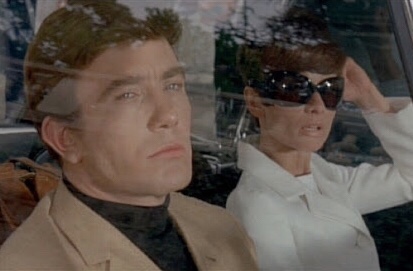
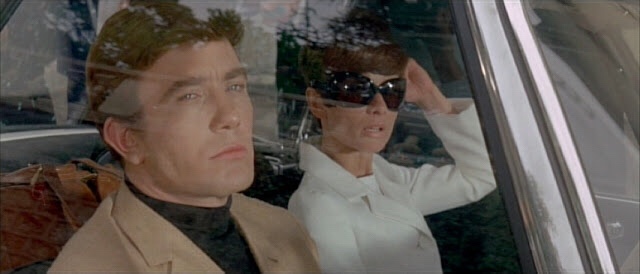
Two for the Road (1967)

Directed by Stanley Donen

Starring Audrey Hepburn as Joanna Wallace and Albert Finney as Mark Wallace

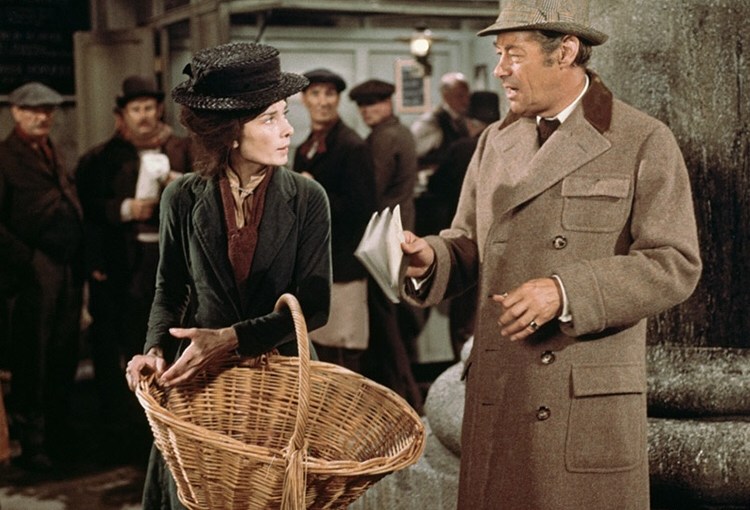
I remember seeing Two for the Road before I was 12, and that cannot be right. I was probably 15. I was delighted by the editing—how it jumped back and forth between the five different time periods, from scene to scene and back again. It was like nothing I had seen before, and it made perfect sense to me. And the dialogue was witty to the point of casual cruelty. It was familiar to me because there was a premium on sharp elbows at dinner table conversation in my family. As the boys became old enough to be no longer seen and not heard, we entered conversations by jousting our way in. Later on in life, a woman I was dating asked how we could be so mean to each other. We had learned it early, and it stuck.

More than anything else this one struck deep because of Audrey Hepburn’s performance. She was 37 when this movie came out, an she played a character who ages from about 20 to 30. Finney is meant to be older than her and was 7 years her junior. Besides the simple matter of years, her transformation is the more amazing of the two. She is both more hopeful and more sad over the course of her character’s aging. Finney remains more static, which is one facet of his masculine character.

A note here: I had crushes on a number of actresses when I was younger. I was unable to distinguish between the characters and the people playing the characters. And I only knew the actresses from a limited number of roles. I had no idea that Catherine Deneuve starred in a number of French films, many of which were far from chaste. I had seen none of Audrey Hepburn’s early work (Roman Holiday, Sabrina). There was simply no way to track down the movies. And besides small notices in Time Magazine, I knew nothing of their lives. I watched according to what was on television, and developed infatuations at the whims of unseen programmers.

At the beginning of Two for the Road the Wallaces, now ten years into their marriage, drive past a bride and groom in a car after their wedding ceremony. “They don’t look very happy,” Joanna remarks. “Why should they? They just got married,” Mark answers. The movie dances through their relationship, specifically tracing a series of five car trips through the French countryside as they travel from the north to the south of France. Their banter is breezy, charming, sarcastic, and bitter, building to crescendos of “I love you” before tumbling back into doubt and resentment. Marriage seems like an unresolvable puzzle, especially to Mark, and toward the end of the movie he asks Joanna, “What can’t I accept?” She answers, “That we’re a fixture. That we’re married.”

Hepburn glows when she looks lovingly at Finney. This must be the look every man wishes to receive from the woman he loves. She captures the look at several stages of the development of Joanna’s feelings toward Mark: from naive hopefulness through the first trembling of doubt, to disdainful resignation, and finally to generous acceptance. Did I understand the complexity of her feelings? Not at all, but I recognized the continuity, and as much as the look, how could a man not want to be loved through all his difficulty.

Growing up, I had no idea how relationships worked. My parents’ marriage was simply a fact and a mystery to me. I learned little about love and romance watching them. Nor were we close to my aunts and uncles and their families or the families in our neighborhood. I could not gauge how families were happy or unhappy. And this was never discussed at home. The only thing I knew was me, and I knew, and was told, that I was difficult. I may not have possessed Mark’s arrogance, but I understood early on that men in particular acted one way and felt another, and that to display doubt was nearly unforgivable. Or so I felt taught, and so I acted. I knew I harbored secret flaws—or not such secret flaws—and there was only one person who was going to love me in spite of them, and maybe even because of them.

At the end of the movie, Joanna tells Mark, “But at least you’re not a bad tempered, disorganized, conceited failure any more. You’re a bad tempered, disorganized, conceited success.” He isn’t angry or upset by her comment. He knows it, and ten years into their relationship, he is happy not to keep his secret from her. She is willing, even happy, to keep it with him.

I wonder now how the movie would play if the roles were reversed, if Joanna had been the arrogant architect, and Mark had been the more steady presence. I wonder what less traditional role I may have played had I seen that possibility earlier in life. But as Joanna tells Mark as he asks her his “What if” questions, she answers “I don’t know.” She has learned to live with the uncertainty. I know I have to accept what I am, which is something I struggled with as a teenager, then as an adult. I have begun to accept the uncertainty. And some of the flaws. And I have stopped expecting one person, even one person like Audrey Hepburn, to keep that secret.

What I Watched About Love—The April Fools

What a Kiss Means

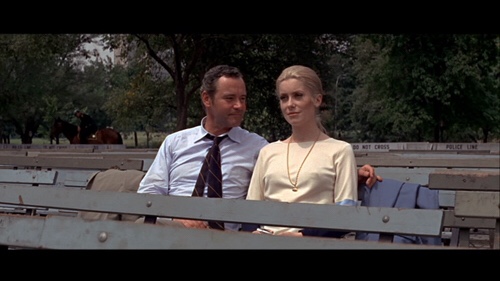
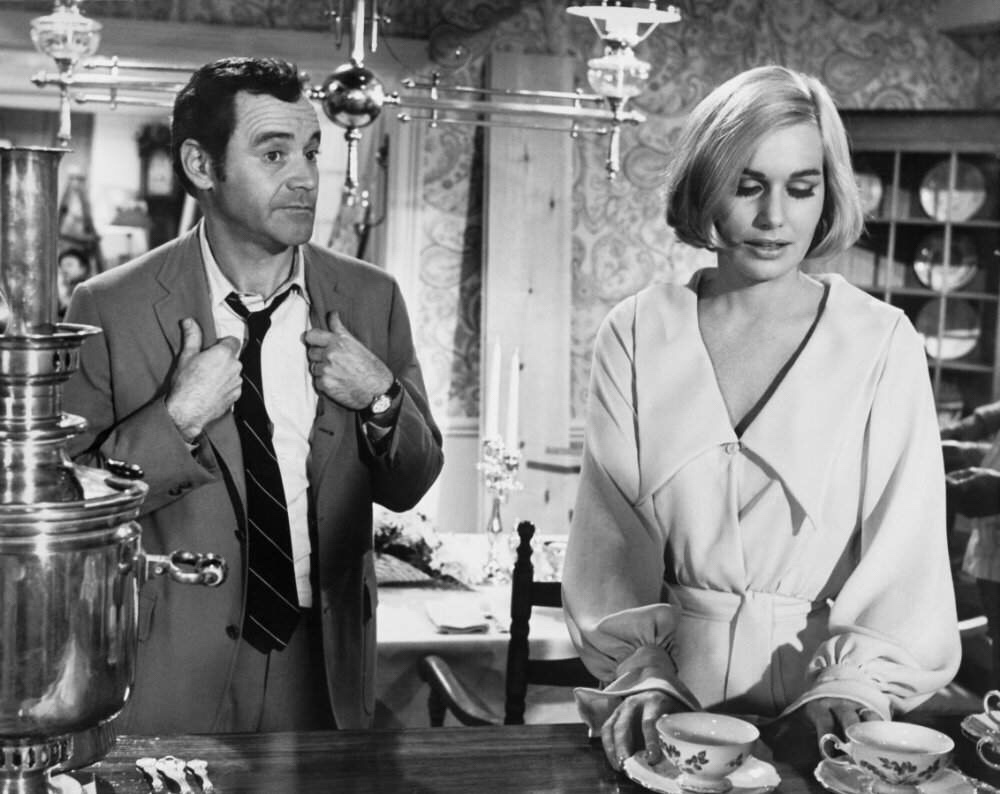
The April Fools (1969)

Directed by Stuart Rosenberg

Starring Catherine Deneuve and Jack Lemmon

I first saw this movie on a weeknight—I recall it as either a Monday or Tuesday night—in the “family” room, the room where the boys watched television. I have no idea where my brothers were. I was probably 14 when I saw this. I was interested in girls, but they flummoxed me. I knew from reading Desmond Morris’ The Naked Ape what strange magic our bodies made for sex, and the idea of sexuality absolutely intrigued me. However, my shyness made the possibility of kissing a girl as unlikely as walking on the surface of the moon. Someone would do it, probably never me.

The April Fools is the story of the Frog and the Princess, with Lemmon playing the frog and Deneuve the princess. Lemmon’s character, Howard Brubaker, has just received a promotion, and with it an invitation to the upper class social scene, represented by a party thrown by his employer Ted Gunther, played by Peter Lawford (a member of the extended Rat Pack). Brubaker does not fit in, though he tries. He wears the wrong tie and cannot talk to anyone, especially not the women. He plays with the art. And Lemmon’s performance is pure nebbish—that’s his charm. Lemmon was entirely relatable to this shy 14 year old boy.

Deneuve’s character, named Catherine Gunther (the boss’s wife), is sad and no longer fits in a society built on attraction and platitude. Brubaker catches her eye because he is unpolished. Even though he can be inept, he is genuine. She is convinced to give him a try when they spend a night in the company of a quirky couple, the Greenlaws, played by Myrna Loy and Charles Boyer, who live in a castle located somewhere in New York City. She tells fortunes. He practices fencing. They inspire Catherine to seek out a more enduring love. She chooses Brubaker.

What a fairy tale. Deneuve is icily beautiful—as perfect as Lemmon is imperfect. She kisses Brubaker, and says it is the first time that she initiated a kiss. And she kisses him. The kissing in The April Fools is chaste—no open mouth osculation. I did no know that when I first saw it. I had stars in my eyes. If she would kiss him, maybe there is a chance for me. Not only does she kiss him, but in the span of 24 hours they forge something like a relationship—they run out of the party, have an adventure in the city, and after some brief contretemps, fly to Paris together.

It should be noted that both Brubaker and Catherine are married. They leave their spouses, and the rest of their world’s behind. Ted Gunther is a smoothie who hits on other women and depends on his wife’s willingness to ignore his behavior. Sally Kellerman (an early heartthrob because of her part in a Star Trek episode) plays Brubaker’s wife Phyllis as distant and focused on her own projects. She talks at, not with, her husband and rushes off the phone to whatever actually holds her interest.

These characters are flat, as are all of the secondary characters male and female.Phyllis is bulletproof, but she would have to be—there is no place for women in this world other than as objects of desire. Brubaker’s male compatriots are unhappy as well, leading lives of quiet and resigned desperation. The Gunther crowd is rich and chic; they make easy targets. They have high art pretensions and echo Tom Wolfe’s social critique of just this crowd. I know that now, at 14 they all just seemed like phonies: mean empty vessels masquerading as people.

All except for the magical Loy and Boyer, whose wealth does not stigmatize them so much as separate them from the herd. They spend the days asleep, because of all the bad things that happen in the sun. There is no explanation given for their presence, the same way that fairy godmothers have no explanation in fairy tales. I longed for quirky friends, even as a youth. My classmates talked about Happy Days and the Pittsburgh Pirates. I had other, more shadowy interests, and no one to share them with.

The April Fools implies that happiness derived from love is so rare that it will require a rule-breaking intercession to achieve it. What a strange foundation on which to build an idea of love, and at 14, that is what I was doing. And to think that a kiss ought to lead to a trip to Paris and a new life. How many kisses would come that did not bear that freight, that betrayed that wish?

What I Watched About Love

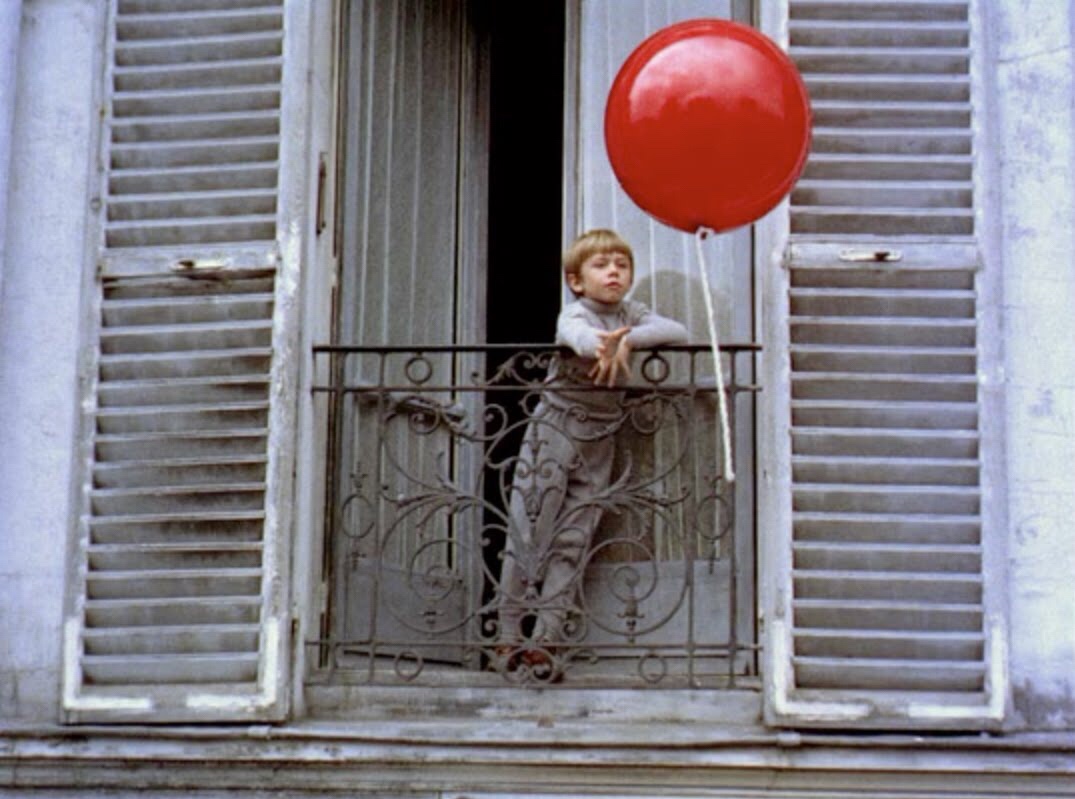
I started watching movies on television. Whether Saturday afternoon monster movies, short films on the CBS Children’s Film Festival with Kukla Fran and Ollie, Sunday afternoon matinees, movies of the week on Tuesday nights, Sunday night movies, or Friday night late shows, I watched movies. The movies of my early life ranged from img_0274-1The Red Balloon to The Great Race, from The House of Frankenstein to The Trouble with Angels. I first saw Lawrence of Arabia on a 19-inch screen. I first watched the Wizard of Oz on a black and white television.
My high school, a boarding school, had movies boys could love (James Bond, Juggernaut, and Sky Riders) on Saturday nights. What I most remember are Sundays after church, when I watched the Flash Gordon serials in the tv room of the dorm. My college had a “popular” film series on Friday and Saturday nights—I was recruited to join the selection team because I had seen Enter the Dragon, and members could only nominate films they had seen to add to the series—and an art series on a weeknight. I can admit that I rarely went to the art films, but can remember classmates going on about Renoir’s Beauty and the Beast. I took a cinema class in the spring of my junior year, and remember listing Star Wars and Airport among my favorite movies. And then I saw Persona, Masculine/Feminin, Providence, Meshes of an Afternoon, Breathless, img_0275Un Chien Andalou, and Birth of a Nation. Kaori Kitao used a projector to screen the films, and we watched and re-watched scenes for hours on Wednesday afternoons. Our three hour class often ran six hours.

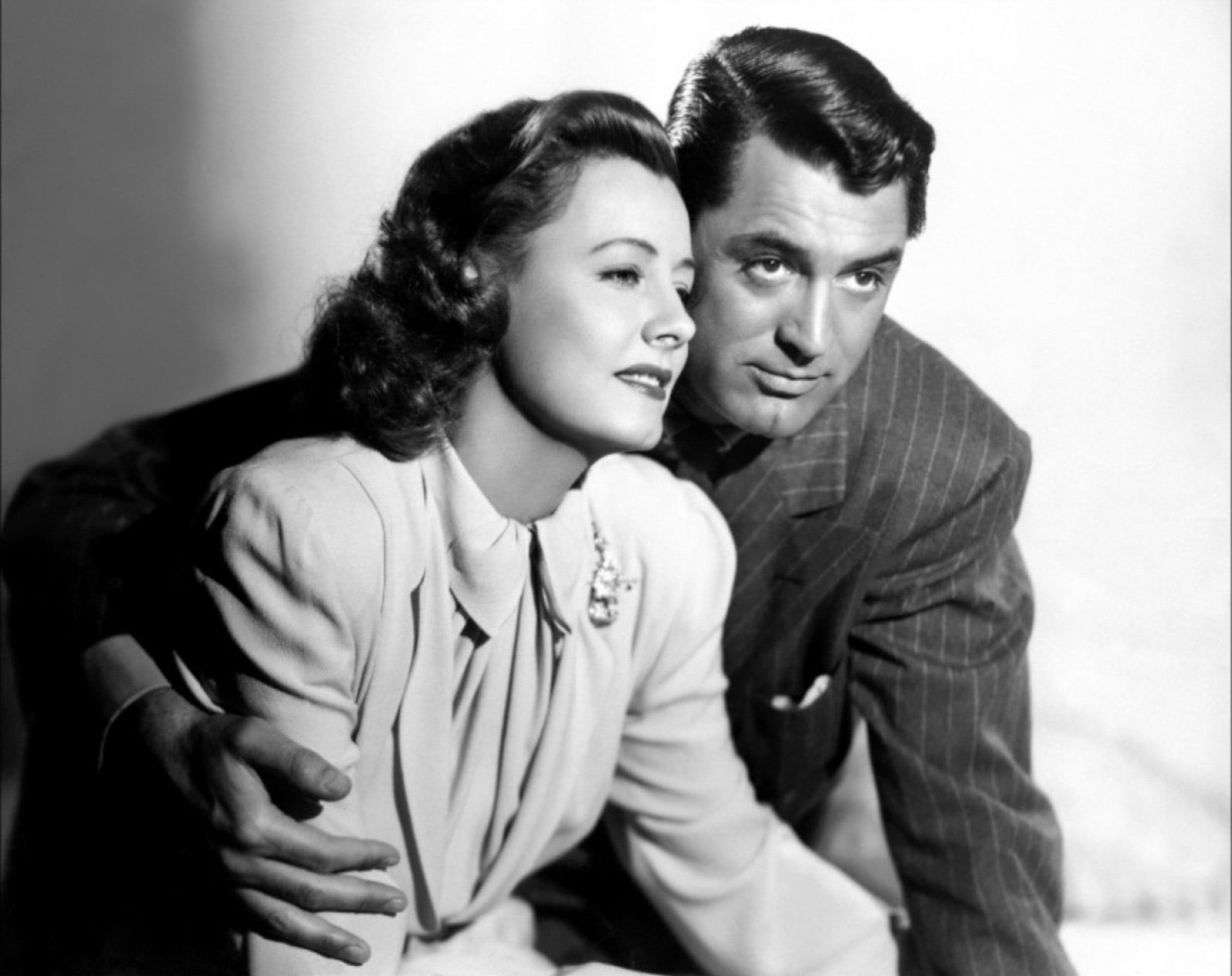
In my twenties, my girlfriend bought me a vcr, and between rentals, late-night movies on Philadelphia’s Channel 29, the Ritz Theater, and movies at the TLA, I filled in what I had missed. I saw Bringing Up Baby, The Searchers, Some Like It Hot, Red River, It Happened One Night, Flying Down to Rio, Koyaanisqatsi, Duck Soup, Ran, The Thin Man, Vagabond, Snow White, Freaks, and Claire’s Knee. I watched two or three movies a day. Some movies I watched as many as a dozen times, and there are some, Billy Wilder’s The Apartment and Wim Wenders’s Paris, Texas come to mind, that I still have not seen and, still, want to see. I watched nearly all of the Marx Brothers, Ingmar Bergman, Akira Kurosawa, Howard Hawks, and Jacques Tourneur. I liked Cary Grant, Katharine Hepburn, Robert img_0276Mitchum, Rosalind Russell, Humphrey Bogart, Irene Dunne, Toshiro Mifune, Myrna Loy, Fred Astaire,  and Charlie Chaplin.
During this time I started writing a novel that I would abandon later. In that process, I went to graduate school, and then started reading books the same way I had watched movies. My walls are lined with bookcases full of the books I read while I found my way as a writer: Charles Dickens, Virginia Woolf, Gabriel Garcia Marquez, Italo Calvino, Lorrie Moore. Hundreds more. Nonetheless, given two hours and a good movie, I still get lost in film.

Movies shaped me. My parents did not dispense life lessons, short of “don’t bug the grown ups.” My brothers and I lived fairly privileged and independent lives. My parents expected us to self-entertain, and we lived where we could do exactly that. Our play ranged over many square miles of field and forest. When we got bicycles, we rode as far as our will and muscle would take us. At home we ate dinner together then went to separate rooms to watch television (when we did watch television). Only event movies drew us into a single room. There were times when I was a teenager that my father and I would watch the same movie in different rooms, and at the end, my father would say, “That was good, wasn’t it.”
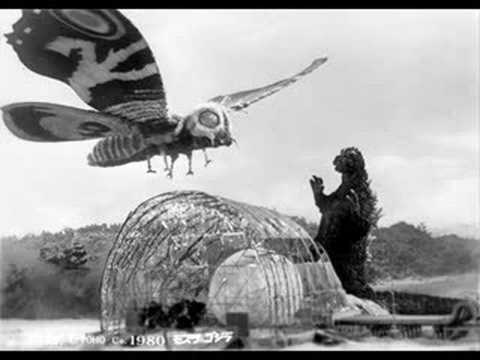
godzilla and mothraMy father loved movies. He shared his love of old horror movies with us, and we did watch Frankenstein and Godzilla together. Back then, Frankenstein was not played often on television, and one UHF channel featured a week of Toho giant monster films. These, along with the Wizard of Oz or Lawrence of Arabia, were event movies. I learned from watching movies that my father also had a soft spot, enjoying The Trouble with Angels and Agnes of God, but enjoying them alone and sharing his enjoyment after the fact. If I did not learn to watch movies alone from him, I certainly continued doing so, never feeling the need for company either when watching at home or in the theater.

Without much direct advice about how to live life, I learned from what teachers I could find. Mr. O’Connor, my eighth grade history teacher, taught me not to swear, and that police work was valuable; he was a former police officer. Mrs. Vandergrift, my fifth grade homeroom teacher, taught me about kindness and to value my academic achievements. But as far as the calculus of adult life, I learned from literature and from movies. Literature, like The Catcher in the Rye or Billy Budd, taught me about the pitfalls of adult life. Perhaps it is not so strange there there is very little in literature that reassuringly implies, “Everything is going to be all right.” There was even less in the literature I read for school about love. For love, I turned to film, or rather, film found me. I was a willing student.

The movies I will write about are not my favorite movies, with one exception. They are movies that stayed with me, like shadowy guides, for years. I feel their influence even now, in some cases I fight against them, the way one might struggle with a parent long after he or she has died. We are never truly done with the past. And so, I will revisit these films, neither to praise them nor to bury them, but to think about them and what I learned from them about love.

Are these the best depictions of love in the movies? Hardly. Nor are they the truest depictions. They simply stood out to me. Beyond that I had only two simple rules for their selection. First, I had to see each one first on television. All but one of these I watched alone the first time I saw it, with the exception being My Fair Lady, an event movie to be sure. Second I had to see each before I was 17, before I became an adult, and before I said the words “I love you” to a woman. Whether I like it or not, every time I have said those words, from the time I was 17 until now, when I am 57, “I love you” is an echo of something I saw in these films. For better and for worse.

The Films

The April Fools

Two for the Road

Hotel

Petulia

What’s Up Doc

My Fair Lady

Dr. Strangelove

Thanksgiving Dinners

The holiday season is upon us, and it is a time we gather with people. Well, to be honest, I gather with people year round. For me, holidays are more a way point, a place to aim for during the journey, and a time to take stock and reflect. When I look backward, I can see the faces of friends who have gathered at my table, at all my tables, and not just at the end of the year festivities. There have been Bastille Day dinners, and Friday night dinners, lobster feasts, and barbecues, as well as Thanksgiving meals. I don’t know that I ever really expected all those people I have cooked for to remain at the table year after year, but in reflection there they go, drifting off into new arrangements, seated around distant tables.

When I think about the holiday dinners I have made and attended, while the courses have remained the same, the people at the table have changed nearly every single year. Of course there is the family—my brothers, my mother, and while he was still alive, my father. My own family, the family of choice, has shifted over the years. Both my brothers are at or just past twenty year marriages and their wives, and then their children have held stable seats at our gatherings, but I have brought four or five different friends or partners or, in one case, wife to holiday meals. I’m not sure what my family thinks of this. I’m sure they were reasonably pleased that the revolving door had stopped spinning when I married, but then that relationship ended as well.

And before this all seems too mawkish and wistful, the holiday table has never been a place of “what was,” or “what if,” but almost always “what is.” And maybe because nostalgia, or its future looking younger cousin, desire, have provided no overwhelming gravity to either pull me back or towards some land other than the one in which I reside, holidays have not had for me that tinge of regret or loss. Still, I am cognizant of the changing faces, and I wonder where they have gone, and also wonder who might be at the table this year, or the next, or the next.

The only twinge I feel is that I do not think that this is what other people feel. Do other people have the weight of memory and expectation to draw them somewhere? What must that be like? What must it be like to spend twenty or more years gathered with the same people? I feel sometimes as if I am missing out on something, that I lack some key that will unlock a door to this experience.

And yet. And yet there is a simple untaintable joy in seeing new faces, even in imaging where the old ones may now be seated. I picture tables in rooms that I have never seen, with gatherings peopled by a mix of friends and strangers, and in some inexplicable way, I am there too.

The Man in the Basement

Francis crept back into the basement. It was not his basement. It belonged to a woman he had courted in his youth, or in his middle age; he could not remember which. He had been creeping into the basement every night for as long as he could remember, but there must have been a time when he had not. He could not remember such a time.

The basement was simple and stark. He had entered through the steps that opened onto the driveway at the side of the house. In the far corner of the space a wooden staircase proceeded up into the house with a series of three short flights of steps, joined by right angles; his bed was under those stairs. It was a small bed, and the bedding was the brightly colored sheets of a child’s bed, but faded with time and use. He looked at the bed and tonight it seemed smaller than it ever had before. Had the bed been larger once, he thought? Had it occupied some other place in the basement? Perhaps, but he could not imagine that place.

As he got into the bed, he began to wonder what he was doing there. He did, after all, have his own home. His daughters had retired to their own beds. His pets: one large dog–a cross between an Irish Wolfhound and a Great Dane–and three small cats; would wait for him to return in the morning. His bed was made, and he dutifully washed the sheets every week, even though he had not slept there for longer than he could remember. “Shouldn’t I be at home?” He wondered. 

He tried to roll over in the small bed. Nothing he did seemed to make sense anymore. He thought of his daughters, at home alone. He knew there was a family living in the rooms above where he slept each night, but they were not his family, no matter what fantasy he had once had about them. Perhaps it had been more than a fantasy. Perhaps he had once imagined a place in that home with a bevy of beautiful daughters and handsome suitors, and a place permanently set for him at the head of the table. He tried to recall when he had started slinking into the basement late at night, and his memory was a wash of grays and browns. This, he thought, is not where I should be.

He got out of the bed and gathered his things. He tried to do it without switching on the light. He could not find his glasses. Maybe they had fallen between the mattress and the wall. He tried to make no noise, cognizant of the people who lived in the house above him. I must not disturb them, he thought.

Then a light flicked on, and one young woman bounded down the stairs. “I’m sorry if I disturbed you,” Francis offered.

“It’s okay,” answered the young woman, “we knew you were here.” 

“I hope I didn’t bother you,” said Francis.

“No. You’re fine,” answered the young woman, “just don’t try to get to mom.”

“No, of course not.” Francis held up his bag, “it’s time for me to go home.”

“Wait,” declared the young woman, who then ushered her sisters down the stairs. “He’s going,” she told them.

The basement now seemed full of beautiful young women. They were dressed in sweat pants and t-shirts, dressed for bed in the house above the basement. “Don’t leave yet,” one of them said, “we have something for you.”

They brought down large baking sheets covered with food. There were cookies and candied fruits. One of the younger women knew that Francis loved their candied strawberries, and offered them to him. “Take as much as you like,” she said.

One of the young women wept. He was going; he had been there so long.

As the women gathered, more lights were turned on in the basement, which no longer seemed as cramped and contained to Francis. Rooms upon rooms seemed to open up. There were men in brown tweed jackets and loafers, and the family he had imagined all these years teemed throughout the rooms. There were daughters and granddaughters, and young men for each as they were wished. Only one thing was missing, and he knew not to look for her.

Two floors above the gathering, the mother got out of her shower, toweled off, and clapped powder over her arms and legs. “Surely this must be over,” she thought. She listened to the quiet commotion, and grew mildly annoyed. But she was tired. She had, after all, raised her family and prepared them for what came next. She fell asleep. She dreamed of a house–some nights it was in the desert, some nights it was in the mountains, other nights it was on an island surrounded by the green northern sea. It was a house without a basement, into which men might come to fix the water heater or garbage disposal, and then leave. She dreamed on through the night and into morning, and when the sun rise and she woke, she stripped the little bed in the basement for the last time.

Exit 7A


I have traveled along the New Jersey Turnpike many times. When I was a kid, my parents would take us to New York to visit their parents. When I was in high school I would travel to swim meets with my school. In college, I went to Great Adventure with a collection of friends. After college, I had a girlfriend who lived in Freehold, and drove there and back  to visit her in my first car. I later took dates to Great Adventure. Most recently, I headed north with my (now ex-) wife and family to visit her family in Ocean Grove, NJ. Today, I took the familiar exit 7A to attend a workshop on the Jersey Shore. I can recall all or parts of all the trips I made along this highway, but I didn’t make it so often that it became rote. I remember leaving from Steve’s home out toward Exton, along with Chris, Darius, and Julie. I remember driving to, and then from Ginny’s home in Freehold. I remember the warm spring air across snow plowed into mounds in the Lawrenceville gym parking lot. I remember riding the Ferris wheel with Marie. I remember missing the turn onto Rte 18. I remember the radio signal fading out from WIP close to where the NJ State Police building was along the turnpike. I can remember feeling happy, sad, angry, jealous, confused, frustrated, thrilled, elated, confident–all along this same stretch of road.

As I drive along this road, I feel as if I am accompanied by several versions of myself, each one traveling the same path to different destinations, either alone or in the company of friends. I wonder what habits have shaped my travel, and me, and how the habits formed over time. I wonder what it would be like to wander over this path–and a dozen, a thousand other paths–for the first time. “You’ve analyzed this enough for both of us,” someone once told me. Of all my habits, analyzing–what I will call wondering or remembering or reveling or pondering or considering or questioning or figuring or honoring or respecting or holding or living–is perhaps my most ingrained habit. It isn’t second nature; it is first nature. What would it be like to just do–either guided by feelings or by someone else’s direction–without thinking?

I once used the metaphor of a path in the brain to demonstrate how memories are made and habits formed. I told students to imagine someone walking through woods over and over until a dirt path had been worn into the underbrush. walk along that path enough and it becomes more like a rut. As soon as the path takes hold, it begins to seem like there is only one way through the woods. I said that once a neural pathway had forms in the brain, it becomes a little like that deep hewn path, and that will power and determination alone are insufficient to the task of changing it. I was trying to disabuse my students of the notion that addictions or mental illnesses like depression could be combatted by force of will alone–that there is no shame in seeking help. I was also trying to show how deeply ingrained habits and patterns in our lives could become.

Maybe this kind of thought is simply a habit for me. Maybe others simply do not need to reflect and wonder. I don’t know what that would be like. I am reading William Finnegan’s Barbarian Days, and he writes about being a young surfer and learning to surf a particular break, and how surfers–the epitome of “go with the flow”–patiently learn the dynamics of each place they surf. They intimately learn the combinations of wind, tide, and depth. And then make surfing seem effortless. Thinking is effortless for me–not easy, to be sure–but something that comes as naturally as breathing or eating. I barely need to daydream, because the visions, the thoughts, the fleeting glimpses and sometimes lengthy gazes into the breaks of the day come involuntarily.


Play time

I’ve been sucked in. It’s true. I have played an inordinate amount of Pokemon Go, although “play” seems like an exaggeration, since all that the playing involves is taking walks and swiping or tapping incessantly on my phone screen. Strategy? Pidgies: collect them, evolve them with a lucky egg when you’re ready to level up (but only in the 20+ levels). The game is gleefully simple (and relatively stupid): collect stuff, collect more stuff, and then collect even more stuff. The player is “rewarded” with greater strength and ability as he or she “levels up,” but let’s be honest: the stuff and the rewards are imaginary; the only thing real is the time one spends playing. So, why do we play?I explained the old rat-reward experiment to my daughter while we watched people paw at their screens. B.F. Skinner showed in an experiment with rats that variable interval reinforcement leads to a higher rate of response than constant rate of reinforcement, and that both were significantly more effective than punishment (which, it turns out, swiftly ends the impulse to work—or play). Well that’s a lot of mumbo jumbo. Here’s the skinny: rats work (or play, for the purposes of game play) harder when rewarded; they get turned off by punishment; and they work hardest and longest when the rewards come consistently but unpredictably. Surely, rat brains and human brains are different, but just try to run such an experiment on people. Wait, let’s track all those Pokemon Go players and see what that tells us about how they play.

Short story long, we are built to be frustrated. The brain likes rewards (and hates punishments), but only so often—too many and it gets bored. Of course our complicated brains find connections and correlations around causes and consequences. So, it’s not a surprise when my brain gets caught up in figuring out if I received that reward for bringing my girlfriend flowers, finishing my annual report, or catching a wild Gyarados, and that’s just if I got a reward for doing something in the first place. My rat brain tells me: just keep working and something will come.

The cool thing about being human (and not a rat pressing a bar in a cage) is that the rewards come in all shapes and sizes—M&Ms, Mazda Miatas, sailing ships in bottles, shoes. We can turn those cash/work rewards into whatever we like. And I will not overlook the reward of the view out my office window, or the company I keep at work, or at home. The world seems designed to reward us—all these surprises. The Clash sings, “I fought the law!” That’s right brothers!

I do believe–and when I started writing this last week (before I reminded myself of all the rewards that I have strewn before me, like a reverse trail of breadcrumbs into the future) I believed it a little more—that games like Pokemon Go offer a fairly consistent diet of rewards, and that in spite of their frustrations (and because of them too), they are bright little respites from the “thousand shocks that flesh is heir to.” If we lead, as Thoreau asserts, “lives of quiet desperation,” we lead them because too often we think that our human brains need punishments to convince and cajole them into agreement or good behavior or harder work. We beat ourselves and each other like mules bound to work until they stop. We preach about “tough love” and manly determination as values that have meaningful positive consequences. My rat brain says, “I’m done.” My human brain says, “No thank you. I’m off to play.”


Summer Time

Summer unsettles me. For the last three weeks I walked through my days drunk with free time, having gone from the manic pace of the end of the school year (exams and graduation) and the beginning of the summer Sunday School program, to a single (part time) job. The manic pace is the pace of the week from September through June. I put in six and seven day work weeks as a matter of course. I am fortunate that some of those days last only a few hours, but there is always something work-related on my schedule. That is the wonder of working what amounts to three part-time jobs, none of which is really part-time. When I add my daughter, who stays with me three days out of seven, into the mix, I really have no trouble getting from waking up to falling asleep with more than an hour here or there to sit idle.

As busy as I am, my schedule gives the day a durable structure. It does not feel so much like a limit on my time, as much as something that opens specific spaces that are “not work” in each day. During the school year, I sip my idle time, and cherish it as something special. I fit in an hour of writing, and it serves as a counterweight to the all the rest of the day’s efforts.

Then comes summer. My schedule opens up, and idle time drinks me down in one single swallow. I can watch six hours of news at the drop of a hat, or nap while old, favorite movies play on Turner Classic Movies, or stand in the kitchen and pet the cat who likes to eat on the windowsill while being petted. The three hours it takes for the dishwasher to sanitize bottles passes while I walk for gelato; I could eat gelato for days. Work, work of any sort, gets in the way of lazy naps. Licking a postage stamp would take too much effort. Small balls of cat fur collect on the carpet; I give them names.

What happened to the grand plans? Wasn’t there a romance I was going to undertake? Don’t I have the outline of a novel festering somewhere? When will I install a properly working garbage disposal? I have scads of miles built up on Southwest, aren’t there friends I haven’t visited in years?

Nothing. Inertia wraps its warm comfortable fingers around my wrists, and holds me tight with the insistence of a dirty secret: I love to be idle. Nothing to do is my idea of heaven, and I can do it with sluggish zeal. Do less! Do less! Forsake your obligations and practice closing your eyes! This is not “genius at work” time, unless I am the genius of laggardly living.

But then I do this, I write about it, and the spell is broken. How did I forget words, the deeper determined secret that I tried to deny, and which surface from even this short (and all too long) dormant time and claim me? I may not be the self-ascribed martinet of the school year and yet I feel compelled by word and dream to get back to it. And so I do.

Loss and Connection

Elizabeth Bishop’s “One Art” is a tart response to the steady procession out the door.  First she loses keys, then houses, then cities, two rivers, and a continent.  She writes, “Practice losing farther, losing faster.” And finally, “you (the joking voice, a gesture I love).” And that seems about the right order: keys, houses, cities, rivers, continents, you.

I have to admit that I’ve lost my fair share of people along the way. I have no friends from elementary school. I have a few acquaintances (thanks Facebook), but no profoundly important bonds from high school.  I keep in intermittent touch with a couple of professors from college, but all the people I played bridge with at lunch or in the evening, my swimming compatriots, or my more fiery friends from that rich time of awakening have gone. I retain only a single connection from the lost years while I worked in restaurants. Until the age of 28, the only people who remained constant in my life were my father, my mother, and my brothers, and I could no more lose them than I could lose my opposable thumbs, my kidneys, or my hair. Oops.

Somewhere along the way all that changed.  And it wasn’t the people I was meeting.  I figured out a few things about myself, and started on my life’s work. I am happy, overjoyed really, that I have friends who I met on the first day I started graduate school at Binghamton, and that in the thirty years since then, I have built, and been built into webs that extend across the country and onto other continents. Even if I disappeared today, if sudden tragedy erased me, those webs would remain, and my juncture would remain too, if only as a bright memory.

Still there are losses, certain “you’s” who spin away someplace else, who collided with my life, briefly or for longer times, and then left.  In the ramshackle castle of my heart, I have a dozen rooms of voices and gestures belonging to this you or that you who received and returned “I love you” from me and to me.

I can imagine rekindling almost any old friendship.  Bruce, Steve, Kevin? Trevor, Barry, Pete? Beth, Paul, Wendy, Cliff, Neil, Jean, Miriam, Ted? Sure. I would be delighted to hear about their lives, to listen to their stories, and discover where they have been, what they have learned, the best meals they have eaten.  I would sit them all around a table and cook a stew of memory.  But those women with whom I have shared at least a glimpse of my most intimate self, for whom I carved hearts into scallops (and filled those hearts with pesto), or alongside whom I have sat quietly on glacial erractic boulders, or who kissed me until days turned into into weeks, and weeks turned into years?  I think I have lost them.

Maybe it’s because break ups are just that—a break, a tear in the web of connections.  If a declaration of love is tantamount to an assertion of meaning in the universe: there are stars! there is hydrogen! the miracle of leaves! radio waves! elephants! cellos! then the end of love threatens to cast all of creation into some alternate universe where everything delicious tastes like burning tires.  Of course it doesn’t. Of course that is overly romantic. It is just turning a page.

What universe do you live in that anything can be set aside so blithely? I cannot.

And so it is with special joy that one star flickered back onto the horizon.  After nearly twenty five years, I sent this old friend a message “Went on a date with someone who so fabulously reminded me of you.” We chatted back and forth and she sent me a draft of the book she has been running away from for as long as I knew her. Finally running into it, she has uncovered connection after connection, and as she does, she bounced between them amazed and perplexed, delighted as a child who has discovered the art of skipping. At some penultimate revelation she declared that she had uncovered a miracle, to which I responded that she is, was, and always would be a miracle. She answered, “Well that made me cry. We had something so special. And for you to still be in my in my life is another miracle.” Thank you, my now distant friend, for helping put the universe back into order.  Keep writing.

We are all miracles. Loss only makes me feel that more keenly now than I ever had before.  But not just loss: my daughter, my students, my friends, a Sondheim song, everything, everyone.  Once I felt unequal to the task of acknowledging and praising the miracles that were all around me.  I kept them at a distance and felt flustered, off-balance, and awestruck when they accepted me into their orbits.  When they drifted away, I accepted the loss, almost as glibly as Bishop does in her poem. After all, what was I but some strange satellite from some strange universe?  Even Bishop’s advice, “Write it,” seemed to make the world and the process of loving and losing little more than the material for writing (which, I am half ashamed to say, it can be).

Loss is a disaster and no disaster, because it casts me back out of myself, and so deeply reminds me that I am not the center of a weird universe, but part of something larger. In his poem, “The Cleaving, “ Li-Young Lee calls us “a many-membered body of love.”  So I am reminded, and so I write, part of the miracle and a miracle. A contradiction and a multitude. Brian Brennan for the moment and in perpetuity. My heart fixed here, back in the web, part of this and every other universe, spinning in every direction, and open.