
Love (Part 2)

An occupational hazard of a career of reading English Literature is an almost fiendish doubt in the power of love. Just think of all the novels—serious literary novels—that you have read, and multiply the effect by a thousand. Sure, Jane Austen has something to offer, but seriously, Pride and Prejudice without Darcy’s fortune waiting to bail out Elizabeth Bennet is a tragedy.

Am I a cynic? Here in the early years of the 21st century, it is hard to be anything else. I fight this impulse with every fiber of my being, and yet, there is a quiet, persistent voice that advises, “Have you lost your mind?” Not so quiet after all.

So much of what I have written in these posts over the past several years is illuminated by the tension between the bountiful and generous impulse to love unabashedly and the counter impulse to protect (what is left of) myself. The gift—if there is a gift—I give is to wrestle between those countervailing forces—to recognize the struggle and not to deny the struggle.  It would be easy to give in to unbridled cynicism—I would not be alone, might even be called wise to make this decision. But even when I declare “(what is left of) myself,” I couch it parenthetically. I don’t believe that I have dwindled over the years and experiences and wisdom. Somehow I have grown—not just older, but deeper.

I can point to literature for this counterweight—just as I can point to literature for the darker impulse.  But not (most) novels.  When I read Whitman’s grand declaration of connection—“For every atom belonging to me as good belongs to you”—I know that there is no loss so large that can obliterate me, because there is no loss that can obliterate you—“You, whoever you are.” Or when Creeley writes, “Be for me like rain—the getting out of the tiredness, the fatuousness, the semi-lust of intentional indifference”—what could be worse than intentional indifference—or semi-lust? What good is anything short of Dickinson’s “Wild nights… Done with the Compass—Done with the Chart!”

The secret power of cynicism is that that it has a course. You can navigate to doubt in a straight line. There are doctrines and creeds to guide you to the heart of darkness. Tolstoy be damned—the road to an unhappy family is too familiar, too well worn and rutted. Happiness—not complacency, not mere contentment—but roof rending joy has no book of instructions.

If ever I doubt the power of unrestrained, unbounded, even unfounded love, I have a store of words and images to revive my failing trust. And if literature fails, I have taught kids and children for the past 25 years who give me palpable views of potential. And, if they fail, I have daughters who, even in querulous moments, give me hope. And when I am apart from them, I build one last bulwark against too easy doubt—have practiced building it for decades, and here, it is neither wall nor boundary, but an open road and unlimited horizon. It is a road built by these words, and met, beyond expectation, beyond hope, beyond doubt—met by another who builds a road to me—a road made with words and hands and trust and faith and an eye ever to the horizon.
Daily (writing, and maybe dating advice)

One of the questions—there are thousands of questions—on the OK Cupid dating website is:
Ideally, how often would you have sex?

• Every day

• 3 to 4 times per week

• 1 to 2 times per week

• less than once per week

Secretly, this is a writing question.

So, you say that you want to write. I have many friends and acquaintances who make that claim. Maybe they like to read, or maybe they have something to get off their chests, or maybe there is some kind of residual romantic cache to being a writer. I hesitate to ask them, is there anything you like to do every day?

Most people only do a few things every day. We sleep (perchance dream). We eat and drink. Cup of coffee? Glass of wine? My dad had a small dish of ice cream every night. Work? I used to work seven day weeks—which is exhausting and revelatory. Parents parent every day—every single day. Some work out daily. Fortunately, I have no worn meniscus in my brain to keep me out of the mental pool more than every other day, and I am happier when I get my actual wet mile in daily. For some with partners, or even without, some kind of sexual activity happens daily.

How many of those do you do willingly, with a sense of purpose bound to deeper joy? How many are obligations that feel like you need a respite from every five—or less!—days? If you are the kind of person who rankles at the daily grind, maybe skip the writing, unless the rankle gets you going. I know plenty of cranky writers. Plenty—Jeremiah has many brothers and sisters.

One of the early discussions in grad school was the tricks writers used to trigger their daily duty. Sharpening pencils. Cleaning house. Eating M&Ms. Waking up.

Antonio Machado writes (translated here):

After living and dreaming

comes what matters most:

waking up.

Writing is like waking up—and it happens every day. It may be fueled—strike the “may”—it is fueled by our lives and dreams, but it is more than either. The same way our bodies move through the day—chopping onions, carrying bags from the car, wheeling our mothers into the doctor’s office—they come awake when we make love (I hope, for your sake that this is so). Writing is like that—an intentional and yet mysterious waking up. A discovery.

I almost always write with a plan. I have a first sentence and last sentence. And then I wake up. The middle—every other part—is a surprise. I start grabbing books off shelves, looking up physics formulas, checking the weather data from fifty years ago, calling a friend. I almost always end up with that last sentence, but the route shifts as fast as a glimpse—the meaning of the last sentence changing as all the shifting words transport me to a city whose streets are unfamiliar and entirely welcome, and whose secret is revealed in a way I had only dreamed.

Every day. If you want to write. Dream, live, write, wake up. Every day.

Dating Advice (or writing advice)

Complain all you want about online dating, and there is plenty to complain about, but if you are of a certain age, and you cannot (will not) date people from work—which also makes up your immediate social circle—then it’s off to the great internet meet n’ greet.
Dating poses a number of challenges later in life. First of all, by now you probably know much more about who you might like to meet than you did when you were 18, or 24, or 36. This is at once an advantage and a trap. “What if she is not exactly who I am looking for?” you might wonder. She may be too much like your Ex, or one of your Exes. Or, heaven forbid, too much like your mother. Are you still really fighting that battle? Chances are if you haven’t given it good long thought that you are. I am not suggesting that any of your Exes, or your mother for that matter, is a bad model for the date you seek, or, on the other hand, the exact person you should run screaming from the building to avoid (It’s your life; you know best). However, either impulse is likely to constrict your expectations. It’s bloody impossible to go swimming with dolphins when all you are thinking about is the White Whale, Ahab.

Second, you may have gotten over all the awkward first moves of your early dating life. “I know where this is going to end up,” you think, already having all the accoutrements ready in the bedroom. And things with your date may, eventually, end up there. May. Look if sex is all you seek there are plenty of other options in the world. I had a friend who declared, “If you don’t care who it is, you can fuck anybody.” Touché!

Remember: You are going on a date. You are meeting a person who is, with any luck in the world, different in ways you have not yet figured out. Slow down. Everywhere. Spend hours making out. Who cares that you know THAT secret trick—you can impress her later. And do not jump to making out. Kisses, short exploratory kisses are gifts not to be forsworn. They are the bubbles in the champagne. If you haven’t learned this yet—and many men and women have not—you can skip everything that follows.

Seriously friends, you will meet least dozens, if not hundreds (and if you move a few times, make it a thousand) of people who will tickle some fancy you have. I have the benefit of being an extrovert (in some ways), and have short conversations with upwards of 10-20 people I have never met before almost every single day. I intend to marry none of these people, but I would fight for the right to have these conversations all the same. If you are an introvert, prepare accordingly, but do not forget that a date is the beginning of a conversation. Let it be that. Learn as you talk. Listen to her. Listen to yourself.

Look, some dates will get annoyed if you are courting too slow. Advice: who cares? Anyone who wants to light the fuse after the first date, or third date, has most likely lit the wrong fuse. 5, 4, 3, 2, 1, Duck! And if you feel annoyed or anxious to get moving, remember this: everything you learn about this person now will help you know whether or not you will want to go on a second date, or a fifth date, or more. Introverts, you know that someone has to meet certain criteria to get past your healthy defenses; spend the time needed to discover. “But I don’t want to have to go through all this again,” you complain. Of course not, so slow down and maybe you won’t, later. Extroverts, you know how easily you can be charmed by a single aspect of another person (I’m giving myself much needed advice here)—remember that people are multi-faceted and that more than a first date requires connections across many facets.
And here’s my complaint. Too often online daters post, “No pen pals. If you can’t meet right away, don’t bother.” Can I just say that harboring an extrovert and introvert in my heart, that words, lots of words, are an essential part of my dating process. And not quick, little texts (although that can be delightful too, but like badminton in the backyard at dusk, can drift into chasing fireflies). Finding someone who can unfurl a story over paragraphs in writing—just as I do here—is my sweet spot. Of course, before the paragraphs come, something will have been sparked by who knows what, a phrase in a written dating profile? a provocative and thoughtful question? “I don’t do words,” one respondent declared early in the process, which, of course, promptly ended. Or someone rushes to meet, and then holds forth. I had a three hour coffee date that was an unspooling of work, home improvements, exes, and there had to be something else. I don’t think I said anything.

I know that my charming exterior works around a diligent writer who is both an extrovert and an introvert. I know that I will need to find someone who can manage both sides of my complicated equation—who wants me to write to her, and who wants to write to me. And she will need to share at least some aspects of this too.

Why writing? Because writing takes focused attention, takes time, and done well, offers a chance for discovery for both the reader and the writer. Writing, done well, offers a chance to grow and learn in perpetuity. What could be better than discovering together?

Before I collapse into, “This is all about me,” let me say, what works for me (the words) may not work for you. Chances are it will not. But you know what does work for you, don’t you? A little self-knowledge about this goes a long way. Revel in it, slowly. Well begun is half done, goes the maxim. Here! Here!

Patterns

I don’t believe in fate—providence, if you will. If there is a plan, it does not proscribe outcomes. Rather we wander in and out of circumstances bumping into two sets of patterns—those we make out of our lives, and those that are beyond our immediate control. Life goes out of balance when we cannot get the two patterns to jibe—when we cannot reconcile ourselves to the patterns that exist. Out of balance we can neither accept what has happened in our lives or we cannot break those patterns and create new ones that are made from familiar pieces but reflect possibilities that we had not imagined. Out of balance we fight against the patterns that life provides, missing obvious signs (rising temperatures, repeated cruelties, even the tender messages of love) and careening against the walls of a maze that we cannot perceive and causing damage to ourselves and those around us.

The patterns in our lives start with family. I constantly share Philip Larkin’s poem, “This Be the Verse.” There is something reassuring in the thought that we are in a cycle of “fuck you up.” As opposed to Larkin, I think the ways we do it, as we do it, inescapably echo what has happened to us, perhaps a refracted and distorted echo, but if we listen closely the voices of the past are there. Beyond that we try, inexpertly and haphazardly, to shape something new—sometimes in the bounds of that was happened—marrying tin castings of our mothers or fathers—and sometimes creating almost new ones—bouncing from job to job, leaving or being fired, until we find something that makes sense; switching churches running away from one doctrine to another until we find answers to our questions, or questions for our answers, failing in aspects of our lives until we discover paths that lead to understanding and accomplishment.

If we pay attention there are patterns to the world—some are startlingly easy to discern: evolution, geology, philosophy, math, literature. We go to school to learn to recognize those patterns, or at least learn the methods behind those patterns. Maybe—there’s no guarantee—we learn to accept that life does not always follow the neat regular order of all that we learn—like a geometry proof—but proceeds in fits and starts—like punctuated equilibrium. Or that it bears an uncanny resemblance to the cagey repetitions of a Mandelbrot set—a kind of beautiful and frustratingly decoded paisley.

I am writing this, because I can see—but only when I’m not looking straight at it—a pattern. The school where I will teach in the fall is near the junctions of routes 17 and 29—roads that ran through my earlier life. The mountains nearby are mountains on which I hiked when I was twelve. I am now split, three hours in either direction—when the traffic is good—from both ends of my family. These are entirely random coincidences—of that I am sure. However, coincidence when it travels in large numbers begins to wear the shape of a pattern. Perhaps it is a pattern of my own making—I look for affirmation and discover it where I will.

And yet, these days, I find other coincidences accruing—but not coincidences, more like reflections and refractions.

How many times in my life have I wondered how someone significant has entered my orbit—or rather, how has the rogue moon of my existence been captured by another’s gravity? I recognized early on the awful fact that I was chasing those tin castings from my family. Inevitable, and not always destined for failure, yet, somehow, not strangely, I ended up at 58 single.

When I looked through the kaleidoscope of my past relationships, I recognized the shifting bits of glass and plastic that first came present in my childhood. And with each turning, I noticed newer, more original bits. I could see how I was adding to the portrait, or finding, fortunately, new colors and shapes. This bit—a runner who lead me onto the road and into extended jaunts over hills. That bit—a wild heretical sense of magic and religion that helped my questioning soul find new answers. Over there, now sliding out of the periphery—an abiding sense of motherhood that helped me see fatherhood in a clearer light. Here—a love of play and pretending that rekindled my dramatic heart. In the corner—a fervent commitment to words and learning that at least matched my own. Sliding past in a glint of light—a traveler’s heart that would call me away from the familiar and to new destinations.

All these marked shifts away, additions to, and surprises in my vision of who I would walk with down city streets and along autumn trails. Singularly, each one added a variation to a familiar pattern, but that pattern remained dominant. All together they formed a secret wish—not just for someone else, but for the person I wanted to be.

Do we get to pick that person? Are we trapped under years of habit and gentle conditioning? They have carried me this far. What to do with the secret and not so secret longings—dreams set aside for expedience and practicality, or for some ingrained fear or limit? What if I began to write a new story—still with some familiar elements, but now with a center I have let waste in a box kept in a closet, underneath last year’s shoes, out of sight, but never, naggingly, out of mind?

I don’t believe in fate, but what if, instead of providence, I relied on my will to call forth a story, to create a possibility I had turned from year after year? What would happen? Would the kaleidoscope turn to reveal someone, or—by dint of will and willingness to shake my life into new form—would someone appear, almost without request, almost by chance? I don’t believe in fate, but I can see patterns, and can follow stars that have not lifted above the horizon before now.

Onward!

A Sonnet

“I wander” starts the simple song. I know

The rhythm, how to walk, but not the way.

I watch as others scatter on the road

Each scramble nine directions hurriedly.

An open bag of wind unspools my will,

Spins me into schools, houses, sheets, and arms—

Not one’s a home, but they will do until

I steer out of miles and into hours.

The course charted with whys—uncertain winds—

Comes clear in shadow dreams and memories—

To a sea of grass lapping autumn woods,

And last night’s dress hung until morning.

You whisper, “No more wandering for you.

This is your home. This all you have to do.”

Magic Words

I wrote this years and years ago. Later, I sat down on a stone wall in a tony neighborhood in Baltimore to wait for a bus, thinking about nothing other than the weather—it was a late spring, the sky was all but cloudless—when I realized that the stones were swarming with ants. I quickly stood up, and brushed many, too many, off my pants. I knew what I had done. I laughed, and started walking.

ANTS

I fall asleep on a park bench. What a long day it’s been. I wake up to a dull itch all over my body. I think, this is what I get for falling asleep on a bench. I scratch at my side, and in my hand: ants. Everywhere ants. I am being eaten by ants. I can’t get up; they’ve already done with most of my legs. I am going to be eaten away by ants.

As they chew at me I think, why couldn’t something have taken me whole, all at once? But there are no whales swimming between the buildings, waiting to swallow Jonah. No bengal tigers, orange striped, royal, ready to leap from office doors and dispatch me in one great kill.

No. I’m being eaten by ants. They take one pincer-full at a time. There must be millions of them, and as many other kinds of insects under the bench absorbing the flow of blood. I look up and down the street, hoping no one has noticed. Who but a fool would be eaten by ants?

I feel a tap on my shoulder. “Aren’t you?” she asks, “I’ve been dying to meet you.” She’s beautiful. Of course she’s beautiful; I’m being eaten by ants. She tells me how much she has looked forward to meeting me. “Why thank you,” I say. Please don’t notice, please don’t notice, please go away.

Then a man in a suit. “There you are, if you could just sign the contract, the advance money will be wired to your account.” My account? Advance money? I’m afraid to sign. Do I still have hands? I would look, but what would I see? Ants, ants, everywhere ants.

Packing again

I am unpacking and repacking old boxes. I have no fantasy that I will throw away old essays or my notes from Joyce and Woolf classes. But there are things I threw into boxes as deadlines approached, and now, when I look at them, nothing. I have whole boxes of emotional and intellectual cul de sacs.

Some of it is technological detritus. Phone cords? Old phone earphones? Some are records from past lives. A checkbook from Pittsburgh? A W-2 from Binghamton? There are kindnesses. A condolence card from my father’s funeral. There is a sweat stained baseball cap from a beer festival. Short ceramic candlestick holders and half burned candles. Another hank of phone cord.

There are more ringing memories. As she was moving from her home of forty years, my mother sent two packages of photos and records from my youth that include a hand made report card in which I earned hand-made A’s in subjects no school ever taught and a photo of the Varsity Swim Team with a dour me in a letter sweater. Other things. Almost twenty years ago, I set aside a bag of Philadelphia Inquirers containing my father’s obituary. A windup nun that shoots sparks as she walks patrols the corner of a now empty box.

These will all make the move, except, this time, I will reopen each box when I settle into my next home. I will spend time going through some of the boxes with my daughter, just to share strange pictures of her father and family, odd toys, and other remnants of my goofier life. Other boxes I will map out—actually going back over notes and essays.

And then, of course, there are the dozens of notebooks containing scraps of thought, dreams of beginnings of stories, hints of recipes, names collected and noted in lectures. As I was packing, I noticed a phone number on an otherwise blank page. There is no name, no feathery reference, just a number. Some mysteries will remain mysteries, and they will travel with me, just as surely as certainty will.

Echoes of Suicide

Here there be triggers…

The suicides of Kate Spade and Anthony Bourdain set off klaxons across all media. People—friends, family, and experts— shared memories, formulated reasons, and dispensed advice. And in my little corner of the world, I quietly melted down as I revisited the suicide that upended my life.

I drove my friend, Jennifer, home on the night she committed suicide. She was more than my friend, she was also my supervisor, colleague, and minister at the church where I work. After her death, I went into crisis mode, helping my congregation as best I could through what was, for some, a challenging year. Because of the timing, no minister could serve our congregation for the year (a neighboring congregation lent us their minister on a once a week basis, and she checked in on us). I talked with a counselor about the events. Friends checked in to make sure I was in reasonable shape. I was.

In a moment of anger, one of my friends suggested that she must must have known it would have been him or me who would have discovered her. I knew then, as I know now, that such calculations or considerations are never present in any meaningful way in the mind of someone who suffers from a mental illness strong enough to cause death. However, that never stopped me from playing and replaying the conversation we had on the night I picked her up from dinner (her car was in the shop) and drove her home.

My rational mind has assured me, and continues to assure me, that nothing I said could have caused her to do anything—or for that matter caused her not to do what she did. I was in the company of a person whose decision—insofar as any decision was actually possible—was already made. And yet over the past few days expert after expert says, “Reach out. Talk. You could save a life.” So my imaginative mind scurries relentlessly into every corner of possibility. “What ifs” pile up like bread crumbs in a tower to rival Babel. And while my rational mind wins the day, I realize this conflict has been with me for years.

The hardest thing I grapple with is the knowledge—certain and horrible—that either there was nothing I could do for my friend, or that I missed an opportunity to do something. The second choice leads to a horror show of self-recrimination. On most days I avoid that. The first choice leads to other struggles, primarily, what difference can I ever make with anyone?

Surely, this is not true. I am reassured repeatedly by the evidence of my experience that I do make differences. Routinely, daily, in the lives of those I teach, of those with whom I work, and of those I love. And yet I daily face unilateral behaviors and actions from people surrounding my life about which I can do nothing. And every time, there is a little (or not so little) twinge. Driver heading two blocks the wrong way down a one way street? Twinge. Student refusing to do work? Twinge. Congregant refusing to meet volunteer obligations? Twinge. I am leaving out the big ones. They are there too.

This happened during the summer after my family had traveled to China to bring home our second daughter. My friend had been at her birthday party in May, and had joined us at my birthday party in June. Jennifer died in July. By November my wife and I began separating. I moved into my own place in April. It was a full year. I am aware now how tangled each and every interaction I had that year, and in the years since, have been with those feelings of guilt and powerlessness–a raw and indefatigable impotence and ineffectiveness.

One of the members of my congregation recently asked how my move was going. I am leaving the congregation I have served for eleven years, and the school where I have taught for nine, and heading to a new school, and no new church, at least not right away. We conferred briefly on the feeling of being in control of the process, and how that was appealing to me. He said that he understood. I too knew it was important, and knew I had felt out of control for some time. My church, by the way, has had six ministerial teams over the eleven years I have served them, with the immediate prospect of two more in the next three years. And we are moving to a new building—a good thing. Still, that twinge, what some might call a trigger, is so wrapped in my in church life, and my life here in Norfolk, that is is nearly impossible to continue.

I know people will tell me, in the most anodyne fashion, that control is an illusion, and that I need to let it go, practice a little Buddhist non-attachment, and set myself free. Or that I need to get tough and face my feelings with Spartan fortitude. And for god’s sake don’t talk about them. But I do not seek detachment, even when the consequence is suffering. Suffering is fine. And I can try not to feel too attached to my feelings, but really, who thinks saltpeter in the milk is a solution? I would rather deal with the struggle. Even four years later. Even forty. In the end, the struggle makes me stronger.

As for sharing? What the hell. I write. This isn’t a cry for help. And it is no “J’accuse!” unless I am accusing myself. I usually wait to write until I have teased out the germs of an idea or feeling until it has grown into words. I admit that here on the blog, I let some unpercolated thoughts trickle in. This one has been in my head for days. Or years. With any luck, the words will be a bridge between us, and not a wall. And with even more luck, perhaps these words will help someone build a bridge in themselves to something they haven’t imagined yet.

Westworld Season Two Reflections

Westworld-S2-2-1070x598Although it has maintained a broad appeal, telling a beautifully depicted story and asking questions about artificial intelligence and the nature of humanity in a comfortable and technologically advanced world, the second season of Westworld has been shackled by narrative devices that give it little room to move or grow.  First, a signal climactic event is visited and revisited in the initial episode of the season, from which there has been no narrative space to move into. The deeper issues of how we use stories to perceive and create reality (or consciousness) have been discarded in advance of a plot driven by revenge and violence.
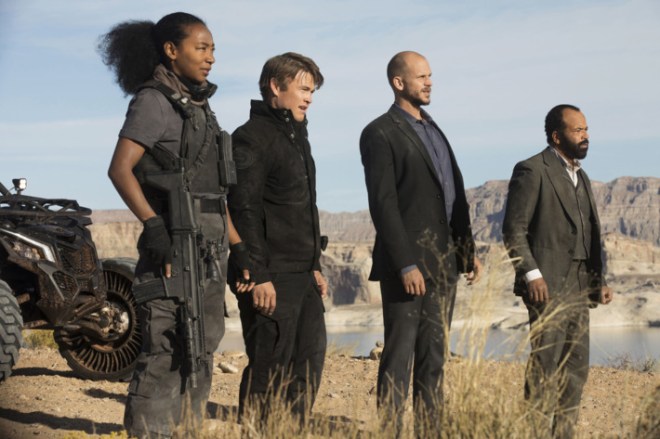
 

The first season of Westworld displayed ample amounts of violence and sex, but seemed to be making comments on the baser human instincts that the park revealed.  The characters with whom we sided—the robot hosts—were fighting to escape their loops: the repetitive cycles of abuse perpetrated on them to delight the human guests. When the first season culminated in a host revolution, the viewer could cheer, because the robots were breaking free of their loops. As the second season began, the hosts descend to violence against the humans and each other that rivals anything that occurred in the first season.


23-westworld.w710.h473The war begins in the first episode and is shown in two closely linked timelines: one immediately following the uprising that ended season one, the other taking place a few weeks later.  In the first timeline the hosts decimate the guests, in the second nearly all the hosts are found “dead” in an artificial lake.  The season has been spent linking these two timelines and filling in some backstory to explain the “true” rationale for the park.  We see waves of humans face the hosts, each one being dispatched with swift and stylized violence. We also watch as the hosts turn on each other. Set free from their controlled loops they repeat and amplify the excesses they had suffered as vehicles for the guests “bloody delights.”
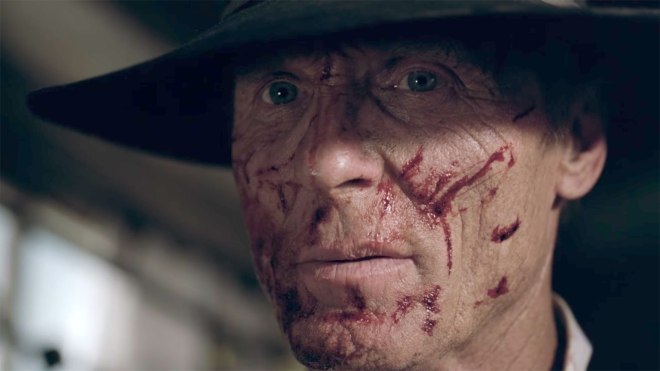
 

westworld-season-2-trailerWhile the first season was unabashedly bloody it also had four major narrative strands of awakening: Dolores gained consciousness and free will; William became the “Man in Black”; Maeve gained a kind of consciousness, but on a separate and less certain course than Dolores; and Bernard had his humanity stripped from him. Each of these plots had a cumulative development: each episode moved these stories forward, and there was a distinct pleasure as we discovered the stories for ourselves.  That discovery was shared by the characters as well, some with pleasure, and some without. The climax of each story—personal revelation for good or bad—mirrored the overall plot.  There was simple structural pleasure to be had.


lead_960_540In the second season these four characters have remained the main focus.  But now, because the climax preceded all the events to follow, the action is more repetitive.  Where else is there to go after mass slaughter? The characters do not grow so much as have secrets revealed to them or new powers added to them.  They are at the mercy of plot needs.  When Shogun World and Raj World, or the named but unseen Pleasure Palaces are introduced they are just grim mirrors of what goes on in Westworld.  When the Cradle and the deeper purpose of the park is revealed, the viewer may have been able to anticipate their existence, but both feel like sleight of hand adjuncts to a story about characters. “Look over here! Isn’t this fancy? Don’t pay attention to the repetitiveness of the story.”


Maybe Westworld will pull out of this narrative funk—there are three episodes left in the season.  How cool would it be to discover that after revenge is piled on top of revenge that some kind of peace breaks out.  Imagine that: peace as a climax. Maybe it will build on the theme of the power of story that underpinned the first season, and subvert narrative expectations by inverting rising action, and we can be as surprised as William was at the end of the first season. Or maybe the next slaughter will just be bigger, more choreographed, more beautiful, and meaningless. Here’s hoping for a quick turn.

03westworld-recap-articleLarge


The Greyhound

“You got any stories, friend?”

And so begins Episode Five, “Contrapasso,” of Westworld. Each of the other nine episodes begins with a host, one of the robots at the heart of the story, waking up or coming on line.  This one begins with a host, Old Bill, making a request of Ford, the creator of the robots and all the park that is Westworld. Ford answers, “Yeah, suppose I do,” and goes on to tell the story of “the saddest thing [he] ever saw.” A pet greyhound kills a cat when it is let loose from its leash. An event that is wholly anticipated (“our father warned us”), ends in horror (“to the horror of everyone, he killed that little cat, tore it to pieces.”), which is also entirely predictable. Who wouldn’t feel horror at a “little cat” being torn to pieces? Because this exchange between Ford and Old Bill breaks the pattern of the opening sequences, it is, as much as anything might be, the key to Westworld’s first season.

Westworld, for all its science fiction underpinnings, timeline switches, sex and violence, is a show about the power of story.  The hosts repeat their stories, which are called loops by the park employees. The guests participate in narratives, taking either white or black hat roles, and act out fantasies of sex and violence that are forbidden in the real world.  Ford and the park employees create and manage the narratives and the hosts to meet the guests’ expectations. Only one guest, The Man in Black, sees these stories as part of a game, and wants in on the bigger game, the more meaningful story, the maze.

Ford’s exchange with Bill hints at all this.  To begin with, Old Bill, is programmed to listen–that is his loop. But, because he is an old host, he isn’t very good at it. When Ford asks, “Never seen a greyhound have you, Bill?” Bill doesn’t recognize “greyhound” and reinterprets it to fit his understanding; he answers that he has seen a few showdowns. This shows one of the fundamental challenges of stories.  The teller and listener need to have a shared language and culture. At the end of the story, Bill responds, “That is one humdinger of a story, partner. Shall we drink to the lady with the white shoes?” Ford looks at him sadly. His secret is safe in Bill’s hands.

The secret Ford shares is the secret of loops.  The greyhound “spends its life running in circles, chasing a bit of felt made up like a rabbit.” Whether by instinct or routine, its life becomes automatic, robotic.  The greyhound running in circles is like the hosts on their loops.  But the dog chases a fake rabbit—just as the hosts are fake humans. While the hosts are on perpetual loops, the guests come to Westworld to break from their loops of their daily lives, to experience a simulacrum of authenticity. The hosts and guests share this. In the park the guests fall into loops that are just as predictable (if more extreme) as the ones they left behind at home, and just as predictable as those that dominate the hosts.

The viewers of the show are invited to sympathize with the hosts.  The guests are portrayed as crude and cruel, the hosts are doe-eyed and wistful. However, the hosts are machines—sophisticated machines, but more like supercharged go-karts. They are not “little cats.”  And yet, because the story of the show plays on the viewers emotions, our attention is refocused, and our expectations shift to hopes that the hosts will be set free from their loops—much in the same way that a father would bring a rescued greyhound into a home to give it some respite from years of cruel running in circles.

The Man in Black shares this hope.  He sees the park as too controlled, and therefore as inconsequential. Even when he gets a glimpse of the maze, he rejects it, because his expectations (“You know what I wanted,” he tells Ford in Episode Ten, “The Bicameral Mind”) were not met. His idea of the story he wants to see prevent him from seeing anything else. He, like Old Bill (and the Man in Black’s name is William), cannot understand the story he is being told.

One of the fun parts of watching the show when it first came out in 2016, was listening to the discussions about the stories in the show.  People wondered who each character was, what timeline each one occupied, and what the big secret would be. They were viewer stand-ins for the Man in Black, or Old Bill, listening and not understanding, letting their expectations or programming get in the way of what was told.

The secret to art of reading is in large part dependent on being able to see the structure of a story as one reads it. We know that if an event happens in chapter one, the rule of plot (rising action) will lead to an amplification of that event later in the story.  If a stranger dies in chapter one, then a friend will die later.  If a distant friend dies early, a dear friend will die later. Stories follow familiar patterns, and when those patterns are broken the reader or viewer may revolt. This is one reason why Campbell’s Hero’s Journey holds such sway over popular screenwriting: familiarity is the writer’s friend.

However, life is not a screenplay or a story. Unexpected, if predictable things happen.  Dogs chase down little cats and the results horrify us.  “I got the cat. Now what?” wonders the dog.  The reason that Ford’s story is “the saddest thing [he] ever saw,” is not because of the little cat, it’s because there’s nothing else for the dog to do.  Its life is defined by chase and kill, and once it has succeeded that’s all there is. Growth, or meaning, does not come from meeting expectations, but from the realization, and it can be a sad realization, that life, as opposed to a story, does not follow an order.  Life is chaotic and random. It dashes our expectations and makes us strip our stories bare and try (and perhaps fail) to revise.

The overall story in Westworld points us to this, if gently.