 I don’t believe in fate—providence, if you will. If there is a plan, it does not proscribe outcomes. Rather we wander in and out of circumstances bumping into two sets of patterns—those we make out of our lives, and those that are beyond our immediate control. Life goes out of balance when we cannot get the two patterns to jibe—when we cannot reconcile ourselves to the patterns that exist. Out of balance we can neither accept what has happened in our lives or we cannot break those patterns and create new ones that are made from familiar pieces but reflect possibilities that we had not imagined. Out of balance we fight against the patterns that life provides, missing obvious signs (rising temperatures, repeated cruelties, even the tender messages of love) and careening against the walls of a maze that we cannot perceive and causing damage to ourselves and those around us.
The patterns in our lives start with family. I constantly share Philip Larkin’s poem, “This Be the Verse.” There is something reassuring in the thought that we are in a cycle of “fuck you up.” As opposed to Larkin, I think the ways we do it, as we do it, inescapably echo what has happened to us, perhaps a refracted and distorted echo, but if we listen closely the voices of the past are there. Beyond that we try, inexpertly and haphazardly, to shape something new—sometimes in the bounds of that was happened—marrying tin castings of our mothers or fathers—and sometimes creating almost new ones—bouncing from job to job, leaving or being fired, until we find something that makes sense; switching churches running away from one doctrine to another until we find answers to our questions, or questions for our answers, failing in aspects of our lives until we discover paths that lead to understanding and accomplishment.
If we pay attention there are patterns to the world—some are startlingly easy to discern: evolution, geology, philosophy, math, literature. We go to school to learn to recognize those patterns, or at least learn the methods behind those patterns. Maybe—there’s no guarantee—we learn to accept that life does not always follow the neat regular order of all that we learn—like a geometry proof—but proceeds in fits and starts—like punctuated equilibrium. Or that it bears an uncanny resemblance to the cagey repetitions of a Mandelbrot set—a kind of beautiful and frustratingly decoded paisley.
I am writing this, because I can see—but only when I’m not looking straight at it—a pattern. The school where I will teach in the fall is near the junctions of routes 17 and 29—roads that ran through my earlier life. The mountains nearby are mountains on which I hiked when I was twelve. I am now split, three hours in either direction—when the traffic is good—from both ends of my family. These are entirely random coincidences—of that I am sure. However, coincidence when it travels in large numbers begins to wear the shape of a pattern. Perhaps it is a pattern of my own making—I look for affirmation and discover it where I will.
And yet, these days, I find other coincidences accruing—but not coincidences, more like reflections and refractions.
How many times in my life have I wondered how someone significant has entered my orbit—or rather, how has the rogue moon of my existence been captured by another’s gravity? I recognized early on the awful fact that I was chasing those tin castings from my family. Inevitable, and not always destined for failure, yet, somehow, not strangely, I ended up at 58 single.
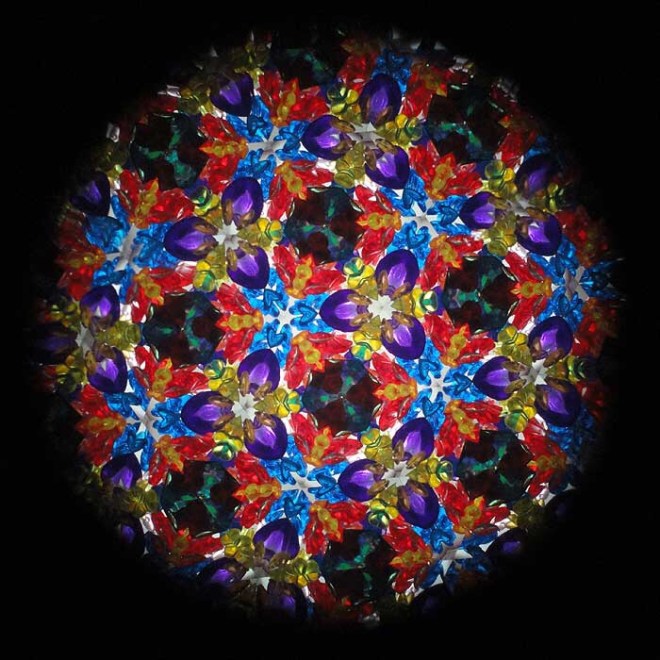
When I looked through the kaleidoscope of my past relationships, I recognized the shifting bits of glass and plastic that first came present in my childhood. And with each turning, I noticed newer, more original bits. I could see how I was adding to the portrait, or finding, fortunately, new colors and shapes. This bit—a runner who lead me onto the road and into extended jaunts over hills. That bit—a wild heretical sense of magic and religion that helped my questioning soul find new answers. Over there, now sliding out of the periphery—an abiding sense of motherhood that helped me see fatherhood in a clearer light. Here—a love of play and pretending that rekindled my dramatic heart. In the corner—a fervent commitment to words and learning that at least matched my own. Sliding past in a glint of light—a traveler’s heart that would call me away from the familiar and to new destinations.
All these marked shifts away, additions to, and surprises in my vision of who I would walk with down city streets and along autumn trails. Singularly, each one added a variation to a familiar pattern, but that pattern remained dominant. All together they formed a secret wish—not just for someone else, but for the person I wanted to be.
Do we get to pick that person? Are we trapped under years of habit and gentle conditioning? They have carried me this far. What to do with the secret and not so secret longings—dreams set aside for expedience and practicality, or for some ingrained fear or limit? What if I began to write a new story—still with some familiar elements, but now with a center I have let waste in a box kept in a closet, underneath last year’s shoes, out of sight, but never, naggingly, out of mind?
I don’t believe in fate, but what if, instead of providence, I relied on my will to call forth a story, to create a possibility I had turned from year after year? What would happen? Would the kaleidoscope turn to reveal someone, or—by dint of will and willingness to shake my life into new form—would someone appear, almost without request, almost by chance? I don’t believe in fate, but I can see patterns, and can follow stars that have not lifted above the horizon before now.
Onward!
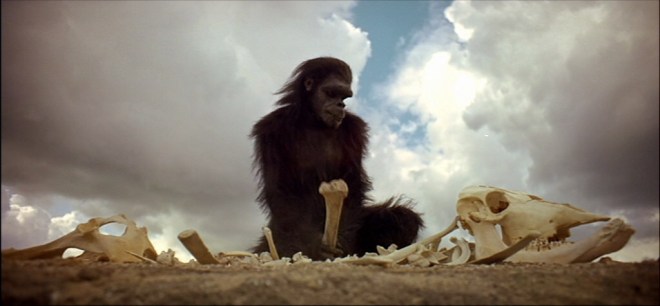 And yet we build, and not every tool—Kubrick’s 2001 aside—is a refinement of a club. Certainly Kubrick’s 2001 won’t help one win a war, or woo, unless, of course, the object of desire is imbued with an essential and unmitigated nerdiness. Nonetheless, even without some mysterious aid, we grow. Maybe not today, maybe not tomorrow, but soon enough, and we find our way to each other.
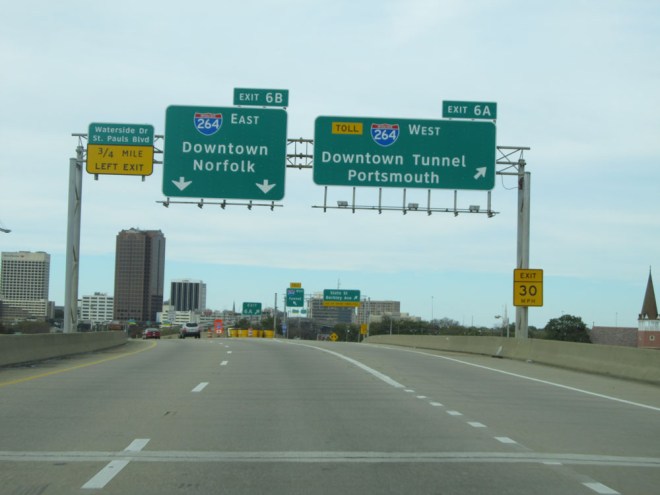 Every time I reach a particular traffic light in Norfolk, I can hear, clear as a bell, the not so gentle prodding that “You can turn right on red from the middle lane. There are people behind us.” Heading west out of Norfolk through the Downtown Tunnel causes a surge of ineffable joy, even when it’s just a trip into Portsmouth. The long drive across the Bay Bridge Tunnel reminds me of the day I took my daughter to drop flowers in the bay to commemorate the day my father fell into the water.
 There is hardly a street corner, a stop sign, or a stretch of highway that does not bring back flashes of memory. I stood on that plot of grass, took photos of the flooding at my church, and then sent them to a friend. I walked past the giant number “9” at West 57th in New York City with another friend, on our way to the Hard Rock Café. There is a house on the back way into the Paoli Shopping Center that my father told us belonged to Chester Gould, the illustrator and writer of the Dick Tracy comic strip. This seems as dubious a claim as that Dr. Seuss lived in a house visible on the hill above Yellow Springs Road—my father had a predilection for harmless invention.
 I have read that places become memorable when significant emotional events have taken place there. Memory formation is my hobby horse. What constitutes a significant emotional event? What allows the creation of two, three, four, more memories to occupy a single green exit sign on the Route One into Bath, Maine?
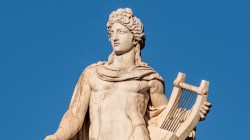 Some people, most people, grow up, and cast their lot on one side or the other. Apollonian selves dream into an idea of logic and order—think a sonnet by Shakespeare, glorious in its arrangement of rhythm, rhyme, and idea. This is Apollo brought to earth, walking firmly on the ground. Dionysian selves trumpet feelings and instinct: Ginsberg’s “first thought, best thought” is as much a dictum as can be borne.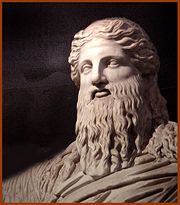
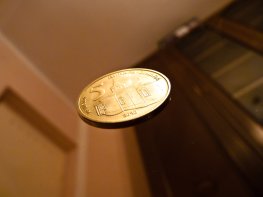 My youngest brother has told me many times that I am too serious. And of all the boys, I am. And not. My wildness is serious, and my seriousness is wild. Flip a coin, and watch the light glint off side after side after side as it tumbles through the air. Heads or tails, the glinting wins.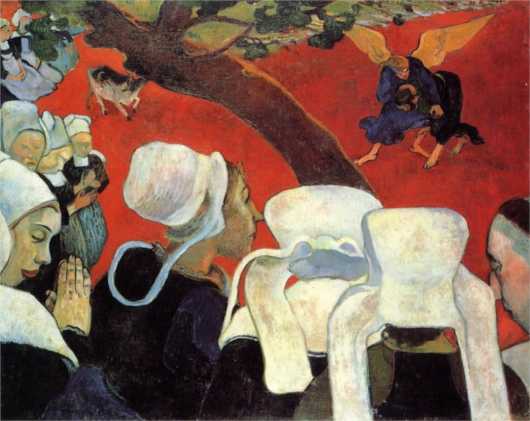
 I have been thinking about feelings. Which means, of course, that I have been having them, or rather, overwhelmed by them of late. I wouldn’t bother to write about them if they were good feelings. When I am in love, I tend to write less about that feeling, in part because my need to communicate to the world is being so generously satisfied by the person I love. The feeling of being so thoroughly understood (she gets me!) is like putty in the gaps through which the words drift out (or in). The feeling of being misunderstood blows all the putty out.
 continuoussearch