 Complain all you want about online dating, and there is plenty to complain about, but if you are of a certain age, and you cannot (will not) date people from work—which also makes up your immediate social circle—then it’s off to the great internet meet n’ greet.
Dating poses a number of challenges later in life. First of all, by now you probably know much more about who you might like to meet than you did when you were 18, or 24, or 36. This is at once an advantage and a trap. “What if she is not exactly who I am looking for?” you might wonder. She may be too much like your Ex, or one of your Exes. Or, heaven forbid, too much like your mother. Are you still really fighting that battle? Chances are if you haven’t given it good long thought that you are. I am not suggesting that any of your Exes, or your mother for that matter, is a bad model for the date you seek, or, on the other hand, the exact person you should run screaming from the building to avoid (It’s your life; you know best). However, either impulse is likely to constrict your expectations. It’s bloody impossible to go swimming with dolphins when all you are thinking about is the White Whale, Ahab.
Second, you may have gotten over all the awkward first moves of your early dating life. “I know where this is going to end up,” you think, already having all the accoutrements ready in the bedroom. And things with your date may, eventually, end up there. May. Look if sex is all you seek there are plenty of other options in the world. I had a friend who declared, “If you don’t care who it is, you can fuck anybody.” Touché!
Remember: You are going on a date. You are meeting a person who is, with any luck in the world, different in ways you have not yet figured out. Slow down. Everywhere. Spend hours making out. Who cares that you know THAT secret trick—you can impress her later. And do not jump to making out. Kisses, short exploratory kisses are gifts not to be forsworn. They are the bubbles in the champagne. If you haven’t learned this yet—and many men and women have not—you can skip everything that follows.
Seriously friends, you will meet least dozens, if not hundreds (and if you move a few times, make it a thousand) of people who will tickle some fancy you have. I have the benefit of being an extrovert (in some ways), and have short conversations with upwards of 10-20 people I have never met before almost every single day. I intend to marry none of these people, but I would fight for the right to have these conversations all the same. If you are an introvert, prepare accordingly, but do not forget that a date is the beginning of a conversation. Let it be that. Learn as you talk. Listen to her. Listen to yourself.
 Look, some dates will get annoyed if you are courting too slow. Advice: who cares? Anyone who wants to light the fuse after the first date, or third date, has most likely lit the wrong fuse. 5, 4, 3, 2, 1, Duck! And if you feel annoyed or anxious to get moving, remember this: everything you learn about this person now will help you know whether or not you will want to go on a second date, or a fifth date, or more. Introverts, you know that someone has to meet certain criteria to get past your healthy defenses; spend the time needed to discover. “But I don’t want to have to go through all this again,” you complain. Of course not, so slow down and maybe you won’t, later. Extroverts, you know how easily you can be charmed by a single aspect of another person (I’m giving myself much needed advice here)—remember that people are multi-faceted and that more than a first date requires connections across many facets.
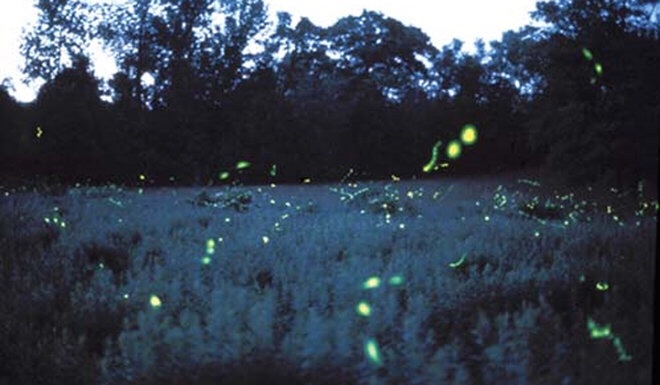
And here’s my complaint. Too often online daters post, “No pen pals. If you can’t meet right away, don’t bother.” Can I just say that harboring an extrovert and introvert in my heart, that words, lots of words, are an essential part of my dating process. And not quick, little texts (although that can be delightful too, but like badminton in the backyard at dusk, can drift into chasing fireflies). Finding someone who can unfurl a story over paragraphs in writing—just as I do here—is my sweet spot. Of course, before the paragraphs come, something will have been sparked by who knows what, a phrase in a written dating profile? a provocative and thoughtful question? “I don’t do words,” one respondent declared early in the process, which, of course, promptly ended. Or someone rushes to meet, and then holds forth. I had a three hour coffee date that was an unspooling of work, home improvements, exes, and there had to be something else. I don’t think I said anything.
I know that my charming exterior works around a diligent writer who is both an extrovert and an introvert. I know that I will need to find someone who can manage both sides of my complicated equation—who wants me to write to her, and who wants to write to me. And she will need to share at least some aspects of this too.
Why writing? Because writing takes focused attention, takes time, and done well, offers a chance for discovery for both the reader and the writer. Writing, done well, offers a chance to grow and learn in perpetuity. What could be better than discovering together?
 Before I collapse into, “This is all about me,” let me say, what works for me (the words) may not work for you. Chances are it will not. But you know what does work for you, don’t you? A little self-knowledge about this goes a long way. Revel in it, slowly. Well begun is half done, goes the maxim. Here! Here!
 One of the questions—there are thousands of questions—on the OK Cupid dating website is:
 I don’t believe in fate—providence, if you will. If there is a plan, it does not proscribe outcomes. Rather we wander in and out of circumstances bumping into two sets of patterns—those we make out of our lives, and those that are beyond our immediate control. Life goes out of balance when we cannot get the two patterns to jibe—when we cannot reconcile ourselves to the patterns that exist. Out of balance we can neither accept what has happened in our lives or we cannot break those patterns and create new ones that are made from familiar pieces but reflect possibilities that we had not imagined. Out of balance we fight against the patterns that life provides, missing obvious signs (rising temperatures, repeated cruelties, even the tender messages of love) and careening against the walls of a maze that we cannot perceive and causing damage to ourselves and those around us.
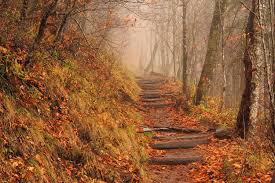 Sometimes I step right in it. It could be good, could be bad, but somehow, my foot comes down right into it. All I was doing was taking a walk—could be to anywhere, the post office, the grocery store, down the aisle. The destination is of no importance—tell yourself that Brennan, assure yourself that you are a man on a journey, drifting happily so long as there is a journey whose destination is, truly and fortunately, impossible to predict. And then, splat, I tumble forward—because that is how we fall.
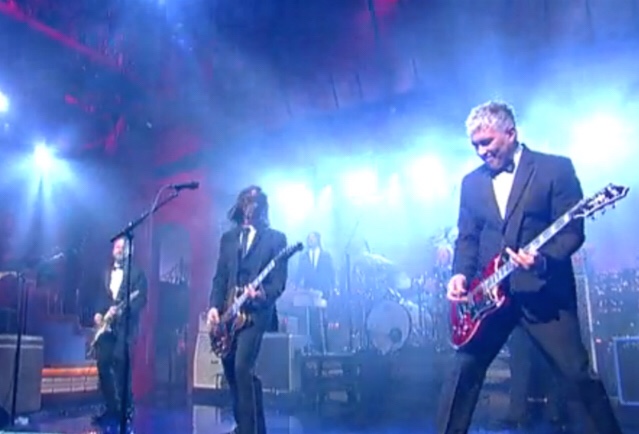 Play it loud.
 I started watching comedians late at night with my father, who was a Carson devotee. My dad would take a nap after dinner—short, maybe 20 minutes in his chair in the den—before watching television or reading until the news and then the Tonight Show. He would stay up until Carson finished at 1 am (later only until 12:30 am). My mother absented the scene well before 11.
 In 1982, the year I graduated from college, Letterman took over what had been a fairly straight talk show slot. Tom Snyder’s Tomorrow had ended NBC’s programming. Snyder was as hip as could be imagined at the time, smoking a cigarette and asking pointedly bemused questions. Letterman rolled in on a wave of calculated whimsy and sarcasm. He was a genial wiseass—smart enough to host Fran Leibovitz, foolish enough to wear a suit of Alka-seltzer tablets into a dunk tank. While Carson chuckled at the world, Letterman was in perpetual eye roll. “These people are idiots,” he seemed to say, “And if we aren’t careful, we are too.”
 When he left in 2015, it marked the end of my Second, and maybe Third Act. From graduation from Swarthmore to graduate school at Binghamton, from adjunct teaching to secondary ed teaching, from occasional church goer to religious professional, from single, to committed cohabitation, to marriage, and finally to separation and divorce. I still watch late night comedians, but now they function almost only as an antidote to the news. Please, someone make light of the daily made-up facts. Maybe that will end when the current administration leaves, and maybe a sequel to Ionesco’s Rhinoceros will have everyone gleefully turning back into humans.
 When I was 11, I started sailing with my father. We took lessons together and practiced on a lake. He kept a boat on the Chesapeake Bay, which was rarely choppy. In my thirties, I joined him on the ocean—home again.
 Deep time? Not thousands of years—a blink. Millions begin to register. Billions of years. I once had my students hold one hundred feet of rope, and marked the history of the planet on it. Those who held on to human historical events: Lucy, the Pyramids, the Great Wall of China, the Renaissance, man walking on the moon—could barely wrap a finger around the rope they were crowded so close. Our Western Mountains—the Rockies—and Eastern Mountains—were flung apart, but well after our continent had formed.
 Where does sadness, the inexorable seriousness in my writing originate? My friends would tell you that I am puckish in real life—if anything, a bit too unrestrained. Why doesn’t that same sense of things stripe my writing? Why do I seem stuck hitting the same damn dour note?
 I packed my suitcase and drove out of Philadelphia. Whether that was yesterday or twenty-five years ago, I am not sure. There is so much to do, so many cities to visit, all those people waiting. I lose track of time. Before I have barely begun, I am completely exhausted. I have to stop. I ask the manager at the motor hotel for a quiet room, and flop into bed. I set the alarm clock for morning.
