Trust

What drives us to claim that someone must “earn” our trust?

Maybe we look at children, and their innocent acceptance of our magical disappearances and reappearances—silly children who haven’t figured out the mystery of object permanence. Or we recall the way dogs will chase the imaginary sticks we have thrown when we hold the actual sticks behind our backs. Dogs are so stupid. Or we remember how Uncle Max had two mistresses—at the same time!—breaking Aunt Sylvia’s heart; how did she not see the signs? Or, or, or…

How many thousand lessons does life provide, proving that if we let our guards down for even a moment, that life will either make fools of us, or render us hapless victims? And earned trust? Surely there are just as many examples when our earned trust was upended like a cheap pine table in an earthquake. We proceed like penurious bankers, giving out loans at interests rates that would humble Rajahs, and still, we are repaid by grief and betrayal. What hope can we have?

How much armor is needed—lead, steel, or titanium—to get us from our bedside to the fringe of the world? Who cares that accident statistics show that SUVs—great exoskeletons that we wear like Gregor Samsa wore his carapace—are more likely to be in a crash than the nimble little roadsters that weave in and out of danger? More armor! More protection!

For what? Wrapped inside a traveling sarcophagus we are pre-entombed—already arrayed for the burial. And trust is just another layer—a shroud that hides a face.

Why not just trust? Why not embrace foolishness, stupidity, Aunt Sylvia’s blissful ignorance (until it finally becomes too much)? How many moments of easy grace do we pass by in the name of incredulity? Protecting our fragile hearts and minds (our bodies are so rarely at risk, and so much easier to protect)? From what?

What price do we pay for the blanket of distrust we wear over our shoulders—leaded, like the dentist’s leaded sheet, to prevent the harmful rays from reaching within? How many more might we more easily trust? What fruits might we more readily sample? What lessons of hope and joy might just as easily fall into our outstretched hands, if we only stretched them out?

Daily (writing, and maybe dating advice)

One of the questions—there are thousands of questions—on the OK Cupid dating website is:

Ideally, how often would you have sex?

• Every day

• 3 to 4 times per week

• 1 to 2 times per week

• less than once per week

Secretly, this is a writing question.

So, you say that you want to write. I have many friends and acquaintances who make that claim. Maybe they like to read, or maybe they have something to get off their chests, or maybe there is some kind of residual romantic cache to being a writer. I hesitate to ask them, is there anything you like to do every day?

Most people only do a few things every day. We sleep (perchance dream). We eat and drink. Cup of coffee? Glass of wine? My dad had a small dish of ice cream every night. Work? I used to work seven day weeks—which is exhausting and revelatory. Parents parent every day—every single day. Some work out daily. Fortunately, I have no worn meniscus in my brain to keep me out of the mental pool more than every other day, and I am happier when I get my actual wet mile in daily. For some with partners, or even without, some kind of sexual activity happens daily.

How many of those do you do willingly, with a sense of purpose bound to deeper joy? How many are obligations that feel like you need a respite from every five—or less!—days? If you are the kind of person who rankles at the daily grind, maybe skip the writing, unless the rankle gets you going. I know plenty of cranky writers. Plenty—Jeremiah has many brothers and sisters.

One of the early discussions in grad school was the tricks writers used to trigger their daily duty. Sharpening pencils. Cleaning house. Eating M&Ms. Waking up.

Antonio Machado writes (translated here):

After living and dreaming

comes what matters most:

waking up.

Writing is like waking up—and it happens every day. It may be fueled—strike the “may”—it is fueled by our lives and dreams, but it is more than either. The same way our bodies move through the day—chopping onions, carrying bags from the car, wheeling our mothers into the doctor’s office—they come awake when we make love (I hope, for your sake that this is so). Writing is like that—an intentional and yet mysterious waking up. A discovery.

I almost always write with a plan. I have a first sentence and last sentence. And then I wake up. The middle—every other part—is a surprise. I start grabbing books off shelves, looking up physics formulas, checking the weather data from fifty years ago, calling a friend. I almost always end up with that last sentence, but the route shifts as fast as a glimpse—the meaning of the last sentence changing as all the shifting words transport me to a city whose streets are unfamiliar and entirely welcome, and whose secret is revealed in a way I had only dreamed.

Every day. If you want to write. Dream, live, write, wake up. Every day.

Dating Advice (or writing advice)

Complain all you want about online dating, and there is plenty to complain about, but if you are of a certain age, and you cannot (will not) date people from work—which also makes up your immediate social circle—then it’s off to the great internet meet n’ greet.

Dating poses a number of challenges later in life. First of all, by now you probably know much more about who you might like to meet than you did when you were 18, or 24, or 36. This is at once an advantage and a trap. “What if she is not exactly who I am looking for?” you might wonder. She may be too much like your Ex, or one of your Exes. Or, heaven forbid, too much like your mother. Are you still really fighting that battle? Chances are if you haven’t given it good long thought that you are. I am not suggesting that any of your Exes, or your mother for that matter, is a bad model for the date you seek, or, on the other hand, the exact person you should run screaming from the building to avoid (It’s your life; you know best). However, either impulse is likely to constrict your expectations. It’s bloody impossible to go swimming with dolphins when all you are thinking about is the White Whale, Ahab.

Second, you may have gotten over all the awkward first moves of your early dating life. “I know where this is going to end up,” you think, already having all the accoutrements ready in the bedroom. And things with your date may, eventually, end up there. May. Look if sex is all you seek there are plenty of other options in the world. I had a friend who declared, “If you don’t care who it is, you can fuck anybody.” Touché!

Remember: You are going on a date. You are meeting a person who is, with any luck in the world, different in ways you have not yet figured out. Slow down. Everywhere. Spend hours making out. Who cares that you know THAT secret trick—you can impress her later. And do not jump to making out. Kisses, short exploratory kisses are gifts not to be forsworn. They are the bubbles in the champagne. If you haven’t learned this yet—and many men and women have not—you can skip everything that follows.

Seriously friends, you will meet least dozens, if not hundreds (and if you move a few times, make it a thousand) of people who will tickle some fancy you have. I have the benefit of being an extrovert (in some ways), and have short conversations with upwards of 10-20 people I have never met before almost every single day. I intend to marry none of these people, but I would fight for the right to have these conversations all the same. If you are an introvert, prepare accordingly, but do not forget that a date is the beginning of a conversation. Let it be that. Learn as you talk. Listen to her. Listen to yourself.
Look, some dates will get annoyed if you are courting too slow. Advice: who cares? Anyone who wants to light the fuse after the first date, or third date, has most likely lit the wrong fuse. 5, 4, 3, 2, 1, Duck! And if you feel annoyed or anxious to get moving, remember this: everything you learn about this person now will help you know whether or not you will want to go on a second date, or a fifth date, or more. Introverts, you know that someone has to meet certain criteria to get past your healthy defenses; spend the time needed to discover. “But I don’t want to have to go through all this again,” you complain. Of course not, so slow down and maybe you won’t, later. Extroverts, you know how easily you can be charmed by a single aspect of another person (I’m giving myself much needed advice here)—remember that people are multi-faceted and that more than a first date requires connections across many facets.

And here’s my complaint. Too often online daters post, “No pen pals. If you can’t meet right away, don’t bother.” Can I just say that harboring an extrovert and introvert in my heart, that words, lots of words, are an essential part of my dating process. And not quick, little texts (although that can be delightful too, but like badminton in the backyard at dusk, can drift into chasing fireflies). Finding someone who can unfurl a story over paragraphs in writing—just as I do here—is my sweet spot. Of course, before the paragraphs come, something will have been sparked by who knows what, a phrase in a written dating profile? a provocative and thoughtful question? “I don’t do words,” one respondent declared early in the process, which, of course, promptly ended. Or someone rushes to meet, and then holds forth. I had a three hour coffee date that was an unspooling of work, home improvements, exes, and there had to be something else. I don’t think I said anything.

I know that my charming exterior works around a diligent writer who is both an extrovert and an introvert. I know that I will need to find someone who can manage both sides of my complicated equation—who wants me to write to her, and who wants to write to me. And she will need to share at least some aspects of this too.

Why writing? Because writing takes focused attention, takes time, and done well, offers a chance for discovery for both the reader and the writer. Writing, done well, offers a chance to grow and learn in perpetuity. What could be better than discovering together?
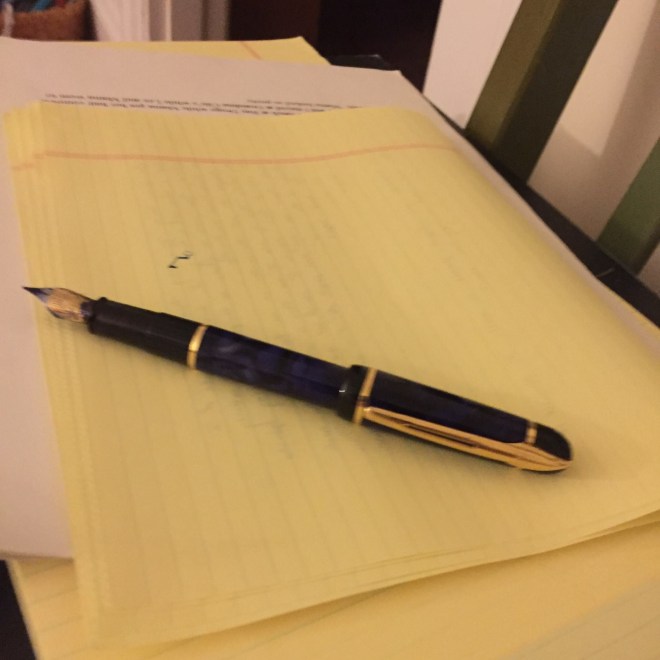
Before I collapse into, “This is all about me,” let me say, what works for me (the words) may not work for you. Chances are it will not. But you know what does work for you, don’t you? A little self-knowledge about this goes a long way. Revel in it, slowly. Well begun is half done, goes the maxim. Here! Here!
Patterns

I don’t believe in fate—providence, if you will. If there is a plan, it does not proscribe outcomes. Rather we wander in and out of circumstances bumping into two sets of patterns—those we make out of our lives, and those that are beyond our immediate control. Life goes out of balance when we cannot get the two patterns to jibe—when we cannot reconcile ourselves to the patterns that exist. Out of balance we can neither accept what has happened in our lives or we cannot break those patterns and create new ones that are made from familiar pieces but reflect possibilities that we had not imagined. Out of balance we fight against the patterns that life provides, missing obvious signs (rising temperatures, repeated cruelties, even the tender messages of love) and careening against the walls of a maze that we cannot perceive and causing damage to ourselves and those around us.
The patterns in our lives start with family. I constantly share Philip Larkin’s poem, “This Be the Verse.” There is something reassuring in the thought that we are in a cycle of “fuck you up.” As opposed to Larkin, I think the ways we do it, as we do it, inescapably echo what has happened to us, perhaps a refracted and distorted echo, but if we listen closely the voices of the past are there. Beyond that we try, inexpertly and haphazardly, to shape something new—sometimes in the bounds of that was happened—marrying tin castings of our mothers or fathers—and sometimes creating almost new ones—bouncing from job to job, leaving or being fired, until we find something that makes sense; switching churches running away from one doctrine to another until we find answers to our questions, or questions for our answers, failing in aspects of our lives until we discover paths that lead to understanding and accomplishment.

If we pay attention there are patterns to the world—some are startlingly easy to discern: evolution, geology, philosophy, math, literature. We go to school to learn to recognize those patterns, or at least learn the methods behind those patterns. Maybe—there’s no guarantee—we learn to accept that life does not always follow the neat regular order of all that we learn—like a geometry proof—but proceeds in fits and starts—like punctuated equilibrium. Or that it bears an uncanny resemblance to the cagey repetitions of a Mandelbrot set—a kind of beautiful and frustratingly decoded paisley.

I am writing this, because I can see—but only when I’m not looking straight at it—a pattern. The school where I will teach in the fall is near the junctions of routes 17 and 29—roads that ran through my earlier life. The mountains nearby are mountains on which I hiked when I was twelve. I am now split, three hours in either direction—when the traffic is good—from both ends of my family. These are entirely random coincidences—of that I am sure. However, coincidence when it travels in large numbers begins to wear the shape of a pattern. Perhaps it is a pattern of my own making—I look for affirmation and discover it where I will.

And yet, these days, I find other coincidences accruing—but not coincidences, more like reflections and refractions.

How many times in my life have I wondered how someone significant has entered my orbit—or rather, how has the rogue moon of my existence been captured by another’s gravity? I recognized early on the awful fact that I was chasing those tin castings from my family. Inevitable, and not always destined for failure, yet, somehow, not strangely, I ended up at 58 single.

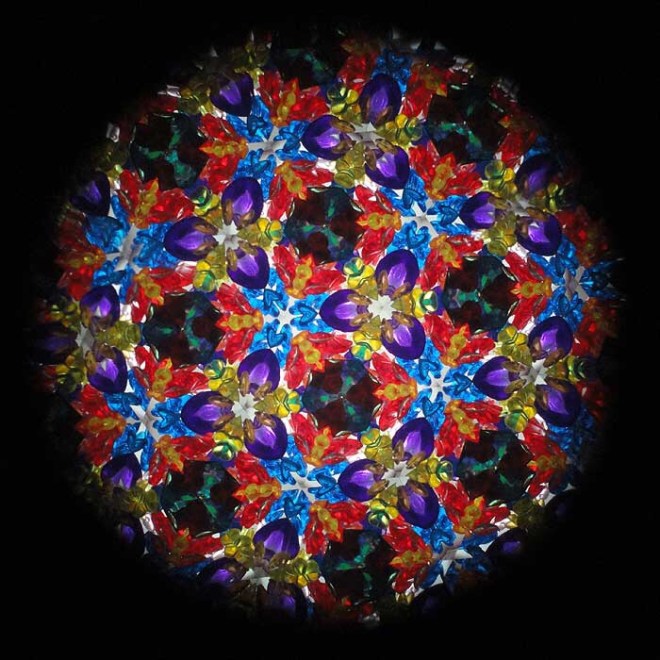
When I looked through the kaleidoscope of my past relationships, I recognized the shifting bits of glass and plastic that first came present in my childhood. And with each turning, I noticed newer, more original bits. I could see how I was adding to the portrait, or finding, fortunately, new colors and shapes. This bit—a runner who lead me onto the road and into extended jaunts over hills. That bit—a wild heretical sense of magic and religion that helped my questioning soul find new answers. Over there, now sliding out of the periphery—an abiding sense of motherhood that helped me see fatherhood in a clearer light. Here—a love of play and pretending that rekindled my dramatic heart. In the corner—a fervent commitment to words and learning that at least matched my own. Sliding past in a glint of light—a traveler’s heart that would call me away from the familiar and to new destinations.

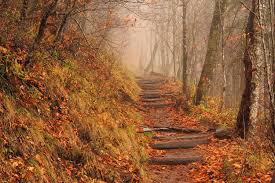
All these marked shifts away, additions to, and surprises in my vision of who I would walk with down city streets and along autumn trails. Singularly, each one added a variation to a familiar pattern, but that pattern remained dominant. All together they formed a secret wish—not just for someone else, but for the person I wanted to be.

Do we get to pick that person? Are we trapped under years of habit and gentle conditioning? They have carried me this far. What to do with the secret and not so secret longings—dreams set aside for expedience and practicality, or for some ingrained fear or limit? What if I began to write a new story—still with some familiar elements, but now with a center I have let waste in a box kept in a closet, underneath last year’s shoes, out of sight, but never, naggingly, out of mind?

I don’t believe in fate, but what if, instead of providence, I relied on my will to call forth a story, to create a possibility I had turned from year after year? What would happen? Would the kaleidoscope turn to reveal someone, or—by dint of will and willingness to shake my life into new form—would someone appear, almost without request, almost by chance? I don’t believe in fate, but I can see patterns, and can follow stars that have not lifted above the horizon before now.

Onward!

Stumbling

Sometimes I step right in it. It could be good, could be bad, but somehow, my foot comes down right into it. All I was doing was taking a walk—could be to anywhere, the post office, the grocery store, down the aisle. The destination is of no importance—tell yourself that Brennan, assure yourself that you are a man on a journey, drifting happily so long as there is a journey whose destination is, truly and fortunately, impossible to predict. And then, splat, I tumble forward—because that is how we fall.
All through my youth my body grew more rapidly than my control of it. I had special gym classes at Paoli Elementary School to help with my coordination. I fell down often. I skinned knees, tore pants, tripped over air. When I walked my feet slapped against the pavement—whap, whap, whap. I was a walking announcement.

And then I hiked 500 miles, and my feet learned to glide over rocks and branches and roots as big as an elephant’s trunk. Maybe it was the ballast—imagine that ballast on the back—of my thirty pound pack. Maybe I simply learned. How do I know? What happens seems to have no reason in retrospect—at the time it was a surprise, and a change I hardly noted.

Now, I still feel moments when that 8 year old boy with limbs of wind can hardly find a corner to swirl out of. My hands follow music with a maestro’s insistence—and plays—and movies. I direct everything, even the line at the grocery store. What I step into now are emotional paths, occasional avalanches of everyone’s feelings—mine too! mine too! Intellectual thickets are no peril. And maybe, just maybe, because there is not one path, but a dozen (a hundred! More!), my feet, so used to gliding, stumble.

Who are all these people, all on their own paths, that veer in and out of my little journey? Little? Hardly. It is, fortunately, a truly immense journey, and I am covered in mud. No worries, there is rain ahead, and then, I will only be wet.

Loud (Happiness part 3)

Play it loud.

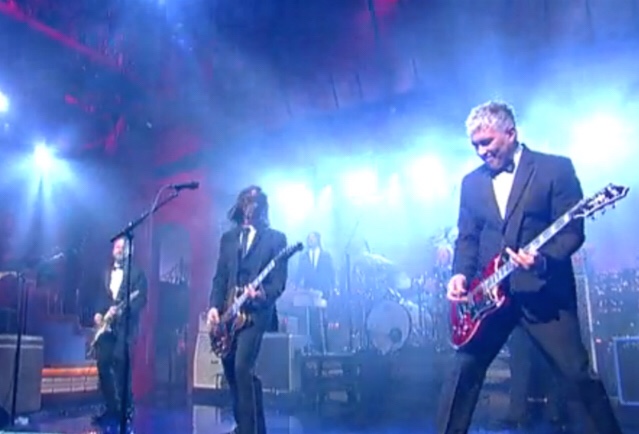
On May 20, 2015, Letterman’s last show ended with the Foo Fighters ripping into an extended version of “Everlong” while a montage of Letterman’s thirty-three years on television played.

And I wonder

When I sing along with you

If everything could ever be this real forever

If anything could ever be this good again

The guitars churn through the song, tearing as deeply into sadness and desire as can be imagined. It struck every chord with me then. Something was gone, but something was good. And loud—and it built, simple layer on simple layer.

Later that summer, I listened to the song in my car before work, before everyone arrived, and the minister for that Sunday (we had a different minister nearly every Sunday in the year of the aftermath of Jenifer Slade’s suicide) pulled into the space next to mine. When I explained the context of the song—briefly—her response was, “My son used to listen to them. I don’t like the Foo Fighters.” Several years afterwards, her name was floated as a possible minister for our church—I cringed.

I like to play music loud—scratch that, I love it loud. My rear view mirror vibrates along to the beat. I love to sing along until my voice is raspy (vocal fry be damned). Springsteen, Foo Fighters, The Pixies, Liz Phair, Aimee Mann (who doesn’t rip it up, but…), U2, Arcade Fire, David Bowie, PJ Harvey. There are others. My Bloody Valentine rang in my ears while seas chased my boat on the ocean.

This has been true for ages. When my coworkers drank their way out of a dinner shift, I got in my car and drove. Turning up the sound until my little Volkswagen caught the turns of country roads to swelling arpeggios. No DUI, just driving while loud. When I swim, I play music loud enough and vicious enough to make the pain in my arms and legs seem like an afterthought. It’s fuel, pure and simple. Fuel with a taskmaster’s beat.

Less never really captivates me. I can appreciate quiet and simplicity, but if I’m going to be transported—physically, spiritually, even mentally—I must crank it up. These days I don’t crack the sound barrier, and the music does not make me forget the limits—not the sensible ones. Still, it opens a gap, a crack in the hard stupid shell of “I don’t like…”

I was at a show for the band The Snails a couple of years ago—proto-punk silliness (they came out with trash bags full of balloons on their backs—like snails!). Everyone kept the beat, even this old man, especially this old man.

The only thing I’ll ever ask of you

Got to promise not to stop when I say “When”

Play it loud.

Late Night (Happiness part 2)

A couple of weeks before Thanksgiving of 2014, I moved into the attic in my family’s home. Things had fallen apart in my marriage, in spite of the trip we had taken to China to bring home a daughter in the previous May. We knew. My wife stopped wearing her wedding ring—not making any formal fuss about it. Cataclysms had intervened to help clarify our struggle, and so, as sad as it was, we began the process of unraveling.

The universe was ready for change. Stephen Colbert stepped down from the Colbert Report, which had lasted just a tick shorter than our marriage. Craig Ferguson walked away from his gig. And then the two seismic shifts: Jon Stewart would leave the Daily Show and David Letterman would exit late night television after 33 years. Is it strange that I gauge my life according to who is performing a monologue on late night television? Perhaps.

I started watching comedians late at night with my father, who was a Carson devotee. My dad would take a nap after dinner—short, maybe 20 minutes in his chair in the den—before watching television or reading until the news and then the Tonight Show. He would stay up until Carson finished at 1 am (later only until 12:30 am). My mother absented the scene well before 11.

My dad was a reasonably well-informed man, coming home each night with a copy of Philadelphia’s evening newspaper—The Bulletin. We did not watch much nightly news—my mother was not interested in the ugliness. Strangely, she has become a avid listener of talk radio and NPR, but not then. In the 60s and early 70s the Vietnam War hung like a grizzly threat over her sons, and so, no news except for what we read.

I learned to pay attention to the news both by scrambling through the Bulletin and Time Magazine, which came every week. For a few years my father changed the name on the subscription to those of my brothers and I, whether for the savings or to delight us, I do not know. As much as any other reason, I knew I had to follow the daily news to keep up with Carson’s monologues. Without knowing the daily facts, the jokes fell flat.

In 1982, the year I graduated from college, Letterman took over what had been a fairly straight talk show slot. Tom Snyder’s Tomorrow had ended NBC’s programming. Snyder was as hip as could be imagined at the time, smoking a cigarette and asking pointedly bemused questions. Letterman rolled in on a wave of calculated whimsy and sarcasm. He was a genial wiseass—smart enough to host Fran Leibovitz, foolish enough to wear a suit of Alka-seltzer tablets into a dunk tank. While Carson chuckled at the world, Letterman was in perpetual eye roll. “These people are idiots,” he seemed to say, “And if we aren’t careful, we are too.”

Somehow, the line between “the joke’s on them” (the politicians, the hypocrites, the too-big-for-their-own-britches), and “the joke’s on us” got thinner and thinner. When Letterman jumped to CBS in 1993, the eyebrows raised response to the woman who said, “They’re not going to put this on CBS, I’m sure,” admitted that he—and we—were getting away with something.

I didn’t watch lots of Letterman after a while. For years I did not own a television—a sacrilege, I know. I started watching Jon Stewart, and then Stephen Colbert, and by then, the comedy of “the joke’s on us” landed too close to home. Letterman never stopped being a smartass—as if that is ever a choice—but the times I did stop by, he seemed gentler, weathered, and maybe perplexed.

When he left in 2015, it marked the end of my Second, and maybe Third Act. From graduation from Swarthmore to graduate school at Binghamton, from adjunct teaching to secondary ed teaching, from occasional church goer to religious professional, from single, to committed cohabitation, to marriage, and finally to separation and divorce. I still watch late night comedians, but now they function almost only as an antidote to the news. Please, someone make light of the daily made-up facts. Maybe that will end when the current administration leaves, and maybe a sequel to Ionesco’s Rhinoceros will have everyone gleefully turning back into humans.

On May 20th, 2015, I sat in my condominium watching an end, and knew something had changed. Everything. Me included.

Riding the wave (Happy part 1)

I have traveled to the ocean off and on all my life. Whether to Jones Beach while visiting my grandparents on Long Island, or Popham Beach in Maine with my immediate family, later on my own—the beach—the ocean really—has had a call for me. Whenever I visited, I would be in the waves for hours, even when the water was frigid. I would exit with chattering teeth—b-b-b-b-b-ut I’m not cold, Mom.

When I was 11, I started sailing with my father. We took lessons together and practiced on a lake. He kept a boat on the Chesapeake Bay, which was rarely choppy. In my thirties, I joined him on the ocean—home again.

Now I live near the mountains, far enough from the ocean that my friends worry I will miss it. How can you move so far away—from minutes to hours—from the breaking waves? I know a secret. I haven’t. I live in the shadow of ancient waves.

The crust of the earth floats slowly, steadily on the surface of the planet. Mountains are sudden swells where the crust crashes into crust, lifting like three mile high following seas. The break is not here or there—the way you know where and when waves break best along a beach—it rises across hundreds of miles all at once, rapidly—in geological time—and subsiding only when erosion carries the soil and rocks back down the swell—the same way the foam at the crest of a wave slides away to one side or the other of the watery passenger.

How can you tell? Nothing is moving? The earth is solid. It seems that way, yes. Yet in time, over time, over more time than humans can recognize with their eyes and ears and hands built for moments on the savanna—the world is more fluid than solid, and it races. Deep time, geologists call it.

Deep time? Not thousands of years—a blink. Millions begin to register. Billions of years. I once had my students hold one hundred feet of rope, and marked the history of the planet on it. Those who held on to human historical events: Lucy, the Pyramids, the Great Wall of China, the Renaissance, man walking on the moon—could barely wrap a finger around the rope they were crowded so close. Our Western Mountains—the Rockies—and Eastern Mountains—were flung apart, but well after our continent had formed.
Deep time. I stand near the mountain as still as I can be, and wait, my feet apart, on a board as long and wide as a county. Here it comes. I can feel it.

Catching fireflies

Where does sadness, the inexorable seriousness in my writing originate? My friends would tell you that I am puckish in real life—if anything, a bit too unrestrained. Why doesn’t that same sense of things stripe my writing? Why do I seem stuck hitting the same damn dour note?

It’s time to disagree with giants. Tolstoy was wrong about families. Families are not all happy the same way, or only so if one only considers the end result. Families, and individuals, are unhappy in a million different ways; happy families share the same infinite array. And how many different ways are individuals happy compared with the list of universal sadnesses?

I will take it a step further. Unhappiness, sadness, if you will, seems, if not a baseline, then a certainty. Life takes its strange course, and we know that bad things will happen. Tragedies wait between buildings like muddy tigers, who, if they do not gore us, they will leave us an awful mess. And they come with a punctuality that challenges the trains in Germany.

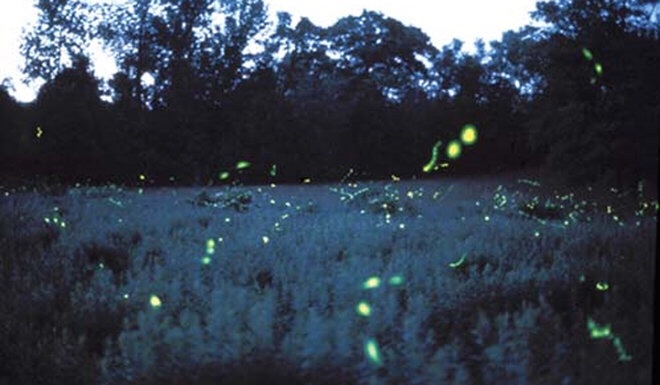
Happiness seems more random, more baffling, more ephemeral. Like a firefly, reach for it quickly, and the breeze your hand makes sends it out of your grasp—it takes a gentle practice to catch a firefly.

What makes me happy? That too may be the rub. Everything in small measures. A decent parking space. The blue outline of the mountains to the west. The concept of deep time. A good crossword puzzle. The ping of my phone when an email arrives. My list is so long and so specific, that it must be boring to you. “That makes you happy!” comes the general snort, “That never makes me happy.” The writer who seeks connection writes about happiness at his own risk.

Even that—the response of disdain to good news—is more general, probably more shared than, say, my appreciation for Kevin Appier’s distinctive and delightful delivery. “You’re writing about baseball? Fie!” Like I said.

So damn the torpedoes. Here comes happiness—some common, some that will be an gentle education. Catch it like the firefly.

Sleep

I packed my suitcase and drove out of Philadelphia. Whether that was yesterday or twenty-five years ago, I am not sure. There is so much to do, so many cities to visit, all those people waiting. I lose track of time. Before I have barely begun, I am completely exhausted. I have to stop. I ask the manager at the motor hotel for a quiet room, and flop into bed. I set the alarm clock for morning.

I must have made a mistake, because it goes off before I fall asleep. I turn it off and try again.

The phone on the bedside table rings. It’s still dark out.

“Get up!”

I mumble into the phone. I am still tired. Please, I am not ready to get up.

“No! you must get up now. There have been complaints. You are sleeping too long. Everyone is waiting. Get up!”

I put the phone down, letting the buzz of voice fill the space under the bed. I try to remember the name of the hotel, so I do not make the same mistake again, but I can’t even remember the name of the city in which I have stopped, and under the white ceiling of the hotel room I fall back to sleep once again.

A loud banging on the door wakes me. I wrap the thin hotel blanket around my shoulders and swing open the heavy grey metal door. The night manager, the one who gave me the room, and several other men stand in the dark hallway outside the door. Deep rings sag under their eyes, wrinkles bend the fabric of their suits.

“You must get up!” the manager implores. “These men are waiting.”

“Damn right!” a heavy man shouts. He wears what must have been, not so very long ago, a handsome blue suit. “Nothing is happening, and it’s all your fault. You can’t sleep forever! We’ve got things to do!”

The other men gather behind him, showing their support. They all look too tired to speak for themselves. The hotel manager stands on one side of the doorway, the businessmen on the other.

“Bother someone else’s dreams!” I try to shout, but all I do is yawn loudly. I wave them away, then close the door and chain it shut, and take sheets and pillows from the bed, making a small nest in the bathtub. I close the bathroom door and turn on the ventilation fan to drown out the noise of the pounding and shouting, and fall asleep between the pink tiles and mirror of the hotel bath.

When I finally wake, I am stiff, but rested. I brush my teeth and wash my face, and walk into the room to change. The manager sits in a folding chair. Firemen—thick booted and heavy coated—sit in the two chairs that came with the room, their heads back, but dreadfully awake. A policeman sits on the floor poking at the shine of his shoes. Men and women near him, almost asleep, curl up together in the unmistakable fashion of lovers, but dressed and chaste. The blue suited businessman lies alone on the bare bed; his head is propped up on a briefcase pillow.

“Are you up?” asks the manager.

I raise my arms to demonstrate the obvious.

“Thank God,” mutters the businessman, and he leads the others out of the room, past the door—separated from its hinges and propped up against the wall—and into the slowly lightening hallway. Outside I hear the sounds of engines starting, and a city whirring to life.

The sun rises above the trees while I change my clothes and repack my suitcase. The maid waves to me on my way out. She smiles. She looks rested too. In the car I open the road atlas and check my itinerary. For each city circled in red there are pages of names. I don’t think that I will finish today.