So, your brain works like this when you begin a relationship: a steady stream of oxytocin lasts about two years and gets you through the infatuation stage. During that time, you are giddily in love, and you do the due diligence (or you don’t) that gets you to something more lasting, something, possibly, permanent.
Here’s the trick. If you are still working on a novel after two years, it is time to throw it overboard. No, seriously. Part of what gets a reader to pass into the dream you wrote is a similar flood of hormones. Reading requires infatuation. Yes, you can pack a novel with drama and with exotic wildness, but somehow, somewhere the depth of infatuation a writer feels for his or her work will emanate from the page and enchant the reader. Or it will not–keep in mind that each reader will be enchanted with something different. But we tend to fall in love with willing partners. Enchantment breeds enchantment.
Novelists are oxytocin junkies. We fall in love—or we fall in love enough—to write and write against all expectation of a result, daftly believing in what we are doing in spite of no promise of permanence. And then, when we finish, we move on—or try to. Some novelists visit and revisit characters, unable to move on. There are a number of reasons: security (this stuff was published once, so why not try again?); habit (I already know these characters, this time and place); anxiety (how will I find another novel to write? I’ll just do this again—sort of).
Great novelists work the same material over and over. Think of all the orphans in Dickens, or all of his switched and hidden identities. Or all the women negotiating lives surrounded by powerful if vision-impaired men in Woolf. Faulkner built Yoknapatawpha County and then inhabited and re-inhabited it again and again. Maybe J.K. Rowling knew that she was beginning a 7 volume world at the start, but how could commercial success not have impacted that world? I could go on.
I could just as easily line up novelists who produced one, maybe two books and then stopped. Might I suggest that they were not prepared for the jarring and harrowing experience of finishing a book—of feeling bereft, broken up with? Their lives were intertwined with that book. It had been the one (as it should be, as it must be!). Yet, once the flow of oxytocin stopped, that’s where they were. Done. And done.
Would falling in love with the process be a solution? You get the oxytocin for two years, it doesn’t matter what—or who—you fall in love with. After the infatuation, you have to learn another way to love. Something more indelible. Love your process like that. I have been writing every day for years—fits and starts, fiction and nonfiction. I used it as a base on which I found a more fiery, single love (that book). After finishing it, I crashed hard, but I also had the writing, some kind of writing, to propel me forward.
I will find another, brighter love as I go forward. Another novel beckons. Before I berate myself too much for the difficulty of beginning the next, I must acknowledge that I am still haunted by the ghost of the last. My brain misses the rush of turning to those words, those characters, those places. So to will your brain. Be ready. It’s just the oxytocin. Just.
 And so, I revisit places—the Calders at the National Gallery of Art remind me of the value of clean lines, whimsy, and balance (always balance!). In spite of the heartache, there is beauty—beauty made by hands, not simply discovered in nature. Although that beauty too—the changing fall colors, the scent of the season even as I walk on the National Mall—fills my sails with new wind.
I take my iPad to bed and write as I imagine Proust did, propped up among the pillows. If only the cats would bring me coffee. I have a table in a library on which I arrange my materials, and where I make progress. I wait for the next rush of crust-breaking hormones, chipping away with sad hands until that day arrives—when the glimmer becomes a fire again. I am ready.
 One of the questions—there are thousands of questions—on the OK Cupid dating website is:
 Complain all you want about online dating, and there is plenty to complain about, but if you are of a certain age, and you cannot (will not) date people from work—which also makes up your immediate social circle—then it’s off to the great internet meet n’ greet.
 Look, some dates will get annoyed if you are courting too slow. Advice: who cares? Anyone who wants to light the fuse after the first date, or third date, has most likely lit the wrong fuse. 5, 4, 3, 2, 1, Duck! And if you feel annoyed or anxious to get moving, remember this: everything you learn about this person now will help you know whether or not you will want to go on a second date, or a fifth date, or more. Introverts, you know that someone has to meet certain criteria to get past your healthy defenses; spend the time needed to discover. “But I don’t want to have to go through all this again,” you complain. Of course not, so slow down and maybe you won’t, later. Extroverts, you know how easily you can be charmed by a single aspect of another person (I’m giving myself much needed advice here)—remember that people are multi-faceted and that more than a first date requires connections across many facets.
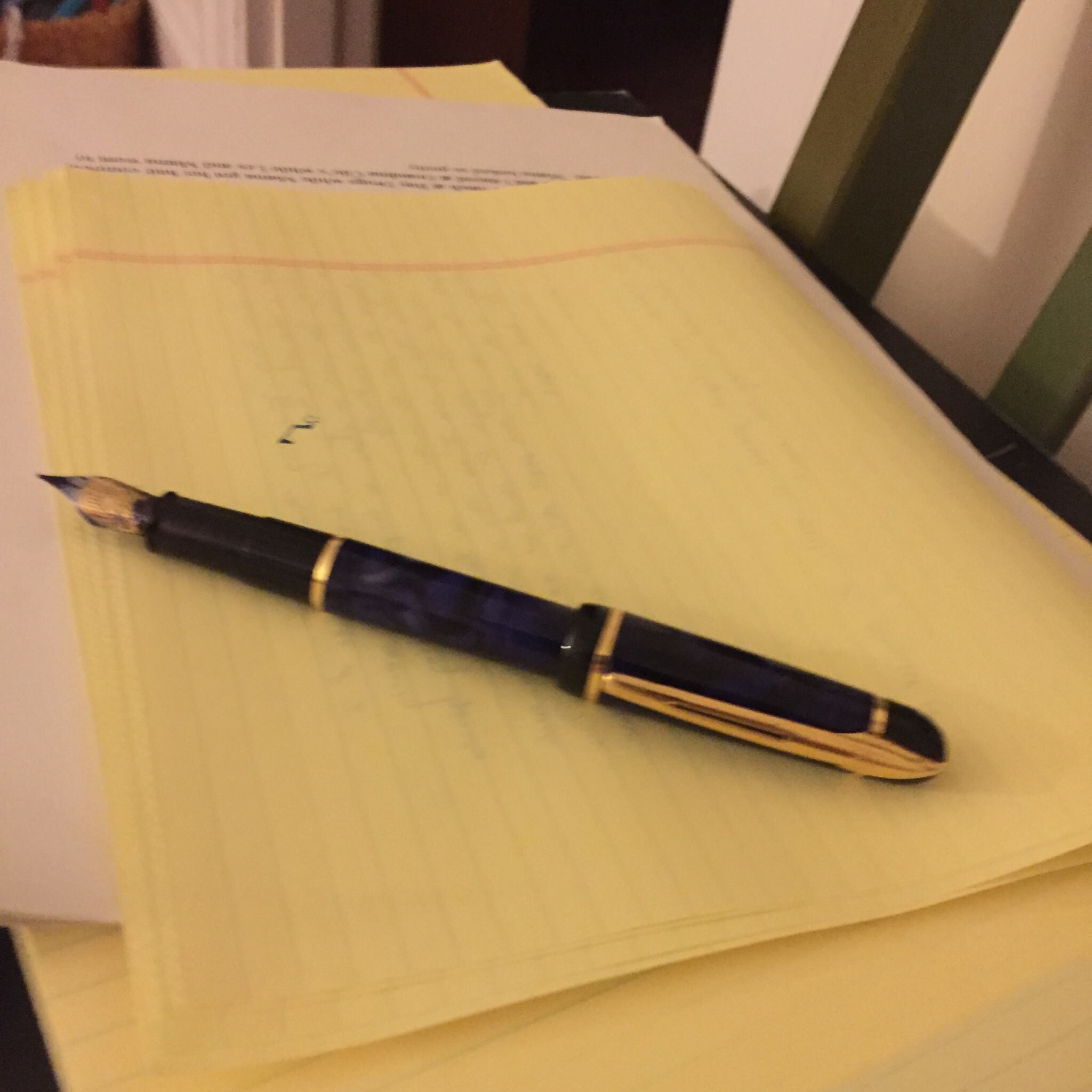 Before I collapse into, “This is all about me,” let me say, what works for me (the words) may not work for you. Chances are it will not. But you know what does work for you, don’t you? A little self-knowledge about this goes a long way. Revel in it, slowly. Well begun is half done, goes the maxim. Here! Here!
 continuoussearch