 A current meme on Facebook compares what Moms used to say to their kids with what they say now. It is held up as a clarion call to the virtues of yesteryear, when Moms—and their kids—knew what was what. Over and over again, stuff (stuff) like this careens around the internet, in casual banter on news shows, in conversations in my workplaces. Those of us who grew up in the mythical “then” look back with nostalgia, and look at this moment with a jocular disdain. I would like to call “bullshit” on the whole enterprise.
I don’t now what your mother was like. If she was anything like mine, there were highs and lows. My mother stayed at home with my brothers and me. She bowled in a league. Went shopping. Had bridge parties. Took tennis lessons. She was a den mother for my Cub Scout troop, and took us to the Devault Meat Packing Plant, among other places. Her sons were a handful. She scurried us out at a reasonable time in the morning, set out lunch when it was time, and made dinner for the family. She made us Batman capes for Easter one year; she sewed. I remember her stitching up an injury to one of our cats.
Was she happy? Her happiness was never an issue for us. Nor was our happiness overly attended to. We all were content, which, to my gimlet eye, is a horse of a different color. It was only later, some 13-14 years after I was born that she began to explore art, and then took on the work of a painter, and artist. If she found genuine and durable happiness, it was in that work—and the work of making art is not about easy delight, or even contentment (so says her son, the writer).
 My mother did what she thought and felt was right. She learned her lessons from her mother and family—and what lessons they were. Some things, she changed. She never leashed us to trees in the front yard. Others were more indelible. I am certain that most of us parent in the same way—sifting through the conscious and unconscious lessons that we received from our parents. What we do, we do almost on a kind of autopilot—in the heat of the moment, dumb memory takes over. Change is hard.
I cannot and will not say that my childhood was perfect. I can recall exceptional moments on both sides of the ledger. Making a judgment seems beside the point. Here I am now, and I go on. There’s a ton of privilege built into that statement, and I fully recognize exactly how fortunate I am to be where I am, and to have traveled to this point in my life. The choices I can make now—and the way I make those choices—are predicated on the choices of my mother and father. And so on. For ages.
I guess that any time I hear someone pass judgment on another’s parenting—and mothering especially so—in that gross, if semi-benign “Look at the snowflakes” kind of way, I want to yell, “Really? Cast aspersions carefully, oh paragons of perfection!” All those old lessons about the log in your eye and casting the first stone ring out loudly for me. Those are the lessons I remember. Besides, the old joke about walking five miles to school in the snow, uphill, both ways, gives the proper lie to ill-kept nostalgia.
Life, and mothering, are hard. No one needs anyone to chide them for the daily duties. The significant missteps require a different consideration. No more abuse, please. But keep the quibbling to a minimum. Please.
In general, and in a larger sense, I distrust nostalgia. Yes, remember, always remember, but without the haze of candy floss. At heart, I am more focused on where we are going, adapting, and learning—and in passing those lessons on. Have I failed? Indeed. I keep at it. I will fail again. So what? I keep at it. Where I came from is a starting point, but not my destination. Eyes up! Here comes life.
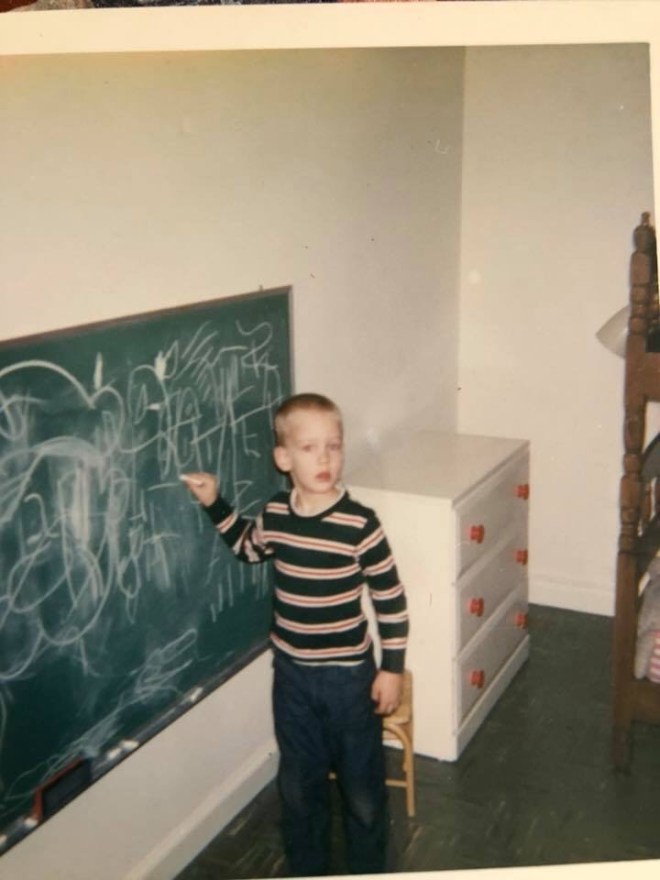 In many ways, I take solace in being surrounded by memories, and there are some that I purposefully mine. The routine of the same lunch—on most days—reminds me of years of similar lunches from the time I was five—earlier—until just last week—and all the lunches in between. I feel comforted by the way those memories permeate my present so easily.
 I have written about the powerful memories associated with places—a rolling set of hills on a road headed north, an intersection with two right turn lanes, a road sign, the curve of a shoreline, a buoy. But, it is everything else as well. All the things. My walls at home are lined with books, and the books speak—not just of what is contained in their pages, but of the times I read them, the places I was, the company that surrounded those moments. And there is more, a gesture, my hand on a doorknob, the sudden turn of my head when I look for something, the way my foot falls on a stair. I am out of myself in a flash, or at least out of this time—even though I know that I am inextricably in it—and another older time surges through me. Even when still, this heartbeat explodes into a thousand, a million other heartbeats, and time collapses.
 And so, beside my own strange face, I also take pleasure in crowds of strange faces, all of whom present unknown avenues, untapped sources of experiences and memories. I know the echoes will come to the strange person I will again be tomorrow.
 continuoussearch