 In between units of my AP English class, I spent a few days with William Blake’s Songs of Innocence and Experience. Blake doesn’t fit nicely into any tradition of British Literature, but his work touches on some of the realities of life in London that other writers ignore. So before we charge into Jane Eyre, Blake.
Blake is a Christian mystic (well, maybe). He believes in a relationship with the divine that is not mediated by the official church. In fact, he sees the church as complicit in forging the manacles of repression that plague humankind. When talking about him, it’s helpful to have an idea of faith that is not infringed upon by doctrine, and so I mentioned the “prelapsarian state of humankind.” My students, high school seniors, did not know what “prelapsarian” meant. Perhaps that is not a surprise—I’ve been told that it is not surprising. No one has taught them about these ideas. Before.
I wonder about what we teach and what we do not teach. There are big sweeps in history and the more minute formulae of mathematics. Grammar in foreign languages. We get big personalities on the world stage—the great man curriculum now incorporates women too. We try to do a decent enough job with race—at least we focus energy there, even if we don’t solve the problem. The history of family life gets left out. The small scale, which is to say daily, costs of industrialism gets left out. We may talk about love, but not about sexual relations. A sense of the on the ground effects of historical movements in faith gets left out. We do the big and the particular, but not so much what gets eaten at dinner (unless you learn that in a foreign language class) or what gets talked about in the bedroom.
There is a history of the personal. It is all around us. I loved to show the first episode of Ken Burns’ Baseball, because it showed how sport was connected to leisure time, which was connected to work, which was connected to changes in industrial patterns and urban growth and a half dozen (more) other things. Teaching Blake, there are the chimney sweeps (nothing like Bert in Mary Poppins) and syphilis, and the Tyburn Tree. There is a hidden, or at least forgotten, history here. And Blake’s glowing mysticism.
My students are shy about the hidden—which is why it is hidden and remains hidden. They sit at the edge of the pond and hedge their bets. They are cautious up to a point. They will wander off topic bravely, and even venture half-baked opinions bravely, but they have a hard time connecting to what they have read. And so often, the hidden remains off limits.
Being a reader means charging in fearlessly, and letting the text in, being attentive in the most focused and furious way. One must be—at once—open to difference and self aware. In Blake’s words, to “[t]urn away no more,” to want to return, to renew. What Blake seeks is that untainted energy and inspiration, unbridled from easy suppositions or over-chartered paths—the crooked way that is at once as old as the ancient trees, and as new as this morning’s dew. Prelapsarian. If not free of sin, at least free of shame—either of one’s deepest feelings or one’s ignorance. Let me learn, the reader cries. Teach me something new.
Oh, to be giddily enthusiastic. To be unashamed of charging in, both sides of the brain blazing. I know there are more quotidian concerns–colleges, jobs–but to seek the full flight of inspiration and imagination, that should count for something. Yes? At a personal level, we give some of that away, and teach our students to stay reasonably in their lanes.
Or not. There must be time to blaze, to dare. Again. As if for the first time.
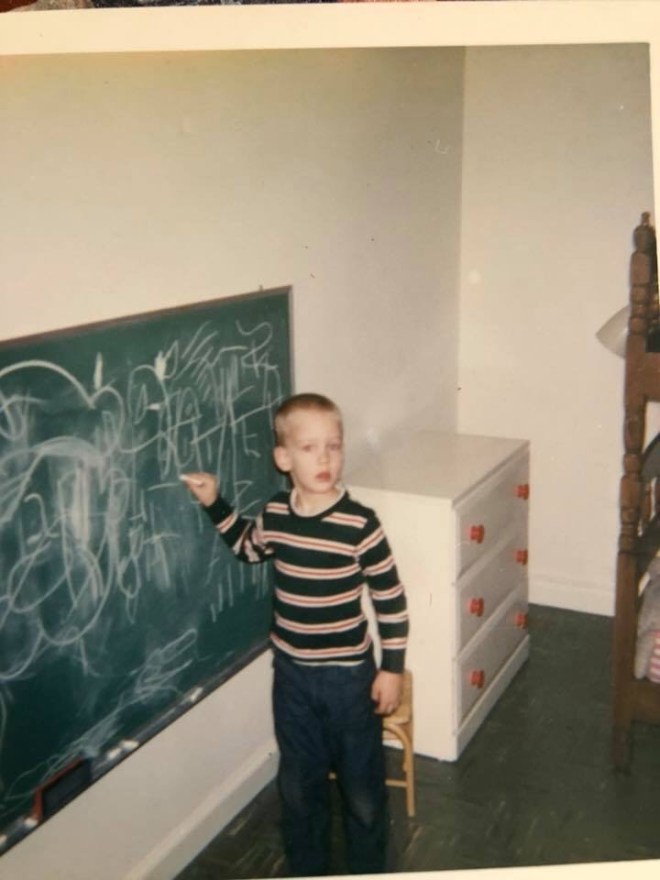 In many ways, I take solace in being surrounded by memories, and there are some that I purposefully mine. The routine of the same lunch—on most days—reminds me of years of similar lunches from the time I was five—earlier—until just last week—and all the lunches in between. I feel comforted by the way those memories permeate my present so easily.
 I have written about the powerful memories associated with places—a rolling set of hills on a road headed north, an intersection with two right turn lanes, a road sign, the curve of a shoreline, a buoy. But, it is everything else as well. All the things. My walls at home are lined with books, and the books speak—not just of what is contained in their pages, but of the times I read them, the places I was, the company that surrounded those moments. And there is more, a gesture, my hand on a doorknob, the sudden turn of my head when I look for something, the way my foot falls on a stair. I am out of myself in a flash, or at least out of this time—even though I know that I am inextricably in it—and another older time surges through me. Even when still, this heartbeat explodes into a thousand, a million other heartbeats, and time collapses.
 And so, beside my own strange face, I also take pleasure in crowds of strange faces, all of whom present unknown avenues, untapped sources of experiences and memories. I know the echoes will come to the strange person I will again be tomorrow.
 I have a confession. I have a terrible time receiving love. I’m sure that this is true of almost everyone, so, I’m reluctant to make any big claim about it.
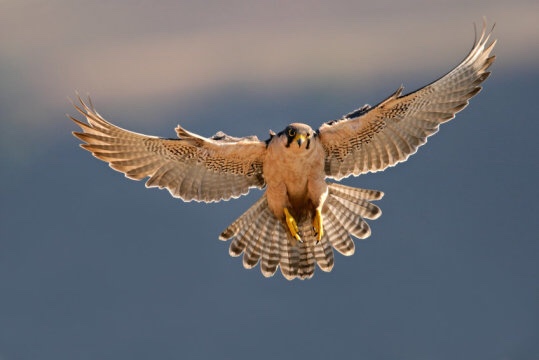
 It is the same with writing. I have used this blog as practice off and on for the past few years. It has been a way to scribble and not to worry about the duration of longer effort. Longer effort—let me call it what it is, a novel—can be daunting. What if, like falling and flying, one mistimes the creative leap and ends up hobbled or broken, with months of work sent to sea like Icarus? I only I can think about something longer as, well, 1000 word spans. 1000 words is nothing. 60 days at that pace, and… But let’s not get ahead.
 I take refuge in Michelangelo’s vision of the sculpture already extant in the stone—we aren’t creators so much as revealers—discoverers if you will. So too, with flight, while there may be a destination, there are also loops and rolls and fields long enough to land, and walk to an untended apple tree, pick a ripe crisp fruit, and eat. Discover this on the journey.
 continuoussearch