 An occupational hazard of a career of reading English Literature is an almost fiendish doubt in the power of love. Just think of all the novels—serious literary novels—that you have read, and multiply the effect by a thousand. Sure, Jane Austen has something to offer, but seriously, Pride and Prejudice without Darcy’s fortune waiting to bail out Elizabeth Bennet is a tragedy.
Am I a cynic? Here in the early years of the 21st century, it is hard to be anything else. I fight this impulse with every fiber of my being, and yet, there is a quiet, persistent voice that advises, “Have you lost your mind?” Not so quiet after all.
So much of what I have written in these posts over the past several years is illuminated by the tension between the bountiful and generous impulse to love unabashedly and the counter impulse to protect (what is left of) myself. The gift—if there is a gift—I give is to wrestle between those countervailing forces—to recognize the struggle and not to deny the struggle. It would be easy to give in to unbridled cynicism—I would not be alone, might even be called wise to make this decision. But even when I declare “(what is left of) myself,” I couch it parenthetically. I don’t believe that I have dwindled over the years and experiences and wisdom. Somehow I have grown—not just older, but deeper.
I can point to literature for this counterweight—just as I can point to literature for the darker impulse. But not (most) novels. When I read Whitman’s grand declaration of connection—“For every atom belonging to me as good belongs to you”—I know that there is no loss so large that can obliterate me, because there is no loss that can obliterate you—“You, whoever you are.” Or when Creeley writes, “Be for me like rain—the getting out of the tiredness, the fatuousness, the semi-lust of intentional indifference”—what could be worse than intentional indifference—or semi-lust? What good is anything short of Dickinson’s “Wild nights… Done with the Compass—Done with the Chart!”
The secret power of cynicism is that that it has a course. You can navigate to doubt in a straight line. There are doctrines and creeds to guide you to the heart of darkness. Tolstoy be damned—the road to an unhappy family is too familiar, too well worn and rutted. Happiness—not complacency, not mere contentment—but roof rending joy has no book of instructions.
If ever I doubt the power of unrestrained, unbounded, even unfounded love, I have a store of words and images to revive my failing trust. And if literature fails, I have taught kids and children for the past 25 years who give me palpable views of potential. And, if they fail, I have daughters who, even in querulous moments, give me hope. And when I am apart from them, I build one last bulwark against too easy doubt—have practiced building it for decades, and here, it is neither wall nor boundary, but an open road and unlimited horizon. It is a road built by these words, and met, beyond expectation, beyond hope, beyond doubt—met by another who builds a road to me—a road made with words and hands and trust and faith and an eye ever to the horizon.
 What preoccupies me is less what is beneath some other surface, than what is beneath mine. I can hardly utter the first word, “I,” without replaying every other time I finished the phrase. No matter how many versions of love I have seen others act out, or that I have seen portrayed, my single clearest—or least clear—vision of love comes from my own experiences. I am sure this is true for everyone. Who, in the final moment before she or he declares her or his love, trusts anything other than the one set of experiences that illuminates only one heart?
 It wasn’t until I started teaching—when I actively had to think about how what I said and did would further the progress of my students—that I began to have a serious idea about love. Teachers never think about themselves. Okay, that’s clearly not true. Great teachers think about their students, even when they think about themselves. I don’t know how I learned that—probably from the examples that great teachers gave me. I do know that the first serious relationship I had in graduate school was made more potent, and ended more peacefully—if not less painfully—than any romantic relationship I had up to that point.
 One of the questions—there are thousands of questions—on the OK Cupid dating website is:
 Complain all you want about online dating, and there is plenty to complain about, but if you are of a certain age, and you cannot (will not) date people from work—which also makes up your immediate social circle—then it’s off to the great internet meet n’ greet.
 Look, some dates will get annoyed if you are courting too slow. Advice: who cares? Anyone who wants to light the fuse after the first date, or third date, has most likely lit the wrong fuse. 5, 4, 3, 2, 1, Duck! And if you feel annoyed or anxious to get moving, remember this: everything you learn about this person now will help you know whether or not you will want to go on a second date, or a fifth date, or more. Introverts, you know that someone has to meet certain criteria to get past your healthy defenses; spend the time needed to discover. “But I don’t want to have to go through all this again,” you complain. Of course not, so slow down and maybe you won’t, later. Extroverts, you know how easily you can be charmed by a single aspect of another person (I’m giving myself much needed advice here)—remember that people are multi-faceted and that more than a first date requires connections across many facets.
 Before I collapse into, “This is all about me,” let me say, what works for me (the words) may not work for you. Chances are it will not. But you know what does work for you, don’t you? A little self-knowledge about this goes a long way. Revel in it, slowly. Well begun is half done, goes the maxim. Here! Here!
 I don’t believe in fate—providence, if you will. If there is a plan, it does not proscribe outcomes. Rather we wander in and out of circumstances bumping into two sets of patterns—those we make out of our lives, and those that are beyond our immediate control. Life goes out of balance when we cannot get the two patterns to jibe—when we cannot reconcile ourselves to the patterns that exist. Out of balance we can neither accept what has happened in our lives or we cannot break those patterns and create new ones that are made from familiar pieces but reflect possibilities that we had not imagined. Out of balance we fight against the patterns that life provides, missing obvious signs (rising temperatures, repeated cruelties, even the tender messages of love) and careening against the walls of a maze that we cannot perceive and causing damage to ourselves and those around us.
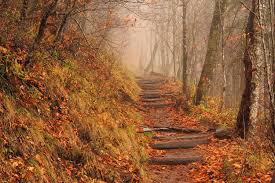 Sometimes I step right in it. It could be good, could be bad, but somehow, my foot comes down right into it. All I was doing was taking a walk—could be to anywhere, the post office, the grocery store, down the aisle. The destination is of no importance—tell yourself that Brennan, assure yourself that you are a man on a journey, drifting happily so long as there is a journey whose destination is, truly and fortunately, impossible to predict. And then, splat, I tumble forward—because that is how we fall.
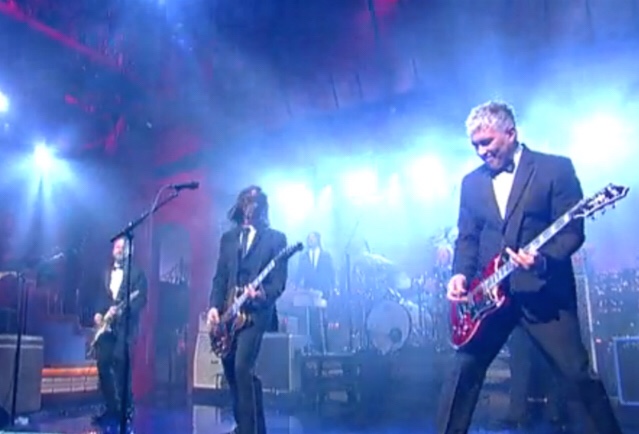 Play it loud.
 I started watching comedians late at night with my father, who was a Carson devotee. My dad would take a nap after dinner—short, maybe 20 minutes in his chair in the den—before watching television or reading until the news and then the Tonight Show. He would stay up until Carson finished at 1 am (later only until 12:30 am). My mother absented the scene well before 11.
 In 1982, the year I graduated from college, Letterman took over what had been a fairly straight talk show slot. Tom Snyder’s Tomorrow had ended NBC’s programming. Snyder was as hip as could be imagined at the time, smoking a cigarette and asking pointedly bemused questions. Letterman rolled in on a wave of calculated whimsy and sarcasm. He was a genial wiseass—smart enough to host Fran Leibovitz, foolish enough to wear a suit of Alka-seltzer tablets into a dunk tank. While Carson chuckled at the world, Letterman was in perpetual eye roll. “These people are idiots,” he seemed to say, “And if we aren’t careful, we are too.”
 When he left in 2015, it marked the end of my Second, and maybe Third Act. From graduation from Swarthmore to graduate school at Binghamton, from adjunct teaching to secondary ed teaching, from occasional church goer to religious professional, from single, to committed cohabitation, to marriage, and finally to separation and divorce. I still watch late night comedians, but now they function almost only as an antidote to the news. Please, someone make light of the daily made-up facts. Maybe that will end when the current administration leaves, and maybe a sequel to Ionesco’s Rhinoceros will have everyone gleefully turning back into humans.
 continuoussearch