I have traveled to the ocean off and on all my life. Whether to Jones Beach while visiting my grandparents on Long Island, or Popham Beach in Maine with my immediate family, later on my own—the beach—the ocean really—has had a call for me. Whenever I visited, I would be in the waves for hours, even when the water was frigid. I would exit with chattering teeth—b-b-b-b-b-ut I’m not cold, Mom.
 When I was 11, I started sailing with my father. We took lessons together and practiced on a lake. He kept a boat on the Chesapeake Bay, which was rarely choppy. In my thirties, I joined him on the ocean—home again.
Now I live near the mountains, far enough from the ocean that my friends worry I will miss it. How can you move so far away—from minutes to hours—from the breaking waves? I know a secret. I haven’t. I live in the shadow of ancient waves.
The crust of the earth floats slowly, steadily on the surface of the planet. Mountains are sudden swells where the crust crashes into crust, lifting like three mile high following seas. The break is not here or there—the way you know where and when waves break best along a beach—it rises across hundreds of miles all at once, rapidly—in geological time—and subsiding only when erosion carries the soil and rocks back down the swell—the same way the foam at the crest of a wave slides away to one side or the other of the watery passenger.
How can you tell? Nothing is moving? The earth is solid. It seems that way, yes. Yet in time, over time, over more time than humans can recognize with their eyes and ears and hands built for moments on the savanna—the world is more fluid than solid, and it races. Deep time, geologists call it.
 Deep time? Not thousands of years—a blink. Millions begin to register. Billions of years. I once had my students hold one hundred feet of rope, and marked the history of the planet on it. Those who held on to human historical events: Lucy, the Pyramids, the Great Wall of China, the Renaissance, man walking on the moon—could barely wrap a finger around the rope they were crowded so close. Our Western Mountains—the Rockies—and Eastern Mountains—were flung apart, but well after our continent had formed.
Deep time. I stand near the mountain as still as I can be, and wait, my feet apart, on a board as long and wide as a county. Here it comes. I can feel it.
 Where does sadness, the inexorable seriousness in my writing originate? My friends would tell you that I am puckish in real life—if anything, a bit too unrestrained. Why doesn’t that same sense of things stripe my writing? Why do I seem stuck hitting the same damn dour note?
 I packed my suitcase and drove out of Philadelphia. Whether that was yesterday or twenty-five years ago, I am not sure. There is so much to do, so many cities to visit, all those people waiting. I lose track of time. Before I have barely begun, I am completely exhausted. I have to stop. I ask the manager at the motor hotel for a quiet room, and flop into bed. I set the alarm clock for morning.
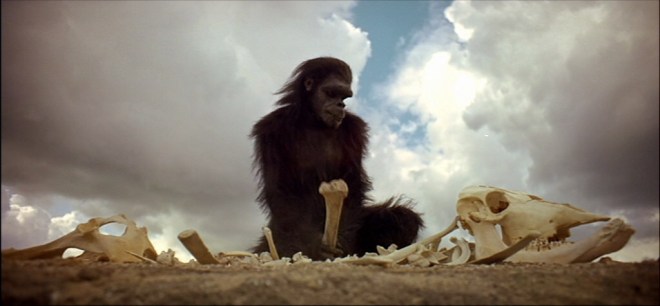 And yet we build, and not every tool—Kubrick’s 2001 aside—is a refinement of a club. Certainly Kubrick’s 2001 won’t help one win a war, or woo, unless, of course, the object of desire is imbued with an essential and unmitigated nerdiness. Nonetheless, even without some mysterious aid, we grow. Maybe not today, maybe not tomorrow, but soon enough, and we find our way to each other.
 I recently swapped the nicknames that we give our kids with a friend. We had both, surprisingly and strangely, settled on “Bug.” I’m not sure that our daughters will appreciate that longer into their lives, but for now, it will do.
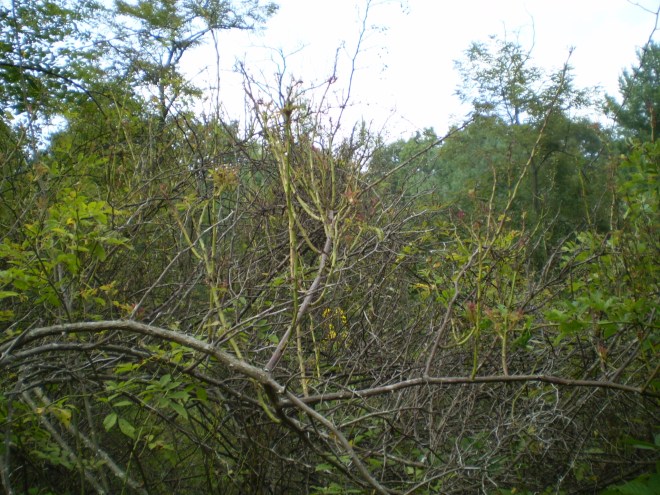 And I do know the other side. I know how easy it is to let upset slide into hate. And I know that once uttered—by an adult, not by a child, because children must experiment with all words and all emotions—it breaks the bonds in a nearly irrevocable way. I have said it, out loud—either in the perpetual external conversation I have with the world or directly the object of scorn—and the immediate thrill is followed by a deep remorse as the tendrils that connected me to another person wither immediately into dried spiked vines, like the hedges of multiflora rosa that grew brown and foreboding in winter. All that was planted must be uprooted. Maybe something can be saved, some sprig, somewhere.
 I wrote this years and years ago. Later, I sat down on a stone wall in a tony neighborhood in Baltimore to wait for a bus, thinking about nothing other than the weather—it was a late spring, the sky was all but cloudless—when I realized that the stones were swarming with ants. I quickly stood up, and brushed many, too many, off my pants. I knew what I had done. I laughed, and started walking.
 I am unpacking and repacking old boxes. I have no fantasy that I will throw away old essays or my notes from Joyce and Woolf classes. But there are things I threw into boxes as deadlines approached, and now, when I look at them, nothing. I have whole boxes of emotional and intellectual cul de sacs.
 continuoussearch