The Soundtrack of My Life

Break Up Songs                             


Some days the only thing that makes me feel better is a really sad song: some earnest expression of hopelessness, with none of the gloriously aggressive exultation of rock and roll. And, no, not the blues, which seems to throw sadness back in the face of grief, although maybe John Lee Hooker’s “I Cover the Waterfront” will do. To be honest, my heart is broken, which, believe me, is no easier at 55 than it was at 35, or, for that matter, 25 or 15. Stupid heart. So cue the Diana Krall and a little Lyle. Here we go.

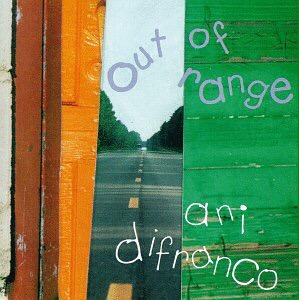
I put on music all day. I shuffle through my playlist, and thank goodness it contains Stevie Wonder’s “Another Star” (the happiest break up song ever), or my daughter would be very unhappy in the car. I search through old CDs and copy old songs into the new moment. I even dig up performances on YouTube (by the way, Ricki Lee Jones’ “We Belong Together” sounds much better in the studio). One song I keep coming back to is Ani DiFranco’s “You Had Time,” in which she answers the question, “Did they love you, or what?” with “They love what I do. The only one who really loves me is you.” This is as chimerical a statement as anything, because love, or not love, there is the absence—of hope, of answers, of the future, and yeah, finally of a love that makes all those other things possible—and it is the absence that causes the hurt.

Listening to it over and over, I swear I can hear another song. And thinking of it, I blow the lyric, looking for “I bleed you. You bleed me.” Or thinking I’m digging for a Cat Stevens’ song. I’m not. Finally, epiphany overtakes poor memory, and there it is—almost the same tinkly piano opening—just ever so askew in Ani’s song—and the deeply keening refrain. It’s Jimmy Webb’s “All I Know” that Art Garfunkel recorded a million years ago. And between the two songs I hear two different ways of going through this gruesome little patch.

“All I Know” begins with: “I bruise you. You bruise me. We both bruise too easily.” Yeah, I get that these aren’t literal bruises, but seriously? Then it proceeds to: “All my plans have fallen through; all my plans depend on you.” And may I just say “my plans?” This is one of those dead giveaways of a relationship that was doomed from the start. A couple never has “my plans” because the fundamental commitment to being a couple means planning together. The hardest part of living as a long term single man—and I have been a single adult much longer than I have been in a relationship—is ceding the well-worn prerogative of making all the decisions: from bed times to travel; from the playlist to the dinner menu; from this to that and back again. A relationship is all negotiation. Even if one person leads, it had better be because some kind of bargain was intentionally struck. Of course I am confusing healthy relationships with what most of us go through (okay, not you, or you, or you, either), replicating our parents’ habits without will or awareness.

Okay, rant over, back to the song, which builds to a crescendo of “I love you and that’s all I know.” I’m not really sure what the singer hopes for at this moment. Forgive me for the bruises? The bruises and plans don’t matter because I love you? Can I just say, this is the ultimate “guy” move: the only thing that matters is how I feel. Webb’s song drives that point home: “That’s all I know.” Yes, that’s all very nice, young man, but I believe the object of your affection just left the building with your car keys. I hope you have a ride home.

(And maybe I’m wrong. Maybe it’s just more of an end of the concert song–the singer pleading with his audience, knowing that his art relies on them, and realizing that although this moment may end, another is sure to come. My penchant for reading everything as indicative of the artist’s perpetual struggle with his or her art and audience is my own perplexing burden).

I’m not sure why we (the males of the species) believe that simply pronouncing our deeply held emotions will ever make a dent in the fabric of reality. Or why we persist even after we acknowledge the deeper flaws (yeah, I bruised you, but you bruised me too). And lord knows I have done it, stupidly, automatically, and genuinely. I’ll give myself some credit.

And that’s why I keep listening to Ani’s song. The song comes from the person who is leaving, who doesn’t have an answer, who knows that she is loved, and still, all she has is “an empty head.” She doesn’t have an answer when her partner pleads, “You said you needed time and you had time, and she feels pretty crumby about it. “How can I go home, with nothing to say?” Even home becomes impossible when things end, because home is a place you (sometimes) make with someone else.

So there just isn’t an answer, or at least not the answer I want. As dissappointed as I feel about that turn of events, it’s as akin to being on the ocean rain that won’t stop for four or forty days. Cursing and complaining don’t help, and putting on dry clothes just guarantees another set of wet in the duffle. Fingers swell with brand new whorls—I’m not even myself anymore. But the rain will stop, the sun will return. Stevie, cue the Brazilian band, ah “Another Star.” Yeah, I’m sad, but I’m here.

For now, I embrace the discordant moment in my life, knowing that it will not be a moment, knowing that as it has before, it will pass, and knowing that the right song (or poem, or sandwich, or trip) may not make everything better, but that eventually I will move on and the music (and poetry and sandwich and trip) will be there and that if I’m a little bit lucky, I will share them.

On Great Teachers (and others) Part 2

The hardest part of having great teachers and having accepted their brilliance and sneakiness, is that I expect this same brilliance and sneakiness from everyone. It’s not a conscious expectation, but who am I to deny someone something to which we all aspire.

Oh, that.

Actually, I realize that I have no idea to what other people aspire. And at heart, I suspect that most people don’t know this about themselves either. I would make a list of the ways people get confused about their aspirations, but it would be sanctimonious (even more sanctimonious than the rest of this).

I realize that I spend too much time trying to figure out what today’s teacher’s moment of sneaky brilliance is. Because not everyone is a Socrates. Not everyone is going to share their passionate brilliance about flying buttresses like Michael Cothren. Nonetheless, when working with “authorities”–with people from whom I expect to learn something, I do look for the hidden treasure (and the hidden map).

What is the hidden treasure? My best teachers always had a dual treasure in mind. One was always the subject at hand: Joyce, Woolf, Geology, Baroque Art. The other was always my (or any other student’s) ability to tease out a unique and successful approach to the subject at hand. As a teacher, my favorite moments are witnessing my students’ dawning awareness of their nascent brilliance–watching the lights go on.

What I have learned over time, and it has been a hard lesson, is that many teachers are only interested in the first treasure. Learn the material and advance. And when I write “teachers,” I mean, “people.” Because I think that everyone is a potential teacher.

In my less generous moments, I think that people want to teach everyone else about themselves. In more generous moments I accept that people are always teaching about the world. The lessons may be unintentional and uncontrollable, but there they are, waiting for the student.

I am more troubled by teachers who never want the treasure to be uncovered, or worse. They hand you a map, and when you follow it, you discover not a treasure, not even a new map, but a penalty: an electric eel, an exploding tomato, a severed thumb (wait, that’s my thumb!). Of course there is a lesson here as well, it is a darker lesson, and one I would rather do without. It may be a necessary lesson. Still.

I go on (I can’t go on). The sneaky brilliance (or the brilliant sneakiness) of the world daunts and delights me. There is always something to learn, and, always, another way to get to it.

On Great Teachers (and others) Part 1

I met with one of my professors from Swarthmore last week. In and of itself, I encourage keeping in touch with mentors from the past. They help provide a milepost on the travel. Either you say, “Wow! How far I’ve gone,” or “Damn! This road circled back on itself.” Or any of a hundred other things.

In the middle of our coffee and conversation, Michael (Cothren) bridled about the drive to clarify assessments at Swarthmore: creating rubrics that would direct students to a clear path for academic success. Otherwise known as telling students how to get an “A.” Michael thought that figuring out how to get an “A” was part of the student’s job: “They need to figure out what I want. It’s a life lesson.”

And right there is where the trouble starts. If only all our mentors were wise enough (and sneaky enough) to bury the treasure and and not simply give us a map, but teach us the signs and signals and ways to interpret the world so that we could find the treasure without a map.

I started this vision of the best teacher early, when Fritz Marks (at The Hill School) taught us Platonic Dialogues (We read Euthyphro, Crito, and Meno, as well as large swaths of The Republic). Socrates was always able to ask a question and craftily get his interlocutors to develop their own answers, making their way to the truth by fits and starts and on their own. Of course these dialogues are fiction, however much they may be modeled on something that actually happened.

At Swarthmore I was fortunate enough to have teachers who used similar ploys, making us figure out answers, or surprising us with answers that had been under our noses all along. Among these was Kaori Kitao, who opened her Cinema class with the simplest of questions (What is Cinema?), and which, if one wanted to follow the logic, ended with some fairly complicated ruminations that could have lead into Neo-Platonic visions of art and ideals.

The French critic/philosopher Roland Barthes proposed that there were two kinds of teachers: emcees, great conductors of ideas; and exemplars, great models of thinking. (And, no I cannot find the reference for that). When I recall my best teachers they actually wove these two strands together. I recall being amazed and inspired by their approaches to their subjects. They were clearly brilliant and just as clearly welcoming. I felt as if they were standing on the opposite shore waving their students over. Their brilliance was never inaccessible or inscrutable, but, instead, was not only possible, but probable if only one was willing to do the work. And part of that work is figuring your way across the water.

Thoughts on compassion and the wrong response

At some point shortly after Robin Williams’ suicide, someone angrily commented that suicide was a selfish act, which drew the fairly enlightened and angry response, “No, it’s not. Here’s why.” At least that was part of what lit up my Facebook newsfeed last week. And there was anger and there were enlightened responses about depression, the meaning of depression, suicide, and the meaning of suicide.

Not so strangely, I’ve had a bit of time to think about suicide this past month. I appreciate the discussions about mental health and depression. Clearly, anything that takes the lives of 30,000 Americans each year bears serious thought and discussion. All our lives must have come into contact with several people who made this choice. In my life, I have known more than five and less than ten people who have either succeeded or made truly serious attempts at suicide. It’s not that unusual a number.

And so, I can’t help spending more time about those who the parlance calls survived. The leftovers. What is a good response to suicide? Quite honestly, this time around, among my first blush responses were some less than charitable impulses. I stand with Dylan Thomas: “Rage, rage against the dying of the light.” I did not act on these impulses; I had other work to do with people who were struggling as much, more, than I was struggling. Nonetheless, I felt them and tried to manage them, but it was not–is not–an easy task.

I watch people around me take up the cause of suicide prevention. This is a good cause, and an act of unselfish kindness on their part. I understand this also as a way these people work at healing the tear in the universe left behind by the suicide of our bright and generous minister. And this is what we who remain are left to do: work at the tear in the universe.

When the universe is torn abruptly, I can’t imagine a response that does not turn finally towards compassion. I also cannot imagine the possibility of a full throated, “No!” In my case this “No!” was accompanied by many Anglo-Saxon epithets. My father would have quietly said, “This is shitty.” I say, “fuck.” A lot. Mostly in private.

There probably is not, within reason, a wrong response to suicide. But even that “within reason” is a hedge. Surely some Devil’s Night act of savage protest in which the dispossessed, the angry, and the desperate burn a city to the ground is not a reasonable response. Okay, maybe just one fire? But 30,000 fires? One for each suicide in America this year?

Probably not a good response.

Nonetheless, my compassion ends up getting turned toward those who are here, whose work will be to poorly sew back together what has been put asunder. I listen to those who try to make sense of the senseless, to those who rapidly respond: “Fix it, fix it,” to those whose “No’s” bear the added weight of personal struggle with suicide and suicidal thoughts. I even feel compassion toward those who yell and scream, who turn to anger, because I feel that too. I feel a little compassion for me.

What the Greeks got right–when grief has a funky beat

Heading home after work at church today, and part of that work is talking and processing with congregants and staff these days (how could it not be?), and put on Sharon Jones and the Dap Kings’ kickin’ retro funk song, Retreat. And then it hit me, the ancient Greeks got it right when they embodied human emotions and states-of-being into their pantheon.

Here’s a song about a woman scorned. She is challenging her lover to retreat in the face of her fury. Right now, it is kind of the same song that grief is singing to me. Yeah, I know, not, of course not. Grief is not singing to me in the form of Sharon Jones. No, no, no.

But maybe grief is palpable, and I fight against it at my own risk. The song is boisterous and giddy in its challenge: “Raise your white flag high ’cause I’m comin’ in blazin’… And I don’t care if it makes sense to you!” Horns blaring, percussion pounding. Bell tolling. Oh yeah, have fun with this.

Have fun (or funk?) with grief? Really? Tear my shirt! Throw ashes on my head! “Retreat! Retreat! Retreat!” Sharon Jones channels the furies–let it all out. Because this time (and every time?), it won’t make sense. Because today I don’t have to declare victory. There will be time for that later, after this raucous (for me, perhaps not for you my quieter more solemnly disposed friends), exceptional event.

For now, maybe turning the dial to eleven, and letting the sea crest over the walls may be exactly what is needed. If that is what it takes, there it is: “Cause it’s my way baby, and I don’t care none about the rest of you.” Go for it, grief. I’m down. I’m dancing.

The Thirty Thousand Voiced Creature of PNC Park

After and in the middle of the tragedy, the family went to Pittsburgh for a long planned visit with friends. We did not talk at length about it. In point of fact, my friends are from the Danbury area of Connecticut–yes, Newtown. One friend taught at Sandy Hook and was in the school when the shooting happened. What strange good company we made.

So, there we were in our different stages of grief, eating good food, drinking wine, riding carousels, and generally taking time away from the world. It almost worked. Careening along the Phantom’s Revenge at
whatever speed helps (and jarred our bones).

Tuesday night we saw the Pirates play the Dodgers along with 30,000 of our closest friends. The game was close until the Buccos scored four runs in the bottom of the eighth inning to reach the final score of 12-7. The crowd followed the game closely: cheering heartily all the Pittsburgh tallies; groaning sickly at the two errors by two different Pittsburgh third basemen; and booing lustily after Dodger reliever Jamey Wright intentionally plunked Russell Martin and was allowed to remain in the game (it was the third hit batsmen of the game, and the second in a series of retaliations).

Seat by seat, aisle by aisle, and section by section the fans embraced the game. My daughter, Katherine, had no idea that a baseball game could produce more than the esoteric detachment of rooting for our (semi-)beloved home team, the Norfolk Tides. We stayed through the entire 3:39, cheering and clapping and booing with all our friends.

Katherine asked, “When can we go back?”

My friend Brian said, “if I lived near a team, I would go every day.” Amen, brother.

Was it wildly jingoistic? Infinitely meaningless? Utterly unpack-able in some philosophical “opiate of the masses” fashion? Yes, yes, and yes. I’ll get back to grief and confusion (and did, quickly), but for one night (and others now to follow), it was good to get swept up and away.

Struggling with suicide

While I am sure that suicide is difficult in any faith, in Unitarian Universalism it poses some distinct challenges. To begin with, as a faith that does not dictate a specific doctrine or creed, Unitarian Universalism finds cohesiveness around the mutual affirmation of some fairly general principles. As general as those principles are, even in our faith we wrangle about them and how they should be lived and interpreted. The main thing we do is agree together to affirm them.

In the end, that agreement that we make with each other is the main thing that holds us together. This makes Unitarian Universalism a covenantal faith; what holds Unitarian Universalists together is not a belief in god, or in a primary prophetic text, but in the act of making a covenant with each other.

This covenantal action bespeaks a premise that we do not make our faith alone–that it arises out of relationships. If you examine the Unitarian Universalist principles, you will find that they all refer to how we are in the world with each other. Even the fourth principle, which seems on its face to be about truth, insists on a “responsible” search for truth and meaning. Responsible to whom or to what? To each other and to the world? At least.

The theology inherent in the Unitarian Universalist reliance of covenant directly places the mysterious truth, what some would call the divine, into this web of relationships. We enter into these relationships freely, which is to say that we are not compelled by force or threat; there is no damnation to frighten a Unitarian Universalist (or anyone) into compliance. We are always in a set of relationships: families, friends, work, but also to nature, to the all the world around us, to the historical past and future, and,in a special way, to our fellow congregants.

This web of relationships can feel weighty at times. For instance, a cup of coffee enjoyed after worship explodes into the world as the web of relationships flowing from coffee in the cup expands ever outward. It is hard to be in the present moment, because no one thing is unconnected. All our choices become profound decisions. However, the web can also be a safety net–they are the ties that bind us to the world. It is not so bad to be bound to this world.

And so to suicide. Suicide is particularly hard because it severs relationships, and it shows that an individual has lost connection to the vast array of relationships to which she or he belongs. The survivors feel the loss because one part of the great tangle is no longer there. And because part of Unitarian Universalist theology is bound to all these relationships, that theology is called into question by the act of suicide.

No, of course not, one might argue, suicide is an act that belongs entirely to the person who enacts it. It reflects only on that individual and his or her state of being. I understand that perspective, but struggle with it, in some portion because I am a Unitarian Universalist.

One of the great mysteries–what makes the self– is answered not by cogito ergo sum (I think therefore I am), but by I am in relationship with the world therefore I am (help me with the Latin, please). This is a fairly radical concept, perhaps more so than we ever fully imagine, because there is no self without the world–the self is contingent on the world. Most would reverse that postulation.

But the world! Insistent and persistent. And then, if only it had been so for my friend, and how could it not have been when she knew all this and knew it more than I ever will? So, I struggle, and stay tangled.

and another thing we take for granted: cold

My daughter grew up in a world without artificially produced cold. The orphanage in Zhongshan had minimal food refrigeration, no air conditioning, and little or no ice. The wading pools were opened in July and August to give the children a little relief from the summer heat and humidity.

So, our summer world is more than a little strange to her. The temperatures we keep our buildings in the summer? She dresses in long pans and long sleeves. “Cold.” The air conditioning vents for the back seat are closed on her side. “Cold.” Her favorite movie right now is Frozen, which she calls, Cold.

More than that–the obvious–condensation on glasses at the table: fascinating. Ice cubes in water: more of the same. Salads? Who eats cold, uncooked food? Bananas are good; we eat them at room temperature.

I look forward to our winter, and am glad that we have a full fall to help with the transition. Sweaters, long johns, and mittens, here we come.

Swimming Lesson (expanding the comfort zone)

Let’s put it this way: at the moment Shi Hui would be happier if every pool were no more than three feet deep. Needless to say, her first swimming lesson was in water deeper than that, and the prospect gained her full throated disapproval.

What is a dad to do? Do I cancel the day’s attempt? Do I attempt to force the issue? Do I sit down on the pool deck and join my daughter in an emotional outburst? How about none of the above?

I walked Shi Hui down to the shallow end, where she ran to the water (and slipped s she sprinted around the corner of the pool), and then gleefully showed me her very own swimming lesson. I watched, gave an enthusiastic thumbs up, and then pointed to where the lesson had begun. “Swimming School,” I said. My wife and I had introduced the idea do lessons as school, and so the concept was not a new one to her. School is where work gets done. “Play,” I said as I pointed to the shallow end. “School,” I said as I pointed to where the other kids were working.

Shi Hui pointed to the water around her, making her desire fairly clear. And so I pulled out the rarely used father voice, “Wei Wei.” She looked up. This was business. “School.” She walked up the handicapped ramp and trudged back to the lesson with me, unhappy, but without the tears that had led to our respite.

During the first exercise with the instructor (kicking using a kickboard) she clung to him with the fearful grip of death. During the next exercise (taking a breath and submerging with her hands extended above her head, and which, thankfully, we had been practicing already), she released the instructor. And for the third exercise (a reprise of the kicking), she took firm grip of the board and kicked away.

After the lesson, she returned to the more familiar depths and practiced for half an hour. Laughing and smiling all the way.

I don’t know what the best way to encourage a child to push her limits. My other daughter will go to the mattresses (Godfather slang) over math homework, and no father or mother voice can stem the tide. I don’t know how or when Shi Hui will draw her lines in the sand over food, effort, or rules. But today felt like a gentle victory. I cross my fingers and hope for more.

Story Telling

Two weeks ago I gave a sermon at my church about what I learned from my father about fatherhood for Father’s Day. It went well. Afterwards some people told me what a good story teller I was, which was nice. I’m sure a few left thinking what a gasbag I was, which is fine too. I was asked whether I got so wrapped up in the story that I forgot that people were listening. Not really, after all, the whole point is to get everyone to focus their attention. Here are some things I did that I hope made that more likely.

I told the story about what I learned from him about fatherhood. I did this by relating things that had happened between him and me in our life. When I “wrote” it, I observed the “rule of three”: the big story (the sermon) had three separate main incidents. Why three? I draw an analogy from geometry when I explain this to my students: it takes three points to define a plane in space, and without that plane, we have nothing on which to stand. I’m sure there are corollaries to this rule: two points make a line, which is only good for tightrope walkers; four points make a solid which will block the reader. Besides, I only had 15-20 minutes: three is enough.

There was plenty of connective tissue to get from one incident to the next. When one shares a story from one’s life, it can be easy to forget to make the connections because they seem so obvious to whoever lived that particular life. I was cognizant of the fact that I wasn’t simply telling my story, I was telling a story based on things that happened to me. My life was the evidence–I still had to make the case.

When delivered it, I put my written notes aside, and followed the outline I had practiced over and over during the month I had to prepare. This is not a useful strategy for everyone. First, not everyone is used to speaking in public, and a strong written text can be an enormous support. Second, one needs to practice a speech to be delivered extemporaneously: the odds of ramble increase exponentially without a firmly rehearsed structure. The advantage was that I could listen to the hundred or so people who were listening to me while I delivered the sermon. I knew what I had to say; I didn’t know how people would hear it. I was able to tinker as I spoke to fit the way people were listening.

Did I end up leaving things out? Sure, I always over-prepare. Was it perfect? No, but what is? Did I get to my conclusion? I think so. It felt done. And now on to the next story.